
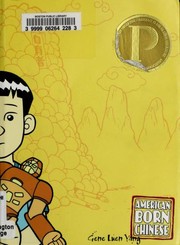
American Born Chinese
2,107-word summary 9 min read 233 pages in the book
- First published
- 2006
- Publisher
- First Second
- Pages
- 233
- ISBN
- 9781596431522
Reading options
What's inside (7 sections)
American Born Chinese is a graphic novel that looks simple and is not. Gene Luen Yang published it in 2006, and it has three stories running through it, drawn in three different registers. One is a myth about the Monkey King. One is a realistic school story about a Chinese-American boy named Jin Wang. One is a sitcom about a white teenager named Danny and his grotesque Chinese cousin, Chin-Kee. The stories seem unrelated for most of the book. Then they meet, and the meeting changes how you read everything that came before.
I came to the book after seeing it taught in schools and recommended as a gateway graphic novel. It is easy to see why. Yang's line is clean and expressive, the panels are easy to follow, and the humor is broad. But the book is also willing to make the reader uncomfortable. Chin-Kee is drawn as a walking racist caricature, and the story frames his visits with canned laughter and applause. The laughter is the point. Yang is showing how stereotypes become entertainment, and how easily an audience can laugh along without noticing what it is laughing at.
The Monkey King
The first strand is a retelling of the Monkey King from Journey to the West, with some changes. The Monkey King rules the monkeys of Flower-Fruit Mountain. He hears music and smells food from Heaven and goes to a divine dinner party. A guard stops him at the door. The guard does not care that the Monkey King is powerful or famous. He says the Monkey King is a monkey, and monkeys are not allowed. The guard also mentions shoes, which is a small detail that becomes a running joke and a symbol.
The Monkey King is humiliated. He attacks the party, then goes home and becomes obsessed with his own fur and smell. He orders his subjects to wear shoes. He isolates himself and studies kung fu for eighty days. He masters invulnerability and the ability to change his shape. When he emerges, he looks larger and more human. He declares himself the Great Sage, Equal to Heaven, and forces the other deities to use the title.
Tze-Yo-Tzuh, the creator, confronts him. The creator tells the Monkey King that he is still what he was made to be. The Monkey King refuses the lesson and tries to escape the universe. He reaches five golden pillars, marks one with his name, and returns triumphant. Tze-Yo-Tzuh reveals that the pillars were his fingers. The Monkey King never escaped. He is buried under a mountain for five hundred years, unable to practice kung fu.
That story is funny and sad at the same time. The Monkey King's desire to be recognized is understandable. His refusal to accept his own nature is the problem. The mountain is not just a punishment. It is a lesson he has to learn in his body. Five hundred years later, the monk Wong Lai-Tsao arrives with a mission from Tze-Yo-Tzuh. He tells the Monkey King that he can free himself by releasing his kung fu and returning to his original monkey form. The Monkey King resists, then does it. He defeats the demons threatening the monk, leaves his shoes behind, and joins the journey. The shoes are a beautiful detail. He does not need them anymore.
Jin Wang
The second strand is Jin Wang's story. Jin is born in San Francisco's Chinatown. His parents are immigrants. He plays with Transformers and goes with his mother to an herbalist. At the herbalist's shop, the herbalist's wife asks him what he wants to be when he grows up. Jin says he wants to be a Transformer. She tells him that he can become anything he wants if he is willing to forfeit his soul. It is a joke, or a warning, or both. The line comes back later in a dream.
Jin's family moves to a suburb. He starts third grade as the only Chinese-American student in his class. His teacher mispronounces his name, assumes he is from China, and tells the class that he stopped eating dogs when he came to America. The other kids repeat the joke. The only other Asian student is Suzy Nakamura, who is Japanese-American, and she is not much comfort. Jin is lonely.
He makes a friend named Peter, but Peter's friendship is full of small humiliations. Peter moves away. Jin meets Wei-Chen Sun, a new boy from Taiwan. Wei-Chen speaks little English and tries to be friendly. Jin initially rejects him, telling him to speak English and refusing his hand. Then Wei-Chen shows him a Transformer toy, and Jin changes his mind. The toy is a bridge between them. It is also a symbol of transformation, which the book uses deliberately.
Jin and Wei-Chen become best friends. They grow up together. In seventh grade, Jin develops a crush on a white classmate named Amelia Harris. Wei-Chen starts dating Suzy. Jin is awkward around Amelia. He gets a perm to look more like Greg, a confident white boy who sits near her. The perm is painful and silly, but it gives Jin enough confidence to ask Amelia out. She says yes.
Their date is a small masterpiece of embarrassment. Jin is worried about his body odor because his parents will not let him use deodorant. He tries dry soap under his arms. The soap leaves a trail of bubbles, and Amelia does not notice, or pretends not to. They ride bikes, see a movie, drink milkshakes. For a few hours, Jin is a normal kid on a normal date. Then Greg tells him to stay away from Amelia. Greg says he is not interested in her himself, but he worries about her social standing. The implication is racial, and Jin knows it. He agrees, then hates himself for agreeing.
The Jin sections are painful because they are so recognizable. Yang captures the way a kid can absorb the surrounding prejudice and turn it into self-disgust. Jin does not need a villain. The ordinary classroom, the ordinary friends, and the ordinary desire to fit in are enough. The book shows how racism works through small jokes, assumptions, and social rules that no one has to say out loud.
Danny and Chin-Kee
The third strand is the strangest. It is presented as a sitcom called Everyone Ruvs Chin-Kee, complete with a laugh track and applause. Danny is a white American teenager. Every year his Chinese cousin Chin-Kee comes to visit, and every year Danny is humiliated. Chin-Kee is drawn with yellow skin, buckteeth, a queue, and traditional clothing. He speaks in an exaggerated accent, eats grotesque food, urinates in a drink, and answers every academic question correctly. He is a collection of anti-Chinese stereotypes, and the sitcom format makes the stereotypes seem like harmless fun.
Danny is ashamed of Chin-Kee. He changes schools every year because his classmates associate him with his cousin. He tries to hide, to be cool, to be the white kid he appears to be. Chin-Kee follows him everywhere. He sings and dances in the library. He embarrasses Danny in front of Steve, a student Danny admires. Finally Danny attacks him. Chin-Kee fights back with kung fu techniques named after Chinese restaurant dishes. Danny throws a punch that knocks Chin-Kee's head off.
The head comes off, and the story changes. Chin-Kee is the Monkey King. Danny's white identity dissolves, and Jin Wang is underneath. The Monkey King explains that he has been visiting Jin in the form of Chin-Kee because Chin-Kee was a signpost to Jin's soul. The racist image Jin feared and rejected was also a part of himself, or a part of how the world saw him. The Monkey King did not come to punish him. He came to make him look.
That reveal is the book's biggest risk and its biggest payoff. For most of the Danny section, the reader is laughing at a caricature. The laugh track encourages it. Then Yang turns the joke around. The caricature was a mask worn by a mythic figure, and the white boy was a mask worn by a Chinese-American boy. The masks come off, and the reader has to think about why the first mask was funny and the second one was sad.
The reveal also connects to Wei-Chen. The Monkey King tells Jin that Wei-Chen is his son, sent to live among humans as an emissary of Tze-Yo-Tzuh. Wei-Chen's test was to spend forty years among mortals without succumbing to human vice. He mostly succeeds, but he lies to Jin's mother to cover for Jin's date, and the lie is a breach. After Jin kisses Suzy and says something cruel to Wei-Chen, the friendship collapses. Wei-Chen becomes disgusted with humanity and refuses to serve the creator. He also refuses the Monkey King's visits.
The reconciliation
The ending is quiet. The Monkey King leaves Jin a business card for a Chinese restaurant. Jin goes there after school every day for a month and orders pearl milk tea. Eventually Wei-Chen arrives, driving a flashy car, playing loud music, smoking. He has become a version of the cool kid he thought he needed to be. Jin tells him about the Monkey King and apologizes. He can see the small, frightened monkey inside Wei-Chen. That recognition is the book's emotional climax. Jin is not just apologizing for one cruel remark. He is recognizing a shared fear.
Wei-Chen says he knows where they can get better pearl milk tea. The friends reconcile by talking and laughing late into the night. The final epilogue shows them recording a music video together, based on the Back Dorm Boys. It is silly and ordinary and hopeful. The book does not end with Jin becoming a perfect person or with racism disappearing. It ends with two friends choosing each other again.
What the book is doing
American Born Chinese is about assimilation, but it is smarter than a simple message about being yourself. Jin's desire to be white is not presented as a random flaw. It is a response to a culture that tells him his Chinese identity is funny, foreign, or shameful. The Monkey King's story mirrors that response. He tries to become more human, more powerful, more acceptable, and he loses himself. The mountain is the cost of that attempt.
The three-strand structure is the book's formal argument. The myth, the realistic school story, and the sitcom are all stories about the same thing: a person trying to escape what he is. Yang uses different visual languages for each. The myth is epic and colorful. The school story is quiet and realistic. The sitcom is flat and bright, with borders and canned laughter. The form tells you how to feel before the plot does, and then the plot makes you question the form.
The criticism I understand is that the book can make racism seem like an individual problem with an individual solution. Jin learns to accept himself, and the story ends with a friendship restored. The school culture that produced the stereotypes is still there. The kids who made the jokes are not transformed. The book does not show us a world where the system changes, only a boy who learns to live inside it. That is a fair limitation. It is also the limitation of a short graphic novel for young readers. Yang gives us a starting point, not a blueprint.
The Chin-Kee material is deliberately ugly. Some readers may find it hard to get through, especially before the reveal. That is the point, but it does not make the reading experience easy. The book trusts the reader to stay with the discomfort long enough to understand it. I think that trust is mostly earned. The reveal does not erase the stereotypes. It shows how they were constructed and who was wearing them.
I would recommend American Born Chinese to readers who want a smart, funny, painful graphic novel about identity. It is a good book for classrooms because it gives students a way to talk about race and representation without starting from a lecture. It is also a good book to read alone, because the last thirty pages make you want to go back to the first thirty and read them again. That is the mark of a story that knows what it is doing.
FAQ
Who is Chin-Kee in American Born Chinese?
Chin-Kee is the Monkey King in disguise. He appears to Jin as a walking racist stereotype, but the Monkey King later explains that the disguise was a signpost to Jin's soul, forcing him to confront the identity he was trying to reject.
Who is Wei-Chen?
Wei-Chen Sun is Jin's best friend, a Taiwanese immigrant who is later revealed to be the Monkey King's son. He was sent to live among humans as an emissary of Tze-Yo-Tzuh and to undergo a test of virtue.
Is American Born Chinese the same as the Disney+ series?
No. This is the 2006 graphic novel. The Disney+ adaptation adds material, including the Fourth Scroll and a heavenly war, that is not part of the original book.
Similar books
Ms. Marvel, Vol. 1: No Normal
Kamala Khan, a Jersey City teenager and Carol Danvers fan, gains shapeshifting powers and has to decide what kind of hero she wants to be.
2,579-word summary · 11 min read
The House of the Scorpion
A clone raised in a drug lord's poppy fields learns what he was made for and chooses what to do with the life he was given.
2,527-word summary · 11 min read
The False Prince
A nobleman buys four orphans and tells them only one will survive to impersonate the missing prince. The narrator, a defiant thief named Sage, has other plans.
2,044-word summary · 9 min read
Clap When You Land
Two half sisters, one in Sosúa and one in Queens, discover each other after their father dies in a plane crash, in Elizabeth Acevedo's novel in verse.
2,890-word summary · 13 min read
Lore Olympus: Volume One
Sheltered Persephone meets lonely Hades at an Olympus party, and gossip, old trauma, and new power test their slow bond.
2,283-word summary · 10 min read
The Namesake
Jhumpa Lahiri follows Gogol Ganguli from a hated namesake to adult loss, marriage, and family reckoning between Calcutta and Boston.
2,878-word summary · 13 min read
Heartstopper: Volume Three
Nick and Charlie test honesty on a Paris trip while friends face exams, outings, and eating-disorder strain.
2,355-word summary · 10 min read

What Happened to Goodbye
Mclean has reinvented herself in four towns since her parents divorced. In Lakeview she uses her real name, and for the first time staying put becomes a choice.
2,796-word summary · 12 min read
The Thief
A boastful young thief is pulled from a prison to steal a legendary stone for the king's magus, and the story he tells about himself is not the whole story.
2,514-word summary · 11 min read
The Idiot
A Turkish-American freshman at Harvard falls in love through email with a Hungarian math student and spends a summer in Hungary trying to turn correspondence…
2,019-word summary · 9 min read
Love Letters to the Dead
A fifteen-year-old writes letters to dead artists because they cannot ask questions, and slowly tells the one story she has been hiding about her sister's…
2,520-word summary · 11 min read
Anya's Ghost
A lonely Russian immigrant falls into a well, befriends the ghost trapped there, and discovers that the ghost's help comes with a dangerous price.
2,001-word summary · 9 min read

Dumplin'
Willowdean Dickson enters her town's beauty pageant as a protest and discovers that confidence is harder to keep once she lets someone close.
1,922-word summary · 9 min read

The Siren
Saved from a shipwreck in 1930, Kahlen becomes a siren who sings men to their deaths for the Ocean, until a boy in a college library makes her want a life she…
2,369-word summary · 11 min read
Unaccustomed Earth
Lahiri’s second story collection follows Bengali families in America and abroad, tracing the quiet distances between parents and children, spouses, and the…
2,333-word summary · 10 min read
The Chalice of the Gods
Percy needs three recommendation letters from three gods to apply to college, so his first quest is recovering a stolen chalice from the god of old age.
2,106-word summary · 9 min read
The Ship of the Dead
Magnus and his crew sail to the edges of the Norse worlds to stop Loki from launching Naglfar, the ship of the dead.
2,426-word summary · 11 min read
Starsight
Spensa Nightshade goes undercover aboard the Superiority space station Starsight to steal a hyperdrive, and finds a frightened bureaucracy where she expected…
2,568-word summary · 11 min read
The Second Summer of the Sisterhood
Four friends share the traveling pants through a summer of grandmothers, first loves, and mothers who are learning to let go.
2,209-word summary · 10 min read
The Magician
Sophie and Josh flee to Paris with Nicholas Flamel, where John Dee, Machiavelli, and an awakened god close in on the missing pages of the Codex.
2,162-word summary · 10 min read
The Burning Maze
Apollo, still trapped in a mortal teenager's body, follows a dangerous prophecy through the Labyrinth with Meg and Grover as the Triumvirate's grip tightens.
2,248-word summary · 10 min read
On the Come Up
Bri Jackson, a sixteen-year-old rapper in Garden Heights, chases a record deal while a viral song turns her into a symbol she never wanted to be.
2,034-word summary · 9 min read

Lore
Lore Perseous, the last of a hunted bloodline, is pulled back into the Agon when a wounded Athena offers her revenge against the god who killed her family.
2,188-word summary · 10 min read
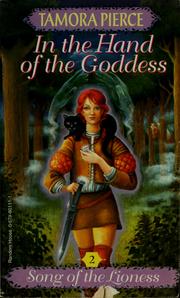
In the Hand of the Goddess
Alanna, still disguised as a boy, survives war, court plots, and a death duel as the Goddess's chosen warrior in the second Song of the Lioness book.
2,018-word summary · 9 min read

Aristotle and Dante Dive into the Waters of the World
Ari and Dante return for senior year in El Paso, navigating first love, AIDS, family grief, and the cost of being openly gay in 1987 Texas.
2,188-word summary · 10 min read

Switched
A Minnesota teenager who can make people obey her discovers she is a changeling troll princess, and the hidden kingdom she came from wants her back.
2,131-word summary · 9 min read

Someone Like You
Halley and her best friend Scarlett face a summer of grief, a surprise pregnancy, and Halley's dangerous first romance in Sarah Dessen's 1998 young adult novel.
2,218-word summary · 10 min read
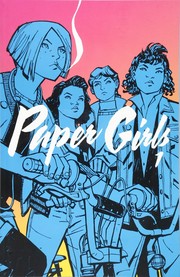
Paper Girls, Volume 1
Four paper girls in 1988 Ohio chase a stolen walkie-talkie into a basement and stumble into a time war, flying dinosaurs, and an older version of themselves.
2,235-word summary · 10 min read
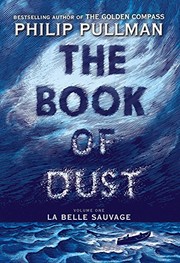
La Belle Sauvage
Philip Pullman's prequel to His Dark Materials follows eleven-year-old Malcolm Polstead as a secret message, a hunted baby, and the flood of the century carry…
2,530-word summary · 11 min read
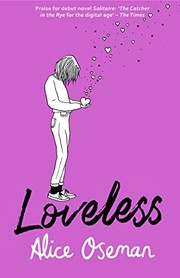
Loveless
Georgia starts university sure she wants love, then learns she is aro-ace.
2,539-word summary · 11 min read