
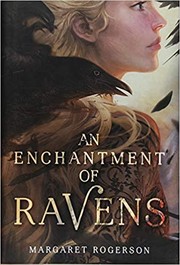
Reading options
What's inside (8 sections)
I read An Enchantment of Ravens after Sorcery of Thorns, which is probably the wrong order. Sorcery of Thorns is longer, stranger, and more ambitious. This one is shorter and more conventional, and it has a narrower scope. That is not a criticism. It is a fairy tale, and fairy tales are supposed to be sharp and quick. Margaret Rogerson knows the rules of the genre, and she has fun bending them.
The novel was published in 2017 by Margaret K. McElderry Books, an imprint of Simon & Schuster. It runs 304 pages in hardcover. It is a standalone, which is rare in young adult fantasy. There is no sequel, no trilogy, no cliffhanger. That gives the book a shape that many of its peers lack. It begins, it complicates, and it ends. The ending is rushed, but it is an ending.
The heroine is Isobel, a seventeen-year-old painter who lives in a town called Whimsy. Whimsy is a human settlement on the edge of the fairy lands, and it is locked in eternal summer. The fair folk cannot create anything of their own. They cannot bake bread, write a poem, or paint a picture without falling apart. They crave human Craft, and they pay for it with enchantments. Isobel is one of the best portraitists in Whimsy. Her paintings are prized by the fair folk, and she has learned to negotiate with them carefully.
A Painter in Whimsy
The fair folk cannot lie outright, but they are masters of implication. Isobel knows this. She uses a false name, like everyone in Whimsy, to prevent ensorcelment. She carries a hidden iron ring, because iron is poison to the fair folk. She has rules for every interaction. She is careful, practical, and a little smug about it. She is also seventeen, and being careful does not make her immune to loneliness.
Isobel lives with her Aunt Emma, a physician, and her twin adopted sisters, March and May. The twins were once goats, transformed by a drunk fairy and then adopted by Emma. They are chaotic, funny, and completely devoted to Isobel. They also give the book a domestic center. Whimsy is not just a setting. It is a home, with a kitchen, a workshop, and a family that depends on Isobel's income.
Her most important client is Gadfly, a charming fair one who pays in practical enchantments. Gadfly is not a prince, or so Isobel believes. He is a patron, a friend, and a negotiator. He tells her that Rook, the autumn prince, wants a portrait. Rook has not been seen in Whimsy for hundreds of years. The news unsettles Isobel. A royal client is a huge opportunity, and a huge risk.
Rook arrives, and he is not what she expects. He is beautiful, of course. The fair folk are always beautiful. But he is also curious. He asks about ordinary things. He is fascinated by her painting tools. He does not want a grand pose or a sword. He wants to be seen as he is. Isobel begins to sketch him, and she notices something wrong with his eyes. She cannot capture them. There is an emotion there that should not exist in a fair one.
The Autumn Prince
The emotion is sorrow. Isobel paints it into the portrait, and the result is a scandal. The fair folk are not supposed to feel human emotions. If Rook is seen to be weak, his authority as the autumn prince will be threatened. He is furious. He charms Isobel's legs and forces her to walk to the forest to stand trial. She presses her iron ring against his skin and reminds him that everyone in Whimsy carries iron. If he kills her for it, he will have to kill everyone. He releases her, and she agrees to walk freely.
The journey to the autumn court is the best part of the book. Rook and Isobel are forced to rely on each other. They travel through the forest, which is not a safe place for a human. The Wild Hunt appears, led by Hemlock, a fair one of the winter court. Hemlock gives them a head start. Rook transforms into a horse, and they flee. The chase is exciting, and it gives the romance time to breathe.
Rook is a good romantic lead because he is not a human boy with pointed ears. He is genuinely alien. He does not understand why Isobel cares about her family. He does not understand death. He is hundreds of years old, and he has spent most of that time playing court politics. He is also vulnerable. He has loved before, and it ended badly. The raven pin he wears contains a curl of blond human hair. The woman he loved grew old and died, and he could not save her. That grief is the sorrow Isobel painted.
Isobel is a strong heroine because she does not lose her head. She is attracted to Rook, but she does not trust him. She negotiates. She plans. She is not a warrior, and she does not become one. Her power is her art. That is refreshing in a genre where heroines often discover a secret fighting skill in the third act. Isobel wins because she is observant and creative, not because she can swing a sword.
The Blight and the Barrow Lord
The fairy lands are dying. The autumn court is suffering from a blight that turns the trees gray and the animals sick. Rook does not know what is causing it. He suspects the Alder King, the ancient ruler of all the fairy courts. The Alder King has been in power for so long that no one remembers a time before him. He is not a character in the first half of the book. He is a shadow, a fear, a name that makes the fair folk go quiet.
Rook and Isobel travel through the summerlands, which are even worse. They encounter a Barrow Lord, a monstrous creature made from a mass grave. The fight is brutal. Rook wins, but he is wounded and infected by the blight. Isobel has to nurse him back to health. The scene is intimate without being explicit. She washes his wounds. She watches him sleep. She realizes that he is not as invulnerable as he pretends to be.
The Green Well is introduced as a possible solution. It is a spring that can turn a human into a fair one. The catch is that the transformation strips away mortality, memory, and the ability to create. A human who drinks from the well becomes immortal, but they lose their Craft. Isobel refuses. She would rather die than lose the thing that makes her herself. That choice defines her.
Rook offers to take her home. He cannot finish the sentence about what he will do afterward, because finishing it would be a lie. He is in love with her. She is not sure whether she loves him back. The Good Law says that love between a human and a fair one is punishable by death, unless both parties are in love. The loophole is absurd, and the book knows it. It uses the law to create tension, but it also uses it to make a point about how arbitrary power can be.
The Spring Court
They go to the spring court for help. Isobel discovers that Gadfly is the spring prince. He has been hiding his rank for years, and he has been guiding her toward this moment. Gadfly is not a villain in the ordinary sense. He is a strategist. He has seen possible futures, and he has chosen the one where Isobel confronts the Alder King. He is using her, but he is also giving her a choice.
The spring court is full of fascinating side characters. Aster is a former mortal who drank from the Green Well centuries ago. She has forgotten the word for her own Craft. She is elegant, sad, and a warning. Lark is Gadfly's young niece, and she is jealous of Isobel. She turns Isobel into a rabbit, which is both funny and terrifying. Rook rescues her, and then proposes ensorcelment as a way to protect her. Ensorcelment requires her true name. She whispers it to him, and the trust between them becomes real.
The masquerade ball is the book's big set piece. Isobel has been painting portraits for the spring court, giving each fair one a specific human emotion. The results are unsettling. Foxglove freezes when she sees herself painted with joy. Aster whispers "I remember" when she is painted with rage. The fair folk are not used to feeling anything, and the experience is both thrilling and dangerous. Isobel is not just decorating them. She is changing them.
At the ball, Gadfly reveals his plan. He has been playing a long game. The Alder King is stagnant, and the fairy lands are dying because of it. Gadfly wants change, and Isobel is the instrument. Hemlock arrives with the Wild Hunt to enforce the Good Law. Isobel and Rook are dragged to the Green Well. They are given a choice: Isobel drinks and becomes a fair one, or they both die.
The Alder King
Isobel pretends to agree, then throws Rook's raven pin into the well. The pin is a human object, and it poisons the well. The well collapses, and Aster becomes human again. It is a clever solution, and it shows Isobel's understanding of the fairy world's rules. She does not fight the law. She uses its contradictions against it.
Hemlock forces them through a fairy path to the Alder King's throne room. Rook tears off the finger wearing the iron ring to regain his power. He grows autumn trees that shatter the crystal pillars. He challenges the Alder King. The fight is not a sword fight. It is a battle of wills, and Rook wins by exploiting a fairy compulsion. Fair folk must return bows and curtsies. Rook bows, forcing the king to bow back, and then he runs.
They escape to Whimsy, where Gadfly has left an iron dagger. Isobel realizes that the dagger was always meant for the Alder King. She paints his portrait, filling it with human emotion. When the Alder King arrives, he is transfixed by his own face. He sees sorrow and love, and he weeps. Isobel drives the dagger through the canvas and into his heart. An alder tree erupts from his body, and the eternal summer ends.
The ending is abrupt. The Alder King is built up as an ancient, terrifying power, and then he is defeated in a few pages. His motivation is interesting, but it is explained too late. The final battle is more of a puzzle than a fight, which fits the book's themes, but it also feels small. The romance resolves quickly. Rook proposes, Isobel accepts, and the book ends with the promise of adventure. It is a happy ending, but it is not a fully earned one.
What Works and What Does Not
The prose is lovely. Rogerson has a talent for describing light, fabric, and weather. The fairy world is not a generic forest. It has seasons, courts, politics, and a sense of history. The romance is sweet, and it is grounded in mutual respect. Isobel and Rook do not fall in love because of fate. They fall in love because they pay attention to each other.
The book is also funny. The twins, the goat origin story, Rook's confusion about human customs, the fair folk's literal-mindedness: these are good comic beats. The humor keeps the story from becoming too precious. It also makes the scary parts scarier. The fair folk are amusing until they are not.
The weaknesses are real. The worldbuilding is thin in places. The Good Law is a convenient rule, and the Green Well is a convenient solution. The side characters are memorable but underdeveloped. The ending is rushed. The romance moves quickly, even for a fairy tale. If you want a slow-burn relationship, this is not it.
I would recommend this book to readers who want a short, atmospheric fantasy with a strong heroine and a satisfying romance. It is not as ambitious as Sorcery of Thorns, but it is more focused. It knows what it is, and it does it well. I read it in two sittings, and I was sorry when it was over. That is a good sign.
FAQ
Is An Enchantment of Ravens a standalone?
Yes. It is a standalone novel, though Rogerson has written other fantasy books.
What is the Good Law?
The treaty between humans and fairies that forbids fairies from showing emotion or breaking certain rules. Isobel's paintings threaten it.
Is the romance appropriate for younger readers?
It is a young adult novel with romance and some violence, but it is not explicit.
Similar books
The Reckoning
Twin heirs survive trials and hazing at Zodiac Academy while the heirs start to split.
1,984-word summary · 9 min read
Sorcery of Thorns
An apprentice librarian framed for sabotage joins a sorcerer and his demon servant to stop attacks on the Great Libraries.
2,926-word summary · 13 min read

The Lost Sisters
Taryn Duarte writes a letter to her twin, Jude, explaining how she fell for Locke and why she stayed silent while he used them both.
1,914-word summary · 9 min read

The Siren
Saved from a shipwreck in 1930, Kahlen becomes a siren who sings men to their deaths for the Ocean, until a boy in a college library makes her want a life she…
2,369-word summary · 11 min read

The Rose & the Dagger
Shahrzad is pulled from her Caliph husband and left in a desert camp of rebels, needing to break his curse and end a war before it ends her.
2,520-word summary · 11 min read

We Hunt the Flame
In a fractured Arabia-inspired world, a disguised huntress and a prince-assassin race to find a magic-restoring book and confront an ancient evil.
2,195-word summary · 10 min read
Blue Moon
Ever Bloom tries to save her immortal boyfriend, Damen, from a mysterious illness while a new student named Roman quietly takes control of her school and her…
1,998-word summary · 9 min read

The Indigo Spell
Sydney Sage hunts an aging witch, learns forbidden magic, and finally admits she loves Adrian, while the Alchemist tattoo on her cheek may be controlling her.
2,604-word summary · 12 min read
A Deal with the Elf King
A village herbalist is exposed as the hidden Human Queen, married to a cold elf king, and given three months to save his dying kingdom or be bound to it…
2,094-word summary · 9 min read
These Hollow Vows
Brie trades with the Unseelie to save her sister and steals for a prince.
2,384-word summary · 11 min read

The Iron Queen
Meghan faces the Iron King past while Ash pays a winter price.
2,548-word summary · 11 min read
Fated Throne
Twins face the throne trial as heirs close in and stars shift.
2,349-word summary · 10 min read
A Winter's Promise
Ophelia reads objects and is sent to marry Thorn on a cold ark.
2,502-word summary · 11 min read
The Golden Lily
Sydney Sage guards Jill at Amberwood Prep in Palm Springs, studies forbidden magic, favors Adrian over Brayden, and faces Alchemist custody in this second…
2,988-word summary · 13 min read
Daughter of No Worlds
A former slave with rare magic hires exiled warrior Max to train her for a daring rescue, sparking slow burn love and wider war in this big 520-page fantasy…
2,529-word summary · 11 min read
Cursed Fates
Twin heirs Tory and Darcy Vega face Lionel Acrux, brutal trials and tangled mate bonds in this fifth Zodiac Academy book, a 749-page bridge to open war and…
2,750-word summary · 12 min read
Strange the Dreamer
Orphan librarian Lazlo Strange joins a quest to the lost city of Weep, where blue-skinned godspawn haunt dreams.
2,221-word summary · 10 min read
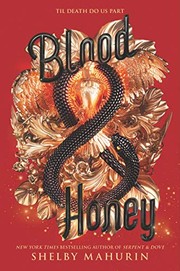
Blood & Honey
Married witch Lou and hunter Reid flee church and coven while dark magic tempts Lou to save them.
2,280-word summary · 10 min read
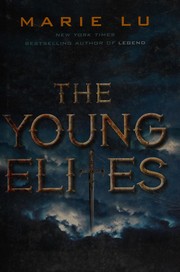
The Young Elites
Adelina survives fever and execution to join a secret group of gifted malfettos plotting against the queen of Kenettra.
3,310-word summary · 15 min read
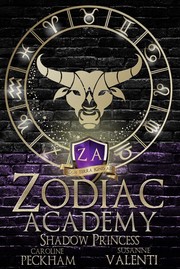
Shadow Princess
Tory and Darcy learn they are Phoenixes with shadows inside them and face Lionel, the Heirs and a rescue that goes wrong.
2,837-word summary · 13 min read
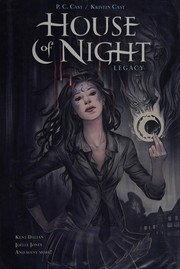
Burned
Zoey's soul hides in the Otherworld while Stark must die to fetch her and Stevie Rae burns secrets.
2,074-word summary · 9 min read
Poison Study
Sentenced to die, Yelena becomes the Commander's poison taster and learns survival in Ixia has a daily price.
2,501-word summary · 11 min read
To Kill a Kingdom
A siren princess turned human must steal a siren-hunting prince's heart to win back the sea.
2,248-word summary · 10 min read
The Shadows Between Us
Alessandra plans to woo the Shadow King, marry him, and kill him for his throne, then finds someone else wants him dead first.
2,571-word summary · 11 min read

Fire
A human monster who reads minds is pulled into war in the Dells and must decide how to use her power.
2,727-word summary · 12 min read
The Awakening
Twin sisters Tory and Darcy Vega learn they are lost Fae heirs and enter Zodiac Academy in Solaria, where the four Heirs bully them to force them off the…
2,960-word summary · 13 min read
A Curse for True Love
Evangeline wakes married with no memory of Jacks while Apollo and Jacks hunt.
2,287-word summary · 10 min read
Finale
Sisters face waking Fates with debts due, loving princes, and choices that break immortal math.
1,995-word summary · 9 min read
The Ballad of Never After
Evangeline hunts four missing Arch stones with Jacks to free a cursed Apollo and learns what his rescue will cost.
3,690-word summary · 16 min read
Legendary
Tella enters a new Caraval in Valenda to pay a debt with Legend's name, while curses and waking Fates raise the cost.
2,886-word summary · 13 min read