
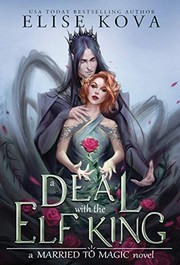
A Deal with the Elf King
2,094-word summary 9 min read 338 pages in the book
- First published
- 2020
- Publisher
- Silver Wing Press
- Pages
- 338
- ISBN
- 9781949694277
- Series
- Married to Magic (#1)
Reading options
What's inside (10 sections)
A Deal with the Elf King was my first Elise Kova book, and it turned out to be exactly the kind of fantasy romance that works when it is done with care. The premise is classic. A small-town healer is claimed by a cold and beautiful elf king, taken to a dying magical kingdom, and expected to marry him for the sake of a treaty. If that sounds like Beauty and the Beast crossed with Hades and Persephone, that is because Kova says so in the author's note. The question with a premise this familiar is whether the execution brings anything new, and for the most part, it does.
It helps that the book is a standalone. There is no trilogy fat here, no cliffhanger, no second act that exists to sell a third. The story starts, complicates, and finishes, with a real ending that the characters have to earn. In a genre full of doorstopper series, that economy is a feature.
The treaty and the queen nobody found
The world is divided in two. The Natural World is where humans live, and Midscape is a land of wild magic inhabited by elves and fae, separated by a barrier called the Fade. Three thousand years ago, the treaty ended a war that was hunting humans to extinction. The price of peace is renewed every hundred years, when the elves take a young woman from Luella's island town of Capton to be their Human Queen. She is always the one human born with magic, and her life force keeps the seasons turning on both sides of the Fade.
Luella is nineteen, a herbalist who runs a shop, and she grew up believing this generation's queen had already been found. That is why she got to keep her life. She trained, she opened her practice, and she has spent years being useful to a town whose merchants paid for her education. When the book opens, Capton is suffering from a wasting illness everyone calls the Weakness, and the elves are expected any day to collect a queen nobody can produce.
Then the quietly devastating part. Luke, her childhood friend and a Keeper of the Fade, the order that tends the temple at the border, confesses his love and begs her to run. She loves him back, in the way you love someone who was there for every important day of your childhood, and she refuses, because Capton needs her. At breakfast with her parents, Luke announces a marriage arrangement she never agreed to. It is the first sign that the people who love Luella have been making decisions about her life without her, and it is not the last.
The king comes to Capton
Eldas, the Elf King, rides into the square on a horse made of shadow and demands that the hidden queen be surrendered. When a friend collapses and Luella rushes to treat him, Eldas watches her perform magic she does not know she is doing. He touches her, tears a necklace from her throat, and the magic erupts. Iron lampposts turn into cherry trees. Moss carpets the stones. The queen was never missing. She was hidden.
Luke had concealed Luella's identity since childhood with that necklace, which suppressed her magic and blocked the elves' Knowing, their power to learn and use a person's true name. His deception is the reason for the Weakness. The town's illness was the price of his protection, and the book treats his confession with more care than I expected, because he did it out of love and it was still monstrous. Luella's reaction is the right one. She refuses to let him be killed and insists he face the town council instead.
The wedding happens fast, and this is where Eldas shows his worst face. He uses magic to calm Luella into compliance during the vows, a violation she calls him out for as soon as she can think clearly. He does not apologize well. The novel is smart to let him be genuinely wrong here, because a cold love interest who only ever acts nobly is boring, and a king who treats his bride like a treaty clause and then has to live with her is a story.
The Fade and the throne
Crossing the Fade nearly kills Luella, and she emerges into Quinnar, the elf capital, in the middle of a deep winter. Eldas gives her a labradorite ring that shields her true name, which is a gift with a leash attached, and assigns Rinni, his right hand and general, to escort her to her rooms.
Then he tells her to sit on the redwood throne, and the book delivers its best piece of worldbuilding. The moment Luella sits, her consciousness plunges down through the roots of the throne and into the earth, where millions of living things in Midscape claw at her, draining her life force. She is not sustaining a kingdom so much as feeding it with her own body. Eldas hauls her free. She wakes twelve hours later to find that winter has turned to spring.
That scene does more work than a hundred pages of explanation. Midscape is beautiful and it is a parasite, and Luella is its next meal. Willow, the castle healer, later explains the arrangement in full. Every sitting drains her further. She must return to the Natural World at midsummer to recharge, and after the coronation in three months, she will be permanently bound to Midscape, because the magic does not care what she wants.
A deal of her own
Luella's answer to this is my favorite thing about her. She does not accept the cage and she does not sulk in it. She digs into the journals kept by previous queens, looking for how the cycle was made and whether it can be broken, and she proposes a bargain to Eldas. She will find a way to end the cycle of queens so that no future woman is taken, and he will help her, with the coronation as the deadline and secrecy as the price. He agrees.
Their early days are marked by hostility. Harrow, Eldas's younger brother, and his friends, including Aria, a half-fae niece of the Fae King, humiliate the new queen with pranks. When Harrow locks her in a room, her rage grows roses into monstrous vines, which is both an impressive piece of magic and a warning about what she is becoming. During her first magic lesson, Eldas insults her, she slaps him, and he retaliates by using her true name to control her body. Luella instinctively changes her true name and breaks free. It is the moment the king learns he cannot simply manage this one.
The wolf deserves his own paragraph. During an escape attempt through the Fade, Luella gets lost and meets a large gray wolf with golden eyes, who leads her to a keystone, an ancient stone anchoring the barrier. The wolf follows her home and she names him Hook. He becomes her companion and protector, and yes, the ending of the book makes you rethink what he is, so pay attention.
Harrow, Aria, and the house that lies
The middle of the novel is a slow burn of exactly the kind the premise promises. Luella heals a badly ill Harrow in secret with a rare plant called heartroot, which matters more than it seems. Rinni takes her into Quinnar in disguise, a fae attacker kidnaps her, and Hook and Eldas rescue her. The attacker belongs to the Acolytes of the Wild Wood, a group of rebel fae who want their lands returned, and Luella suspects Aria of being involved. Eldas dismisses the concern, which is the first of several times the king underestimates the danger in his own house.
Their dinner scene is where the romance turns. Luella removes Eldas's crown over faerie mead and asks to meet the man rather than the king, and they share a first kiss. He pulls away, because she has a plan to leave and he cannot let himself hope otherwise. The novel gets real mileage out of that tension. Every tender moment is shadowed by the deadline, and both of them know it.
The queen's cottage is the other key location, a retreat with gardens transplanted from the Natural World, and there Luella and Eldas finally stop negotiating and start choosing each other. It is also where she finds a hidden journal that belongs to Lilian, the first Human Queen, which becomes the clue that unlocks the whole mystery.
Westwatch and the truth about Lilian
Word arrives that Harrow has been captured near the fae border. Luella deduces that Aria lured him using glimmer, a fae-made substance he has been secretly using, and they ride for Westwatch, the fortress held by Eldas's brother Drestin, to get him back. In the fae wilds, Aria holds a blade to Luella's throat and demands the return of fae lands. Luella uses her blood and magic to trap Aria in briar vines while Eldas kills the remaining fighters, and the truth comes out. Aria was helping the Acolytes out of love for one of the rebels. She is a traitor for a human reason, which is this book's recurring theme.
Back at Westwatch, Eldas asks Luella whether she loves him, and she cannot answer. She is afraid her feelings are a product of circumstance rather than choice, and that fear matters to her identity. Eldas hears the silence as rejection and goes cold again. It is a frustrating scene in the best sense, because both of them are right about something and wrong about the rest.
The heartroot and the last queen of spring
The solution to the whole book sits in the conservatory, and it is elegant. Luella identifies the heartroot as the key. Lilian, the first queen, deliberately withheld the plant from the Natural World so that the balance between the two sides could only be maintained by a living woman on the throne. She turned herself into a permanent substitute. By returning the heartroot, Luella can restore the equilibrium and end the cycle for good, which also dissolves the obligation binding her to Midscape. She tells Eldas, and he grants her passage through the Fade with a cold farewell, because letting her go is the only honorable thing he can think to do.
In Capton, Luella buries a necklace of polished heartroot bark at the base of the great redwood tree in the temple grounds, the Natural World's counterpart to Midscape's redwood throne, and plants the heartroot around it. Five days later, an elf messenger confirms that the throne has sprouted living leaves and the cycle is broken. She spends time with her parents, feels displaced in the town she saved, and learns that Eldas arranged for a healer to replace her so she could leave without guilt.
Then she whistles for Hook at the edge of the Fade and returns during the springtime rites. She bursts into the coronation and declares her love, and Eldas responds in kind. She explains that she had to leave to know her feelings were freely chosen, and he crowns her with gilded redwood leaves, naming her the last queen of spring. They sit on their thrones together and the Fade is quiet.
What works and what does not
The strengths are the pacing, the couple, and the ending. The book moves fast without feeling thin, the side characters are generous, and Hook is an excellent wolf. The resolution is genuinely earned, because the answer was planted early and the final choice belongs to Luella rather than to prophecy. The sex scene is warm and consensual, and the romance is a real slow burn rather than an outline of one.
The weaknesses are the familiar ones for the subgenre. Eldas's coldness repeats a beat or two more than necessary, and some of the early antagonism between them could have been trimmed. The political subplot with the Acolytes resolves tidily, and readers who want the fae conflict to matter beyond Aria's personal motive will be unsatisfied. The middle section, while pleasant, does not have the momentum of the first hundred pages, and Luella's transition from shopkeeper to queen is a little frictionless. Still, these are small complaints about a book that knows exactly what it is and delivers it with warmth, and the standalone structure makes it an easy recommendation. If you have been burned by unfinished fantasy series, this one will treat you well.
FAQ
Is A Deal with the Elf King part of a series?
It is the first of the Married to Magic novels, a set of linked standalones that can be read in any order. This book tells a complete story with an ending.
What is A Deal with the Elf King based on?
The author describes it as inspired by the myths of Hades and Persephone and by Beauty and the Beast. The marriage of a mortal woman to a ruler of a magical kingdom is the shared skeleton.
Does A Deal with the Elf King have a happy ending?
Yes. The queen cycle is broken, and Luella returns to Eldas by choice rather than by treaty. The novel closes with the two of them crowned together.
Similar books
More from Married to Magic first, then related titles.
An Enchantment of Ravens
Isobel, a mortal artist in the fairy town of Whimsy, paints a portrait of the autumn prince and falls in love with him, breaking the laws of her craft.
2,087-word summary · 9 min read
The Reckoning
Twin heirs survive trials and hazing at Zodiac Academy while the heirs start to split.
1,984-word summary · 9 min read

The Lost Sisters
Taryn Duarte writes a letter to her twin, Jude, explaining how she fell for Locke and why she stayed silent while he used them both.
1,914-word summary · 9 min read

Magic Burns
A magic flare hits Atlanta, and mercenary Kate Daniels must recover stolen maps, find a missing witch, and keep a teenage girl alive while Celtic gods try to…
2,021-word summary · 9 min read

Blood Bonds
Oleander is chained in a Resistance camp, and her five Bonds have to find her before Silas Davies finishes what he started in this third Bonds that Tie book.
2,018-word summary · 9 min read

The Siren
Saved from a shipwreck in 1930, Kahlen becomes a siren who sings men to their deaths for the Ocean, until a boy in a college library makes her want a life she…
2,369-word summary · 11 min read

The Rose & the Dagger
Shahrzad is pulled from her Caliph husband and left in a desert camp of rebels, needing to break his curse and end a war before it ends her.
2,520-word summary · 11 min read

We Hunt the Flame
In a fractured Arabia-inspired world, a disguised huntress and a prince-assassin race to find a magic-restoring book and confront an ancient evil.
2,195-word summary · 10 min read
Blue Moon
Ever Bloom tries to save her immortal boyfriend, Damen, from a mysterious illness while a new student named Roman quietly takes control of her school and her…
1,998-word summary · 9 min read
A Fate Inked in Blood
In Norse-inspired Skaland, a fish gutter hiding a goddess's blood is claimed by a jarl, bound by oath, and guarded by the son she cannot want.
1,971-word summary · 9 min read
Savage Bonds
Oli's deadly gift is out in the open, her Bond runs the show, and the Resistance is closer than ever in the second Bonds that Tie novel.
2,431-word summary · 11 min read
Cold Days
Back from the dead as the Winter Knight, Harry Dresden must follow Mab's order to kill an immortal and defend Demonreach on Halloween night.
2,361-word summary · 10 min read

The Indigo Spell
Sydney Sage hunts an aging witch, learns forbidden magic, and finally admits she loves Adrian, while the Alchemist tattoo on her cheek may be controlling her.
2,604-word summary · 12 min read
Dreamfever
With the walls between worlds down and Mac broken by the Fae, Dreamfever is the darkest volume of the Fever series, and the one that changes everything.
2,007-word summary · 9 min read
Deadlocked
A dead woman on Eric's lawn starts a murder investigation, a vampire queen wants Eric as her consort, and the fairies in Sookie's life close in.
2,885-word summary · 13 min read
When the Moon Hatched
An assassin who hears air takes a job that throws her to dragons and a hunter.
2,083-word summary · 9 min read
These Hollow Vows
Brie trades with the Unseelie to save her sister and steals for a prince.
2,384-word summary · 11 min read

The Iron Queen
Meghan faces the Iron King past while Ash pays a winter price.
2,548-word summary · 11 min read
The Dark One
Winnie trades with Hook while Peter Pan turns cruel in Neverland.
2,596-word summary · 12 min read
Shadowfever
Mac Lane hunts the Sinsar Dubh in Dublin as Fae walls fail and Barrons secrets surface.
3,016-word summary · 13 min read
Fated Throne
Twins face the throne trial as heirs close in and stars shift.
2,349-word summary · 10 min read
Bloodfever
Mac hunts the Sinsar Dubh in Dublin while Barrons tests her.
2,124-word summary · 9 min read
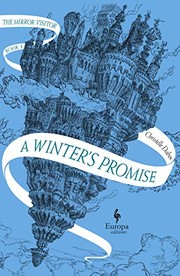
A Winter's Promise
Ophelia reads objects and is sent to marry Thorn on a cold ark.
2,502-word summary · 11 min read
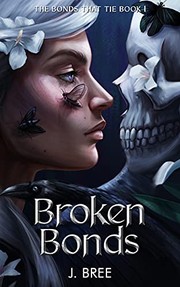
Broken Bonds
Oleander returns after five years on the run to face the five men she is bonded to, in J. Bree's 2021 opener of resentment, training, and slow trust.
2,582-word summary · 11 min read
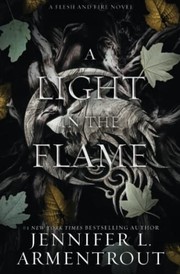
A Light in the Flame
Held by Nyktos in the Shadowlands, Sera faces trials, Kolis and the Rot while broken trust is tested.
2,577-word summary · 11 min read
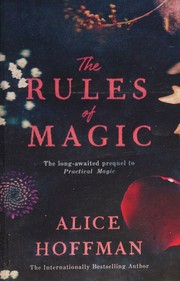
The Rules of Magic
Franny, Jet, and Vincent Owens test strict family rules and a love curse in 1960s Manhattan and Massachusetts in Alice Hoffman's warm prequel about love, loss,…
2,686-word summary · 12 min read
The Golden Lily
Sydney Sage guards Jill at Amberwood Prep in Palm Springs, studies forbidden magic, favors Adrian over Brayden, and faces Alchemist custody in this second…
2,988-word summary · 13 min read
Daughter of No Worlds
A former slave with rare magic hires exiled warrior Max to train her for a daring rescue, sparking slow burn love and wider war in this big 520-page fantasy…
2,529-word summary · 11 min read
Cursed Fates
Twin heirs Tory and Darcy Vega face Lionel Acrux, brutal trials and tangled mate bonds in this fifth Zodiac Academy book, a 749-page bridge to open war and…
2,750-word summary · 12 min read