

We Hunt the Flame
2,195-word summary 10 min read 472 pages in the book
- First published
- 2019
- Publisher
- Farrar, Straus and Giroux
- Pages
- 472
- ISBN
- 9780374311544
- Series
- Sands of Arawiya (#1)
Reading options
What's inside (8 sections)
I bought We Hunt the Flame because the cover was beautiful and because I wanted a fantasy novel that did not feel like another tour of the same European castles. Hafsah Faizal's debut is set in Arawiya, a world inspired by ancient Arabia, and it opens with a girl in a forest that eats people. That combination was enough to get me to the first page. The book is not perfect. It is slow at the start, the invented vocabulary takes work, and the romance sometimes competes with the plot. But it is also atmospheric, ambitious, and full of characters who are trying to become the people they want to be rather than the legends other people have made of them.
The premise is simple enough. Arawiya was once united by the magic of the Six Sisters. Then the Sisters vanished, magic disappeared, and the land broke into five caliphates. The Arz, a cursed forest, keeps spreading and swallowing the country. In Demenhur, a young woman named Zafira disguises herself as a man and enters the Arz to hunt food for her starving people. She is known as the Hunter, a legend who can walk into the forest and come back with game. If anyone discovers she is a woman, her achievements will be dismissed and her identity will be used against her. The disguise is a survival strategy in a society that does not believe women can be heroes.
Zafira's family history gives the disguise its weight. Her father was a hunter, and the cloak she wears is his. Her mother is gone. Her younger sister and her community depend on her. She does not hunt for glory. She hunts because the alternative is hunger. That grounding is one of the novel's strengths. Zafira is not a chosen one who discovers a destiny. She is a person who has been doing difficult work for years and has learned to keep her mouth shut about it. When the Sultan's mission gives her a chance to be recognized, she takes it, but she is not naive about what recognition costs.
Nasir is the other protagonist. He is the son of Sultan Ghameq and his personal hashashin, the Prince of Death. His father sends him to kill people who resist the regime. Nasir does it because he wants his father's approval, and because the alternative is worse. Privately he is compassionate and exhausted. If he shows that compassion, the Sultan punishes him. The novel sets him up as Zafira's opposite: she is publicly celebrated but privately hidden, while he is publicly feared but privately decent. Both are legends who do not want to be.
His relationship with his father is the novel's most interesting psychological thread. Nasir remembers a time when the Sultan was kind. He keeps doing terrible things because he is trying to find that man again. The reveal that the Sultan has been controlled by the Lion of the Night complicates the story without excusing it. Nasir is not responsible for his father's magic, but he is responsible for what he did while serving him. The novel knows that, and it does not let him off easily. His arc is about learning to separate love from obedience.
The mission to Sharr
War is coming, and the Arz is expanding. The Sultan decides that the Hunter should retrieve a lost artifact called the Jawarat, a book that can restore magic and stop the forest. Zafira accepts because she does not believe the stories about the Six Sisters' betrayal, and because she wants to make a difference. She travels to Sharr, the cursed island beyond the Arz, with her friend Deen. Unbeknownst to her, the Sultan has also sent Nasir to kill the Hunter and bring him the Jawarat once she finds it. The Silver Witch, the Sultan's mysterious advisor, helps both of them covertly. Her motives are not clear until much later.
The journey to Sharr is where the book finds its rhythm. The island is full of ifrit, kaftar, and ruins from a civilization that has been deliberately erased. The darkness is sentient. It whispers to Zafira and offers her deals. Nasir discovers that he can wield darkness as a weapon. Zafira learns that she can navigate it. The magic system is tied to emotion and identity rather than rules, which makes the action scenes feel unpredictable. It also means the book has to work harder to explain what is happening, and sometimes it does not.
Deen's death is the hinge of the first act. Altair, Nasir's companion, accidentally kills Deen while trying to protect him and Zafira from an ifrit. Altair is a poor archer, and the arrow goes wide. Zafira sees Nasir standing over her friend and assumes he is responsible. She spends a long time hating him for the wrong reason. The misunderstanding is frustrating, but it is also realistic. Grief does not wait for a full investigation. It attaches itself to the nearest person who looks guilty.
The zumra
Zafira and Nasir are forced to work together to survive. They meet Benyamin, a safi scholar with pointed ears, and Kifah, an elite warrior who has been conspiring with Altair against the Sultan. The group calls itself the zumra. Each member has a secret. Altair is a soldier with loyalties the others do not fully understand. Benyamin knows more about Sharr than he admits. Kifah is a leader in her own right. The novel takes its time revealing these secrets, and the pacing suffers for it. There are long stretches where the characters walk, talk, and camp. Readers who want constant action will be bored. Readers who like atmosphere and banter will be happier.
The banter is one of the book's pleasures. Altair is funny. Kifah is dry. Nasir is terrible at jokes and knows it. Zafira is too serious to enjoy most of it, which makes her the perfect straight woman. The group dynamic is more interesting than the romance, at least for me. The romance is enemies to lovers, and it follows the familiar beats: the hostile first meeting, the forced proximity, the moment of vulnerability, the kiss that means nothing and everything. Faizal writes it with heat, but the emotional logic is thin. Nasir and Zafira fall for each other because the plot needs them to, not because their conversations reveal a deeper compatibility.
The Lion of the Night
The central revelation is that the Lion of the Night, the ancient enemy of the Six Sisters, is still alive. He has been manipulating the Sultan through an amulet. The Sultan's cruelty is not entirely his own. Nasir learns that the father he has been trying to please is a puppet, and that the man he remembers is still in there somewhere. It is a horrifying idea, and the novel handles it with restraint. Nasir does not get a clean reunion. He gets a new understanding of how much of his life has been shaped by someone else's magic.
The Lion is also connected to Altair. Altair is Nasir's half-brother, the son of the Silver Witch and the Lion. The reveal recontextualizes their relationship. Altair has been protecting Nasir without telling him why. Nasir has been treating Altair as a rival without understanding that they share a mother. The novel does not resolve their feelings. It just gives them more to carry.
The Silver Witch is the most interesting character in the book, and she is barely on the page. She is the last surviving Sister, the mother of Nasir and Altair, and the woman who has been grooming Nasir to kill the Lion. She admits it. She does not apologize. She has been playing a long game, and her sons are pieces on the board. The novel wants us to see her as a tragic figure, but it also lets her be cold. That ambiguity is more compelling than a simple reveal.
The Jawarat
The climax takes place in a circle of five trees around a stone altar. The Jawarat is there, but it is not a book of spells. It contains the memories of the Six Sisters, and their hearts are buried beneath the trees. Zafira touches the book with a bloody hand, and it bonds to her. The Lion appears. The Silver Witch fights him. Benyamin throws himself in front of a death blow meant for Nasir and dies. Altair buys time by revealing his light magic. The zumra digs out the hearts, and magic returns to the world. The Lion is freed from his confinement on Sharr, which means the victory is also a catastrophe. Altair is captured. The others escape on Benyamin's ship.
The ending is a first-act ending, not a conclusion. Zafira and Nasir reach a truce. The zumra vows to rescue Altair. Yasmine, Zafira's best friend, has a vision of her brother Deen's death and vows to kill Altair, not knowing that the killing was an accident. In the epilogue, Altair is imprisoned on the Lion's ship, and the Lion visits him. Altair greets him as his father. It is a chilling final line, and it does its job. I wanted the sequel immediately.
The cost of the victory is what makes the ending work. Benyamin is dead. Altair is captured. Magic is back, but so is the Lion. The characters have won a battle and lost the safety they had at the start. That is more interesting than a clean triumph. It also sets up the sequel without feeling like a marketing decision. The story has earned its cliffhanger.
What works and what drags
The world-building is the book's greatest strength. Arawiya feels lived in. The food, the clothes, the titles, the prayers, and the poetry are woven into the story rather than displayed in a glossary. Faizal is good at describing light and shadow, which matters in a book about a forest that eats people and a prince who controls darkness. The setting is not a decorative backdrop. It shapes the politics and the magic.
The magic system is also more interesting than it first appears. The Six Sisters did not simply disappear. Their hearts are buried under trees, their memories are inside the Jawarat, and their legacy has been rewritten by the people who seized power. Magic is not a neutral force in Arawiya. It is a resource that has been stolen, hoarded, and used to justify a dictatorship. When Zafira restores it, she is not fixing a machine. She is reopening a question about who gets to use power and for what. That is why the ending feels like a beginning rather than a conclusion.
The prose is uneven. Some sentences are beautiful. Some are trying too hard. The invented terms are dense at the beginning, and the book does not always give the reader enough context to keep them straight. I had to flip back a few times to remember which caliphate was which. The multiple points of view are useful for the plot, but they can dilute the emotional focus. I was most engaged when I was in Zafira's head, and least engaged when the book cut away to a character I did not yet care about.
The romance is the weakest element. Nasir and Zafira have chemistry, but their relationship develops too quickly given how much they distrust each other. The kiss in the forest is a turning point, but it feels more like a genre requirement than an organic development. The novel also has a habit of telling us that Zafira is a legend and then showing us a girl who is mostly tired and hungry. That is the point, but the contrast could be sharper.
The reception was strong. The book was a New York Times bestseller, a Goodreads Choice Award nominee, and a critical favorite for its representation and atmosphere. Readers praised the world and the characters. Some criticized the pacing and the romance. I agree with both sides. We Hunt the Flame is a promising debut that sometimes reads like a first novel. It is ambitious, and ambition is not a flaw. It just means the book is reaching for more than it can hold.
Who should read it
This is for readers who love fantasy worlds that feel specific and culturally grounded. It is for readers who like enemies to lovers and do not mind a slow burn. It is for anyone who has ever felt like they had to hide part of themselves to be taken seriously. It is not for readers who need a fast plot or a clear magic system. It is also not for readers who are tired of duologies that end on a cliffhanger.
I am glad I read it. I finished it on a rainy afternoon and immediately looked up the sequel. The book made me want to know what happens to Altair, to Zafira, to Nasir, and to the world that has just gotten its magic back. That is the best thing a first book can do. It does not have to be perfect. It has to make you want the next one.
FAQ
Is We Hunt the Flame the first book in a series?
Yes. It is the first book of the Sands of Arawiya duology and is followed by We Free the Stars.
Does We Hunt the Flame end on a cliffhanger?
Yes. Benyamin is dead, Altair is captured by the Lion of the Night, and the zumra escapes knowing the larger war is still ahead.
Who is the Lion of the Night?
He is the ancient enemy of the Six Sisters, a powerful being who was imprisoned on Sharr and has been manipulating the Sultan through an amulet.
Similar books
More from Sands of Arawiya first, then related titles.

The Rose & the Dagger
Shahrzad is pulled from her Caliph husband and left in a desert camp of rebels, needing to break his curse and end a war before it ends her.
2,520-word summary · 11 min read
A Winter's Promise
Ophelia reads objects and is sent to marry Thorn on a cold ark.
2,502-word summary · 11 min read
Daughter of No Worlds
A former slave with rare magic hires exiled warrior Max to train her for a daring rescue, sparking slow burn love and wider war in this big 520-page fantasy…
2,529-word summary · 11 min read
Strange the Dreamer
Orphan librarian Lazlo Strange joins a quest to the lost city of Weep, where blue-skinned godspawn haunt dreams.
2,221-word summary · 10 min read

Poison Study
Sentenced to die, Yelena becomes the Commander's poison taster and learns survival in Ixia has a daily price.
2,501-word summary · 11 min read
To Kill a Kingdom
A siren princess turned human must steal a siren-hunting prince's heart to win back the sea.
2,248-word summary · 10 min read

Fire
A human monster who reads minds is pulled into war in the Dells and must decide how to use her power.
2,727-word summary · 12 min read
Finale
Sisters face waking Fates with debts due, loving princes, and choices that break immortal math.
1,995-word summary · 9 min read
Graceling
Katsa, Graced with killing, breaks from her uncle's use of her and follows a kidnapped prince toward a hidden king.
2,517-word summary · 11 min read

Inkdeath
The final Inkworld novel sends Mo into the land of the dead, leaves Meggie choosing between two boys, and ends the Adderhead's immortality with three written…
2,062-word summary · 9 min read

Vow of Thieves
Kazi and Jase return to Tor's Watch to find it occupied, and their marriage is tested by captivity, betrayal, and a war for the town of Hell's Mouth.
2,059-word summary · 9 min read

Lioness Rampant
Alanna searches for the Dominion Jewel with the Shang Dragon, then returns to Tortall to face Duke Roger at Jonathan's coronation.
2,478-word summary · 11 min read

Archenemies
Nova steals for the Anarchists while Adrian hides his Sentinel identity, and a serum that erases prodigy powers puts them both at risk.
2,485-word summary · 11 min read

The Siren
Saved from a shipwreck in 1930, Kahlen becomes a siren who sings men to their deaths for the Ocean, until a boy in a college library makes her want a life she…
2,369-word summary · 11 min read

The Golem's Eye
Two years after The Amulet of Samarkand, Nathaniel is a rising bureaucrat, Bartimaeus is his unwilling servant again, and something made of clay is tearing…
2,299-word summary · 10 min read

The Queen of the Tearling
Nineteen-year-old Kelsea leaves the woods to take her throne, ends a shipment of human captives, and draws the Red Queen's revenge.
2,357-word summary · 10 min read
The Magician
Sophie and Josh flee to Paris with Nicholas Flamel, where John Dee, Machiavelli, and an awakened god close in on the missing pages of the Codex.
2,162-word summary · 10 min read

Lore
Lore Perseous, the last of a hunted bloodline, is pulled back into the Agon when a wounded Athena offers her revenge against the god who killed her family.
2,188-word summary · 10 min read
In the Hand of the Goddess
Alanna, still disguised as a boy, survives war, court plots, and a death duel as the Goddess's chosen warrior in the second Song of the Lioness book.
2,018-word summary · 9 min read

Blue Moon
Ever Bloom tries to save her immortal boyfriend, Damen, from a mysterious illness while a new student named Roman quietly takes control of her school and her…
1,998-word summary · 9 min read
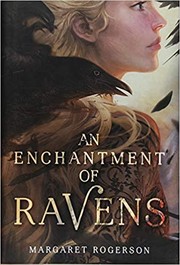
An Enchantment of Ravens
Isobel, a mortal artist in the fairy town of Whimsy, paints a portrait of the autumn prince and falls in love with him, breaking the laws of her craft.
2,087-word summary · 9 min read
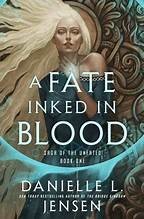
A Fate Inked in Blood
In Norse-inspired Skaland, a fish gutter hiding a goddess's blood is claimed by a jarl, bound by oath, and guarded by the son she cannot want.
1,971-word summary · 9 min read
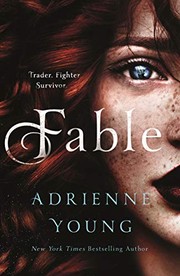
Fable
Abandoned on a lawless island at fourteen, Fable spends four years diving for gems to buy passage off it, straight into the cutthroat trade of the Narrows.
2,320-word summary · 10 min read

The Indigo Spell
Sydney Sage hunts an aging witch, learns forbidden magic, and finally admits she loves Adrian, while the Alchemist tattoo on her cheek may be controlling her.
2,604-word summary · 12 min read

When the Moon Hatched
An assassin who hears air takes a job that throws her to dragons and a hunter.
2,083-word summary · 9 min read

The Winner's Curse
An aristocratic girl buys a slave who is secretly a prince plotting rebellion.
2,124-word summary · 9 min read

The Iron Queen
Meghan faces the Iron King past while Ash pays a winter price.
2,548-word summary · 11 min read
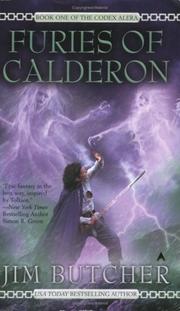
Furies of Calderon
Furyless Tavi defends Calderon Valley when the Marat return and lords scheme.
2,587-word summary · 11 min read

The Golden Lily
Sydney Sage guards Jill at Amberwood Prep in Palm Springs, studies forbidden magic, favors Adrian over Brayden, and faces Alchemist custody in this second…
2,988-word summary · 13 min read
Lirael
A Sightless Clayr girl and a prince afraid of Death join the Dog and Mogget to stop necromancers from waking the Destroyer Orannis at the Red Lake while old…
2,692-word summary · 12 min read