
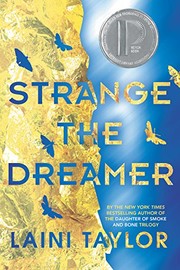
Strange the Dreamer
2,221-word summary 10 min read 544 pages in the book
- First published
- 2017
- Publisher
- Little, Brown Books for Young Readers
- Pages
- 544
- ISBN
- 9780316341684
- Series
- Strange the Dreamer (#1)
Reading options
What's inside (7 sections)
I picked up Strange the Dreamer because a friend kept leaving it on my kitchen table with the cover facing up, that blue moth on black, and saying nothing, just waiting. I finally started it on a train and missed my stop. Laini Taylor published it March 28, 2017 with Little, Brown Books for Young Readers, a 544 page hardcover with ISBN 9780316341684. It is the first book in the Strange the Dreamer duology, followed by Muse of Nightmares. I went in expecting standard chosen one fantasy. What I got was slower, stranger, and sadder, in a good way.
The hero is Lazlo Strange. He is not a prince. He is a war orphan raised by monks in Zosma, a boy who was left on the steps as a baby with that odd name, Strange, given by a monk who thought it fit. As a child he fixates on the lost city of Weep. The name was cut from every record when the city cut itself off. Scholars are punished for saying it. Lazlo finds one old story and keeps it for years. He grows up to be a junior librarian, good with languages, bad with people, kind in a way that makes others protect him. He dreams of Weep every night. He thinks his dream chose poorly because he has no money, no sword training, no connections.
Two hundred years before Lazlo, Weep was ruled by the Mesarthim, blue skinned gods who came from elsewhere and took human wives and husbands by force. They had children, the godspawn, who inherited cruel and wild gifts. Then a hero called Eril-Fane, later called the Godslayer, led humans to kill the gods. Babies with blue skin were supposed to be killed too. Five survived, hidden in the citadel above the city by their nurse. The city then lost its true name. Everyone calls it Weep because the survivors weep. The gods are dead but their metal citadel still floats above the streets, held by dead gods and ghosts. Birds avoid it. Rain avoids parts of it.
The boy who loved a name
The opening third is my favorite part, even though almost nothing explodes. Lazlo works in the Great Library of Zosma. He catalogs, translates, begs older scholars for scraps about Weep. He is bullied by a senior librarian named Master Hyrrokkin. He has one friend, a fellow junior named Calixte, who steals food for him. When the Godslayer comes to Zosma looking for experts to solve Weep problems, Lazlo does something bold. He gives a speech in front of a room that laughs at him. He knows the old trade routes, the climate patterns, the fragments of language. Eril-Fane picks him, not as a warrior but as a translator and record keeper.
The travel section lets Taylor show what she does well. The party crosses the Elmuthaleth desert, a poisoned waste left by god magic. The caravan includes soldiers, engineers, magicians, a thief named Calixte who stows away, a cook, and Thyon Nero, a golden boy alchemist who hates Lazlo on sight. Thyon is rich, famous, and empty. He solved a famous problem young and has been coasting since. He needs to be the smartest person in the room. Lazlo does not compete. He watches clouds, tastes water, learns names of drivers. The desert crossing is hard in a physical way. Water goes bad. Sand gets into bindings. One man dies. When they finally see Weep, a city of pink stone and blue domes with a dark citadel hanging above it like a held breath, Lazlo cries. I believed him.
Weep itself is tired. The river is wrong. Babies are born wrong. Metal from the citadel falls sometimes and kills. The Godslayer is not welcomed as a hero. People spit when he passes. He killed their oppressors but he also killed children, or tried to, and the city remembers both. Eril-Fane drinks. He has nightmares. His wife was killed by gods. He has a human son he barely speaks to. Taylor does not let him be simple. He did a necessary thing in a brutal way and it broke him.
Sarai and the moths
Above the city, in the citadel, live the five surviving godspawn. Sarai is our second lead. She is seventeen, blue skinned, with magic that lets her slip into dreams as a moth. Every night she visits the people of Weep in sleep and gives them nightmares, or takes their dreams, to keep them afraid. She hates it. She was raised by Great Ellen, a ghost nurse, and by Minya, the oldest godspawn, an eight year old girl in body who leads with rage. The others are Ruby, who whistles fire, Spar, who can fold into shadow, and Feral, who controls clouds and weather.
Sarai is gentle in a place that punishes gentleness. She feeds ghosts. She tends a garden of ghost orchids. She dreams of a boy with gray eyes who loves books. Then Lazlo arrives in Weep and starts dreaming of her back. Their dream meetings are the heart of the book. They meet in a grove that Sarai builds from memory, green and soft, with moths. They talk about stories. Lazlo tells her about libraries. Sarai tells him what it feels like to be hated for skin she did not choose. She hides her blue hands at first. He sees them and stays.
I liked how Taylor handles consent here. Sarai can enter dreams without asking. She knows it is wrong. Lazlo calls her on it early, kindly but clearly. She starts asking. He starts inviting. The romance grows through talk, not rescue. They are both lonely in specific ways. He was raised without touch. She was raised without a future. When they kiss in a dream, it has weight because they spent a hundred pages learning each other first.
Minya is the problem. She remembers the slaughter. She was a child when Eril-Fane killed her family. She kept the younger ones alive by being hard. She wants revenge on all of Weep, not just the Godslayer. She sends Sarai out each night to punish dreamers. She hoards the ghosts of dead godspawn children and uses them as soldiers. Sarai starts to disobey in small ways, skipping houses, softening nightmares. Minya notices. The citadel scenes get colder as the book goes on. You feel two sisters pulling apart.
Thyon and the alchemy of pride
Thyon Nero could have been a cartoon rival. He is not. He is a good study of what happens when a bright kid is praised for being special and then stops working. In Weep he is tasked with solving the citadel problem, how to bring it down or move it. He fails for weeks. He tries to steal Lazlo notes. He tries to buy servants to lie for him. One night he meets a strange girl in the market who sells him a solution that is not a solution. His chapters are uncomfortable because I recognized parts of school and work in him, that panic when you realize talent alone will not save you.
Lazlo, by contrast, works. He learns the Weep language from street kids. He helps engineers drain a poisoned pool. He listens to old women who remember the gods. He figures out that the citadel is held up by mesarthium, a god metal that responds to spirit, and that the ghosts are anchored by grief. He does not have magic, or so he thinks. He has patience. People start to trust him because he shows up. A little girl named Suheyla gives him bread. An old farmer shows him where the river changed. These small kindnesses matter later when the city must decide whether to trust outsiders.
The middle does slow down. There is a long stretch of translation work, council arguments, and Thyon sulking. Taylor loves language and she lets Lazlo love it too, which means pages about verb forms and old trade names. I enjoyed it, but if you want fast battles, you will fidget here. The payoff is that when action comes, you understand the stakes. You know why the river matters, why the metal matters, why the ghosts cannot leave.
What fell and what woke
The last hundred pages move fast. Minya forces Sarai to deliver a nightmare to Eril-Fane that breaks him. Sarai, torn, tries to warn Lazlo instead. The Godslayer, mad with guilt, climbs to the citadel to finish what he started. The humans below decide to cut the citadel loose and let it fall, which would crush part of Weep. Lazlo climbs too, without armor, with books and rope and a plan half formed.
Here Taylor reveals what she hid in plain sight. Lazlo is not fully human. He is the son of Skathis, a dead god, and a human woman. His gift is control of mesarthium. That is why metal sings near him. That is why ghosts watch him. When he reaches the citadel, the metal answers him. He does not become a king. He becomes a bridge. He holds the citadel up while people flee. He talks to ghosts who have been stuck for two hundred years.
Sarai dies in the physical world during this chaos. I will not soften it. A soldier kills her body while she is dreaming. Her spirit survives for a time because Lazlo holds her. Their goodbye in the dream grove is the best written scene in the book, quiet after so much noise. She asks him to live. He asks her to stay. Neither gets exactly what they want. Minya, seeing Sarai gone, lets her rage take full control and sends the citadel down toward the city.
Lazlo stops it, but at cost. He takes the citadel into the sky, away from Weep, with Minya and the remaining godspawn and ghosts aboard. He is changed. His skin is blue now. The humans below see a god where a librarian stood. Eril-Fane dies. Thyon lives, smaller and sadder, which feels right. Weep survives, damaged, free of the shadow for the first time in generations. The book ends with Lazlo and Sarai spirit reaching for each other across sleep, and with a new question about what Lazlo will become.
I admired the ending and I resented it a little. It is a true first half, not a standalone with a bow. Sarai fate will frustrate readers who wanted a wedding. Minya remains unredeemed. The romance is not finished. That is the point of a duology, but the cut lands mid breath. The sequel Muse of Nightmares picks up directly, so keep it nearby.
Fair criticism belongs here. Taylor writes lush sentences. Sometimes three adjectives where one would do. The Weep chapters repeat the same image of blue skin as shame until the point is made and then made again. Lazlo is almost too good. He forgives Thyon quickly, forgives Eril-Fane quickly, forgives Minya longer than I would. If you prefer prickly heroes, his sweetness may tire you. The book also keeps sexual violence in backstory without fully facing it, which some readers will find evasive.
Still, I closed the book and sat still for a while. It understands what it feels like to love a place you never saw, to learn a name others threw away, to want to fix old harm without becoming a new harm. Lazlo starts as a boy who files books and ends as someone who must decide what gods are for. Sarai starts as a weapon and insists on being a person. Weep starts as a rumor and becomes a city with laundry lines and bread ovens and tired parents. That movement from myth to neighbor is why the book stays with me.
If you read Daughter of Smoke and Bone, you will recognize Taylor concerns: blue skin, moths, resurrection work, mothers who hide children to save them. This book is more patient and more adult in tone. Read it when you have time to sink. Keep a pencil for names. Let the slow middle do its work. The fall, when it comes, will hit harder for the waiting.
Why it still matters
Fantasy often gives us orphans who learn they are kings. Lazlo learns he is part god and uses it to serve, not to rule. That choice feels old fashioned in the best way. He translates. He carries. He listens. In a genre full of swords, a hero whose power is attention is rare.
The book also treats stories as tools. Who gets to name a city matters. Who writes the history matters. Weep lost its name when it lost its power to tell its own past. Lazlo gives it back by writing down what old women remember, what children sing, what engineers measure. It is not flashy magic, but the book argues it is magic all the same.
I will read the second volume soon, though I am a little afraid. I want Sarai back in a body. I want Minya to soften. I want Lazlo to find a library in the sky. Taylor may not give me any of that. The dream chooses the dreamer, not the other way around. I am learning to trust that line, even when it leads off a cliff.
FAQ
When was Strange the Dreamer published and how long is it?
Little, Brown Books for Young Readers published it March 28, 2017. The hardcover runs 544 pages with ISBN 9780316341684.
Is Strange the Dreamer part of a series?
Yes. It is book one of the Strange the Dreamer duology, followed by Muse of Nightmares from 2018. Start here.
What age is Strange the Dreamer appropriate for?
Ages 14 and up fits best. There is war violence, body horror around the godspawn, and romance without explicit scenes.
Similar books
More from Strange the Dreamer first, then related titles.

The Rose & the Dagger
Shahrzad is pulled from her Caliph husband and left in a desert camp of rebels, needing to break his curse and end a war before it ends her.
2,520-word summary · 11 min read

We Hunt the Flame
In a fractured Arabia-inspired world, a disguised huntress and a prince-assassin race to find a magic-restoring book and confront an ancient evil.
2,195-word summary · 10 min read
A Winter's Promise
Ophelia reads objects and is sent to marry Thorn on a cold ark.
2,502-word summary · 11 min read
Daughter of No Worlds
A former slave with rare magic hires exiled warrior Max to train her for a daring rescue, sparking slow burn love and wider war in this big 520-page fantasy…
2,529-word summary · 11 min read
Poison Study
Sentenced to die, Yelena becomes the Commander's poison taster and learns survival in Ixia has a daily price.
2,501-word summary · 11 min read
To Kill a Kingdom
A siren princess turned human must steal a siren-hunting prince's heart to win back the sea.
2,248-word summary · 10 min read

Fire
A human monster who reads minds is pulled into war in the Dells and must decide how to use her power.
2,727-word summary · 12 min read
Finale
Sisters face waking Fates with debts due, loving princes, and choices that break immortal math.
1,995-word summary · 9 min read
Graceling
Katsa, Graced with killing, breaks from her uncle's use of her and follows a kidnapped prince toward a hidden king.
2,517-word summary · 11 min read

Inkdeath
The final Inkworld novel sends Mo into the land of the dead, leaves Meggie choosing between two boys, and ends the Adderhead's immortality with three written…
2,062-word summary · 9 min read

Vow of Thieves
Kazi and Jase return to Tor's Watch to find it occupied, and their marriage is tested by captivity, betrayal, and a war for the town of Hell's Mouth.
2,059-word summary · 9 min read

Lioness Rampant
Alanna searches for the Dominion Jewel with the Shang Dragon, then returns to Tortall to face Duke Roger at Jonathan's coronation.
2,478-word summary · 11 min read

Archenemies
Nova steals for the Anarchists while Adrian hides his Sentinel identity, and a serum that erases prodigy powers puts them both at risk.
2,485-word summary · 11 min read

The Siren
Saved from a shipwreck in 1930, Kahlen becomes a siren who sings men to their deaths for the Ocean, until a boy in a college library makes her want a life she…
2,369-word summary · 11 min read

The Golem's Eye
Two years after The Amulet of Samarkand, Nathaniel is a rising bureaucrat, Bartimaeus is his unwilling servant again, and something made of clay is tearing…
2,299-word summary · 10 min read

The Queen of the Tearling
Nineteen-year-old Kelsea leaves the woods to take her throne, ends a shipment of human captives, and draws the Red Queen's revenge.
2,357-word summary · 10 min read
The Magician
Sophie and Josh flee to Paris with Nicholas Flamel, where John Dee, Machiavelli, and an awakened god close in on the missing pages of the Codex.
2,162-word summary · 10 min read

Lore
Lore Perseous, the last of a hunted bloodline, is pulled back into the Agon when a wounded Athena offers her revenge against the god who killed her family.
2,188-word summary · 10 min read
In the Hand of the Goddess
Alanna, still disguised as a boy, survives war, court plots, and a death duel as the Goddess's chosen warrior in the second Song of the Lioness book.
2,018-word summary · 9 min read
Blue Moon
Ever Bloom tries to save her immortal boyfriend, Damen, from a mysterious illness while a new student named Roman quietly takes control of her school and her…
1,998-word summary · 9 min read
An Enchantment of Ravens
Isobel, a mortal artist in the fairy town of Whimsy, paints a portrait of the autumn prince and falls in love with him, breaking the laws of her craft.
2,087-word summary · 9 min read
A Fate Inked in Blood
In Norse-inspired Skaland, a fish gutter hiding a goddess's blood is claimed by a jarl, bound by oath, and guarded by the son she cannot want.
1,971-word summary · 9 min read
Fable
Abandoned on a lawless island at fourteen, Fable spends four years diving for gems to buy passage off it, straight into the cutthroat trade of the Narrows.
2,320-word summary · 10 min read

The Indigo Spell
Sydney Sage hunts an aging witch, learns forbidden magic, and finally admits she loves Adrian, while the Alchemist tattoo on her cheek may be controlling her.
2,604-word summary · 12 min read
When the Moon Hatched
An assassin who hears air takes a job that throws her to dragons and a hunter.
2,083-word summary · 9 min read

The Winner's Curse
An aristocratic girl buys a slave who is secretly a prince plotting rebellion.
2,124-word summary · 9 min read

The Iron Queen
Meghan faces the Iron King past while Ash pays a winter price.
2,548-word summary · 11 min read
Furies of Calderon
Furyless Tavi defends Calderon Valley when the Marat return and lords scheme.
2,587-word summary · 11 min read

The Golden Lily
Sydney Sage guards Jill at Amberwood Prep in Palm Springs, studies forbidden magic, favors Adrian over Brayden, and faces Alchemist custody in this second…
2,988-word summary · 13 min read
Lirael
A Sightless Clayr girl and a prince afraid of Death join the Dog and Mogget to stop necromancers from waking the Destroyer Orannis at the Red Lake while old…
2,692-word summary · 12 min read