
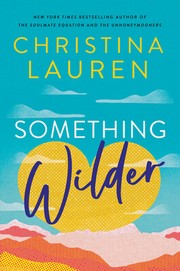
Something Wilder
2,556-word summary 11 min read 384 pages in the book
- First published
- 2022
- Publisher
- Gallery Books
- Pages
- 384
- ISBN
- 9781982173401
Reading options
What's inside (8 sections)
I picked up Something Wilder because I wanted a romance that spent most of its time outside. So many contemporary love stories live in apartments and offices and wedding venues, and this one promised red rock, horses, campfires, and a treasure map. That sounded like a vacation. What I got was part second chance love story and part desert survival adventure, with a father daughter wound sitting underneath both. I tore through it in two sittings, and I am still thinking about the canyons more than the kissing, which tells you something about where this book puts its energy.
Here is the short version before we walk through it properly. Lily Wilder grew up as the daughter of Duke Wilder, a famous treasure hunter who was almost never home. As an adult she makes a living running fake treasure hunts for tourists in the red rock country of Utah, using her father's hand drawn maps. Her ex, Leo Grady, the boy she loved at eighteen and lost through a tangle of missed messages, walks back into her life at the head of a group of college friends on a guys trip. The week in the wilderness starts as a performance and turns into something real and dangerous when the old legend about hidden outlaw loot starts looking less like a story. Lily and Leo have to decide whether they trust each other again, and Lily has to decide what her father's obsession is actually worth to her.
The daughter of a legend who was never home
The book opens by making sure you understand Lily's particular damage, and it does it fast. Duke Wilder was not some hobbyist with a metal detector. He was a genuine celebrity in treasure hunting circles, the kind of man whose maps people coveted and whose name opened doors. He was also an absentee father in every way that mattered. He missed birthdays, school events, ordinary Tuesdays. He sold the family ranch years back, a decision Lily has never forgiven, and she has carried that loss like a stone in her pocket ever since. Her dream, the one she barely says out loud, is to earn enough to buy the ranch back.
So Lily's adult life is a sideways answer to her father. She knows his maps better than anyone alive, and she uses them to stage elaborate fake treasure hunts for paying tourists. She and her best friend Nicole run the operation: groups ride out on horseback through canyon country, solve puzzles, follow clues, and dig up a treasure that Lily planted herself. It is theater, and Lily is good at it. It pays the bills without quite paying for the ranch, and it lets her stay close to the desert she loves while keeping her father's actual obsession at arm's length. She tells herself she is nothing like Duke. The book spends the rest of its pages testing that claim.
What stuck with me in these early chapters is how tactile everything feels. The authors describe heat, dust, the smell of horses, the particular orange of canyon walls at sunset, hands sore from reins. Lily checks tack and water supplies and headcounts with the competence of someone who has done this a hundred times. Nicole is the steady counterweight, funny in a dry way, the friend who will tell Lily when she is lying to herself. If you have ever run any kind of trip or tour or group event, you will recognize the particular tiredness of performing cheer for strangers while privately doing math about money in your head.
The boy from ten years ago walks into camp
Leo Grady is Lily's great unfinished business. When they were young, barely out of their teens, they loved each other completely and then lost each other through what turns out to be a failure of communication rather than a failure of feeling. Each of them spent ten years believing the other one walked away. He is now a coder living in Manhattan, settled into an adult life that looks fine from the outside and feels thin on the inside. He signs on for an annual guys trip with old college friends without knowing the destination, and the destination turns out to be Lily's camp in Utah.
I appreciated that the book does not drag out the misunderstanding for three hundred pages. That is the trap with this kind of plot, the exes circling each other while refusing to have one honest conversation, and the authors mostly refuse it. Lily is furious to see him. She would genuinely like to march him into the desert and abandon him there, and the narration lets her be angry without making her cruel. Leo is Poleaxed, then quietly determined. He came out west carrying his own regrets and he decides early that he is not leaving without trying to fix the oldest one. Within the first stretch of the trip they actually talk. They compare notes on what happened ten years ago, and the truth lands hard: nobody was rejected. Two young people with no money, no practice at hard conversations, and too much pride simply missed each other in the dark. The relief of that scene is enormous, and so is the grief. They lost a decade to nothing.
The friends round out the group. They are college buddies on a reunion trip, city people mostly, varying levels of fitness and outdoor skill, funny around the campfire in the way men who have known each other since dorms are funny. One of them, though, is a problem from the start. He is the loud one, steeped in internet conspiracy talk, the kind of guy who treats every official story as a cover and every legend as suppressed truth. He locks onto Lily's operation with a focus that goes past enthusiasm into something entitled. You can feel the trip's chemistry curdle whenever he talks. The authors do not make him subtle, and I will say plainly that he is the least interesting character in the book, but he serves his purpose as a pressure gauge. When he is on the page, the air gets thinner.
A week of horses, puzzles, and campfire static
The middle of the book is the treasure hunt itself, and for a long stretch it is simply fun. Lily and Nicole lead the group out along old outlaw routes, spinning tales of the Wild West while the riders solve staged puzzles and follow Duke's maps toward planted payoffs. The legend at the center is the story Duke chased his whole life: loot from outlaw heists, Butch Cassidy era riches supposedly stashed somewhere along remote trails and never recovered. Lily presents it as flavor, part of the show. The tourists eat it up. There are wrong turns and sore legs and nights under huge desert skies, and through it all Lily and Leo keep finding their way back to each other in small moments. A shared look across a campfire. Leo remembering how Lily takes her coffee. Lily noticing that Leo still gets quiet when he is thinking, the same way he did at twenty.
The romance rekindles in a way I found believable. These are not strangers falling fast. They are two people with a deep groove worn between them, checking whether the groove still fits. The physical pull never went away, and the authors write their reunion scenes with warmth without going explicit for pages at a time. More important is the emotional negotiation. Lily has spent ten years telling herself that Leo chose to leave, and she built a whole self reliance philosophy on top of that story. Letting the true version in means admitting she wasted years of anger on a mistake. Leo has to face that his silence back then was a choice too, even if it was a scared young man's choice. Their conversations have the stop start rhythm of real reconciliation, brave for a minute, then retreating into jokes, then brave again.
Meanwhile the desert keeps doing its work on everyone. I loved the descriptions of the Canyonlands maze country, the slot canyons and dry washes, the way sound behaves between stone walls, the particular danger of a place where a wrong turn costs water and daylight. Lily reads this land like a book. Watching her work, watching Leo watch her work, you understand what he fell for and what she lost when she decided love made her weak. Nicole keeps the operation running and keeps giving Lily looks that say talk to him properly or I will. If the book had stayed in this mode, a warm adventure romance about exes solving puzzles on horseback, I would have been perfectly happy. It does not stay in this mode.
When the treasure stops being pretend
About two thirds in, the tone shifts hard, and readers should know this going in. The legend starts producing results that Lily did not plant. A clue resolves in a way her staged version never accounted for. The conspiracy minded member of the group decides Lily has been holding out, that she knows where the real riches are, and his entitlement turns menacing. What follows is the part of the book I have the most mixed feelings about: a stretch of genuine peril with guns, captivity, forced marches through brutal country, and violence that the breezy cover copy does not prepare you for. The publisher blurb calls the trip's disaster hilarious. Nothing about this section read as hilarious to me. It reads as scary, and deliberately so.
I want to be fair about what works here. The survival chapters are gripping on a mechanical level. Water discipline, heat, navigation by map and memory, who carries what, how fear makes people stupid and how training takes over. Lily's competence becomes the engine of the whole book. She is not waiting to be rescued. She is reading stone and sky, counting miles, making calls that keep people alive. Leo proves himself too, not as an action hero but as someone who stays steady, follows her lead where she knows best, and steps up where strength is needed. The crisis strips away every remaining pretense between them. When you might die in a canyon, you stop performing indifference.
What works less well is the villainy. The human threats are drawn in broad strokes, greed plus grievance plus guns, and their planning bends to whatever the plot needs scene by scene. A couple of reveals about who knew what and who arranged which part of the trip require you not to look too closely at timing and logistics. I found myself going along because the desert chapters move fast and Lily's point of view stays sharp, but afterward I had questions. If you are a reader who needs your thriller mechanics airtight, this stretch may frustrate you. If you can accept a romance novel's action logic, the way you accept a musical's spontaneous choreography, you will probably stay strapped in.
Duke Wilder's ghost and the ranch that means home
Underneath the chases and the kissing, this is a book about a father who loved a mystery more than his family and a daughter deciding what to do with that inheritance. Duke is mostly off the page, present through maps and memories and other people's stories, and the book is smart about him. He is not a monster. People who knew him describe a man genuinely lit up by history, charming when he bothered to be present, generous with strangers. That is what makes him hard to forgive. A villain you can hate cleanly is easier than a father who loved you in the abstract and abandoned you in the particular.
Lily's arc is about separating the useful inheritance from the poison. Duke's maps, his research, his feel for the old trails: those are real gifts, and Lily using them to make a living is not a betrayal of herself. His obsession, his willingness to trade the ranch and his daughter's childhood for one more season chasing a rumor: that is the part she has to refuse. The ranch itself functions as the book's emotional compass. It carries weight far beyond its price: the home Duke sold out from under them, the proof that his priorities were broken, the thing Lily believes will make her whole if she can buy it back. Whether money can fix what Duke broke is the question the ending has to answer, and I thought the answer was handled with more honesty than most romances manage. Lily gets a clearer idea of what home actually means, and it is not only a deed with her name on it.
Leo has his own family material, quieter but important. His people are ordinary in the best sense, present where Duke was absent, and his mother's clear eyed view of him helps Lily see him as he is now rather than as the boy who failed her. The contrast is deliberate without being hammered. Two families, two models of love: one big and showy and unreliable, one plain and steady. Lily choosing Leo is also Lily choosing which model she believes in.
What I will carry and what I would warn about
Let me be direct about the split in my reaction, because I think it will map onto a lot of readers. The romance and the desert are excellent. Lily is a great heroine, competent and prickly and funny, and her voice carries the whole book. Leo is a genuinely decent hero, patient without being a doormat, and their second chance feels earned because they do the actual talking. The Utah canyon writing made me price out trips I cannot afford. The banter around campfires feels lived in. The early chapters where two people who never stopped loving each other figure out they were both wrong about the past are as good as anything this duo has written.
The action thriller back half is where I wobbled. It is exciting but it belongs to a different book than the one I started, and the shift never fully settles for me. The villains are thin. The treasure mechanics, which I wanted to play along with as a reader, mostly happen at a distance: characters figure things out off to the side and then explain, rather than letting us solve alongside them. And the humor the marketing promises largely evaporates once guns appear, which is honest but makes the packaging feel off.
Who should read it anyway. If you like second chance romance, forced proximity in the wilderness, competent heroines, and love stories where the couple's biggest obstacle is old grief rather than a silly third act breakup, this will scratch the itch. If you want a cozy low stakes romcom in the vein of some of this team's other hits, adjust expectations: this one has teeth and dust and real fear in it. I am glad I read it. I cared about Lily and Leo all the way down, and the final chapters, with the treasure question resolved and the ranch question reframed, gave me the warm ache I want from this genre. Then I went and stared at photos of canyon country for an hour, which is probably the highest compliment an adventure romance can earn.
FAQ
When was Something Wilder published?
Gallery Books published the hardcover on May 17, 2022. It runs 384 pages and the ISBN is 9781982173401.
Who are the main characters?
Lily Wilder, who guides staged treasure hunts in Utah, and Leo Grady, the coder she loved and lost ten years earlier.
Is Something Wilder part of a series?
No. It is a standalone adventure romance with a closed ending, separate from the Beautiful Bastard and other Christina Lauren books.
Similar books

Sam's Letters to Jennifer
A grieving journalist reads her grandmother's letters and finds a decades-long love affair that changes how she sees her family.
2,310-word summary · 10 min read
Wedding Night
Lottie marries an old flame days after a breakup, then flies to a Greek island while her sister quietly works to sabotage the honeymoon. A farce about memory,…
2,213-word summary · 10 min read
The Road Trip
Two exes squeeze into one small car for the drive to a Scottish wedding, with four years of history and one photograph between them.
2,418-word summary · 11 min read
Every Breath
Two strangers share one week at Sunset Beach in 1990, part for duty, and reunite decades later at the mailbox that started it all.
2,357-word summary · 10 min read
Never Too Far
Blaire flees Rosemary Beach after Rush's lies, then must decide if his pursuit and Nan's exposed schemes earn trust again.
2,626-word summary · 12 min read
The Dead Romantics
A ghostwriter who stopped believing in love goes home to bury her father and finds her editor's ghost waiting at the funeral parlor.
2,634-word summary · 12 min read
Wizard's First Rule
Woods guide Richard joins Kahlan and wizard Zedd to find the Boxes of Orden before Darken Rahl, learning why people believe lies.
2,220-word summary · 10 min read
One True Loves
Emma Blair loses husband Jesse presumed dead, rebuilds life in Acton with fiance Sam, then Jesse returns alive after years missing, forcing a painful choice…
2,418-word summary · 11 min read
Happy Place
A split couple fakes being together for one last week with friends at a Maine cottage. Emily Henry mixes witty banter, grief, and second chances in this 2023…
2,497-word summary · 11 min read
It Starts with Us
It Starts with Us retold: Lily and Atlas after Ryle, co-parenting, second chances in Boston.
2,216-word summary · 10 min read
Josh and Hazel's Guide to Not Dating
Quirky teacher Hazel and steady Josh set each other up on awful double dates in Portland while insisting they are just friends.
2,854-word summary · 13 min read
Beautiful Bastard
Chloe Mills battles her demanding boss Bennett Ryan in Chicago, until office rivalry turns into a secret relationship that tests both careers.
2,800-word summary · 12 min read
The Soulmate Equation
Statistician Jess matches a genetics grump at top score ever, then tests dating by data.
2,006-word summary · 9 min read
Love and Other Words
Childhood friends Macy and Elliot reunite after eleven years apart and face the night that broke them.
2,069-word summary · 9 min read
The Unhoneymooners
Olive Torres takes her sister's Hawaii honeymoon with enemy Ethan Thomas after food poisoning ruins the wedding.
2,864-word summary · 13 min read

What Happened to Goodbye
Mclean has reinvented herself in four towns since her parents divorced. In Lakeview she uses her real name, and for the first time staying put becomes a choice.
2,796-word summary · 12 min read
The Thief
A boastful young thief is pulled from a prison to steal a legendary stone for the king's magus, and the story he tells about himself is not the whole story.
2,514-word summary · 11 min read
Size 12 Is Not Fat
Former teen pop star Heather Wells investigates two dorm elevator deaths while juggling her ex, her crush, and a size-12 wardrobe.
2,805-word summary · 12 min read
Alone With You in the Ether
Two people in Chicago agree to six conversations, and the experiment becomes a love affair that is also a study of bipolar disorder, obsession, and the shape…
2,713-word summary · 12 min read

Vow of Thieves
Kazi and Jase return to Tor's Watch to find it occupied, and their marriage is tested by captivity, betrayal, and a war for the town of Hell's Mouth.
2,059-word summary · 9 min read
The Icebound Land
Captured and enslaved in Skandia, Will fights a drug that erases him while Halt and Horace cut a bloody road through Gallica to bring him home.
2,088-word summary · 9 min read

Dumplin'
Willowdean Dickson enters her town's beauty pageant as a protest and discovers that confidence is harder to keep once she lets someone close.
1,922-word summary · 9 min read
Secrets of the Dragon Sanctuary
Kendra is replaced by a plant copy and held by the Society, while Seth steals a unicorn horn so the family can enter a dragon sanctuary.
2,590-word summary · 12 min read

Lioness Rampant
Alanna searches for the Dominion Jewel with the Shang Dragon, then returns to Tortall to face Duke Roger at Jonathan's coronation.
2,478-word summary · 11 min read

Archenemies
Nova steals for the Anarchists while Adrian hides his Sentinel identity, and a serum that erases prodigy powers puts them both at risk.
2,485-word summary · 11 min read
The Valley of Horses
Exiled from the Clan, Ayla survives alone in a hidden valley, tames a horse and a cave lion, and nurses a wounded stranger back to life.
2,311-word summary · 10 min read
Shopaholic and Sister
Becky Brandon returns from a ten-month honeymoon to meet the half-sister she always wanted, then discovers that Jess is thrifty, prickly, and nothing like the…
2,591-word summary · 12 min read
My Dark Romeo
A debutante ball kiss traps Dallas Townsend in a marriage to Romeo Costa, a man who wants her as leverage in a war against his father and her fiance.
2,530-word summary · 11 min read

Carve the Mark
On a planet divided between conquered and conqueror, the tyrant's sister and a kidnapped oracle's son discover that their gifts make them useful to everyone…
2,340-word summary · 10 min read
Mr. Maybe
Libby Mason wants a rich husband, but the wealthy man who proposes is dull and the broke writer she cannot forget is not offering forever.
2,322-word summary · 10 min read