
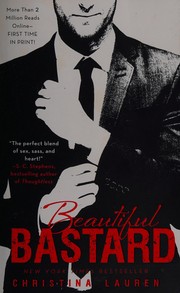
Beautiful Bastard
2,800-word summary 12 min read 320 pages in the book
- First published
- 2013
- Publisher
- Gallery Books
- Pages
- 320
- ISBN
- 9781476730097
- Series
- Beautiful Bastard (#1)
Reading options
What's inside (7 sections)
I picked this one up because I kept seeing the name Christina Lauren on newer romantic comedies and I wanted to see where that partnership started. First published in 2013 by Gallery Books, this 320 page contemporary romance opens the Beautiful Bastard series. I expected something light and a little dated. In some ways it is. I still finished it in two sittings because the central clash is loud and specific enough to carry the pages.
The setup is simple. Chloe Mills works at Ryan Media Group in Chicago. She has been with the company for six years, earned company support for her MBA at Northwestern, and is now finishing an internship that doubles as her thesis project. Her boss is Bennett Ryan, youngest son of founder Elliott Ryan, recently back from work in France and now in a senior role. He is handsome, exacting, rude in email and worse in person. Chloe privately calls him the Beautiful Bastard. They trade insults over deadlines, keep score in meetings, and pretend they feel nothing else. Then the friction turns into an attraction neither handles well.
What follows is a secret office relationship, close calls at work, pressure from family and coworkers, a bad misunderstanding near the end, and a final public gesture that decides whether Chloe stays or walks away. It is told in alternating first person chapters, Chloe then Bennett, which matters because you hear how differently they read the same fight. The plot sounds thin described straight. The voice does a lot of lifting.
One note on background. The book grew out of fan fiction the authors posted online under the title The Office, then rewrote for traditional publication. It knows what shelf it wants. The romance is physical and frequent. I will keep details here to plot and character choices, in plain non graphic terms. If frank talk about desire puts you off even in mild form, this will not fit you.
The intern who does everything right
Chloe Mills was easy for me to root for. She is organized to a fault, early to the office, polite to assistants, firm in meetings, and tired in a familiar way. She has spent years proving she belongs at Ryan Media Group. Her father is a successful executive himself, which adds pressure instead of easing it, because Chloe wants no one to think she was handed a place. The MBA is her path from support work into management. Her thesis account, for a client named Papadakis, is live work with contracts, market analysis, segmentation reports, and a board watching to see if she can lead.
Her friend Sara Dillon works in accounting in the same building and the same internship program. Sara is the only person Chloe can vent to without filtering. Their lunches and hallway chats map the office. Who gossips, who covers, which managers read the full proposal and which read only the summary. Through Sara we learn Bennett's reputation. Founder's son, sharp with numbers and strategy, known for a short temper, known too for short affairs and never staying long. Most junior women in the building talk about him. Chloe claims she is immune. She is not, and the gap between what she tells Sara and what she admits to herself supplies much of the humor.
Chloe's work life feels specific in a way I liked. She chases signed contracts for clients with names like Schaffer, Colton, and Beaumont. She builds status tables. She runs to other offices downtown to fetch missing data. She fights with a copy shop that botches a binding job at the worst hour. None of it is glamorous, and that is the point. When she skips lunch to fix slides, I believed her. When she corrects Bennett after he calls her an office girl, citing her tenure and degree progress, I believed that too. She keeps duct tape in her desk as a joke threat for his mouth. Childish, but it tells you she refuses to shrink. That refusal is why Bennett notices her, and why their early fights feel closer to sparring than to harm.
The boss everyone warns you about
Bennett's chapters help, because from Chloe's view alone he would be unreadable. In his telling he is controlled, proud, and anxious about the Ryan name. He worked abroad in France, helped by email by an assistant he had never met. When he returned to Chicago to take a central role in the family media business, that helpful assistant turned out to be Chloe Mills in person, young, sharp, composed, unwilling to flatter him. He did not know what to do with that, so he defaulted to orders and sarcasm.
Nine months pass in that pattern before the main action. Curt nods, late requests, slammed doors. Bennett watches Chloe's work ethic and resents how much he watches her. Chloe watches his suits and his confidence and resents that too. Elliott Ryan looms in the background as founder and father, a reminder that Bennett did not build the firm from nothing. Bennett wants to prove he can run accounts and close deals without trading on his last name. His method is pressure. More tables. More drafts. Higher standards. Chloe meets them, which only raises them.
The book is honest about why this is uncomfortable. He is her direct supervisor. He controls her assignments, hours, evaluation, and by extension her thesis. Chloe worries, to herself and to Sara, that anything personal could wreck her credibility. If word gets out, people will say she earned her grade and review in bed. That fear shapes every choice about secrecy, where they meet, who can know. Bennett claims he never mixes work with his private life, then fails to hold that line. His possessive streak shows early. When other men speak to Chloe, or when family friend Joel Cignoli is floated as a suitable match, Bennett flashes with jealousy that surprises him. His chapters frame it as protectiveness. A current reader may read it as control. I read it as both. At times I found it flattering in context. At times I wished someone had pushed back harder.
Late in the conference room
The turn comes on a rotten day. Chloe is late for the first time after a chain of small disasters with her phone, her commute, and the police. Bennett answers with a full load. Status tables for three clients by five, plus a mock board presentation for Papadakis at six in the conference room. Chloe has months left on paper, yet contracts are unsigned and slides are rough, so she sprints all day. She misses lunch. She begs Sara for chocolate. She races through empty halls at 6:20 in heels, sure she is about to be dressed down.
Instead the empty room, dusk over Chicago through tall windows, a long wood table, and Bennett waiting alone set up a different fight. She starts her practice pitch. He interrupts. She pushes back. The argument slides from professional to personal. Months of circling, plus exhaustion, strip the last politeness. What happens next is consensual and deliberate on both sides, and it breaks their rules. They agree it was a one time lapse tied to stress and late hours. It will not repeat.
It repeats.
I will not track each encounter, because the book does not ask you to track logistics. The pattern is what matters. Fights at the desk, charged looks in hallways, chance meetings outside work that feel less accidental each time. A run in at a lingerie shop where Chloe is with Sara nearly exposes them and forces quick lies. Late nights stretch. Mornings turn awkward. They try limits. No office talk in private, no personal talk at work, no labels. Limits last about a day.
Dual narration carries this stretch. Chloe is funny and self lacerating about her own choices. Bennett is shorter, blunter, more fixated. He logs how Chloe speaks in meetings and handles clients, telling himself he studies her talent while plainly infatuated. The same exchange from both heads shows the misreading. She hears contempt where he meant teasing. He hears rejection where she meant caution. Under the banter a real respect grows, and I liked those passages best. He trusts her with client facing work. She finds his harsh edits make her slides stronger. When they prep together, the rhythm clicks. He tests her numbers. She defends her segmentation. If the book had stayed longer in that mode, two smart people learning to work while trying not to touch, it would have been stronger. It hurries instead toward secrecy and jealousy, which entertain but feel less specific.
A secret, a family scare, and San Diego
Secrets do not hold in this building. Same elevators, same break room, same gossip chain. Chloe and Bennett try separate arrivals, closed doors, vague answers. Sara sees through it. She notes Chloe's distraction, her flushed face after meetings, her sudden late nights on accounts that had seemed controlled. Chloe hates lying to her one ally, and each lie makes the next day harder.
Work politics tighten the loop. Other interns want the same full time slots. Managers compare thesis projects. A strong review from Bennett would open doors. A rumor would close them. Chloe acts colder to Bennett in public to protect herself. He reads it as distance and piles on demands. Coldness brings pressure, pressure brings late nights, late nights bring closeness, closeness brings fear. Round they go.
Family adds a second weight. Chloe wants her father's respect without his help. Bennett's family is louder and tied to the firm. His mother takes interest in his private life. Joel Cignoli hovers as the polished appropriate option. Chloe feels the gap even with her own comfortable background. She starts to admit she wants more than a hidden affair. Not promises, just daylight. Lunch without hiding. No flinch when Sara asks where she was. Bennett hears criticism of his caution rather than information about her needs. He offers solutions, a bigger account, a weekend away, when she asked for honesty. That mismatch felt true, and it sets up the break better than any single betrayal would.
The tone shifts when Chloe's father faces a health scare. A tumor is found in his stomach, and Chloe leaves Chicago to sit with family, talk to doctors, and try to work remote while feeling guilty for caring about slides at all. Bennett, left without her, must run his days without the person who kept them ordered. His chapters here are his best. With no audience, he admits how much he relies on her memory for client detail and calm with hard people. He misses her competence and her laugh. He understands his feelings are not only physical.
When she returns, they travel together to a convention in San Diego. On paper it is work. A big client, a big room. Off hours it is their first time outside Chicago eyes, able to act like a couple at dinner without spelling names. For a few days the loop breaks. They prep, eat, and rest without clock watching. Then food poisoning pins Bennett in the hotel room on the key day. Chloe must carry the presentation alone. She does. She reads the room, adjusts, answers hard questions on budget and timeline, and wins the client. It is her thesis in action, proof she can lead without Bennett rewriting her lines.
The high snaps fast. Still buzzing, Chloe overhears Bennett speaking about the win in a way that sounds like he claims her success. Wording matters less than what it confirms. Every fear about dating her boss locks in. If he can take her win in a hallway, what will her degree mean. She confronts him, hurt and pride talking over each other. She ends the relationship and submits her resignation. For Chloe this is self protection, not drama. She will not build a career that can be dismissed as favoritism. I believed her completely. It is the first choice where long term goals beat short term heat. Bennett is left sick and stunned, then back in Chicago with an empty anteroom that reminds him daily what he lost. To his credit he does not blame her. He knows how it sounded and why she heard it that way.
The boardroom and whether it holds
The close belongs to Chloe's MBA finish. She lines up project work with a different company to keep her evaluation clear of Ryan Media Group. She builds two portfolios for her final presentation to the school board, a sign she takes the academic side seriously. The room is formal, professors and professionals at a table, slides ready. She expects judgment. She does not expect Bennett.
He appears and speaks plainly. No long speech that fixes all, but a direct admission that he loves her and mishandled the credit, the secrecy, and the power gap. In genre terms this is the public declaration, staged where it counts for Chloe. Not at dinner, but where her competence is judged. He tells the board the work is hers. That matters more than flowers would.
She presents both portfolios, answers questions, and earns approval. She does not take him back for a job. She has options and proven skill. She takes him back, after anger and terms, because he stood in daylight and because she still wants him. The book ends with reconciliation on clearer ground. No more hiding. No more hallway lies. If they try, they try openly.
Does it hold up. Partly. As a series opener, followed by Beautiful Stranger and others in the same world, it does its job at 320 pages. Voice and pace are the strengths. The Chicago office feels lived in. Chloe is funny without begging for approval, ambitious without apology. Bennett is thinner but more interesting than his type when he admits fear about failing the firm. Their best scenes are work scenes, where competence turns into respect. When Chloe defends her segmentation or leads alone in San Diego, the book is smartest about why they would last past novelty.
The creaks are real. The middle repeats one fight too often. He orders, she snaps, they meet, they vow to stop. After the third cycle I skimmed setups to reach choices. Secondary figures stay thin. Sara is warm yet mostly a sounding board. Elliott Ryan and Chloe's parents enter when needed and vanish after. Joel is more device than person. The food poisoning is convenient, a classic move to force the heroine onstage alone. The overheard credit scene turns on a partial hearing. One honest talk a chapter earlier would have saved a resignation letter.
Power is the largest rub. A boss with his intern is a hard sell now, and it was uneven in 2013. The book softens it by making Chloe senior in tenure, near her degree, excellent at her job, and free to leave and return on her terms. That helps without erasing the gap. If direct reporting line romances bother you on principle, you will feel it throughout. I did, even while enjoying the banter. Read it as a fantasy of being wanted by the hardest person in the room, not as office guidance.
Craft wise the prose is plain and fast, built for momentum. Short exchanges, lots of dialogue, brief asides. Some will find the teasing salty or repetitive. I rode the rhythm once I accepted the premise. The fan fiction roots show in tight focus on the pair. All else blurs. That suits genre fans and limits others. Markers date it. Fax machines still named without irony, early smartphones, convention halls doing heavy lifting. None of that hurt me. It fixed the story in an office era just before remote work changed these dynamics. The core question still translates. What do you risk when you want someone you must also work with, and how do you keep your own name clear while you learn the answer.
For facts, the edition I describe is the Gallery Books paperback of February 12, 2013, 320 pages, ISBN 9781476730097. Gallery Books operates as an imprint of Simon and Schuster. The book is number one in the Beautiful Bastard series. Later books follow other couples tied to the Ryan world, so you can stop here with no cliffhanger. If you like enemies to lovers with a workplace edge, sharp back and forth, dual narration, and Chicago as backdrop, start here. If boss intern setups bother you, or you want slower burn with more outside plot, try the authors' later romantic comedies such as The Unhoneymooners, where the balance is cleaner. As an entry to their catalog, this showed me why the duo built an audience, and left me curious how later books handle conflict with more room.
FAQ
When was Beautiful Bastard published?
Published February 12, 2013 by Gallery Books in a 320 page paperback, ISBN 9781476730097, opening the Beautiful Bastard series.
Who are Chloe Mills and Bennett Ryan?
Chloe is a Ryan Media Group intern finishing her MBA at Northwestern. Bennett is her boss and youngest son of founder Elliott Ryan, back in Chicago after work in France.
Is Beautiful Bastard part of a series?
Yes. It is book one of the Beautiful Bastard series, followed by Beautiful Stranger and other books about couples tied to the Ryan world, with no cliffhanger if you stop here.
Similar books
More from Beautiful Bastard first, then related titles.

Beautiful Stranger
After a betrayal, Sara Dillon moves to New York and starts a no-strings affair with a British stranger, only to find that control and intimacy are harder to…
2,015-word summary · 9 min read
The Takeover
An arrogant CEO and the sharp employee forced to staff his deal trade insults, trips and late nights across a long push-pull, until pride and jealousy force…
2,580-word summary · 11 min read
The Hating Game
Two executive assistants share an office, a rivalry, and a promotion neither will concede without a fight.
1,945-word summary · 9 min read
The Unhoneymooners
Olive Torres takes her sister's Hawaii honeymoon with enemy Ethan Thomas after food poisoning ruins the wedding.
2,864-word summary · 13 min read
The Ex Talk
Two rival public radio producers pretend to be exes for a dating show, then fall for each other while the lie grows.
2,389-word summary · 11 min read
You Deserve Each Other
Engaged and miserable, Naomi and Nicholas wage a prank war to force a breakup, then face money, mothers, and truth in Sarah Hogle's funny romance with a tender…
2,415-word summary · 11 min read
Things You Save in a Fire
A Texas firefighter takes a job at an old Boston-area firehouse and moves in with her estranged mother while facing hazing, old trauma, and love.
2,967-word summary · 13 min read
Stuck with You
Sadie gets stuck in a New York elevator with Erik, the rival she blames for a lost client. A short, spicy STEM novella about rivalry and repair.
3,378-word summary · 15 min read

The Stopover
A one night stopover fling turns awkward when she learns the arrogant stranger is her new billionaire boss. Banter, trips, and jealous rows follow in this…
3,242-word summary · 14 min read
Attachments
In 1999 Omaha, a shy night shift IT man reads two coworkers flagged emails and falls for one before ever saying hello.
3,210-word summary · 14 min read

From Lukov with Love
Stalled skater Jasmine pairs with rude champion Lukov for one last season built on 5 a.m. ice.
2,013-word summary · 9 min read

Things We Left Behind
Lucian Rollins returns to Knockemout to bury his father's past and collides with librarian Sloane Walton.
2,777-word summary · 12 min read
Yours Truly
Divorced ER doctor Briana Ortiz fake dates anxious newcomer Jacob Maddox, trading honest letters while her brother waits for a kidney donor.
2,475-word summary · 11 min read
Twisted Hate
Jules Ambrose and Josh Chen turn years of hate into a risky arrangement that forces both to face old wounds.
2,557-word summary · 11 min read

Something Wilder
Lily Wilder runs staged treasure hunts in Utah until her first love Leo returns and the old legend turns dangerous.
2,556-word summary · 11 min read

Josh and Hazel's Guide to Not Dating
Quirky teacher Hazel and steady Josh set each other up on awful double dates in Portland while insisting they are just friends.
2,854-word summary · 13 min read
The Soulmate Equation
Statistician Jess matches a genetics grump at top score ever, then tests dating by data.
2,006-word summary · 9 min read

What Happened to Goodbye
Mclean has reinvented herself in four towns since her parents divorced. In Lakeview she uses her real name, and for the first time staying put becomes a choice.
2,796-word summary · 12 min read

Size 12 Is Not Fat
Former teen pop star Heather Wells investigates two dorm elevator deaths while juggling her ex, her crush, and a size-12 wardrobe.
2,805-word summary · 12 min read

Alone With You in the Ether
Two people in Chicago agree to six conversations, and the experiment becomes a love affair that is also a study of bipolar disorder, obsession, and the shape…
2,713-word summary · 12 min read

Dumplin'
Willowdean Dickson enters her town's beauty pageant as a protest and discovers that confidence is harder to keep once she lets someone close.
1,922-word summary · 9 min read

Blood Bonds
Oleander is chained in a Resistance camp, and her five Bonds have to find her before Silas Davies finishes what he started in this third Bonds that Tie book.
2,018-word summary · 9 min read
Shopaholic and Sister
Becky Brandon returns from a ten-month honeymoon to meet the half-sister she always wanted, then discovers that Jess is thrifty, prickly, and nothing like the…
2,591-word summary · 12 min read

My Dark Romeo
A debutante ball kiss traps Dallas Townsend in a marriage to Romeo Costa, a man who wants her as leverage in a war against his father and her fiance.
2,530-word summary · 11 min read

Sam's Letters to Jennifer
A grieving journalist reads her grandmother's letters and finds a decades-long love affair that changes how she sees her family.
2,310-word summary · 10 min read
Mr. Maybe
Libby Mason wants a rich husband, but the wealthy man who proposes is dull and the broke writer she cannot forget is not offering forever.
2,322-word summary · 10 min read
I Kissed Shara Wheeler
Shara Wheeler kisses her rival Chloe Green at prom and disappears, leaving a scavenger hunt that forces Chloe to rethink everything she knew about her.
2,083-word summary · 9 min read

Amy & Roger's Epic Detour
Amy Curry has not driven since the crash that killed her father. With Roger at the wheel and a box of maps between them, a cross-country trip becomes a slow…
3,034-word summary · 13 min read

There Are No Saints
Two rival artists circle a struggling San Francisco painter. Cole Blackwell wants her, Alastor Shaw wants her dead. Book one of the Sinners duet.
2,190-word summary · 10 min read

The Predator
Coder Morana Vitalio and mob enforcer Tristan Caine chase stolen software while a case of missing girls from twenty years back catches up with them both.
2,296-word summary · 10 min read