
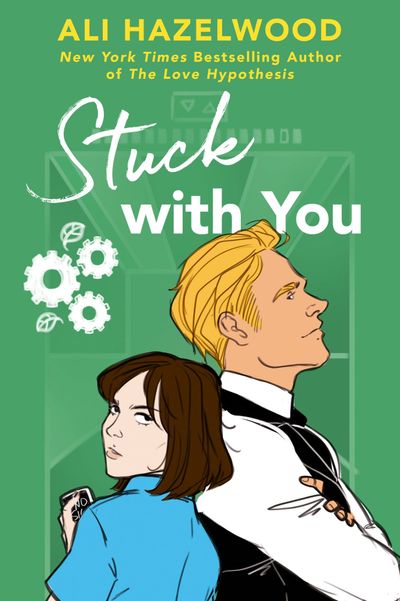
Stuck with You
3,378-word summary 15 min read 112 pages in the book
- First published
- 2022
- Publisher
- Berkley Books
- Pages
- 112
- ISBN
- 9780593437827
- Series
- The STEMinist Novellas (#2)
Reading options
What's inside (9 sections)
I came to Stuck with You because Under One Roof left me in a good mood and I wanted one more short stop in the same world. I had a free evening, a pile of laundry waiting, and no patience for a five hundred page plot. A friend told me the second STEMinist novella was basically one great day plus one very awkward elevator ride. That sounded perfect. The book came out in 2022 as The STEMinist Novellas number two. It started as an Audible-first story and then appeared as an ebook from Berkley Books. The ebook runs 112 pages. I read it in two sittings, mostly on my couch with my phone on silent, and I laughed more than I expected for a story set largely between floors.
Sadie Grantham is the kind of heroine Hazelwood writes best. She is a civil engineer at a tiny two person firm that cares a lot about sustainability. She loves bridges in the way some people love old movies, with real affection and strong opinions. She is good at her job and still has to fight to be taken seriously in rooms full of men from bigger firms. She has rituals that she half believes in and fully keeps. Purple underwear on pitch days. A croissant from the same coffee shop before a big presentation, even though she will admit the croissants are not very good. I have my own versions of this. A certain pen for hard meetings. The same breakfast when I am nervous. So I got her right away.
Erik Nowak is the man on the other side of the rivalry. He is a lawyer at a much larger firm, tall and blond and broad in a way that makes Sadie think of Vikings whether she wants to or not. Early on he reads as the golden guy from the other team. Polite. Confident. The sort of person who gets the last croissant without even knowing it matters. What I liked is that Hazelwood does not keep him as a cartoon rival. He is quiet in a careful way. He listens. He offers his sweater when Sadie is cold and his voice goes soft when he worries he pushed too far. His forearms get a lot of attention in Sadie narration, which made me smile because Hazelwood always picks one physical detail and sticks with it.
The friend group around them matters more than you would guess for 112 pages. Mara from Under One Roof is back, along with Hannah who leads the third novella. The three met in grad school and stayed close after their fields pulled them in different directions. They do video calls where they talk over each other and tease and check in. At one point they joke about weekly summoning circles meant to curse the guy Sadie hates, with Mara holding up fingers on a laptop screen to pause the story because she cannot believe what she is hearing. I loved those cuts away from the couple. They remind you Sadie has a life outside Erik, and they set up why she feels so embarrassed to admit she might have misjudged him.
The Last Croissant
The opening moves fast and it charmed me. Sadie has a pitch that could keep her small firm steady for months. She goes through her ritual. Same shop. Same croissant. Only the case is empty because a very large Scandinavian man just bought the last one.
She panics in a funny, honest way. Not movie panic. The tight chest kind where you tell yourself a pastry decides your future and you know that sounds silly and you still feel it.
Erik, to his credit, does not act like a jerk about it. He shares the table. He talks. He is easy company. They walk around the city together between her meetings. They trade stories about work and school and dumb habits. Sadie learns he knows his way around contracts and buildings from the legal side. Erik learns she cares about materials and rivers and how a bridge sits in a place without wrecking it. There is Star Wars talk tucked in here too, the kind Hazelwood drops in for readers who get it. Sadie quotes her rebel leader when she is mad later, the kiss a Wookiee line, and it fits because she grew up on those movies the way I did.
What makes this section work is how normal the chemistry feels. They are not trading grand speeches. They are splitting food, missing a train by seconds, laughing at a bad sign in a shop window. Erik says out loud that what he feels seems big for one day, which could have sounded false and instead sounded brave. Sadie feels it too and tries to talk herself out of it. I believed the pull because Hazelwood gives them time to be silly together before anything physical happens. A whole day of small yeses.
I should say the work contrast is clear from the start. Sadie firm is two people and a lot of care. Erik firm is large and polished and used to winning pitches. Sadie notices the difference without making a speech about it. She watches how easily Erik talks to clients. She worries her earnest talk about sustainable methods sounds small next to his smooth answers. That worry sits under the cute day like a stone in a shoe. You can tell it will cause trouble.
One Good Day Then A Lost Client
They end up at Erik place that first night. I am saying this plainly because the book does too. The attraction has been building all day and they act on it. Then Sadie head catches up with her body and she freezes a little, unsure and suddenly shy in a strange apartment.
This is one of my favorite passages for how Hazelwood handles it. Erik stops. He tells her she does not have to perform or prove anything. He offers options that have nothing to do with sex. Keep walking around the city till dawn if she wants. Play a board game. Help him give his brother cat flea medicine, which apparently takes two or three people. I laughed at that detail because it is so specific and so unsexy and so kind. It lowers the pressure without making a big deal of lowering it. Things heat up again after, and Hazelwood writes those pages in clear adult terms, but the pause is what stayed with me. It tells you who Erik is.
Morning feels tender. Then work hits.
Sadie learns her firm lost the client she pitched. The business went to Erik firm. To Sadie, the timeline looks awful. Great day, great night, then her rival company walks off with the job she needed. She decides Erik used pillow talk to pick her brain and pass ideas along. She ghosts him. She skips calls. She blocks his number. She starts taking the rickety elevator in their shared office building just to avoid running into him in the main one.
Was she fair? No. Did I get why she did it? Yes, and that split kept me reading.
Three weeks pass in this sour mood. Sadie replays that day and rewrites it darker each time. A question he asked about materials becomes fishing for secrets. A laugh becomes a trick. Her friends listen on calls and mostly let her vent, though Mara clearly thinks there might be more to the story. Sadie leans hard on ritual to feel in control again. Same routes. Same breakfasts. Same rules about which elevator to take. I recognized that impulse. When work feels shaky, I clean my desk like it will save my job. It never does, but it helps for an hour.
The criticism that belongs here is that the misunderstanding rests on thin proof. We never see a clear leak. We see a small firm losing to a big firm, which happens every day without spying. Sadie jumps because she is tired and scared about money and because Erik is an easy place to put the fear. Hazelwood knows this is thin and tries to sell it through Sadie embarrassment and pride. It mostly works because Sadie admits, even to herself, that part of her anger is hurt that the perfect day was not perfect. Still, readers who dislike miscommunication plots will feel a pinch here. I did. I wanted one more scene showing why Sadie could not simply ask him straight out what happened.
Stuck Between Floors
Then the power goes out and Sadie gets exactly what she tried to avoid. She steps into the small elevator, the doors close, and Erik is there. The car jerks, stops between floors, and they are trapped for hours in a hot metal box in New York with no quick rescue coming.
Forced proximity does not get more literal than this. No hallway to escape down. No office door to close. Just two people, one bench that is more ledge than seat, bad light, and a lot of unsaid stuff.
The first minutes are awful in a believable way. Sadie tries to make herself small in the corner. Erik tries to give her room that does not exist. They argue about whether she blocked him, which she did, and whether he stole her work, which he says he did not. His voice stays low. Hers goes fast and then stops. The air gets warm. Someone phone battery is low. Building staff shouts through the doors now and then with updates that are not really updates.
What slowly changes the mood is boredom mixed with care. You cannot stay in fight mode for three hours in a box. Erik offers his sweater when Sadie shivers under the vent. Sadie notices his hands shaking a little when the car creaks, which makes him seem less like a villain and more like a guy who also hates small stuck spaces. They trade water. They sit on the floor because standing feels silly after a while. At one point Sadie catches herself staring at his forearms and gets mad at herself, which made me laugh out loud because desire is rude like that. It shows up at the worst moment.
They finally talk about that first day in order, which I appreciated. Not in flashes. Start to finish. The croissant. The walk. The night. The morning after. Erik explains his side of the client story. His firm already had a track with that client. He did not pass along her words. He actually pushed back when someone in his office repeated a detail that sounded like hers, though he admits he should have told her right away instead of hoping it would blow over. Sadie tells him how small she felt watching a big team take food off her table. She says she felt dumb for believing a lovely day could be simple. That line hit me. I have felt that exact shame after a job loss, where you rewrite a happy memory as proof you were naive.
I am not sure every reader will buy the neatness of his explanation. I partly did and partly did not. It fits what we saw of Erik. It also wraps a work conflict a bit too cleanly for real life, where credit often stays muddy. But in a 112 page novella, you either get a clean talk or no talk at all. I prefer the talk.
Mara And Hannah On The Phone
One smart choice is how Hazelwood uses the friends during the elevator stretch. Sadie cannot call out for long, but before her battery dips she gets a burst of texts and a short video check that cuts in and out. Mara and Hannah fill in backstory without slowing the box scenes.
We learn more about how the three met and why they hold tight. Grad school friendships can be intense because you are all broke and tired and living in labs. These three kept the group chat alive after. They send photos of bad coffee. They remind each other to eat before pitches. They tease Sadie about her superstitions while also respecting them. When Sadie confesses she cursed Erik for weeks, Hannah jokes that their summoning circles clearly need better aim. Mara, who just lived through her own grumpy roommate story, tells Sadie to ask what actually happened before deciding he is cold hearted.
Those beats do two jobs. They give Sadie people to be honest with, since she performs calm for Erik longer than she should. They also link the series without forcing cameos. You do not need to have read Under One Roof to follow this, but if you did, seeing Mara steady and amused adds warmth. If you have not, Hannah energy will make you want Below Zero, which is about her Arctic station trouble. I liked that the friendship feels lived in rather than added for pages. They interrupt. They mishear. One of them is clearly doing dishes while talking. Small touches like that sell it.
If I have a quibble, it is that I wanted one longer call after the rescue instead of quick texts. Sadie makes a big turn in the elevator and then we mostly see the turn through Erik eyes. A five minute talk with Mara where Sadie says out loud what she got wrong would have made her growth land harder. As written, the friends frame the story more than they close it.
Heat With Checking In
Readers come to Hazelwood for a mix of sweet and spicy, and this novella leans spicier than the first one. The early night together is frank about bodies and sounds and what feels good. The elevator does not become a nonstop hookup box, which I found a relief. There is kissing against the rail and hands under clothes and a lot of breathing in close air. There is also a lot of stopping to check. Are you okay. Do you want water first. Do you want to wait till we are out. Consent here is not a speech. It is a habit.
That habit fits Erik. He asks before he touches in small ways all through the book. May he carry her bag when the stairs look slick. May he text after a meeting. May he hold her wrist to check her pulse when she looks pale in the heat. At first Sadie reads this as smoothness. By the elevator, she reads it as care. I thought that shift was well done. It shows how the same action looks different when trust changes.
Sadie superstition gets a nice turn too. Early on, ritual rules her. If she wears the right thing and eats the right thing, the pitch will go right. After the elevator, she still likes her habits but holds them lighter. She eats a croissant because she likes the morning pause, not because it controls clients. She wears purple because the color makes her happy. That may sound small. For someone who tried to ritual her way out of heartbreak, it feels like growth.
Work detail stays light but specific enough to please me. Sadie talks about low impact materials and retrofit plans for old buildings. She cares about how a structure meets a street. Erik talks about risk and timelines and why larger firms win bids even when their ideas are blander. Neither talk is long. Hazelwood does not pause the romance for a lecture. She lets job stress hum under scenes. A late email Sadie must answer from the elevator. A client name Erik cannot quite share. I wanted a touch more of Sadie actual calculations and site visits, the way longer Hazelwood novels give lab scenes room to breathe. Here engineering mostly colors the romance rather than driving it. For this length, that is a fair trade, though STEM readers hoping for bridge math may find it thin.
What Clicks And What Feels Rushed
What clicks first is pacing. The book moves in order without tricks. Croissant and walk. Night and morning. Lost client and ghosting. Elevator and talk. Repair and soft landing. Each step causes the next, so even though the whole thing is short, it never feels jumpy. I never flipped back to check what happened when. Scenes hand off cleanly. A joke about sweaters in chapter one pays off in the hot box. A line about wonky elevators pays off when the good elevator traps her. That kind of setup and payoff is simple craft and Hazelwood does it well.
What clicks second is voice. Sadie narration is funny and a little frantic in a way I trust. She overthinks, then catches herself overthinking, then makes a Star Wars joke to break the spiral. Erik dry replies land because he uses few words. When he says he missed her, it counts double after weeks of silence. Their banter in the box felt true to being tired and attracted and annoyed at once. They tease habits, not wounds, which keeps the pages kind even when the topic is sore.
What feels rushed is the fix. Once Erik explains the client timeline, Sadie believes him fast. Part of that is exhaustion and heat and relief at not being betrayed. Part of that is page count. A full novel could spend eighty pages rebuilding trust through actions at work. Here we get a sincere talk, a good apology for not speaking sooner, and a quick plan to make things right with credit where it is due. Then warmth takes over. I bought the feelings. I did not fully buy that the work wound closed that fast. Small firms do not bounce back from a lost anchor client because a nice guy says sorry in an elevator.
The stakes also stay low by design. No one must move cities. No family veto looms. No past trauma must be faced down beyond pride and fear. The trouble is mostly emotional and professional in a contained way. If you like low angst with high banter, this will suit you. If you want a third act that aches, you may find it slight. I read the last quarter in one go and felt cozy rather than wrung out.
Who should pick this up. If you like forced proximity, rivals to lovers with a soft center, and STEM heroines who hold their own, start here or after Under One Roof. If you want a one sitting romance between longer books, this fits well. If you are new to Hazelwood, this shows her flirty side fast, though The Love Hypothesis shows her range better. If you want thick plot or slow pining across many chapters, look to her full novels. This is a small hot box, not a big house. I left it fond of Sadie croissant rules and Erik sweater offers, glad to have spent an evening stuck with them.
A Short Elevator Note For Rereads
I keep thinking about why I would reread this when longer Hazelwood books exist. The answer is ease and heat in a small package. Some nights I want a full arc without staying up past midnight. Stuck with You gives flirting, a frank talk, and a warm landing in about the time of a long film. Sadie and Erik feel like neighbors I could check on. The elevator feels like a place I once got stuck, with its buzzing light and tired air and strangers turned chatty.
If I could ask for one more scene, I would ask for Sadie back on a job site a month later, marking a beam while thinking of home as backup rather than burden. I would ask for Erik telling a coworker plainly that credit must be shared, since he says little and means a lot. Those pages would not change the plot. They would widen the world just enough to make the center hold firmer. As it stands, the book holds. It is brief, kind, and sure of what it wants to be. For a series middle written first for audio and then for print, that sureness counts. It sent me straight to Hannah story, which is exactly what a middle should do.
FAQ
Is Stuck with You part of a series?
Yes, it is book two of The STEMinist Novellas by Ali Hazelwood. It follows Under One Roof and comes before Below Zero, and all three were later collected in Loathe to Love You.
Who are the main characters in Stuck with You?
Sadie Grantham, a civil engineer at a small sustainability firm, and Erik Nowak, a lawyer at a larger rival firm. They meet over a croissant, spend a day together, then get trapped in an elevator weeks later.
How long is Stuck with You?
The Berkley Books ebook runs 112 pages, so most readers finish it in one sitting. It was first released in 2022 as an audio novella and ebook.
Similar books
More from The STEMinist Novellas first, then related titles.

Under One Roof
Mara inherits half a house and must share it with Liam, a grumpy lawyer co-owner. House rules, banter, and slow heat follow in this short STEM romance opener.
3,596-word summary · 16 min read

Below Zero
Stranded at an Arctic station, NASA engineer Hannah is rescued by rival Ian, and a storm forces them to face old grudges and attraction.
2,555-word summary · 11 min read

Love, Theoretically
Adjunct physicist Elsie Hannaway fake-dates for rent money until Jack Smith, an MIT experimentalist, stands between her and her dream job.
2,308-word summary · 10 min read

Love on the Brain
Bee Konigswasser lands her dream NASA neuroengineering lead and must co-lead with grad-school nemesis Levi Ward, while her equipment fails and someone…
2,176-word summary · 10 min read

My Dark Romeo
A debutante ball kiss traps Dallas Townsend in a marriage to Romeo Costa, a man who wants her as leverage in a war against his father and her fiance.
2,530-word summary · 11 min read

The Ex Talk
Two rival public radio producers pretend to be exes for a dating show, then fall for each other while the lie grows.
2,389-word summary · 11 min read

The Takeover
An arrogant CEO and the sharp employee forced to staff his deal trade insults, trips and late nights across a long push-pull, until pride and jealousy force…
2,580-word summary · 11 min read

The Stopover
A one night stopover fling turns awkward when she learns the arrogant stranger is her new billionaire boss. Banter, trips, and jealous rows follow in this…
3,242-word summary · 14 min read

Beautiful Bastard
Chloe Mills battles her demanding boss Bennett Ryan in Chicago, until office rivalry turns into a secret relationship that tests both careers.
2,800-word summary · 12 min read

Reckless
Guarded Winter and charming Theo fake date through wedding season.
2,051-word summary · 9 min read

The Hating Game
Two executive assistants share an office, a rivalry, and a promotion neither will concede without a fight.
1,945-word summary · 9 min read

The Love Hypothesis
Love Hypothesis retold: Olive fakes dating Adam, lab hijinks, consent talks, Boston fall.
2,009-word summary · 9 min read

Six Scorched Roses
A dying scholar bargains with a reclusive vampire for blood, and six roses turn a transaction into a slow, dangerous romance.
2,663-word summary · 12 min read

The Lost Sisters
Taryn Duarte writes a letter to her twin, Jude, explaining how she fell for Locke and why she stayed silent while he used them both.
1,914-word summary · 9 min read

Blood Bonds
Oleander is chained in a Resistance camp, and her five Bonds have to find her before Silas Davies finishes what he started in this third Bonds that Tie book.
2,018-word summary · 9 min read

There Are No Saints
Two rival artists circle a struggling San Francisco painter. Cole Blackwell wants her, Alastor Shaw wants her dead. Book one of the Sinners duet.
2,190-word summary · 10 min read

The Predator
Coder Morana Vitalio and mob enforcer Tristan Caine chase stolen software while a case of missing girls from twenty years back catches up with them both.
2,296-word summary · 10 min read

The Casanova
Kate Landon's boss is also the pen pal she falls for online, hiding behind fake names, until family secrets and a trip to Paris get in the way.
2,274-word summary · 10 min read

On Chesil Beach
Two newlyweds spend one terrible night on Chesil Beach in 1962, and the rest of their lives is decided by it.
2,456-word summary · 11 min read

Indigo Ridge
A new police chief in a Montana town meets the founding family's eldest son in a bar, and one night later a body turns up under their cliff.
2,763-word summary · 12 min read

Reveal Me
A Shatter Me novella told by Kenji, set between Defy Me and Imagine Me, as the rebels learn Anderson has taken hostages and Juliette faces Emmaline.
2,098-word summary · 9 min read

Beautiful Stranger
After a betrayal, Sara Dillon moves to New York and starts a no-strings affair with a British stranger, only to find that control and intimacy are harder to…
2,015-word summary · 9 min read

The Road Trip
Two exes squeeze into one small car for the drive to a Scottish wedding, with four years of history and one photograph between them.
2,418-word summary · 11 min read

Savage Bonds
Oli's deadly gift is out in the open, her Bond runs the show, and the Resistance is closer than ever in the second Bonds that Tie novel.
2,431-word summary · 11 min read
Wretched
The Wicked Witch of the West becomes a heroin chemist, and the DEA agent sent to destroy her family falls for the very woman he was assigned to ruin.
2,117-word summary · 9 min read
Pestilence
Firefighter Sara Burns shoots the Horseman Pestilence and discovers he cannot die. Taken captive, she rides with him as his plague sweeps the world.
2,508-word summary · 11 min read

A Deal with the Elf King
A village herbalist is exposed as the hidden Human Queen, married to a cold elf king, and given three months to save his dying kingdom or be bound to it…
2,094-word summary · 9 min read

These Hollow Vows
Brie trades with the Unseelie to save her sister and steals for a prince.
2,384-word summary · 11 min read

The Winner's Curse
An aristocratic girl buys a slave who is secretly a prince plotting rebellion.
2,124-word summary · 9 min read
The Traitor Queen
Exiled Lara returns to free Aren and break her father hold.
2,328-word summary · 10 min read