
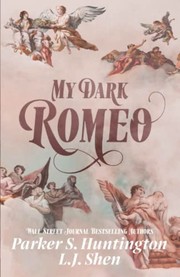
My Dark Romeo
2,530-word summary 11 min read 366 pages in the book
- First published
- 2023
- Publisher
- PSH Publishing
- Pages
- 366
- ISBN
- 9781950209071
- Series
- Dark Prince Road (#1)
Reading options
What's inside (9 sections)
Dallas Townsend goes to her debutante ball thinking about shortbread. That is the first joke the book makes, and it is a good one. She is twenty-one, engaged to a man her family approves of, and more interested in the dessert table than in the procession of eligible bachelors being paraded past her. Then she meets Romeo Costa in the rose garden, and the book stops being a comedy of manners.
Romeo is thirty-one, rich, and in town for reasons that have nothing to do with dancing. He is the son of a defense contractor and the rival of Dallas's fiancé, Madison Licht. He kisses her where a curtain can be pulled back, and someone pulls it back. The entire ball sees them. Her father sees them. Madison sees them.
What follows is not a scandal so much as a transaction. Romeo offers marriage as the only way to save Dallas from social ruin, and the offer is not really an offer. He takes Madison's ring off her finger and puts his own claim in its place. Her father agrees. The wedding is arranged. Dallas is flown to a mansion outside Washington, D.C., before she has time to pack properly.
That is the setup for My Dark Romeo, the first book in the Dark Prince Road series by Parker S. Huntington and L.J. Shen. It was published in 2023 and it is a dark romance, which means the coercion at the center is not a misunderstanding to be cleared up in chapter three. It is the relationship's foundation. The book knows this. The question it keeps asking is whether anything decent can be built on ground that was taken by force.
The kiss that became a contract
The ball is a machine for converting reputation into power, and Romeo understands the machine better than anyone in the room. He does not kiss Dallas because he is overcome. He kisses her because he has been told by his father that he cannot inherit the company until he marries, and because marrying Madison Licht's fiancée is a way to wound a business rival at the same time. Two problems, one bride.
Dallas is not naive about this, exactly. She is naive about how much say she gets. She has been raised to believe that marriage and motherhood will complete her life, and she has accepted a match with a man she barely knows because that is what the women in her family do. When Romeo appears, he looks like an escape from one arranged future and turns out to be a worse version of the same thing.
The wedding is held at the estate of Oliver von Bismarck, a friend of Romeo's who will spend most of the book being punched or threatened for saying the wrong thing. Dallas wears an enormous dress and walks through a ceremony that photographs beautifully. Romeo kisses her in front of the guests with enough force to make it look like love. That image matters, because the public performance of devotion is one of the book's recurring tricks. The more theatrical the marriage looks, the less consent there was.
Madison is the one who complicates the picture. At the reception he is gentle with her. He accepts her apology. He listens when she tells him Romeo engineered the whole thing, and he agrees to keep an eye on her husband. Dallas walks away from that conversation with a plan, which is the first sign that she is not going to be a passive captive. She is going to use every tool she has, including the men who want to use her.
A house that is all silence
Romeo's mansion in Potomac is the best setting in the book. It is enormous, immaculate, and completely without warmth. The staff move quietly. The rooms are kept at the right temperature. Nothing is out of place, and nothing is comfortable. Dallas arrives in this controlled environment and immediately starts making noise.
Her first allies are the people Romeo employs. Hettie, the chef, feeds her and talks to her. Vernon, the groundskeeper, gives her a white rose that survives cold and neglect, which is about as subtle as the book gets with symbolism. Dallas names the rose. She wanders into rooms she is not supposed to enter. She orders groceries she likes. She turns a showplace into something closer to a home, one small act of domestic vandalism at a time.
The mansion also reveals how much of Romeo's cruelty is routine rather than personal. He is not a man who loses his temper and then apologizes. He is a man who has organized his life so that nothing can surprise him. The house is an extension of that organization. Dallas is the first thing in years that refuses to stay in its drawer.
Their early fights are about small things because the large thing is unspeakable. He tells her what to wear. She wears something else. He tells her where to stand. She moves. The book gets good mileage out of this, and Dallas's humor keeps it from becoming oppressive. She is funny in the way that clever people are funny when they are frightened. She makes jokes at Romeo's expense and watches to see whether he will punish her. Sometimes he does. Sometimes he almost laughs.
The problem is that the book keeps mistaking possessiveness for chemistry. When Romeo fires a co-pilot for talking to Dallas on the flight to Potomac, the scene is meant to show that he cares more than he admits. It mostly shows that he cannot tolerate a world he does not control. The narrative knows this on some level, but it also wants the reader to find the jealousy attractive. Those two desires pull against each other for most of the novel.
Paris, and the price of a truce
Romeo takes Dallas to Paris for a honeymoon he insists is necessary for appearances. Then he leaves her alone with his credit card. She spends nearly seven hundred thousand dollars on clothes, food, and gifts. It is a tantrum and a rebellion and a pleasure all at once, and it is one of the few sequences where Dallas gets to act instead of react.
Romeo comes back furious. He has heard that Madison is in the city and assumes the worst. They argue. The argument turns physical in a way that the book presents as passion and that a reader might reasonably find frightening. Then Dallas explains that she did not know Madison was there, and Romeo offers a truce. Dinner. Civility. A few hours of pretending they are ordinary newlyweds.
The truce is important because it is practical rather than romantic. Neither of them suddenly likes the other. They simply recognize that they are stuck in the same arrangement and that open war is exhausting. The dinner scenes in Paris are the first time the two of them sound like people who could live together without hurting each other.
Then Dallas asks about children. She wants them. Romeo does not, and his reason is not the usual fear of responsibility. He has decided that the Costa family line should end with him, as an act of revenge against his father. Dallas's central hope and Romeo's central grievance are pointed in opposite directions, and neither of them can compromise without giving up a piece of their identity.
Madison turns up outside the hotel suite. Romeo punches him and sends him away. Dallas is left in the middle of a feud between two men who both treat her as a claim. The book wants the reader to see that Romeo's violence is protective. It is, partly. It is also a performance for Madison, and Dallas can tell the difference even when the novel cannot.
Victoria, and the argument about children
The best material in My Dark Romeo has nothing to do with the romance. It has to do with grief.
Dallas has been funneling money into children's hospitals for years. She wants to start a lobbying group for infant product safety. Romeo refuses, because political activity could complicate his position at Costa Industries. Dallas calls him a coward. He is surprised, because he has never seen her fight for anything except her own comfort.
Then she tells him about Victoria. When Dallas was six, she found her four-month-old sister dead in her crib. Sudden infant death syndrome. She has spent her adult life trying to make sure that other families do not go through the same thing, and she has kept the reason private because the story is not hers to use for sympathy.
This changes the shape of the character. Up to this point Dallas has been the spoiled debutante who spends too much money and talks too much. Victoria explains why she wants a baby so badly, and why she is so determined to be a good mother. It is not a fantasy of domestic completion. It is an answer to a loss she could not prevent when she was a child.
Romeo's refusal is ugly, and the book does not let him off easily. He can buy restaurants and threaten rivals, but he will not spend his influence on a cause that matters to his wife. Dallas tells him she now understands what he is afraid of, and the accusation lands because it is true. He is not afraid of politics. He is afraid of doing something that cannot be turned into an advantage.
The arena in Milan
The novel's other good idea is Romeo's hunger.
He is obsessive about food. He chews gum constantly. He cannot stand crowds or noise. He keeps his house silent and his schedule fixed. The book treats these as quirks for two hundred pages and then explains them. As a child, Romeo was sent to Milan and left with an aunt who neglected him. Her boyfriend forced him to fight other children in an underground arena for food. He learned that eating was something you won, and that the crowd was a thing that watched you win it.
The revelation happens on a date in Dallas's hometown. She takes him to the public library and to her favorite lake. He brings white roses. For a few hours he is almost light. Then the hunger hits and he loses control, and Dallas sees the mechanism underneath the polished man.
Her response is the best thing in the book. She does not pity him. She does not try to fix him. She feeds him, and she promises that their future children will never go hungry. It is a small, concrete offer of care, and it means more than any declaration of love. Romeo lets her see the source of his need for control, and the novel becomes briefly honest about what it has been doing.
Of course, the honesty does not last. The book is still a dark romance, and dark romance has a formula. After the vulnerability comes another argument, another possession scene, another round of the same jealousy. The middle of the novel repeats itself. Dallas pushes, Romeo withdraws, someone gets punched, they fall into bed. The pattern is not unpleasant, but it is a pattern.
Poison, coma, and the library
The plot snaps back into focus when Madison and his father are arrested for corporate fraud. Romeo is at a shareholders' meeting, about to be named the next CEO of Costa Industries, when he learns that Madison has been released on bail and is heading toward the estate. He rushes home. His chauffeur, Jared, has poisoned his water.
The poisoning is a good climax because it removes the one thing Romeo has relied on for the entire book: control. He cannot fight his way out of his own body. He reaches Dallas and tells her he loves her before he collapses. She holds him while the paramedics arrive. The confession comes too late for an answer, which is the kind of cruel timing the book has earned.
Romeo survives. He spends four days in a medically induced coma. While he is unconscious, his lawyer tells Dallas that Romeo destroyed their prenup and replaced it with a will leaving her the entire estate. It is the most romantic gesture in the novel, and it is also the most legalistic. He gives her the thing he spent the whole book using to keep her.
When he wakes, he sends his father and his lawyer out of the room. Jared and Madison are arrested. Romeo walks away from the company and from the revenge project that gave his life structure. He and Dallas travel, eat their way across countries, and come home to a mansion that he has rebuilt as a library. Books fill the rooms. The place that was a prison is now shaped around the thing she loves.
The epilogue takes place a year later. Dallas locks herself in the reading room with ice cream and the final Henry Plotkin novel, crying hard enough that Romeo thinks something is wrong. She is pregnant. He is stunned, then delighted. The family he once refused has become the future he wants.
What the book is and is not
The prose is fast and funny. Huntington and Shen write short chapters, sharp banter, and sex scenes that are explicit without being especially inventive. Dallas has a real voice. She is vain, generous, hungry, and observant, and her narration carries the book through its weaker stretches.
The problems are structural. Romeo's conversion from a man who engineered a public scandal to a husband who builds a library is too quick. The book explains his childhood, and explanation is not the same as change. He apologizes, he gives Dallas his estate, he abandons his revenge, and the novel treats that as enough. A reader who remembers the rose garden may want more.
The side characters are thin. Madison is a plot device with a nice smile. Oliver exists to be punched. Romeo's father is a cartoon of corporate cruelty. Hettie and Vernon are warm, but they are there to show that Dallas is good with staff. The book is not interested in anyone who is not in the main bedroom.
And the central romance is coercive in a way that the novel sometimes acknowledges and sometimes sells as passion. The wedding is forced. The pregnancy is contested. Romeo's jealousy is violent. The book's defense is that Dallas chooses him in the end, and that she changes him. That defense is worth exactly as much as the reader thinks consent can be reconstructed after it has been taken.
Still, there is something here. The grief over Victoria is handled with real restraint. The Milan revelation is genuinely disturbing. The library at the end is a better gesture than a wedding ring, because it is built around Dallas's actual dream rather than an idea of what a wife should want. My Dark Romeo is not a careful book, and it is not a kind one. But it knows what it is, and it delivers that thing with energy.
FAQ
Is My Dark Romeo a standalone?
Yes. It is the first book in the Dark Prince Road series, but Dallas and Romeo's story concludes here.
How old are the main characters?
Dallas is 21 and Romeo is 31 when the novel begins.
Is My Dark Romeo a retelling of Romeo and Juliet?
Only loosely. It borrows the names and the feuding-families frame, but it is a contemporary dark romance with a different ending.
Similar books
More from Dark Prince Road first, then related titles.
There Are No Saints
Two rival artists circle a struggling San Francisco painter. Cole Blackwell wants her, Alastor Shaw wants her dead. Book one of the Sinners duet.
2,190-word summary · 10 min read

The Predator
Coder Morana Vitalio and mob enforcer Tristan Caine chase stolen software while a case of missing girls from twenty years back catches up with them both.
2,296-word summary · 10 min read
The Casanova
Kate Landon's boss is also the pen pal she falls for online, hiding behind fake names, until family secrets and a trip to Paris get in the way.
2,274-word summary · 10 min read
The Kiss Thief
Promised to one man, taken by another, Francesca must choose in Chicago.
2,545-word summary · 11 min read
King of Sloth
Party heir Xavier chases publicist Sloane who refuses to fall in forced job.
2,017-word summary · 9 min read

Below Zero
Stranded at an Arctic station, NASA engineer Hannah is rescued by rival Ian, and a storm forces them to face old grudges and attraction.
2,555-word summary · 11 min read
King of Wrath
Billionaire Dante Russo enters an arranged engagement with Vivian Lau and control slips into feeling.
2,975-word summary · 13 min read
The Ex Talk
Two rival public radio producers pretend to be exes for a dating show, then fall for each other while the lie grows.
2,389-word summary · 11 min read
Beneath This Man
Ava returns to Jesse after five days apart and finds his drinking, jealousy, and a hidden deception that changes what she can forgive.
2,341-word summary · 10 min read

Indigo Ridge
A new police chief in a Montana town meets the founding family's eldest son in a bar, and one night later a body turns up under their cliff.
2,763-word summary · 12 min read
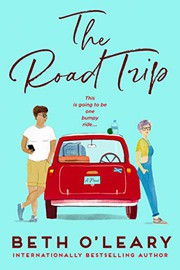
The Road Trip
Two exes squeeze into one small car for the drive to a Scottish wedding, with four years of history and one photograph between them.
2,418-word summary · 11 min read
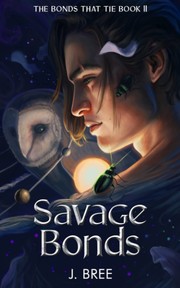
Savage Bonds
Oli's deadly gift is out in the open, her Bond runs the show, and the Resistance is closer than ever in the second Bonds that Tie novel.
2,431-word summary · 11 min read
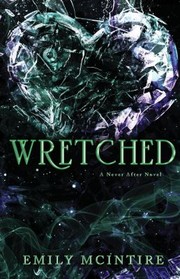
Wretched
The Wicked Witch of the West becomes a heroin chemist, and the DEA agent sent to destroy her family falls for the very woman he was assigned to ruin.
2,117-word summary · 9 min read
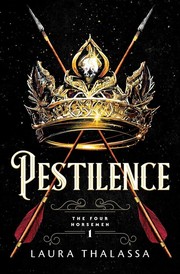
Pestilence
Firefighter Sara Burns shoots the Horseman Pestilence and discovers he cannot die. Taken captive, she rides with him as his plague sweeps the world.
2,508-word summary · 11 min read
The Marriage Bargain
A bookstore owner marries a billionaire friend's brother for a year to save home and company.
2,092-word summary · 9 min read
The Finish Line
Tobias King seeks forgiveness from Cecelia as the Ravenhood past closes in.
2,868-word summary · 13 min read

Broken Prince
Reed loses Ella and ruins his name while rivals circle him.
2,356-word summary · 10 min read
Bound by Honor
An arranged mafia marriage between a Chicago girl and a New York heir turns to love.
2,586-word summary · 11 min read
Love Redesigned
Rival designers Dahlia and Julian restore a Lake Wisteria Victorian while facing grief, family pressure, and old sparks.
2,248-word summary · 10 min read

The Roommate
Uptight Clara shares a flat with porn star Josh and teams up to build ethical adult films for women.
2,362-word summary · 10 min read
My Killer Vacation
A teacher and a bounty hunter share a Cape Cod rental with a corpse and a growing attraction.
2,625-word summary · 12 min read
God of Malice
Rina Kent's God of Malice fully retold: Glyndon King, Killian Carson's fixation, secret societies, and the Devlin twist that resets everything.
2,849-word summary · 13 min read
Stuck with You
Sadie gets stuck in a New York elevator with Erik, the rival she blames for a lost client. A short, spicy STEM novella about rivalry and repair.
3,378-word summary · 15 min read
Kulti
Pro soccer player Sal Casillas gets childhood idol Reiner Kulti as assistant coach, and a tense season turns into slow friendship.
2,544-word summary · 11 min read
Scarred
A spy bride sent to ruin a scarred king learns his scars first.
2,074-word summary · 9 min read
Wild Love
A full retelling of Elsie Silver's Wild Love: a heroine's return to Rose Hill, a grumpy billionaire neighbor, forced proximity, and a slow burn first in a new…
3,067-word summary · 14 min read
The Stopover
A one night stopover fling turns awkward when she learns the arrogant stranger is her new billionaire boss. Banter, trips, and jealous rows follow in this…
3,242-word summary · 14 min read
The Maddest Obsession
Sharp-tongued Gianna spars with secretive Christian Allister in this 2019 Made #2 mafia romance, where teasing hides danger and lies.
3,903-word summary · 17 min read
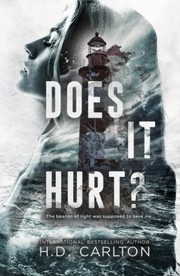
Does It Hurt?
Running Sawyer hitches a sailboat with guarded Enzo and wrecks off the Australian coast.
2,251-word summary · 10 min read
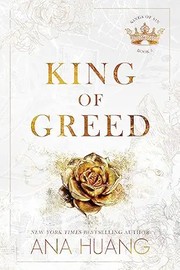
King of Greed
Billionaire Dominic fights to win back Alessandra after work obsession breaks their ten year marriage.
2,548-word summary · 11 min read