
Reading options
What's inside (9 sections)
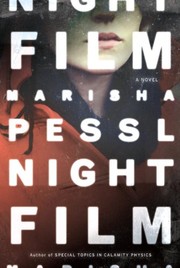
I finished Night Film at four in the morning with the lamp on, which is probably the most honest review I can give it. Marisha Pessl's second novel, published by Random House in 2013, is a 602 page haunted-house story in which the house is a filmography. Stanislas Cordova, the director at its center, has not been seen in public for decades. His movies circulate in secret screenings in condemned buildings marked with a stylized eye. Scott McGrath, a disgraced journalist, spends the book walking toward that dark room, and Pessl makes sure the reader walks with him.
The opening is a small masterpiece of unease. Scott is jogging around the Central Park Reservoir after two in the morning when he sees a woman in a red coat on the North Gatehouse landing. She flickers in and out of the lamplight. On the subway he sees her coming down the stairs just as the doors close. Days later he learns that Ashley Cordova, the director's twenty-four-year-old daughter, has been found dead at the bottom of an abandoned elevator shaft in a Chinatown warehouse. The death is ruled a suicide. The red coat was hers. She had been following him.
That is the engine: a woman who seems to haunt a man before she dies, and a man who needs her death to mean something about her father. Five years earlier Scott accused Cordova on national television of harming children, based on an anonymous caller who called himself John and claimed the director visited elementary schools at night to collect children's belongings. The claim could not be verified. Cordova's lawyers sued for slander. Scott settled, lost $250,000, lost his marriage to Cynthia, lost most of his access to his daughter Sam, and became the kind of journalist who teaches a class and drinks before noon. He wants the story because the story would retroactively make him right.
The reporter who lost everything
Pessl spends real time on Scott's ruin, and that is one of the book's better decisions. He is not a detective. He is a man with a box of old clippings, a contact in the NYPD, and a grudge he has mistaken for a principle. Detective Sharon Falcone slips him Ashley's case file on a late-night bus. Ashley had been at Briarwood Hall, a private psychiatric hospital upstate. On September 30 she walked out with an unidentified man. Ten days later she was dead. Her family refused an autopsy. She had checked into the Waldorf Towers and left without her coat.
Everything Scott learns is documentary. A housekeeper's statement. A guest book signature. A security log. The novel is full of evidence, and almost none of it settles anything. Scott is a reporter in a story where the record has been curated by someone richer and stranger than he is.
His first ally is Wolfgang Beckman, a Columbia film professor and devoted Cordovite who knows the filmography the way some people know scripture. Beckman points him toward the Blackboards, a hidden fan site where devotees trade sightings and theories. Pessl renders the site as black pages with white text, one of the book's many inserted documents. Scott secretly photographs the URL off Beckman's screen. It is a petty act of reporting, and it fits a man locked out of every official door.
A red coat, a monkey, and two strangers
The trio forms in the least likely way. Nora Halliday is nineteen, a coat-check girl at the Four Seasons, and the last person to see Ashley alive. She lied to the police about the coat. When she meets Scott in a diner she brings it with her, and the object turns his midnight ghost into a fact. Nora wants to be an actress, talks too much, and inserts herself into the investigation because she will not be another witness who gets used and discarded. Hopper Cole is twenty-five, a drifter and small-time drug dealer who turns up at the warehouse drunk, watching the elevator shaft. Ashley had mailed him a mud-stained stuffed monkey from that address. He knew her at a wilderness camp for troubled teenagers in Utah called Six Silver Lakes, and he loved her.
Hopper withholds and sulks. Nora pushes and jokes. Together they make a strange family, a disgraced older man and two young people discarded by the same world that made Cordova a legend.
The camp story matters. Ashley arrived late, kept to herself, and refused the confessional rituals the counselors imposed. When a boy named Orlando was caught smuggling ecstasy, Ashley took the blame and accepted a brutal isolation sentence. A rattlesnake later appeared in a counselor's sleeping bag. The camp began to treat her as a protector. She was brave and reckless, and she was willing to absorb punishment for other people. She also let the legend grow, because the legend was useful.
The stuffed monkey belonged to Orlando, a boy who drowned at the camp. Hopper's cruelty played a part in that drowning. Hopper is not just a grieving boyfriend. He is a man carrying guilt for a child's death, and Ashley knew it. Their relationship, revealed through a split tattoo of a kirin on his ankle, was conducted mostly by letters, with a plan to run away to Brazil that her family crushed. She sent him an email ending things. He believed it until the monkey arrived. Pessl never explains what the monkey means.
The tour of Ashley's last ten days
The middle of the novel is a tour of Ashley's last ten days. At Briarwood, a nurse runs after their car and shouts the name Morgan Devold. Devold is a former security guard who watched Ashley play piano on the cameras every night, fell in love with the image, erased the tapes, and drove her off the grounds. He produces the note she hid inside the piano and the plain clothes he bought her. He is another man who confused being needed with being chosen.
At the Waldorf, a housekeeper remembers finding Ashley unconscious in a hallway and seeing a second pupil-like mark in her left eye. She calls it evil's footprint. At a piano showroom, the manager remembers two visits, the first brilliant and the second despairing. Ashley signed the guest book as Kay Glass, a character from one of her father's films, and gave an address on Henry Street. The trio finds a rented room there with her hospital pajamas still on the bed, rings of black ash on the floor, and a bundle of knotted roots above the door. A witchcraft shop called Enchantments interprets the ash as an uncrossing ritual and the roots as protection. The owner also finds a killing curse on the soles of Scott and Nora's shoes.
The ash could be grief ritual or folk magic. The second pupil could be a trick of light. Scott wants a culprit, Nora wants a story, and Hopper wants Ashley back. None of them is a reliable instrument, and the book knows it.
Cordova's son Theo appears here, recognizable by a left hand missing three fingers. He follows them through lower Manhattan. He is a threat and a warning, a member of the family sent to see how close they are getting. The detail of the hand is grotesque and specific, the kind of thing that makes the Cordova world feel physically dangerous rather than merely atmospheric.
The Spider and the house at the Peak
A cryptic post on the Blackboards leads them to Oubliette, a private club in a Montauk mansion where wealthy guests expect to stay unseen and the staff are trained not to look. Ashley broke in and attacked a member known as the Spider. Hopper and Scott get inside; Nora waits in a diner. Hopper steals the membership records on the way out. Cross-referencing those records with the Waldorf guest list gives them Hugo Villarde, an antiques dealer in Spanish Harlem, a large man in priest's clothing with burn scars on his face.
Villarde does not deny it. He tells them Ashley tracked him down and confronted him about the past. He also tells them about the devil's bridge at The Peak, Cordova's estate in the Adirondacks, and about leading five-year-old Ashley across it out of jealousy. He describes a ritual involving a child the way a man might describe a difficult business meeting. During the visit, a lamp falls and injures Scott's daughter Sam, who is with him. Cynthia uses the injury to restrict his visitation.
Marlowe Hughes, Cordova's reclusive second ex-wife, fills in the history. The Peak was built on a massacre site. Cordova became involved with occult rituals practiced by local townspeople. His first wife drowned herself after learning the truth. At five, Ashley was led across the devil's bridge by Villarde. After that her piano playing became unearthly, her body ran cold, and the mark appeared in her eye. Cordova spent years trying to save her, and the schools he visited at night were part of a soul exchange: he collected children's belongings to trade for his daughter's life. The anonymous caller John was telling the truth, or something close to it.
This is where the novel's two possible realities start to separate. In one, a grieving genius did monstrous things to keep his daughter alive. In the other, a sick child became the center of a family myth, and the myth consumed everyone around her. Pessl keeps both readings alive by giving each one its own witnesses and its own physical evidence. The protection figurines Ashley gave to three children in her last days, including Sam, work as either white magic or a dying woman's kindness. The book does not choose.
Three days inside Cordova's sets
The Peak sequence is the best thing in Night Film. Scott, Nora, and Hopper approach through a severed fence beneath Lows Lake. Dogs scatter them. Scott hides in a foul swimming pool, then wanders into soundstages that hold intact sets from Cordova's films: the rooms from Thumbscrew, the greenhouse from Wait for Me Here. The estate is a museum of nightmares, maintained and dusted, as if the movies were still being shot.
In the greenhouse he contacts toxic hallucinogenic plants. What follows is a delirium of tunnels, a devil's bridge, robed figures, a prison of nested hexagonal boxes. He escapes by breaking through the boxes, and he is found on a roadside three days later, carrying a stained child's shirt, a compass, and strange bones. Nora has found incinerators. Hopper has explored the mansion. None of them can agree on what was real.
Then the evidence collapses. The lab says the stain on the shirt is corn syrup, not blood. The bones belong to a bear cub. Devold's house burns down. Witnesses vanish, phones are disconnected, former contacts stop answering. Scott's three days at The Peak become the novel's central unverifiable story, and Pessl gives the skeptical reader every reason to dismiss it. The plants were hallucinogenic. He was dehydrated and hurt, and he was already obsessed. A man in that state can build a devil's bridge out of a garden trellis.
The leukemia story
Inez Gallo, Cordova's devoted assistant, gives Scott the explanation that sounds most like the truth. Ashley had acute lymphoblastic leukemia. She was diagnosed at five and battled it for years. The family kept it secret at her insistence. Her musical genius, her cold body, her collapses, and her erratic behavior were symptoms and side effects, not a curse. Cordova became catatonic after learning that the cancer had returned and that his daughter was terminal. He now lives in a nursing home under an alias. Scott visits, sits beside a large silver-haired man in a wheelchair, and gets no confirmation.
That should be the ending. It is the humane reading, and it accounts for almost everything. But Beckman warned Scott about a Cordova trademark: a substitute placed at the intersection of life and death to grant freedom to the real thing. A decoy. Scott follows a trail of embedded clues to Chile, to a remote island, to a small house where a Murad cigarette is burning, Cordova's black-lensed glasses sit on a table, and a bottle of Scott's own scotch is open. A hulking figure appears in the doorway. Scott steps toward him, ready to listen. The book ends there.
What the file cannot settle
The ending is either the best kind of ambiguity or a writer refusing to pay off her own setup. I think it earns most of its mystery. The Chile scene is short and physical, and it refuses to explain itself. It does not confirm the occult. It confirms that Cordova, or someone acting for him, has been watching Scott the whole time. The horror is that a rich man can build a world where every witness and every document is negotiable, and a reporter with a grudge will keep walking toward him anyway.
The multimedia inserts are a real part of the reading experience. Pessl interrupts the prose with police reports, newspaper clippings, handwritten notes, photographs, and screenshots of websites. The Blackboards pages are printed as black rectangles with white text. The first hardcover edition also came with a Night Film Decoder app that let readers scan certain images to unlock extra text, audio, and video. The app is gone now, so some inserts feel dated. Some reviewers found the documents immersive. Others, including Janet Maslin in the New York Times, called the interactive element a distracting gimmick. Both reactions are fair. The images do atmosphere work, but they also interrupt the novel when the prose has built up a head of steam.
The deeper criticism is that the people are thinner than the machinery. Scott is a familiar type, the ruined investigative journalist with a drinking problem and a daughter he has let down. Nora is the plucky young woman who insists on being included. Hopper is the brooding drifter with a secret. They are well deployed and lightly drawn. Meg Wolitzer, reviewing the novel for NPR, noted that the environments are beautifully rendered while the characters fall flat. The book's best character is Cordova's absence. The man never appears in the present, and the novel is most alive when it is describing what he left behind.
The length is also a real cost. At 602 pages, the middle interview circuit starts to feel like a video game with one locked door after another. Go to the hospital, get a name. Go to the name, get an address. Go to the address, get a ritual. Pessl writes those scenes well, but the pattern becomes visible, and a reader who wants the plot to move will feel the repetition. Scott's voice is hard-boiled pastiche, and pastiche is a style that announces itself.
Still, I would hand this book to the right person without hesitation. It is for readers who like their mysteries atmospheric and their endings unresolved. It is not for readers who need the supernatural to resolve into either a monster or a rational explanation. Pessl is not going to give you that. She is going to give you a red coat on a subway platform, a piano playing through a hospital wall, and a man in a doorway on a Chilean island, and she is going to trust you to decide what you saw.
The last thing I will say is that the book is sadder than its reputation suggests. Ashley is dead before the story begins, and every witness Scott interviews is a person who loved her badly or failed her completely. Her father built an empire of fear around her illness. Theo, the son with three missing fingers, is a ghost. Her lover is a guilty man who cannot say what he means. The horror is not the devil's bridge. The horror is the number of people who turned a sick girl into a symbol and then could not see her anymore. That is the part that stayed with me after I turned off the lamp.
FAQ
Is Stanislas Cordova a real director?
No. Cordova is a fictional filmmaker created by Marisha Pessl, though his reclusive reputation echoes real directors.
Does Night Film have multimedia elements?
Yes. The novel includes photographs, police reports, handwritten notes, and screenshots of websites, and the first hardcover edition came with a Night Film Decoder app.
Does Night Film have a conclusive ending?
No. The final scene in Chile leaves open whether Ashley's death came from illness, her father, or something supernatural, and the novel does not confirm which explanation is true.
Similar books
Lock Every Door
Broke Jules apartment sits at the Bartholomew where another sitter vanished.
2,224-word summary · 10 min read
What Moves the Dead
Alex Easton arrives at the Usher house to find Madeline dying, the tarn full of fungus, and the local hares refusing to stay dead.
2,586-word summary · 11 min read
When No One Is Watching
Sydney Green watches her Brooklyn block's Black residents vanish one by one in Cole's Edgar-winning thriller about gentrification as a crime scene.
2,165-word summary · 10 min read
The Poet
A crime reporter investigates his twin brother's apparent suicide and uncovers a killer who leaves Edgar Allan Poe quotes behind, in the novel that took…
2,020-word summary · 9 min read
The Last House on Needless Street
A lonely man, a cat and a mysterious neighbor pull you into a house full of buried trauma.
2,627-word summary · 12 min read
The Chalk Man
Childhood chalk codes lead to a murder that follows friends thirty years later.
2,350-word summary · 10 min read
Relic
A museum beast kills during an exhibition while an agent investigates.
2,066-word summary · 9 min read
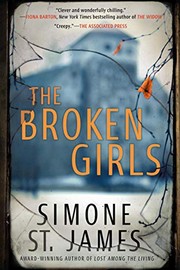
The Broken Girls
A journalist revisits her sister's murder while a restored boarding school gives up a girl missing since 1950.
2,579-word summary · 11 min read
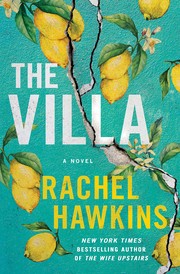
The Villa
Two friends house-sit a haunted Italian villa tied to a 1974 rock murder while their own bond frays.
2,243-word summary · 10 min read
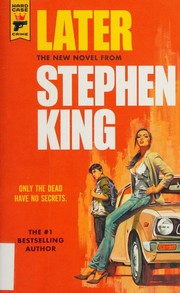
Later
Boy Jamie Conklin sees dead people who must answer truthfully, pulling him into NYPD cases and a drug crew's greed.
2,009-word summary · 9 min read
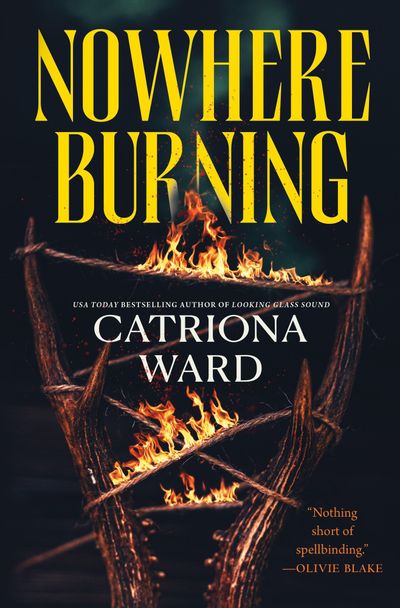
Nowhere Burning
Siblings flee to a burnt ranch commune in the Rockies where old fires still smolder.
2,232-word summary · 10 min read
The Sun Down Motel
In 1982 Viv vanishes from a Fell motel desk; in 2017 niece Carly takes the same shift to find her.
2,150-word summary · 10 min read
The Death of Mrs. Westaway
Broke tarot reader Hal claims a Cornish inheritance and finds attic locks and lies.
3,313-word summary · 15 min read
Final Girls
A survivor of a cabin massacre tries to live normally until another Final Girl dies and a second one shows up at her door.
2,176-word summary · 10 min read
We Have Always Lived in the Castle
Merricat guards sister Constance after arsenic deaths, until cousin Charles invades and fire frees them.
3,011-word summary · 13 min read
Luckiest Girl Alive
Ani FaNelli reinvents herself as a glossy New Yorker, but a documentary about her Bradley past threatens to expose everything.
2,222-word summary · 10 min read
Home Before Dark
Maggie renovates haunted Baneberry Hall her father made famous.
2,017-word summary · 9 min read
The Turn of the Key
A nanny writes from prison about a smart Highland house, four girls, and the night one child died.
3,207-word summary · 14 min read
The Historian
A daughter traces her father's search for Dracula through letters and archives across Europe.
3,237-word summary · 14 min read
The Outsider
Coach Terry Maitland's DNA and witnesses point to an impossible murder, until Ralph Anderson and Holly Gibney trace it to El Cuco.
2,586-word summary · 11 min read
The Only One Left
Caregiver Kit tends mute Lenora Hope accused of 1929 family murders.
2,592-word summary · 12 min read
Mexican Gothic
In 1950 Mexico, glamorous Noemi Taboada leaves Mexico City for High Place after a desperate letter, to rescue cousin Catalina from the chilling Doyles and…
2,523-word summary · 11 min read
Hidden Pictures
Nanny Mallory sees Teddy drawings predict a murder in New Jersey.
2,332-word summary · 10 min read
The Seven Deaths of Evelyn Hardcastle
Aiden relives a murder day in eight hosts to solve Evelyn Hardcastle's killing.
2,459-word summary · 11 min read
The Strange Case of Dr. Jekyll and Mr. Hyde
A London lawyer traces a violent stranger to his respectable friend in Stevenson's 1886 tale of two selves.
2,286-word summary · 10 min read
The Woman in the Window
Agoraphobic Anna Fox thinks she sees a murder across the street in Harlem.
2,026-word summary · 9 min read
Dark Places
Libby Day, sole survivor of family murders, is paid to rethink her testimony.
1,910-word summary · 8 min read
Miss Peregrine's Home for Peculiar Children
Jacob Portman finds his grandfather dead in the woods, follows a cryptic letter to a ruined orphanage in Wales, and meets children living inside a repeating…
2,331-word summary · 10 min read

What She Knew
Rachel lets her eight-year-old son run ahead in a Bristol park, and the nine-day search turns her into a suspect in the public eye.
2,952-word summary · 13 min read
The Tale of the Body Thief
Lestat trades bodies with a psychic thief for one day of mortality and ends up trapped, sick, and hunting his own vampire body.
2,069-word summary · 9 min read