
Reading options
What's inside (7 sections)
I picked this one up because it is short enough to read in an evening and famous enough that I thought I already knew it. I did not. I knew the twist in the way everyone does, that Jekyll and Hyde are the same man, but I did not know how the book tells it, which is mostly through other people watching from the outside and getting worried. It was published in 1886 by Longmans, Green and Co., first edition 141 pages, and the copy I am using for facts here is the Bantam Classics 112 page edition with ISBN 9780553212778. That distance between reputation and actual text kept me going.
The book opens with two men on a Sunday walk through London. Mr. Utterson is a lawyer, dry, loyal, the kind of friend who stays even when he disapproves. His cousin Mr. Enfield is livelier. They pass a plain door in a side street, a door with no windows and a lot of grime, attached to a building that looks out of place. Enfield says the door reminds him of a story.
His story is about a small girl running and bumping into a man at three in the morning. The man tramples her and walks on. A crowd gathers. The man is calm in a way that makes people angrier. Enfield describes him as deformed somehow, though no one can say how. To avoid a scandal, the man pays the family with a cheque signed by a respectable doctor. The address he leads them to is that same door. Utterson asks the name. Enfield says Hyde.
That scene stuck with me because Stevenson does not show Hyde doing something grandly evil yet. He shows rudeness and coldness. People react to Hyde with instant dislike that they cannot explain. I found that more unsettling than a murder, at least at first. It also sets up Utterson as a kind of detective, not a police detective, but a friend who keeps files and follows paper.
Utterson goes home and pulls out the will of his friend Dr. Henry Jekyll. Jekyll has left everything to a Mr. Edward Hyde in case of disappearance. Utterson hates the will. He assumes Hyde is blackmailing Jekyll. He asks another friend, Dr. Lanyon, about Jekyll. Lanyon says Jekyll has taken up strange ideas and they have grown apart. That word strange does a lot of work in this book.
Utterson starts watching the door. He meets Hyde. Stevenson gives Hyde a short description that I kept rereading. He is small, pale, with an impression of deformity without a clear defect. He speaks politely enough. He has a key to the door. He goes in. Utterson goes to Jekyll and warns him. Jekyll asks to be left alone and says he can get rid of Hyde any time. Utterson is not convinced, but he promises to try to help.
A year or so passes in the story. A maid witnesses a murder. An old member of Parliament, Sir Danvers Carew, is walking late at night. He meets Hyde and speaks to him with kindness. Hyde suddenly beats him to death with a cane and leaves the body in the street. The cane is broken. Half of it is left behind. The other half is later found in Jekyll's house. The victim had a letter from Utterson on him, so Utterson is called to identify the body and then to the house of the suspect.
Hyde's rooms in Soho are searched. They are comfortable and kept by a housekeeper who likes Hyde, which surprises Utterson. There are papers, but no sign of Hyde. The murder makes Hyde a wanted man. Then a letter arrives for Utterson, supposedly from Hyde, saying he has gone and Jekyll should be safe. But Utterson's clerk notices the handwriting looks like Jekyll's. That detail made my stomach drop a little. Utterson confronts Jekyll. Jekyll shows him a letter and swears he had nothing to do with it, and says the whole business is over. Lanyon, when asked, refuses to talk about Jekyll and looks ill.
The quiet after Carew
There is a stretch where things seem better. Jekyll comes out of his seclusion. He dines with Utterson and Lanyon. He seems like his old self for a couple of months. I liked this part because it complicates the simple reading that Jekyll is a victim from the start. He chooses company again. He laughs. Utterson thinks the trouble has passed.
Then Jekyll shuts his doors again. Utterson visits and is turned away by the servant Poole. Lanyon dies. Before he dies, Lanyon leaves Utterson a sealed envelope to be opened after Jekyll's death or disappearance. Utterson is frustrated by all these sealed papers. Everyone in this book communicates by leaving envelopes for after they die. It is funny in a grim way until it stops being funny.
Utterson and Enfield take their walk again and see Jekyll at a window. He looks ill and sad. He smiles, then the smile falls and he slams the window shut. That image stayed with me longer than the murders. A sick man at an upstairs window who cannot bear to be seen.
Poole comes to Utterson at night, frightened. He says something is wrong in Jekyll's laboratory. The voice coming from the cabinet is not Jekyll's. The figure inside cries for medicine and sends Poole to chemists all over London for a particular powder, then rejects each sample as impure. Poole and Utterson break down the door with an axe. Inside they find Hyde dead in Jekyll's clothes, with a vial nearby. There is no sign of Jekyll. On the table are a new will leaving everything to Utterson, and two sealed statements, one from Lanyon and one from Jekyll.
What Lanyon saw
Utterson opens Lanyon's statement first. Lanyon writes that Jekyll sent him a desperate letter asking him to fetch certain powders and a notebook from Jekyll's laboratory and hand them to a man who would call at midnight. Lanyon does it, though he thinks it is madness. Hyde arrives, wild with impatience. In front of Lanyon, Hyde mixes the powders and drinks. Lanyon watches Hyde change into Jekyll.
Lanyon says the sight shocked him so badly that he lost sleep and then his health. He writes that what he saw was beyond belief and against nature. I found Lanyon's reaction believable and sad. He is a practical doctor. He does not want mystery. When mystery forces itself on him, he cannot absorb it. Stevenson does not make Lanyon a fool. He makes him a man with limits, and the limits kill him.
I should say here that Stevenson keeps the science vague, which I appreciated. There is talk of salts, of an impurity that made the first mixture work, of a powder that can no longer be found pure. There is no long lecture on chemistry. The vagueness works because the book is not really about how a powder changes a body. It is about what a respectable man might do if he thought no one would know.
Jekyll's own account
The last long section is Jekyll's statement, written as a confession. He says he was a young man who enjoyed pleasures he felt ashamed of, while also wanting to be seen as serious and good. He began to think of man as double, two natures in one body. He dreamed of separating them so the good could go one way and the bad another without shame.
He found a mixture that did something like that. He drank and became Hyde, smaller, younger, with fewer restraints. At first Jekyll felt delight. As Hyde he could do what he liked and Jekyll's reputation stayed clean. He even made arrangements, the house in Soho, the will, so Hyde would have a life. He told himself he could stop any time.
For a while he could. Then Hyde grew stronger. The change began to happen without the powder, especially during sleep. Jekyll would fall asleep as himself and wake as Hyde. He describes needing double doses to get back. He describes Hyde's cruelty growing, more than selfishness, active pleasure in harm in harm. The trampling of the girl becomes the murder of Carew. After Carew, Jekyll tries to live only as himself. He does good for a time. Then boredom and temptation return. He goes out as Hyde one evening for no strong reason and feels sick at what that means, that Hyde now comes more easily.
The end in the laboratory is grim. The original powder had an impurity that cannot be replaced. Jekyll runs out of the working mixture. He knows that when the last dose wears off, Hyde will take over for good, wanted for murder and hated by all. He writes to explain, then, by implication, ends his life before that can happen. Poole and Utterson find Hyde's body in Jekyll's clothes because by then the two are switching without control.
I found this confession both clear and slippery. Jekyll takes responsibility in words but keeps splitting blame in feeling. He says I did this, then says Hyde did that. Even at the end he writes of Hyde as another person. Stevenson lets you see the trick. The whole project was to avoid owning the bad part. The writing shows that the split never really worked as an excuse.
Why it still lands, and where it drags
What lands is the London atmosphere and the male friendship at the center. Utterson is not brilliant. He is stubborn and decent. He keeps visiting. He keeps asking. He does not gossip. I liked reading a horror story where the hero's main power is loyalty and paperwork. Poole is also good, practical and scared, loyal to his master but willing to fetch a lawyer when things go wrong.
The horror lands because Hyde is not a monster with fangs. He is a small man who is rude, who hits a child and does not care, who beats an old man for no reason. Stevenson trusts the reader to feel disgust without a lot of gore. The descriptions are short. A cane breaking. A body in the street. A window slamming. Those images did more for me than longer death scenes in other books.
Where it drags, for me, is the middle legal work and some of the letters. There are several pages of Utterson thinking, visiting, being turned away, thinking again. I understand why Stevenson does it. He wants dread to build through routine. But on a first read I wanted to get to Lanyon's letter faster. On a second pass I appreciated the slowness more, how normal life keeps going while something awful grows upstairs. Still, a reader who wants action may get restless.
The language is Victorian in a way that takes ten pages to settle into. Sentences run long. Words like countenance and apothecary appear. I got used to it, and after a while I liked the formality because it makes Hyde's intrusions feel sharper. But the first chapter took me two tries. If you bounce off the opening walk, give it another ten pages. Enfield's story picks up fast.
A fair criticism I kept coming back to is that there are almost no women with inner lives here. There is a maid who witnesses, a housekeeper who likes Hyde, a girl who is trampled. They serve the plot and then vanish. That is typical for the time and place Stevenson is writing about, a circle of professional men, but it narrows the book. The moral question is about a man's public respect and private appetite, and the book stays inside that circle. I missed a wider view.
Another point worth naming is that the psychology is simple by modern standards. Jekyll's theory of double man is stated, not argued. If you want a careful study of addiction or dissociation, this is a fable, not a case file. I did not mind. Fables can be sharp. But anyone expecting clinical detail will find the powder plot thin.
Still, I closed the book feeling that the central image is earned. A respectable doctor makes a smaller, meaner version of himself so he can misbehave without cost, then finds the smaller version is taking over. That feels true to how habits work, even without any powder. Small choices make a shape, the shape gets easier to slip into, and one day the clothes fit the other self better. Stevenson wrote that in 1886 without modern terms for it, and it reads as fresh.
If you read it, read the two final statements slowly. Lanyon's horror and Jekyll's self defense complete Utterson's puzzling in a way that feels fair. The lawyer who started by worrying over a will ends by understanding too much. I put the book down and thought about doors I walk past without noticing, and about what it means to be known only in part. That is a lot for a story you can finish in one sitting.
A note on the text
Because this is old, texts vary. Some editions modernize spelling or add introductions that spoil the turn. The facts I am keeping here are the stable ones. First published in January 1886 in London by Longmans, Green and Co., 141 pages in the first wrappered issue, author Robert Louis Stevenson. The reading edition cited for cover purposes is the Bantam Classics mass market with ISBN 9780553212778, 112 pages. If your copy has a different page count, that is normal for this title. The story itself does not change much across honest reprints.
FAQ
When was Strange Case of Dr Jekyll and Mr Hyde published?
It was first published in January 1886 in London by Longmans, Green and Co. The first issue ran 141 pages; the Bantam Classics reading edition used here runs 112 pages with ISBN 9780553212778.
Who tells most of the story?
Mr. Utterson is a lawyer and Jekyll's friend. He investigates Hyde, reads Lanyon's letter and Jekyll's confession, and breaks into the laboratory with Poole.
Is Jekyll the narrator?
No. Utterson, Lanyon, Poole, Enfield, Carew and the servants carry much of it. The final two documents explain what Jekyll did and what Lanyon saw.
Similar books
More like The Strange Case of Dr. Jekyll and Mr. Hyde →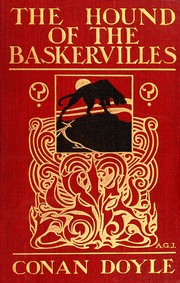
The Hound of the Baskervilles
Holmes Watson probe spectral hound killing Baskervilles on Dartmoor.
2,596-word summary · 12 min read

The Green Mile
Guard Paul Edgecombe watches John Coffey show healing miracles on death row in 1932 Louisiana.
2,549-word summary · 11 min read

Mexican Gothic
In 1950 Mexico, glamorous Noemi Taboada leaves Mexico City for High Place after a desperate letter, to rescue cousin Catalina from the chilling Doyles and…
2,523-word summary · 11 min read

'Salem's Lot
A writer returns to Jerusalem's Lot as an old house fills with vampires.
2,046-word summary · 9 min read

Rebecca
A shy bride at Manderley learns she competes with Maxim's perfect dead wife Rebecca.
2,008-word summary · 9 min read

Interview with the Vampire
Louis tells a reporter how Lestat made him and how Claudia doomed them all in New Orleans and Paris.
2,195-word summary · 10 min read