
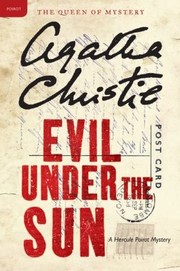
Evil Under the Sun
2,380-word summary 11 min read 256 pages in the book
- First published
- 1941
- Publisher
- Collins Crime Club
- Pages
- 256
- ISBN
- 9780062073938
- Series
- Hercule Poirot (#24)
Reading options
What's inside (8 sections)
A seaside holiday with a body on the sand
I have always thought of Evil Under the Sun as the Christie book people remember for the setting rather than the solution, and rereading it I can see why. Agatha Christie first published it in the United Kingdom through the Collins Crime Club in June 1941, a hardback of 256 pages in a dust jacket that promised sun and danger in equal measure. An American edition followed from Dodd, Mead that October. It is a Hercule Poirot novel, the book that came between One, Two, Buckle My Shoe and Five Little Pigs, and it takes place at a secluded hotel in Devon where the Belgian detective has gone for a quiet rest. The Jolly Roger Hotel, with its rocks and coves, was inspired by Burgh Island, and Christie clearly enjoyed building a puzzle around a place where everyone is on holiday and nobody can leave.
The title comes from Ecclesiastes: there is an evil that I have seen under the sun, and it lies heavy upon humankind. That line hangs over the book in a way the seaside brightness does not. Christie is writing about a killing committed in full view of a landscape built for pleasure, where the heat and the sunbathing make the dead body look like another tourist on the sand. The verse goes on to speak of wealth and honor that a stranger enjoys, which is a fair description of the motive waiting at the center of this particular case.
Poirot arrives at the hotel in white trousers, one of the details contemporary reviewers seized on, and spends his first days doing what he always does on holiday: watching other people. He has no official role. Inspector Colgate is the investigating officer once the body is found, with Colonel Weston, the chief constable who appeared in Peril at End House, taking a senior interest. Poirot works alongside them by permission and by habit, which is one of the comfortable pleasures of the series. Nobody questions whether the famous detective should be involved. They simply accept that he is.
Burgh Island is a real place off the Devon coast, a small island with a hotel that can only be reached on foot at low tide. Christie knew it well, and the isolation is built into the puzzle. When the tide comes in, the guests cannot simply leave and come back later. They are together, which is exactly what a detective needs and exactly what a murderer does not want.
The woman nobody likes
Poirot has not been at the hotel long when he notices Arlena Stuart Marshall. She was an actress until a year ago, and she is now the wife of Captain Kenneth Marshall, a proud man in his forties. Arlena is attractive, flirtatious, and openly pursuing Patrick Redfern, who is married to Christine. Almost nobody at the Jolly Roger likes her. Her stepdaughter Linda, sixteen, hates and mistrusts her. Rosamund Darnley, a fashionable dressmaker, was Kenneth's sweetheart long ago and watches the marriage with feeling she tries to hide. Reverend Stephen Lane calls Arlena evil through and through. Emily Brewster, an athletic spinster who rows a boat around the island every day, keeps her own counsel.
The rest of the house is just as carefully stocked. Carrie and Odell Gardener are garrulous American tourists, with Carrie an open admirer of Poirot's cases who mentions Death on the Nile in the first chapter. Horace Blatt is large, loud, and avoided by everyone. Major Barry is a retired officer who talks endlessly about India. Gladys Narracott is the chambermaid, and Mrs Castle owns the hotel. Christie introduces this whole population in a few pages, and every one of them will have a use before the end. That is the craft of the closed-circle mystery at its most economical.
Christie gives each guest one habit that becomes a clue. Emily rows at the same hour every day. Major Barry never stops talking about India. Mrs Castle runs the hotel with an eye on the staff, and Gladys Narracott hears things in the corridors. These are not portraits so much as labels pinned to coats, and the book is honestly stronger for it in the middle chapters, when Poirot needs to move quickly from one witness to the next.
One morning Arlena sets off alone for a private rendezvous at Pixy Cove. Everyone assumes she has gone to meet Patrick, but Patrick emerges from the hotel moments later, apparently looking for her. He and Emily Brewster row around the island and find Arlena lying dead. The local police surgeon, Dr Neasden, determines that she was strangled. Sergeant Phillips assists with the interviews, and the hotel is thrown into the particular excitement that a murder brings to a place built for leisure. Christie is good on this: the way guests become detectives, the way staff become witnesses, and the way a holiday turns into an inquiry without anyone quite agreeing to let it.
Perfume in a hidden cave
Poirot works the guests the way he always does, by asking ordinary questions and filing away the answers. Emily Brewster was nearly struck by a bottle thrown from one of the guest rooms. Gladys Narracott heard someone running a bath at noon. Most telling of all, Poirot catches the aroma of Arlena's perfume inside a hidden cave near Pixy Cove. Those three details, a thrown bottle, a bath, and a smell in a cave, end up carrying the entire solution, which is why the middle of the book feels so much like a man arranging matches on a table.
He also goes looking for similar cases. There was another strangulation, that of Alice Corrigan, found by a local teacher at a time when her husband Edward had an alibi. Poirot gets hold of a photograph of the Corrigans and the teacher and keeps it close. Then he invites most of the suspects to a picnic, where he watches how they behave and quietly tests their reaction to heights. This is Christie at her most theatrical: the great detective staging an outing so he can see who flinches on a rope bridge. The picnic is a clever piece of staging because it looks like a social event and is really an examination.
That outing has another consequence. Linda Marshall, distressed and frightened, tries to kill herself with Christine Redfern's sleeping pills. Poirot reveals that the girl had been experimenting with voodoo and had convinced herself her spells killed her stepmother, whom she loathed. It is a cruel subplot and a shrewd one, because it makes the reader suspect Linda right up to the moment the real killers are named. Christie lets a child's guilty imagination do the work of a dozen red herrings, and the scene gives the novel its one genuinely painful emotional thread. Linda is the only person in the book whose feelings are not part of a scheme.
The Alice Corrigan case is the book's cleverest piece of construction. A dead woman, a husband with an alibi, and a teacher who found the body form a triangle that mirrors the one at the Jolly Roger. Poirot does not announce the connection. He keeps the photograph in his pocket and waits until the picnic, when he can watch the Redferns react to a test they do not know they are taking. It is detection as theater, and Christie makes the staging feel like fun.
The alibi that ran backward
In the denouement Poirot names Patrick and Christine Redfern as Arlena's killers, and the mechanism is worth walking through slowly because it is the most intricate part of the book. The motive is money. Patrick had conned most of Arlena's fortune away, and if she lived, her husband Kenneth would learn what he had done. So the Redferns built an alibi around the time of death, one that would place Christine at Gull Cove with Linda while Arlena died at Pixy Cove.
Christine, while ostensibly at Gull Cove with Linda, set Linda's watch forward by twenty minutes, asked a stranger for the time to fix the hour in everyone's memory, then set the watch back. Back in her room she put on fake suntan makeup, hid it, and threw the bottle out the window, where it landed near Emily Brewster by pure chance. She climbed down to Pixy Cove using a long ladder the hotel kept fixed there for tourists, and made sure Arlena saw her, because Patrick had told Arlena to hide if his wife appeared before their meeting. Once Arlena was deep inside the cave, Christine lay down and imitated a dead body so that Brewster, summoned by the commotion, would think the murder had already happened. Brewster rushed off for help. Christine hurried back to the hotel to wash off the makeup, and Patrick then called the unsuspecting Arlena out and strangled her.
Poirot breaks the alibi in two ways. At the picnic Christine claimed to fear heights, yet she crossed a suspended bridge with perfect ease, which means she was never afraid of the ladder. And the photograph from the Surrey police identifies Patrick as Edward Corrigan, the man who killed his wife Alice, and Christine as the teacher who claimed to have found Alice's body before the murder could have taken place. The couple had done it before. Poirot closes by telling Linda she did not kill Arlena and predicting that she will not hate her next stepmother, since her father has rekindled an old romance with Rosamund Darnley. Even the solution ends with a small act of kindness toward the child.
Christie's own verdict, and mine
Not everyone has loved the machinery. Robert Barnard called the book the classic Christie marital triangle set in a West Country seaside resort, with particular play on the likeness of sunbathing bodies and dead ones, and suggested it was possibly overingenious and slightly uncharacterised. Isaac Anderson, reviewing the 1941 American edition in the New York Times Book Review, said the murder was an elaborately planned affair, a little too much so for credibility given the many ways it could have gone wrong, though Poirot's reasoning was flawless as always. Maurice Richardson in the Observer called it light as a souffle and predicted the solution would catch readers out. The Times Literary Supplement thought it would take a lot of beating.
I lean toward Anderson and Barnard. The plot is a marvel of clockwork, but the clockwork is so exposed that I kept admiring the mechanism instead of fearing for anyone. The bottle landing beside Emily Brewster asks a great deal of luck, and the ladder, the makeup, and the impersonation all require every guest to behave exactly as needed. Christie draws the central trick from her own short story The Blood-Stained Pavement, collected in The Thirteen Problems, and there are echoes of Triangle at Rhodes too. She was clearly fond of the idea of a mock corpse in the sun. What saves the novel is the setting and the people around the victim: the uncomfortable Reverend Lane, the tireless Major Barry, the watchful Emily Brewster, and poor Linda with her voodoo and her pills.
There is also the question of where the book sits in the Poirot sequence. Some editions call it book twenty-three of the Hercule Poirot mysteries, while other lists place it differently depending on whether short story collections are counted. What is not in doubt is its year and its publisher. It was a Collins Crime Club book in 1941, published in the middle of a war that the novel barely acknowledges, and that is part of its peculiar charm. The guests worry about affairs and inheritances while the world outside the hotel is falling apart.
The solution also depends on something Christie loved to do: making a body into a prop. Christine lying in the cave pretending to be Arlena is a piece of performance, and the whole case turns on an audience seeing what it expects to see. That is why the sun in the title matters. Bright light makes people confident about what they are looking at, and confidence is exactly what the killer needs from Emily Brewster.
After the sun goes down
The book has had a long afterlife. Peter Ustinov played Poirot in a 1982 film with Maggie Smith, Diana Rigg, James Mason, and Roddy McDowall. David Suchet took the role in a 2001 television episode filmed largely at Burgh Island itself, the place that gave Christie the setting. There was a BBC radio version in 1998 with John Moffatt as Poirot and a computer game in 2007. Andy Weir even used the novel in The Martian, where Mark Watney spends a sol reading it and wrongly concludes that Linda Marshall is the killer. That last detail always makes me smile, because Watney's mistake is the same mistake most first-time readers make.
Readers new to Poirot should know what they are getting. He is at his most confident here: polite, exacting, faintly amused by everyone else's bad acting. There is no Hastings to ask the questions on the reader's behalf, so Poirot explains the mechanism at the end with the patience of a man who has been holding the answer all along. If you prefer your mysteries to hide their seams, this one will disappoint you. If you like watching a puzzle put together in public, it is close to ideal.
Series order aside, the novel is a fine entry point to Poirot if you like your puzzles bright and your seaside holidays sinister. It asks you to watch a room full of people who all have something to hide, and to trust the little grey cells when the obvious suspect is far too obvious. When Poirot finally explains the trick of the forward-set watch and the borrowed dead body, the pleasure is in how neatly it all closes, not in any shock. Evil Under the Sun is a story about a murder staged in plain sight, and its lasting trick is the idea that a body in the sun can be a costume someone wears for twenty minutes. Christie's readers have been trying to see through that costume ever since.
FAQ
When was Evil Under the Sun published?
Collins Crime Club published it in the UK in June 1941, and Dodd, Mead published the US edition that October. The first UK hardback ran 256 pages.
Is Evil Under the Sun part of a series?
Yes. It is a Hercule Poirot mystery, following One, Two, Buckle My Shoe and preceding Five Little Pigs. It uses the same series name as the other Poirot posts on this site.
Who killed Arlena Marshall?
Patrick and Christine Redfern. They strangled her to keep her husband from learning that Patrick had stolen most of her fortune, and a faked timeline nearly gave them an alibi.
Similar books
More from Hercule Poirot first, then related titles.
The Mysterious Affair at Styles
Hastings reunites with refugee Poirot at Styles Court after Emily Inglethorp is poisoned in her locked room.
2,856-word summary · 13 min read
The Murder on the Links
Poirot arrives in France too late to save his client, who is found stabbed in a grave and was not the man he claimed to be. Christie's second Poirot novel.
2,055-word summary · 9 min read
The Murder of Roger Ackroyd
Retired Poirot probes a locked study murder in King's Abbot, told by the village doctor.
3,582-word summary · 16 min read
Murder on the Orient Express
Poirot is trapped by snow with thirteen strangers after an American is found stabbed in his berth.
2,004-word summary · 9 min read
The ABC Murders
Poirot and Hastings chase a killer who leaves an ABC railway guide near victims in Andover, Bexhill, and Churston. A salesman looks guilty, but publicity hides…
3,302-word summary · 15 min read
Death on the Nile
Poirot takes a Nile cruise where a young heiress is shot dead in her cabin.
4,077-word summary · 18 min read
Hercule Poirot's Christmas
Simeon Lee invites his family to Gorston Hall for Christmas, then is found dead in a locked room. Poirot sorts a household where nearly everyone has a reason…
2,348-word summary · 10 min read

One, Two, Buckle My Shoe
Poirot links a dentist murder to a missing banker and stolen millions.
2,549-word summary · 11 min read
Five Little Pigs
Sixteen years after a painter's murder, Poirot reopens the case at the request of a daughter who believes her dead mother was innocent.
2,027-word summary · 9 min read
Hallowe'en Party
A girl boasts she once saw a murder, then drowns in an apple-bobbing bucket. Poirot investigates both the claim and the killing.
2,232-word summary · 10 min read
The Body in the Library
A strange girl found dead in a library pulls Miss Marple into lies about dance halls and film.
2,017-word summary · 9 min read
The Memoirs of Sherlock Holmes
Doyle's second Holmes collection gathers twelve Strand stories, including the early case of the Gloria Scott and the confrontation with Moriarty at Reichenbach…
2,390-word summary · 11 min read
The Maltese Falcon
Sam Spade hunts a jeweled bird through lies after his partner is killed.
2,529-word summary · 11 min read
The Sign of Four
Mary Morstan's pearls lead Holmes and Watson from foggy London to Agra treasure and a Thames chase.
2,114-word summary · 9 min read
The Adventures of Sherlock Holmes
Twelve Strand cases from Irene Adler to the Copper Beeches, with Holmes at his sharpest and strangest.
3,579-word summary · 16 min read
The Hound of the Baskervilles
Holmes Watson probe spectral hound killing Baskervilles on Dartmoor.
2,596-word summary · 12 min read
A Study in Scarlet
Watson meets Holmes in Baker Street, a Brixton body bears the word Rache, and a Utah revenge tale explains it.
2,208-word summary · 10 min read
Crooked House
A family gathered around a dying patriarch in a twisted old house, and one of Christie's most famous revelations about who killed him.
2,059-word summary · 9 min read
At Bertram's Hotel
Miss Marple finds a luxury hotel fronting robbery and murder.
2,550-word summary · 11 min read
The Man in the Brown Suit
Anne Beddingfeld sees a Tube death in London and chases a paper clue to South Africa, diamonds, and the hidden Colonel.
2,292-word summary · 10 min read
The Murder at the Vicarage
Vicar Leonard Clement narrates the shooting of Colonel Protheroe while Miss Marple watches St Mary Mead.
2,926-word summary · 13 min read
And Then There Were None
And Then There Were None retold: ten to Soldier Island, rhyme deaths, no one left to tell.
2,137-word summary · 9 min read
There Will Be Bodies
Digging out a villa buried by Vesuvius, Flavia Albia finds chained corpses and a death someone tried to hide for ten years.
2,152-word summary · 10 min read
The New York Trilogy
Three linked novels turn a wrong-number call into a puzzle about names, authorship, and the stories people tell to stay sane.
2,259-word summary · 10 min read
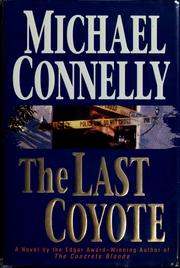
The Last Coyote
On stress leave, Harry Bosch reopens the unsolved murder of his mother, a prostitute strangled when he was twelve, and finds corruption reaching the DA's…
2,069-word summary · 9 min read
The 5th Horseman
Two linked cases pull Lindsay Boxer and the Women's Murder Club into a hospital full of strange deaths and a luxury-car murder spree.
2,609-word summary · 12 min read
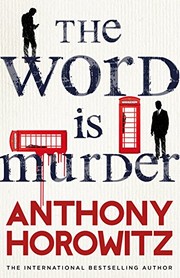
The Word Is Murder
A fictionalised Anthony Horowitz is talked into chronicling a prickly ex-detective's case: a woman murdered hours after planning her own funeral. A clever…
2,296-word summary · 10 min read
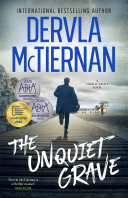
The Unquiet Grave
In Dervla McTiernan's fourth Cormac Reilly novel, a body found in a Galway bog turns out to be a missing school principal, and the case opens into something…
2,253-word summary · 10 min read
The Secret of the Old Clock
The first Nancy Drew novel: a sixteen-year-old detective follows a clue hidden in a clock to overturn a will and restore a family's inheritance.
2,011-word summary · 9 min read
The Running Grave
In the seventh Cormoran Strike novel, Robin goes undercover inside a Norfolk cult while Strike digs into a child's death from decades earlier.
2,615-word summary · 12 min read