
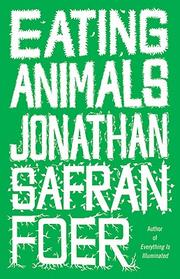
Eating Animals
2,100-word summary 9 min read 352 pages in the book
- First published
- 2009
- Publisher
- Little, Brown and Company
- Pages
- 352
- ISBN
- 9780316069908
Reading options
What's inside (8 sections)
The question that started it
There is a moment early in Jonathan Safran Foer's 2009 nonfiction book when the whole project becomes clear. He is not writing a history of factory farming, and he is not writing a manifesto. He is a new father trying to decide whether to feed his newborn son meat, and he cannot find an honest answer. That small, practical question is the engine of the entire book, and it is what kept me reading through passages that might otherwise have felt like a lecture. Published by Little, Brown and Company, Eating Animals is Foer's third book and his first work of nonfiction, arriving after two novels that had made his name.
What surprised me first was how personal it is. Foer had spent much of his life moving between being an enthusiastic carnivore and an occasional vegetarian, and he admits that uncertainty suited him fine when it only affected him. Having a child changed the terms. Suddenly a private squeamishness had to become a decision he could explain out loud. The book is his attempt to work out what that decision should be, and it is structured less like an argument than like an investigation conducted by someone who genuinely does not know how he will come out.
One detail worth knowing is that Foer did not write the book on his own in the usual sense. He worked in close collaboration with Farm Forward, a nonprofit organization that promotes veganism and sustainable agriculture. That partnership shaped the reporting, opening doors to farms and to people who could explain the industry from the inside. It also raises the obvious question of whether the book was neutral ground from the start. Foer is candid about his sympathies, and the book never pretends to be a detached survey. Knowing who helped him makes the advocacy easier to see, and in my view easier to trust, precisely because it is out in the open.
That uncertainty is a large part of the book's appeal. Foer is not a saint, and he does not pretend to be one. He writes as someone who loves the taste of meat and who understands exactly why people eat it. That gives the book a generosity that pure advocacy often lacks. He lets farmers speak, he lets defenders of the industry speak, and he lets his own contradictions speak. The result is a book that is easier to argue with than a sermon, and more unsettling for it.
Stories about food are stories about us
The book's organizing idea is announced in its structure. The first chapter is called "storytelling," and so is the last. Foer's claim is that the stories we tell about food are the stories we tell about ourselves. As he puts it, "stories about food are stories about us." He argues that we humans make sense of complicated things by turning them into narratives, and that eating is one of the most complicated things we do. Every meal carries a story about where the animal came from, who raised it, what it was fed, and what was done to it. Most of the time we decline to hear that story.
This is where the idea of forgetfulness comes in. Foer believes that most people sense, somewhere, that there is something wrong with eating animals, and that they work to push that knowledge away. He connects this forgetting to a broader denial of our own animality. We insist on the difference between ourselves and other creatures, and in doing so we forget that we, too, are bodies capable of pain. The line that best summarizes this part of the argument is a plain one: "what we forget about animals, we begin to forget about ourselves." The claim is that the distance we put between ourselves and animals is also a distance we put between ourselves and our own suffering.
Foer follows that thought into the language of shame. He describes the vague, uneasy feeling that arises when memory brushes against something we have chosen not to remember. That feeling, in his account, is what hangs around the edges of a fast-food meal. The food is designed to be consumed quickly and without thought, but the thought keeps surfacing. His answer is not to shame the eater into submission. It is to insist that the shame is information, a signal that something in the arrangement is being hidden from us.
I found this section the most interesting part of the book, and also the most slippery. Foer is a novelist by training, and he is at his best when he is tracing the thin line between what we know and what we allow ourselves to know. But the argument sometimes moves faster than the evidence. A claim about forgetting and shame is a claim about human psychology, and the book gestures toward that psychology more than it proves it. It is suggestive rather than conclusive, and readers who want airtight demonstration may feel shortchanged.
What the labels hide
The book's most practical chapter is a kind of dictionary. Foer takes the words that appear on meat labels, words meant to reassure, and asks what they actually guarantee. Terms like free range, cage free, natural, and humane all sound like promises, and all of them turn out to be thinner than they look. Some describe a detail of housing while saying nothing about the animal's life. Some are regulated loosely, and some are barely regulated at all. The chapter works because it is so concrete. Instead of asking the reader to trust him, Foer shows the gap between the comfortable word on the package and the conditions it describes.
That gap is reinforced by an account of how hard it is to see the inside of a factory farm at all. Foer argues that the industry depends on privacy, that farms are generally closed to the public, and that getting inside is difficult enough that he eventually went in without permission. What he describes there is meant to stand in dramatic contrast to the sunny language of the packaging. He writes about animals living in cramped, industrial conditions, about the routine nature of the suffering, and about the sheer scale of the operation. The point is not that any single farm is uniquely cruel. It is that the system is arranged so that its worst features are invisible to the people buying the product.
He also writes about workers, and this is one of the places where the book is more complicated than a simple animal-rights argument. Slaughterhouse workers appear as people doing difficult, poorly regarded jobs, often under harsh conditions themselves. Foer does not let the reader imagine that the system is maintained only by cartoon villains. He is interested in the whole chain, from the animal to the worker to the consumer, and he keeps returning to the idea that a system which treats living beings as units of production will eventually treat people that way too.
The argument, stated carefully
It is worth being precise about what Foer is and is not claiming. He is not arguing that eating meat is wrong in every possible circumstance. His position is circumstantial rather than absolute. Meat becomes bad, in his account, when it entails animal suffering, environmental damage, and risk to human health. In the past, he suggests, those costs were lower and the practice was more defensible. Under modern industrial methods, he argues, the costs overwhelmingly outweigh the pleasure. That distinction matters, because it means the book is not really a case against meat as such. It is a case against the way meat is currently produced.
From there he builds the ethical argument. He claims that food choices express values, whether or not the eater intends them to. When someone buys industrial meat, he argues, that person is implicitly ranking the pleasure of eating above the welfare of the animal. Foer extends the same logic to human beings. If a society learns to discount the suffering of animals, he suggests, it becomes easier to discount suffering elsewhere. The treatment of animals and the treatment of people are linked, in his telling, by a habit of deciding who counts and who does not.
This is the part of the book that has drawn both the most praise and the sharpest criticism. Admirers see a moral argument that connects the dinner plate to larger questions about power and care. Detractors see a chain of reasoning that leans too hard on analogy. The step from animal suffering to human suffering is asserted more often than demonstrated, and a skeptical reader can accept the first half of the argument without accepting the second. Foer's strength is that he rarely overstates the case in a factual sense. His weakness is that the emotional logic sometimes does the work that evidence should be doing.
The conclusion is personal rather than legislative. Foer decides to raise his son vegetarian, and he says so plainly. He does not announce a program for everyone else. He has said in various discussions that his aim is to inform the choice rather than make it, and the book is at its best when it holds to that modest position. Readers who arrive expecting to be told exactly what to eat may be frustrated. Readers willing to sit with the difficulty usually find the honesty rewarding.
The reception, including the boos
The book became a bestseller and collected strongly divided reviews. The Los Angeles Times praised it in terms that were hard to improve on, saying it deserved a place at the table with the greatest philosophers. Natalie Portman wrote that reading it moved her from being a vegetarian to becoming a vegan activist, and Elizabeth Kolbert wrote about it in The New Yorker with real admiration for the way it explained the gap between how people treat companion animals and how they treat the ones they eat. Peter Singer reviewed it, and the general tenor of the serious praise was that Foer had made a complicated subject readable without making it simple.
But the criticism was just as real. A vegetarian reviewer in New York Magazine called the book deeply irritating and accused it of settling on the safest possible non-conclusion. That is a fair description of the book's ending if you came for a verdict. Foer declines to issue one, and the refusal can feel like a retreat after so much accumulated evidence. Other reviewers objected to his style, which is energetic, digressive, and unmistakably literary. The Washington Post noted that his writing has always divided readers into those who love it and those who do not, and this book did nothing to change that pattern.
I think both reactions are justified. The book is genuinely good at making the invisible visible, and genuinely evasive at the final hurdle. It shows you the machinery and then steps back. Whether that is intellectual honesty or a failure of nerve depends on what you wanted from it. What cannot be denied is that it changed the conversation. It arrived at a moment when questions about industrial food were becoming mainstream, and it gave those questions a human face and a memorable voice.
After the book
In 2018, the book was adapted into a documentary film directed by Christopher Dillon Quinn and narrated by Foer and Natalie Portman. The film extended the book's reach and rounded out some of its arguments with visual reporting. It was released in June of that year and was met with largely favorable reviews. The existence of the film is a measure of how far the book travelled from its modest starting point as one novelist's attempt to settle a question about his son's dinner.
Reading it now, what stays with me is not the statistics or the excursions into labeling law. It is the frame. A person becomes a parent, and suddenly the ordinary act of feeding someone becomes a moral problem that cannot be waved away. Foer does not solve that problem, and he is right not to pretend otherwise. He does something more useful. He makes the problem impossible to ignore, and he does it in a voice that is funny and honest about its own doubts. If you have ever found yourself wondering about the gap between the meat on the plate and the animal it came from, this book will not let you stop wondering. Its real achievement may be simpler than any verdict: it asks a question that refuses to go away.
FAQ
Does Eating Animals argue that eating meat is always wrong?
No. Foer argues that meat is bad under modern industrial conditions, not that eating animals is inherently wrong in every circumstance. He raises his own son vegetarian.
Why did Jonathan Safran Foer write it?
He is the author of Everything Is Illuminated and Extremely Loud and Incredibly Close. The birth of his son made his long-standing uncertainty about eating meat into a decision he could no longer avoid.
Was there a documentary adaptation?
Yes. A film version directed by Christopher Dillon Quinn and narrated by Foer and Natalie Portman was released in 2018.
Similar books

Beyond Good and Evil: Prelude to a Philosophy of the Future
A guide to Friedrich Nietzsche's Beyond Good and Evil: its attack on moral prejudice, the will to power, master and slave morality, and the philosopher of the…
2,597-word summary · 12 min read
Animal, Vegetable, Miracle: A Year of Food Life
A family eats only local for a year from their Virginia farm.
2,270-word summary · 10 min read
In Defense of Food
Pollan argues we stopped eating food and started eating nutrients, and offers a plain way back.
2,320-word summary · 10 min read
The Tao of Pooh
Hoff explains Taoism through Pooh, Piglet, and Eeyore in gentle chats.
2,006-word summary · 9 min read
The Omnivore's Dilemma
Four meals traced from corn fields to foraging show what industrial food costs and what else is possible.
1,918-word summary · 9 min read
The Symposium
At a banquet in Athens, seven men compete to praise Eros, ending with Socrates' account of Diotima and a drunken interruption by Alcibiades.
2,147-word summary · 10 min read
The Hidden Life of Trees
A German forester argues that trees communicate through root networks and that forests thrive when left largely undisturbed.
2,078-word summary · 9 min read
One Day, Everyone Will Have Always Been Against This
From a viral 2023 post, Omar El Akkad builds a furious short argument about Western promises, silence and complicity during the Gaza war.
2,218-word summary · 10 min read
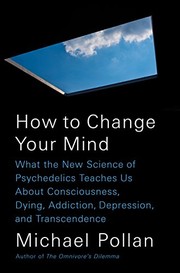
How to Change Your Mind
Pollan blends the history of psychedelic research, his own guided trips, and current neuroscience to ask what these drugs reveal about consciousness.
2,466-word summary · 11 min read
Brief Answers to the Big Questions
A short posthumous collection in which Hawking answers ten big questions about God, the universe, time, and humanity's future.
2,464-word summary · 11 min read
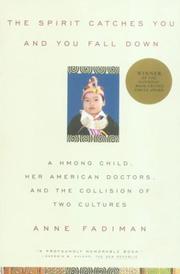
The Spirit Catches You and You Fall Down: A Hmong Child, Her American Doctors, and the Collision of Two Cultures
Anne Fadiman's account of a Hmong girl's epilepsy and the two cultures that tried to treat her, literary journalism about translation, trust and the limits of…
2,972-word summary · 13 min read
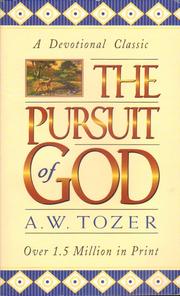
The Pursuit of God: The Human Thirst for the Divine
Ten short chapters on wanting God rather than merely knowing about him, from a pastor who wrote the book in a single night on a train.
2,014-word summary · 9 min read
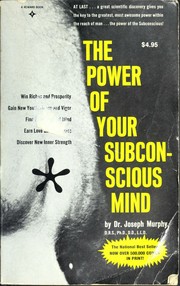
The Power of Your Subconscious Mind
Joseph Murphy argues that the subconscious accepts whatever the conscious mind repeats, so worry and confidence quietly grow into very different lives.
2,259-word summary · 10 min read
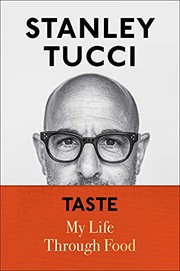
Taste: My Life Through Food
Stanley Tucci's memoir traces his life through food, from a Calabrian family kitchen in Katonah to film sets, marriage and a cancer fight that cost him his…
2,503-word summary · 11 min read

Ikigai: The Japanese Secret to a Long and Happy Life
Two Spanish writers explain the Japanese idea of a reason for being, drawing on Okinawan centenarians, flow, friendship and the acceptance of imperfection.
2,030-word summary · 9 min read
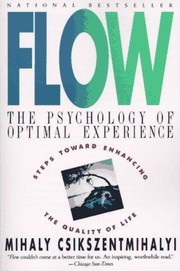
Flow: The Psychology of Optimal Experience
Csikszentmihalyi's 1990 study of optimal experience asks when people feel most alive and finds the answer in a balance of challenge and skill. Drawing on…
3,073-word summary · 14 min read
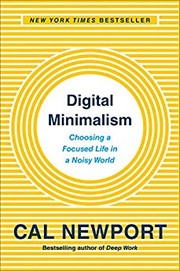
Digital Minimalism: Choosing a Focused Life in a Noisy World
Cal Newport argues that willpower cannot beat an attention economy designed against you, and offers a thirty day reset to rebuild your digital habits around…
2,701-word summary · 12 min read
Abundance
Two journalists argue that rules written to fix the abuses of the 1970s now block the housing, energy and clean construction the 2020s need, and propose a…
2,306-word summary · 10 min read
The Obstacle Is the Way: The Timeless Art of Turning Trials into Triumph
A 2014 Stoic self-help book arguing that perception, action and will can turn setbacks into fuel, told through historical anecdotes.
2,669-word summary · 12 min read
The Autobiography of Benjamin Franklin
Franklin writes his own life in four parts, from a Boston boyhood and a runaway apprenticeship to printing, science, and public service, while keeping careful…
2,259-word summary · 10 min read
Everything is F*cked: A Book About Hope
Manson argues that hope, built on control, values, and community, keeps despair at bay, then takes apart the stories and diversions we use to sustain it.
2,789-word summary · 12 min read
Concerning the Spiritual in Art
Kandinsky argues that art must come from an inner need and that colour and form can speak directly to the soul, in a book that also made the case for…
2,289-word summary · 10 min read
As a Man Thinketh: A book that will help you to help yourself
In seven short chapters, James Allen argues that character and circumstance grow from thought, and that changing how you think is the practical route to…
2,673-word summary · 12 min read

The Zookeeper's Wife: A War Story
The directors of the Warsaw Zoo hid roughly three hundred Jews in empty cages and outbuildings after the German invasion, while Jan worked for the resistance.
2,065-word summary · 9 min read
The Courage to Be Disliked: The Japanese Phenomenon That Shows You How to Change Your Life and Achieve Real Happiness
A philosopher and an angry young man argue over five nights about Adlerian psychology, trauma, approval, and the freedom to be disliked.
2,054-word summary · 9 min read
Once There Were Wolves
A biologist reintroduces fourteen wolves to the Scottish Highlands while protecting her traumatized twin sister, then finds a body in the snow that could…
2,682-word summary · 12 min read
Four Thousand Weeks: Time Management for Mortals
Oliver Burkeman turns the whole productivity project on its head, arguing that a human lifespan of roughly four thousand weeks is not a problem to optimize…
2,447-word summary · 11 min read
At Home: A Short History of Private Life
Bill Bryson tours his own Norfolk rectory room by room to explain how private life and the modern home got built.
2,334-word summary · 10 min read
The Road Less Traveled: A New Psychology of Love, Traditional Values and Spiritual Growth
M. Scott Peck argues that maturity begins with accepting difficulty, then builds discipline, love, and spiritual growth through honest, often painful work.
2,200-word summary · 10 min read
Ishmael: An Adventure of the Mind and Spirit
A gorilla named Ishmael teaches a disillusioned man that civilization is a story, and that humans may compete but must not wage war on other species.
2,015-word summary · 9 min read