
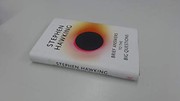
Brief Answers to the Big Questions
2,464-word summary 11 min read 256 pages in the book
- First published
- 2018
- Publisher
- John Murray
- Pages
- 256
- ISBN
- 9781529345421
Reading options
What's inside (10 sections)
I read A Brief History of Time a long time ago and remember mostly the feeling of being let in on something enormous. This book is a different experience. It is short, it was published in 2018 after Hawking's death in March of that year, and it reads less like a book he sat down to write than a collection of things he had already said. That is not a complaint exactly, but it sets your expectations. You are getting a greatest-hits folder from a working scientist, assembled with care by the people around him, rather than a fresh argument built from the ground up.
The publisher's description calls it a selection of his most profound and accessible reflections from his personal archive, and that is about right. Someone went through roughly half a million words of essays, lectures, and keynote speeches and pulled out the parts that answer the questions he was asked most often. Eddie Redmayne, who played Hawking in The Theory of Everything, wrote the foreword. Kip Thorne, a Nobel Prize winning physicist, wrote the introduction. His daughter Lucy Hawking wrote the afterword. Part of the royalties go to the Motor Neurone Disease Association and the Stephen Hawking Foundation, which feels like a fitting footnote to a life lived with the disease.
The questions he chose to answer
There are ten chapters, each built around one direct question. Is there a God? How did it all begin? What is inside a black hole? Can we predict the future? Is time travel possible? Will we survive on Earth? Is there other intelligent life in the universe? Should we colonise space? Will artificial intelligence outsmart us? How do we shape the future?
The publisher groups these under four broader headings: why we are here, whether we will survive, whether technology will save us or destroy us, and how we can thrive. Notice how quickly the subject moves from cosmology to the future of the human race. The old Hawking interest in black holes and the early universe is present, but it is not the main event. The main event is humanity, and his argument is that science is the only tool we have that might get us through the next century.
The order matters. God and origins come first, then the nature of time and the fate of the universe, then the threats that could end us, and finally the choices that might save us. It is a progression from the largest possible question to the most practical one, and it means the last chapters carry the emotional weight of everything before them. Hawking is not asking you to admire the cosmos from a safe distance. He is asking what you intend to do about the part of it you can affect.
That shift is what makes this book feel like a manifesto rather than a physics primer. He is not trying to teach you general relativity. He is trying to convince you that looking carefully at the world matters, and that forgetting this is how civilizations get into trouble.
Is there a God
This is the first chapter and the one that got the most attention when the book came out. Hawking's position is blunt. He says the simplest explanation is that God does not exist, and that there is no reliable evidence for an afterlife. He allows that people can live on through their influence and their genes, which is a gentler way of saying something similar.
He also makes a distinction that I found helpful. If you like, he says, you can call the laws of science God, but that would not be a personal God you could meet and put questions to. Knowing the mind of God, in his usage, means knowing the laws of nature. He predicted that we would get there by the end of this century, which is a confident claim for a book published in 2018.
The interesting part is the reasoning about origins. He argues that the laws of nature allow a universe to appear without any assistance, requiring nothing in terms of energy, and that it is possible nothing caused the Big Bang. He means that literally. Nothing. This is not atheism as a shrug; it is a physicist saying that the math no longer needs a first push.
He is also careful about what he is not saying. He does not claim to disprove every version of religious belief, and he leaves room for the idea that people live on through their influence and their genes. What he rejects is the picture of a personal deity who intervenes and waits for questions. The chapter reads less like an attack on religion than like an argument about which explanations do work, and that distinction is lost in most of the arguments made about the book online.
How it began and what a black hole keeps
The chapter on beginnings leans on a distinction between time inside the universe and time before it. You cannot get to a time before the Big Bang, he writes, because there was no time before the Big Bang. To make that idea land he uses a comparison he had used elsewhere: asking what came before the Big Bang is like asking what is south of the South Pole. There is nothing there, and the question is malformed rather than profound.
He then turns to the evidence. Small irregularities in the cosmic background radiation, mapped in detail by satellites, are described as the blueprint for all the structure in the universe. Galaxies, stars, and eventually us are the product of quantum fluctuations in the early universe. That is where his famous line about God playing dice comes back in, turned around: here the randomness is a feature, not a problem, because it is the thing that made structure possible.
There is a line a few pages later that has stuck with me ever since I first heard it in another context. If the universe adds up to nothing, he wrote, then you do not need a God to create it; the universe is the ultimate free lunch. It is a physicist's joke with a serious point. A universe that begins from no net energy is not a universe that needs an outside donor, and the phrase manages to make a dense idea feel almost casual.
The black hole chapter is shorter and more familiar territory. It revisits the idea that black holes are not quite the one-way traps they were once thought to be, because quantum effects allow them to leak particles slowly over immense spans of time. This is Hawking's signature result, and it gets a chapter rather than a footnote, which is only fair.
Predicting the future and the time travel question
When he gets to prediction, Hawking is careful about what the word can mean. The laws of physics let us say a great deal about systems we can measure, but the further out you go, the more uncertainty multiplies. The practical answer is that some things are predictable and some are not, and the useful skill is telling which is which.
Time travel gets a more playful treatment. He calls asking whether it is possible a very serious question that our current understanding cannot rule out. He does not build a machine for you. He points out that the physics does not contain an obvious prohibition, which is a very different claim from saying we will do it. What he does say with confidence is that we are all time travelers already, journeying together into the future, and that the task is to make that future a place worth arriving at.
I have a soft spot for that passage because it admits what the rest of the book often glosses over. We do not know. The honest scientific answer to some of the biggest questions is that current understanding has not settled them, and Hawking says so plainly even while he is being optimistic about the eventual answer. That combination of humility and confidence is the best version of him.
There is a forward-looking claim here too. He expected that within about fifty years we would understand how life began and might discover whether life exists elsewhere in the universe. Reading that in 2026, it sounds less like a wild guess than it did in 2018, but it is still a prediction and should be read as one.
The threats he spends the most energy on
The chapters about survival are the ones where Hawking sounds most like a person in a hurry. An asteroid collision is the biggest immediate threat to the planet, he writes, pointing to the impact that wiped out the dinosaurs sixty-six million years ago, and noting that we have no defense against a repeat. Climate change follows, with a description of how warmer oceans melt ice caps and release carbon dioxide, pushing the climate toward something like Venus at roughly 250 degrees Celsius. Nuclear war gets a timeline: at some point in the next thousand years, he says, war or environmental calamity will cripple Earth.
He is not only a messenger of bad news. Nuclear power gets a serious defense as a source of clean energy without pollution or global warming, and he argues for serious investment in research and education as the way through. The pattern is consistent. He names a danger, then points at a practical, scientific response.
He is equally direct about education. He believed that education and science were in danger at the time of writing, more so than at any point he could remember, and he wanted young people to treat the future as something they would build rather than inherit. Critics sometimes call this vague uplift, and there is some truth to the charge. He does not offer a policy program or a funding plan. But he does offer a reason to care, which is not the same thing and should not be dismissed as filler.
Artificial intelligence gets the sharpest warning. He says that in the future AI could develop a will of its own, a will in conflict with ours. He also worries about gene editing producing a modified race of superhumans with better memory and disease resistance, which would put the rest of us at risk. Neither of these is a detailed technical argument. They are warnings from someone who thought the conversation was happening too slowly, and they read differently now that both subjects are in the news most weeks.
Space, wisdom, and the closing advice
Hawking's answer to the long-term survival problem is to get off this planet. He argues for colonising space and for bold manned exploration, and he ends with advice to young people that was widely quoted when the book appeared. Look up at the stars, he wrote, and not down at your feet. Try to make sense of what you see, wonder about what makes the universe exist, unleash your imagination, and shape the future.
The line I keep returning to is the one about the race. Our future, he wrote, is a race between the growing power of our technology and the wisdom with which we use it, and we need to make sure wisdom wins. That single sentence explains more about the book than any summary of its physics. The big questions matter to him because the answers might determine whether there is anybody left to ask them.
It is impossible to read those passages without hearing a man who knew his own time was limited. The optimism is real, but it is the optimism of someone who had reason to feel the clock. That gives the last chapters a weight that a purely academic treatment would not have.
What the book does not manage
The fact that the book was assembled after his death is worth holding in mind throughout. Hawking could not revise these chapters, could not answer the reviewers, and could not decide what to leave out. The people who finished the job did it with obvious care, and the estate's involvement means the material is authentic, but authenticity is not the same as a finished argument. You can feel the seams where a lecture ends and an essay begins, and some questions get a longer answer than their importance warrants.
The obvious criticism is that this is a compilation, and Hawking says as much through his publisher. There are no new discoveries here. If you want the argument of A Brief History of Time developed further, you will not find it. If you want a coherent, single-sitting philosophical system, you will not find that either. You will find ten short chapters welded together by a shared mood and a shared faith in rational inquiry.
Some of the physics is also more debatable than the confident tone suggests. John Horgan, writing in the Wall Street Journal, pointed out that Hawking favors string theory and the multiverse as answers, and quoted Sabine Hossenfelder's worry that physicists working on those ideas might not really be doing science anymore. Other experts disagreed with his predictions about artificial intelligence, gene editing, and religion. None of that makes the book worthless, but it does mean the answers are sometimes Hawking's opinions in a lab coat, and they should be read that way.
The tone can also feel too certain. Reviewers called it a manifesto, and that is fair. Marcelo Gleiser at NPR praised his faith in science's ability to solve humanity's problems, while others thought the confidence was doing more work than the evidence. I found myself nodding along to the warnings about asteroids and AI and then wanting to argue with the neatness of the conclusions. That is a reasonable response to a book built from speeches. Speeches want applause; they do not always want scrutiny.
Who this book is for
At 256 pages, this is a small book with a large subject, published by John Murray in the United Kingdom and by Bantam in paperback. It works well as a companion to A Brief History of Time, and it works even better as a starting point for a reader who wants to know what Hawking thought about the world outside his equations. Someone looking for a technical introduction to cosmology should go elsewhere. Someone looking for a clear, humane statement of why a scientist thought the future was worth fighting for will find plenty here.
I closed it feeling something like the reviewers described: worried about the future and strangely cheered by the person who was worried about it. That combination is the book's real achievement, and it has little to do with whether every prediction holds up.
FAQ
Was Brief Answers to the Big Questions finished by Hawking himself?
No. It was published in 2018 after his death in March of that year, with colleagues, family, and the Stephen Hawking Estate completing material drawn from his personal archive.
Do I need a physics background to read it?
No. The ten short chapters avoid equations and explain ideas like black holes and the Big Bang in plain language, though some familiarity with A Brief History of Time helps.
Is the science still current?
The core ideas hold, but this is a 2018 compilation with no new discoveries, and several of its predictions about artificial intelligence, gene editing, and fundamental physics are debated.
Similar books
A Brief History of Time
Hawking walks from ancient spheres to big bang, black holes, and time arrows without equations.
2,210-word summary · 10 min read
The Elegant Universe: Superstrings, Hidden Dimensions, and the Quest for the Ultimate Theory
Brian Greene explains relativity, quantum mechanics, and the promise of string theory without requiring a physics degree.
2,110-word summary · 9 min read
Astrophysics for People in a Hurry
Tyson condenses the Big Bang, dark matter, and exoplanets into twelve short chapters for busy readers.
2,314-word summary · 10 min read
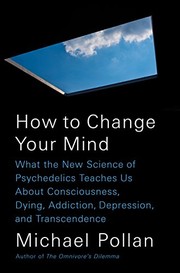
How to Change Your Mind
Pollan blends the history of psychedelic research, his own guided trips, and current neuroscience to ask what these drugs reveal about consciousness.
2,466-word summary · 11 min read
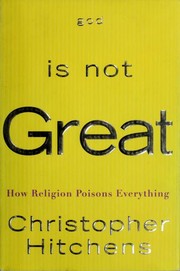
God Is Not Great
Hitchens argues religion poisons life across history and texts.
2,545-word summary · 11 min read
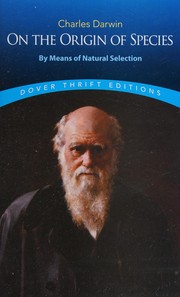
On the Origin of Species
Darwin's 1859 case for evolution by natural selection, from Beagle finches and breeding pigeons to fossils and anatomy.
2,589-word summary · 12 min read
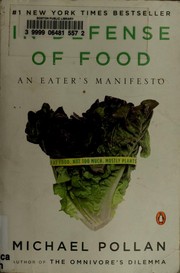
In Defense of Food
Pollan argues we stopped eating food and started eating nutrients, and offers a plain way back.
2,320-word summary · 10 min read
Cosmos
Sagan tours galaxies, evolution, and Alexandria to argue for science.
2,416-word summary · 11 min read
A World Appears
Pollan traces consciousness from plant sentience to AI feeling and the self, with gardens, labs, trips and hard questions along the way.
3,108-word summary · 14 min read
What If?: Serious Scientific Answers to Absurd Hypothetical Questions
Randall Munroe of xkcd answers absurd science questions with real physics, rough math and stick figures, from relativistic baseball to draining the oceans.…
2,932-word summary · 13 min read
Einstein: His Life and Universe
Isaacson traces Einstein from patent clerk to world fame using newly opened papers, through 1905, relativity, exile, and the long unified theory search.
2,773-word summary · 12 min read
Surely You're Joking, Mr. Feynman!
Feynman drums, cracks safes, and learns by doing from Los Alamos to Caltech classrooms.
1,946-word summary · 9 min read
Sapiens: A Brief History of Humankind
Harari's Sapiens from cover to cover: the cognitive revolution, the agricultural bargain, shared fictions like money and nations, and the scientific centuries…
2,145-word summary · 10 min read
The Hidden Life of Trees
A German forester argues that trees communicate through root networks and that forests thrive when left largely undisturbed.
2,078-word summary · 9 min read
Eating Animals
A new father's question about what to feed his son becomes a wide-ranging investigation of factory farming, food labels, and the stories we tell about meat.
2,100-word summary · 9 min read
The Pursuit of God: The Human Thirst for the Divine
Ten short chapters on wanting God rather than merely knowing about him, from a pastor who wrote the book in a single night on a train.
2,014-word summary · 9 min read
The Power of Your Subconscious Mind
Joseph Murphy argues that the subconscious accepts whatever the conscious mind repeats, so worry and confidence quietly grow into very different lives.
2,259-word summary · 10 min read

Ikigai: The Japanese Secret to a Long and Happy Life
Two Spanish writers explain the Japanese idea of a reason for being, drawing on Okinawan centenarians, flow, friendship and the acceptance of imperfection.
2,030-word summary · 9 min read
Flow: The Psychology of Optimal Experience
Csikszentmihalyi's 1990 study of optimal experience asks when people feel most alive and finds the answer in a balance of challenge and skill. Drawing on…
3,073-word summary · 14 min read
Everything Is Tuberculosis
John Green tells the story of a boy with tuberculosis in Sierra Leone and argues that a disease curable since the 1950s still kills a million people a year…
2,015-word summary · 9 min read
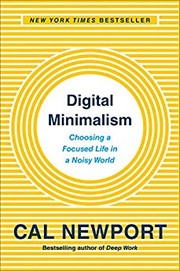
Digital Minimalism: Choosing a Focused Life in a Noisy World
Cal Newport argues that willpower cannot beat an attention economy designed against you, and offers a thirty day reset to rebuild your digital habits around…
2,701-word summary · 12 min read
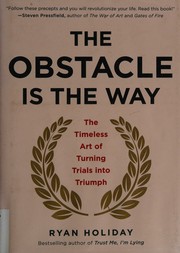
The Obstacle Is the Way: The Timeless Art of Turning Trials into Triumph
A 2014 Stoic self-help book arguing that perception, action and will can turn setbacks into fuel, told through historical anecdotes.
2,669-word summary · 12 min read
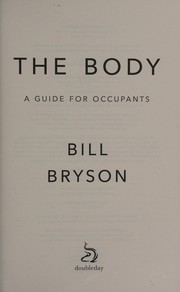
The Body: A Guide for Occupants
Bill Bryson tours the human body from atoms to aches, mixing wonder at how we work with a sharp account of how our lives cut that short.
2,249-word summary · 10 min read
The Autobiography of Benjamin Franklin
Franklin writes his own life in four parts, from a Boston boyhood and a runaway apprenticeship to printing, science, and public service, while keeping careful…
2,259-word summary · 10 min read

Everything is F*cked: A Book About Hope
Manson argues that hope, built on control, values, and community, keeps despair at bay, then takes apart the stories and diversions we use to sustain it.
2,789-word summary · 12 min read
Concerning the Spiritual in Art
Kandinsky argues that art must come from an inner need and that colour and form can speak directly to the soul, in a book that also made the case for…
2,289-word summary · 10 min read
As a Man Thinketh: A book that will help you to help yourself
In seven short chapters, James Allen argues that character and circumstance grow from thought, and that changing how you think is the practical route to…
2,673-word summary · 12 min read

The Courage to Be Disliked: The Japanese Phenomenon That Shows You How to Change Your Life and Achieve Real Happiness
A philosopher and an angry young man argue over five nights about Adlerian psychology, trauma, approval, and the freedom to be disliked.
2,054-word summary · 9 min read

Moonwalking with Einstein: The Art and Science of Remembering Everything
A journalist spends a year training for the U.S. Memory Championship and discovers that extraordinary memory is mostly technique, attention, and a lot of…
2,027-word summary · 9 min read
Four Thousand Weeks: Time Management for Mortals
Oliver Burkeman turns the whole productivity project on its head, arguing that a human lifespan of roughly four thousand weeks is not a problem to optimize…
2,447-word summary · 11 min read