
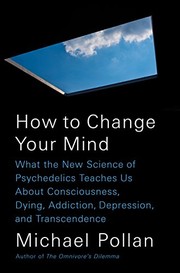
How to Change Your Mind
2,466-word summary 11 min read 480 pages in the book
- First published
- 2018
- Publisher
- Penguin Press
- Pages
- 480
- ISBN
- 9781594204227
Reading options
What's inside (10 sections)
I picked this book up with some suspicion. Pollan had won me over on food, first with The Omnivore's Dilemma and then with In Defense of Food, and I trusted the way he followed a question wherever it led. A book on psychedelics by the same writer felt like a different proposition. The full published title runs to consciousness, dying, addiction, depression, and transcendence, and that is a lot of ground for one author to cover. What I found was a book that is part history lesson, part science report, and part personal diary, and the mixture is stranger and more convincing than any one of those pieces would be on its own.
What Pollan is actually doing
The book has six chapters and a short epilogue, and the chapter titles tell you how it is built. There is A Renaissance, then Natural History: Bemushroomed, then History: The First Wave, then Travelogue: Journeying Underground, then The Neuroscience: Your Brain on Psychedelics, and finally The Trip Treatment: Psychedelics in Psychotherapy. That order matters. Pollan starts with a drug he took himself, walks backward into the history of the research, moves forward into what brain scanners show, and ends in the clinic. He describes his own account as a mental travelogue, and the phrase is honest. He is a reporter who happened to be his own most available subject.
The structure kept me from settling into the easy rhythm of a popular science book. Just when the neuroscience starts to feel technical, the story pulls back to a middle aged man lying on the floor with a blindfold on. Just when the personal account starts to feel indulgent, a researcher arrives with years of data. The alternation is the method, and it is what makes the book hard to summarize in a single sentence.
Some background helps. Pollan wrote this after a long career of asking how what we eat shapes us, and the same instinct drives him here. He wants to know what a molecule does to a mind, and he is not satisfied with a lab report or a memoir alone. He wants both, plus the story of how the questions got asked in the first place.
A mushroom in the woods
The first chapter I remember clearly is the one he calls Bemushroomed. Pollan, who was in his fifties when he wrote the book, had never taken a psychedelic. He arranges a guided session with psilocybin mushrooms, the kind of experience that is now sold as a carefully managed retreat rather than a weekend in the woods. There is a guide, there is music, there are eye shades, and there is a great deal of preparation about set and setting. Pollan writes about the ordinary awkwardness of it all: the drive out, the waiting, the uncertainty about what is supposed to happen.
What follows is a long, patient account of a drug taking effect. Colors intensify. Patterns appear behind closed eyes. The sense of a separate self loosens, and he describes the strange relief and the fear of that loosening in the same breath. He is a careful writer about his own fear. At one point he worries he is dying, and the thought does not arrive as drama but as a plain fact his mind has produced. Then the fear passes, and something like trust takes its place.
The value of the chapter is not that Pollan's trip was unusual. Plenty of people have described similar afternoons. The value is that he refuses to tidy it up. He does not announce that he has seen the truth of the universe. He reports what it felt like to have the furniture of his ordinary mind rearranged for a few hours, and he admits that the experience is hard to put into words without sounding like a convert. He keeps the skepticism and the wonder on the page at the same time, which is a difficult trick.
I also want to say something about the chapter Pollan calls Journeying Underground. He does not limit himself to mushrooms. Later in the book he describes taking LSD, and the account is longer and stranger than the first trip. Where the mushroom session felt like a slow unfolding, the LSD experience arrives with more force and less negotiation. He writes about it with the same attention to physical detail: the sounds in the room, the way music bends, the presence of a guide who stays nearby. He also writes about the hours after the peak, when the mind is tired and the ordinary world seems newly strange. That chapter is the clearest example of why he calls the whole project a travelogue. He is not trying to prove a theorem. He is reporting from a place he went.
The first wave and what killed it
Pollan then goes back to the beginning of modern psychedelic research. He writes about the chemists and doctors who first isolated these compounds, about the psychedelic name itself, and about the wave of academic interest that followed in the late 1950s and early 1960s. Harvard becomes a central stage. Timothy Leary and Richard Alpert run the Harvard Psilocybin Project, and Walter Pahnke carries out the experiment known as the Good Friday Experiment, giving psilocybin to divinity students and asking whether the experience could produce something like a religious encounter.
This part of the book is where Pollan's reportorial strengths show. He is good on the personalities, and he is good on the way a research field can be destroyed by its own mistakes and by the world around it. Leary's self promotion, the counterculture that adopted his slogans, and the alarm of politicians and journalists all get their turn. The work was shut down. Funding dried up. Brain science about these drugs stopped for decades, and a generation of researchers either left the field or never entered it.
A fair criticism shows up here, and it is one that reviewers raised at the time. Pollan is sharp about Leary's vanity but softer on the people who shut the research down. Politicians and reporters helped create the climate that ended the work, and they get less blame than the man who courted the cameras. It is a small imbalance, but it is visible if you are looking for it. The chapter still reads well because the larger point holds: a promising line of inquiry was interrupted, and the interruption was a choice rather than an accident.
The long comeback
After the shutdown, the field did not simply resume. A few researchers kept working at the edges, and by the late 1990s a new generation began asking the old questions with better tools. Pollan follows that return closely. He writes about the difficulty of getting approval to study a drug that the law classified as having no accepted medical use, and about the researchers who persisted anyway. Institutions had to be persuaded that the work was legitimate. Ethics boards had to be convinced that a session with a powerful drug could be conducted safely. Money had to be found from sources that did not mind a controversial subject.
He is especially good on what changed in the clinic. The people running the new studies were careful about who could participate, and they built in safeguards that the early researchers had never used. Participants were screened. They were prepared for the experience and accompanied through it. Sessions took place in rooms designed to feel calm rather than clinical. The contrast with the 1960s is deliberate, and Pollan does not hide his view that the earlier researchers were careless about setting.
The result is a book that is quietly institutional in its politics. Pollan is arguing that these substances belong in laboratories and hospitals rather than in the streets or in the counterculture. He wants the research to be funded and regulated, and he thinks the therapeutic results justify the effort. That argument will not satisfy readers who think any drug research is a bad idea, nor will it satisfy readers who think the restrictions were never justified in the first place. He writes for the middle, for people willing to look at the evidence after decades of noise.
What struck me is how much of the story is about ordinary professional courage. A scientist who wants to study psilocybin has to accept that colleagues may think the choice is strange. A young researcher has to build a career on a subject that could be shut down again. Pollan interviews these people and lets their caution show. They are not crusaders. They are careful academics who believe they have found something worth measuring.
That tone is one of the book's quiet strengths. The comeback is not presented as a triumph over narrow minded fools. It is presented as slow, messy work by people who had to rebuild a field from almost nothing.
Your brain on psychedelics
The neuroscience chapter is the one I reread. Pollan visits researchers who put people in scanners and watch what changes when a drug like psilocybin or LSD is active. The recurring finding is that the brain becomes less tidy. Regions that usually work in isolation start talking to each other, while the networks that keep a firm sense of self in place become quieter. The default mode network, which is busy when we think about ourselves and our stories, is a frequent subject. When it calms down, people report that the boundary between self and world softens.
Pollan is careful about the gap between a scan and an experience. A picture of changing blood flow does not tell you what a person is feeling, and he does not pretend it does. What he does instead is put the two accounts side by side, the first person report and the third person measurement, and let the reader see where they meet. He also introduces the idea that a brain under psychedelics is more entropic, meaning more open to patterns it normally filters out. The word sounds forbidding, but the idea is simple enough: the brain may normally work by limiting what gets through, and these drugs may loosen the filter.
Some of this science was young when the book appeared in 2018, and some of the bold claims rest on small studies. Pollan knows this. He keeps returning to the size of the samples and the difficulty of controlling for expectation. A person who believes a drug will change them is likely to report a change, and a room full of supportive guides is itself an intervention. The book is at its best when it holds that problem in view rather than hiding it.
The trip treatment
The last major chapter moves into therapy, and this is where the book's subject becomes practical. Pollan describes trials using psilocybin for depression, for the anxiety that comes with a serious diagnosis, and for addiction, including work on smoking cessation. He describes MDMA studies for post traumatic stress as well. He visits the teams running these trials and sits with the question of what a therapy session looks like when the drug itself is part of the treatment. The answer is that the drug is not the whole treatment. Preparation matters, the presence of trained guides matters, and the days afterward matter.
One section that stayed with me concerns people facing terminal illness. The researcher Roland Griffiths and his colleagues at Johns Hopkins appear in this part of the story, as does work at Imperial College London. Pollan reports that some patients describe a single guided session as changing their relationship to death. He writes about this with restraint. He does not claim the drug cures the fear of dying. He describes what the patients said and leaves the interpretation open.
The book also circles back to Pollan's own life here. He writes about his mother, who died when he was young, and about the way certain trips brought him close to questions he had carried for decades. I found these passages moving without finding them persuasive. A personal connection is not evidence, and Pollan seems to know that too. He includes the reflections because the book is a travelogue, not because he wants the reader to count them as data.
The case for skepticism
There is a tension in this book that I do not think Pollan fully resolves. He wants psychedelics to be taken seriously as objects of study and as tools for treating suffering. He also keeps insisting that the experience itself defeats easy description. Those two goals pull against each other. If the experience cannot be captured in words, then the reports the researchers collect are all we have, and self report is a weak instrument. He acknowledges the problem but keeps returning to the beauty of the accounts.
Reviewers were split in useful ways. Some praised the book as a grown up case for substances that had been demonized for decades. Others wanted more about the politicians and the law, or more rigor about the trials. My own reservation is about tone. When Pollan is describing a brain scan or a 1960s experiment, his prose is exact. When he is describing a trip, even a difficult one, the writing takes on a warmth that edges toward advocacy. The shift is subtle, and a reader who wants a cool assessment should read the last chapters alongside a critical review.
None of this makes the book dishonest. It makes it a book by a particular person with a particular temperament. Pollan is a writer who fell into a subject and then followed it further than he expected. That is the source of its energy and also of its limits.
Who should read it
I would hand this to someone who wants one book that connects the history of psychedelic research to current clinical work, and who is willing to sit through a long personal account to get it. The history chapters alone are worth the price of admission, especially the story of how a promising field was shut down. The science chapters are clear without being simple minded, and they will give a general reader enough vocabulary to follow later news stories.
I would be cautious about recommending it to someone looking for guidance on using these drugs. Pollan is a reporter describing his own sessions and other people's trials, and he says so. He is not offering instructions or promises. Read it as an account of a subject coming back into view after a long absence, and as a reminder that the mind is harder to explain than the molecules that change it. I finished the book more interested in the questions than in any answer, and that seems like the right result.
FAQ
What is the full published title of How to Change Your Mind?
The full title is How to Change Your Mind: What the New Science of Psychedelics Teaches Us About Consciousness, Dying, Addiction, Depression, and Transcendence. Penguin Press published it in 2018.
Does Pollan describe his own psychedelic experiences in the book?
Yes. He writes about guided sessions with psilocybin mushrooms and LSD and calls the result a mental travelogue. Those accounts sit beside the history and the clinical research.
Does the book claim psychedelics cure depression?
No. Pollan reports promising early trials for depression, addiction, and anxiety, but he keeps returning to the small sample sizes and the difficulty of measuring a subjective experience.
Similar books
Smoke Gets in Your Eyes: And Other Lessons from the Crematory
A young medieval history graduate takes a job at an Oakland crematory and becomes a mortician, confronting the physical reality of death and the funeral…
2,003-word summary · 9 min read
In Defense of Food
Pollan argues we stopped eating food and started eating nutrients, and offers a plain way back.
2,320-word summary · 10 min read
A World Appears
Pollan traces consciousness from plant sentience to AI feeling and the self, with gardens, labs, trips and hard questions along the way.
3,108-word summary · 14 min read
Brief Answers to the Big Questions
A short posthumous collection in which Hawking answers ten big questions about God, the universe, time, and humanity's future.
2,464-word summary · 11 min read
The Power of Your Subconscious Mind
Joseph Murphy argues that the subconscious accepts whatever the conscious mind repeats, so worry and confidence quietly grow into very different lives.
2,259-word summary · 10 min read

Ikigai: The Japanese Secret to a Long and Happy Life
Two Spanish writers explain the Japanese idea of a reason for being, drawing on Okinawan centenarians, flow, friendship and the acceptance of imperfection.
2,030-word summary · 9 min read
Flow: The Psychology of Optimal Experience
Csikszentmihalyi's 1990 study of optimal experience asks when people feel most alive and finds the answer in a balance of challenge and skill. Drawing on…
3,073-word summary · 14 min read
Everything Is Tuberculosis
John Green tells the story of a boy with tuberculosis in Sierra Leone and argues that a disease curable since the 1950s still kills a million people a year…
2,015-word summary · 9 min read
Digital Minimalism: Choosing a Focused Life in a Noisy World
Cal Newport argues that willpower cannot beat an attention economy designed against you, and offers a thirty day reset to rebuild your digital habits around…
2,701-word summary · 12 min read
An Unquiet Mind: A Memoir of Moods and Madness
A clinical psychologist's memoir of bipolar disorder, written from both sides of the desk, about mania, lithium, the death of a lover and the cost of hiding a…
2,013-word summary · 9 min read
The Body: A Guide for Occupants
Bill Bryson tours the human body from atoms to aches, mixing wonder at how we work with a sharp account of how our lives cut that short.
2,249-word summary · 10 min read

The Autobiography of Benjamin Franklin
Franklin writes his own life in four parts, from a Boston boyhood and a runaway apprenticeship to printing, science, and public service, while keeping careful…
2,259-word summary · 10 min read

Everything is F*cked: A Book About Hope
Manson argues that hope, built on control, values, and community, keeps despair at bay, then takes apart the stories and diversions we use to sustain it.
2,789-word summary · 12 min read

Sybil
A 1973 case study of a woman treated for multiple personalities, and the book that made dissociative identity disorder a household phrase.
2,054-word summary · 9 min read
The Courage to Be Disliked: The Japanese Phenomenon That Shows You How to Change Your Life and Achieve Real Happiness
A philosopher and an angry young man argue over five nights about Adlerian psychology, trauma, approval, and the freedom to be disliked.
2,054-word summary · 9 min read

Too Much and Never Enough: How My Family Created the World's Most Dangerous Man
Mary L. Trump's 2020 memoir traces how a cold, zero-sum Queens household shaped her uncle, and uses family tax documents to challenge his self-made story.
2,059-word summary · 9 min read

Moonwalking with Einstein: The Art and Science of Remembering Everything
A journalist spends a year training for the U.S. Memory Championship and discovers that extraordinary memory is mostly technique, attention, and a lot of…
2,027-word summary · 9 min read
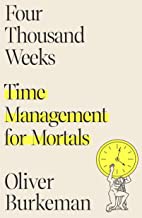
Four Thousand Weeks: Time Management for Mortals
Oliver Burkeman turns the whole productivity project on its head, arguing that a human lifespan of roughly four thousand weeks is not a problem to optimize…
2,447-word summary · 11 min read
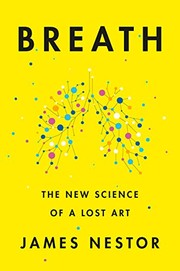
Breath: The New Science of a Lost Art
Journalist James Nestor investigates how modern humans learned to breathe badly, and what researchers, athletes, and breathwork practitioners have found about…
2,011-word summary · 9 min read
Beautiful Boy: A Father's Journey Through His Son's Addiction
David Sheff recounts watching his son Nic slide into meth addiction, and his own desperate, humbling search for how to help without destroying them both.
2,076-word summary · 9 min read
The Road Less Traveled: A New Psychology of Love, Traditional Values and Spiritual Growth
M. Scott Peck argues that maturity begins with accepting difficulty, then builds discipline, love, and spiritual growth through honest, often painful work.
2,200-word summary · 10 min read

Attached
A psychiatrist and a psychologist explain adult attachment styles and show how anxious, avoidant, and secure patterns shape dating, conflict, and the search…
2,157-word summary · 10 min read

The Emperor of All Maladies
A biography of cancer from Galen to chemo through one doctor cases.
2,255-word summary · 10 min read

The Choice
Auschwitz survivor and therapist turns prison into a guide for healing.
2,472-word summary · 11 min read
God Is Not Great
Hitchens argues religion poisons life across history and texts.
2,545-word summary · 11 min read
10% Happier
An ABC newsman panics on air, then finds meditation without losing his edge.
2,590-word summary · 12 min read
The Hot Zone
Ebola and Marburg move from African outbreaks to a Virginia monkey house and an Army response in suits.
2,291-word summary · 10 min read
The Black Swan
Taleb argues rare shocks shape history more than models admit, and urges safer exposure over prediction.
2,588-word summary · 12 min read
On the Origin of Species
Darwin's 1859 case for evolution by natural selection, from Beagle finches and breeding pigeons to fossils and anatomy.
2,589-word summary · 12 min read

The Untethered Soul
Singer names the noisy inner voice and shows how watching thoughts, loosening old hurt, and keeping the heart open through surrender can ease daily suffering…
2,752-word summary · 12 min read