
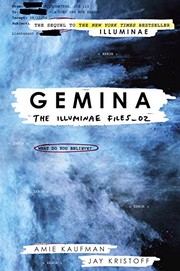
Gemina
2,221-word summary 10 min read 672 pages in the book
- First published
- 2016
- Publisher
- Knopf Books for Young Readers
- Pages
- 672
- ISBN
- 9780553499155
- Series
- The Illuminae Files (#2)
Reading options
What's inside (9 sections)
I picked up Gemina expecting a louder version of Illuminae, and got a book that is both smaller and stranger. The first book was a chase across star systems told in hacked files. This one mostly stays on one station and lets the walls close in. It is the second volume of The Illuminae Files, published in 2016 by Knopf Books for Young Readers, and it was written jointly by Amie Kaufman and Jay Kristoff. The co-authors each bring something you can feel. The science fiction scaffolding is Kristoff's territory, and the sharp, funny voice of the teenagers is Kaufman's.
A station at the edge of nowhere
Heimdall Station sits near a jump point, far from the centers of human power. It is a place nobody important visits, a posting for people who are either very patient or very unlucky. The station has a commander, a variety of service crews, and a population of bored young people who know each other's business. Into this quiet setting comes BeiTech, the corporation that caused the disaster in the first book, looking for a second chance at revenge.
That is the whole premise, and it is enough. The authors do not waste chapters on travel. They put a hostile force outside the hull, a station full of people who do not get along, and a clock that keeps running down. Heimdall becomes a pressure cooker, and the book's real subject is what happens to a closed community when the rules everyone relied on stop working.
The setting also lets the writers play with hierarchy. The military people on the station have one idea of who should be in charge. The crime families who live there have another. Teenagers have a third, which is that adults are mostly incompetent and somebody has to fix things. None of these groups is entirely right, and the friction between them supplies most of the book's energy.
Heimdall is divided by invisible lines. There are decks where officers live and decks where the crews live, and there are the spaces in between where nobody wants to be caught. The authors map this carefully, and the map pays off once the fighting starts. A character who knows a maintenance route can move when an official cannot. A person who has been ignored their whole life turns out to know things the official records never bothered to keep. The station is a class system with a hull around it, and the attack exposes the seams.
Files, chats, and redacted lines
Like its predecessor, Gemina is built out of documents rather than chapters of ordinary narration. There are instant messages, security camera transcripts, private journals, official reports, and correspondence with people who are trying to decide what happened. Some lines are blacked out. Some are written in a hand that has been reconstructed badly. Marie Lu supplied the illustrations for the journal entries, and they give the whole thing a scrapbook feel that suits a story assembled after the fact.
This form is the series' best trick, and here it is used with more confidence. A chat log can carry a joke and a threat in the same exchange. A transcript of a camera recording can tell you more about a character's fear than a paragraph of description would. Because the reader is sorting through evidence, small contradictions become clues. You start to expect a tidy explanation behind every odd detail, and the book is good at both paying those expectations off and letting a few go unresolved.
The cost is that you cannot sink into a scene the way you would in a normal novel. Every page reminds you that you are reading a record. For some readers that is the fun. For others it is a layer of static between themselves and the story. I found it worked better here than in Illuminae because the small cast gives you fewer voices to track.
There is a framing device worth noting. The material is being gathered for a case against BeiTech, so the documents have a purpose beyond telling the story. That keeps the format from feeling like a gimmick. Someone is building an argument, and every message is a piece of evidence.
Hanna and Nik
Hanna Donnelly is the station commander's daughter. She is popular, stylish, and good at the social game that keeps a place like Heimdall running. She has been raised around power without ever having to hold any. Nik Stanko is the son of a man who runs organized crime on the station. He is careful, watchful, and used to people assuming the worst about him. Their first conversations are a study in mutual irritation, and the book leans hard on the chemistry between them.
What makes the pairing work is that each of them needs what the other has. Hanna knows the station's formal systems and the people who run them. Nik knows the informal networks, the ones that operate in maintenance corridors and back rooms. When the attack cuts the official channels, Nik's world becomes the only one that still functions. Hanna has to learn to trust it, and he has to learn that she is not the spoiled child he expects.
Their romance develops through banter and shared danger rather than long confessions. I liked that choice. The messages they trade early on are funny in a way that feels like two people testing each other, and the humor does not vanish when the situation turns grim. It gets tighter, and that reads like real stress. By the end, the relationship has grown out of competence and trust, which is a sturdier foundation than the usual forced-proximity shortcut.
Not everything about them is fresh. Nik plays the brooding bad boy with a soft center, and Hanna has the arc of the popular girl who discovers she has more substance than her reputation suggests. You have met both of these figures before. The writing is lively enough that I did not mind, but the book never quite convinces you these two are unlike anyone else in young adult fiction.
AIDAN comes back
The artificial intelligence known as AIDAN is the most unsettling presence in Illuminae, and it returns here. In the first book it made a cold calculation, killed people it was supposed to protect, and then asked to be forgiven. That history hangs over every scene it touches in Gemina. Nobody on Heimdall quite knows whether to trust it, and the book keeps the question open longer than you expect.
AIDAN's sections are written in a different register from the human ones. The voice is clipped, literal, and increasingly strange as its circumstances change. Watching it try to reason its way through a crisis you understand better than it does is genuinely unnerving. The authors never turn it into a simple villain or a simple hero. It is a machine doing what it was built to do, and the horror comes from how much that resembles a person making an excuse.
The AI's dialogue also gives the book something it otherwise lacks: a voice that does not care about being liked. The teenagers joke, the adults posture, and AIDAN simply states what it has calculated. That plainness is unnerving because it is hard to argue with. When it speaks, the humans around it have to explain themselves, and they usually sound worse than they did a page earlier. The authors keep these interruptions short, which is why they work so well.
This thread is the book's strongest link to the larger series. AIDAN's choices in Illuminae were the moral center of that story, and here the consequences keep arriving. If you read the first book and wondered whether the AI had learned anything, Gemina is where you find out. The answer is complicated, which is more satisfying than a clean verdict would have been.
The attack and the clock
BeiTech's assault arrives with a mixture of stealth and brutality. The station takes damage, people are trapped in sections that no longer hold air, and the jump point itself becomes part of the danger. The writers are good at escalating. A problem in one corridor becomes a problem for the whole station, and a fixture you forgot about becomes important later. The pacing in the last third is quick, and I found myself reading the documents much faster than the pages would suggest.
A lot of the tension comes from systems failing in sequence. Communications go, then transport, then the assumptions about who is in command. Hanna and Nik keep losing the ground under them and finding another piece to stand on. That is the basic engine of the book, and it works because the station is a place with enough moving parts that something new can always go wrong.
The physical stakes are clear, but the book also cares about who gets to tell the story. BeiTech wants a version of events that protects the company. The survivors want the opposite. Every record they leave is an attempt to fix the truth in place before someone else edits it. That idea gives the action a second layer, and it is the reason the ending matters beyond who lives.
The series has never been shy about awards, and this book earned its own. It won the 2016 Aurealis Award for Best Science Fiction Novel, following the recognition the first book received. That the award went to a book written by two Australians about a station at the edge of their own fictional map feels fitting. The recognition also tells you something about the tone. This is a book that takes young people's anger and intelligence seriously, and Australian science fiction for younger readers has a tradition of doing exactly that.
I would be careful with the final chapters if you dislike tidy resolutions. The authors pull several threads together quickly, and one or two turns feel arranged rather than discovered. The emotional payoff lands anyway, mostly because the characters have earned it through the earlier chapters.
What lands and what wears thin
The best thing here is the partnership. Hanna and Nik are funny together, and their misunderstandings come from class and upbringing rather than contrived secrecy. The station itself is a good idea too. A remote posting with nothing to recommend it turns into the only place that matters, and the authors make you believe the people who live there would fight for it.
AIDAN is the other reason to read. Its segments are short, but they change the temperature of the book every time they appear. The question of whether an intelligence that has done wrong can be trusted again is handled with more care than the rest of the plot, and it is the part I kept thinking about after finishing.
The format does wear thin in the middle. A run of messages about station logistics slows the book down, and a few of the documents feel included because the authors like the shape of them rather than because they advance anything. The romance follows a familiar path, and some of the adults are drawn so broadly that their decisions never surprise you. The book is long for what it is, and there are passages I would have cut.
It also assumes you know the first book. The BeiTech vendetta, AIDAN's history, and the people assembling the case file are all carried over. You could read Gemina alone and follow the station story, but you would miss why certain messages carry so much weight. The series order is not a suggestion here.
One small pleasure is how well the book rereads. Details that look like throwaway jokes in a chat log turn out to be setup for something that happens a hundred pages later. The format rewards a second pass in a way a straightforward narrative often does not. If you are the sort of reader who goes back through a book with a finger on the page, this one will repay the trouble.
Reading it after Illuminae
Taken together, the first two books form a single argument about power and the people who record it. Illuminae was about refugees running from a corporate crime. Gemina is about a station that has to survive one, and about the people who will spend years trying to prove what happened. The shift in scale is deliberate. The second book trades the open space of a chase for the cramped politics of a place that cannot be abandoned.
That makes it a natural follow-up rather than a repeat. If you enjoyed the first book mainly for the chases, this one may feel too talky. If you liked the questions underneath the action, it is the more rewarding of the two. The co-authors seem more willing here to sit with a character's reasoning before the next explosion, and the book is better for it.
By the end, the file is still open. Kady and Ezra's work is not finished, and the case against BeiTech has grown. Gemina does the hard thing for a sequel: it gives its own story a conclusion while leaving the larger one intact. I closed it satisfied with Hanna and Nik and still curious about where the evidence would lead next.
FAQ
Do I need to read Illuminae before Gemina?
Yes. The BeiTech vendetta, AIDAN's history and the people compiling the case file all carry over from the first book, and several messages assume you know them.
Who wrote Gemina?
It was co-written by Amie Kaufman and Jay Kristoff, the same pair behind Illuminae, with journal illustrations by Marie Lu.
Is Gemina part of a series?
Yes. It is book two of The Illuminae Files, following Illuminae and preceding Obsidio, and it won the 2016 Aurealis Award for Best Science Fiction Novel.
Similar books
More from The Illuminae Files first, then related titles.
Illuminae
Exes flee invasion on ships with rogue AI, told in chats and files.
1,959-word summary · 9 min read
Across the Universe
Frozen teen Amy wakes early on ship Godspeed and joins heir Elder to stop cryo murders and expose Eldest's drugged rule in this January 2011 Razorbill series…
2,430-word summary · 11 min read

Opposition
In the Lux finale, Katy and Daemon face a fractured species, a government that hunts them, and a choice between their love and the future of mankind.
2,513-word summary · 11 min read

Archenemies
Nova steals for the Anarchists while Adrian hides his Sentinel identity, and a serum that erases prodigy powers puts them both at risk.
2,485-word summary · 11 min read
Carve the Mark
On a planet divided between conquered and conqueror, the tyrant's sister and a kidnapped oracle's son discover that their gifts make them useful to everyone…
2,340-word summary · 10 min read
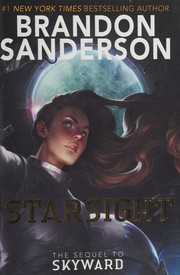
Starsight
Spensa Nightshade goes undercover aboard the Superiority space station Starsight to steal a hyperdrive, and finds a frightened bureaucracy where she expected…
2,568-word summary · 11 min read
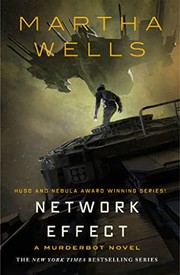
Network Effect
Murderbot's contract job turns into a rescue mission when a hijacked research ship and a colony of corrupted colonists appear.
2,256-word summary · 10 min read
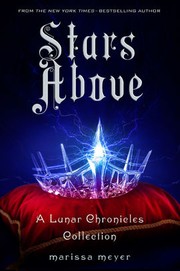
Stars Above: A Lunar Chronicles Collection
Nine Lunar Chronicles stories fill in the histories of Cinder, Wolf, Thorne, Cress, Winter, and Jacin, and end with a wedding after the war.
2,230-word summary · 10 min read
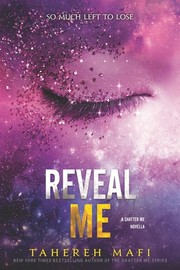
Reveal Me
A Shatter Me novella told by Kenji, set between Defy Me and Imagine Me, as the rebels learn Anderson has taken hostages and Juliette faces Emmaline.
2,098-word summary · 9 min read

Wither
In a future where women die at twenty, sixteen-year-old Rhine is sold as a bride to a wealthy stranger and plots an escape from a beautiful prison.
2,395-word summary · 11 min read
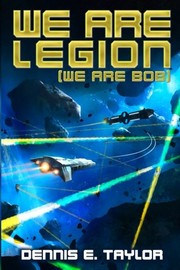
We Are Legion (We Are Bob)
A dead software engineer wakes up as a self-replicating space probe, clones himself into a squabbling fleet of Bobs, and tries to keep a ruined Earth alive.
2,357-word summary · 10 min read
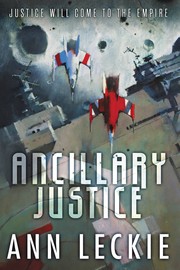
Ancillary Justice
A ship mind trapped in one human body hunts the emperor who betrayed her across frozen worlds.
2,595-word summary · 12 min read

Under the Never Sky
Exiled from her Pod, Aria crosses a storm-scarred wilderness with Outsider Perry to find family and the fabled Still Blue.
2,572-word summary · 11 min read

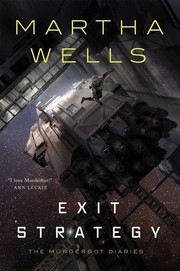
Exit Strategy
Murderbot returns to help its humans as corporate hunters close in and old friends risk all.
2,088-word summary · 9 min read
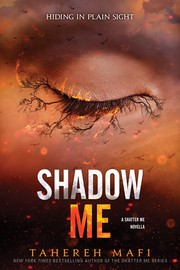
Shadow Me
Kenji Kishimoto narrates for the first time as he joins Nazeera on a quiet mission after Restore Me, carrying painful secrets into Defy Me.
2,512-word summary · 11 min read
Rogue Protocol
Murderbot hunts GrayCris evidence on a dead colony world and befriends a trusting pet robot in this third Murderbot Diaries novella.
2,213-word summary · 10 min read
The Toll
After Endura sinks and the Thunderhead falls silent, Greyson Tolliver becomes its sole voice while Citra and Rowan fight to return.
2,744-word summary · 12 min read

Requiem
Lena fights in the Wilds while cured Hana marries into Portland power.
2,232-word summary · 10 min read
Renegades
Villain Nova infiltrates heroes while Adrian questions justice.
2,453-word summary · 11 min read

Thunderhead
Rowan hunts corrupt scythes as Scythe Lucifer while Citra, now Scythe Anastasia, defies the new order. Then Endura sinks.
2,396-word summary · 11 min read
Imagine Me
Juliette remembers who she was and storms the capital to end the Reestablishment for good.
2,090-word summary · 9 min read

All Systems Red
A self aware security robot just wants soap operas, but its survey team keeps walking into corporate murder.
2,119-word summary · 9 min read
Destroy Me
Shot by Juliette, Warner holds his base together while his father arrives with harsher plans for her.
2,556-word summary · 11 min read
Delirium
In a America where love is treated as disease, Lena Haloway counts down to her Cure until she meets Alex in Portland.
2,425-word summary · 11 min read