
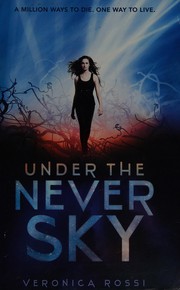
Under the Never Sky
2,572-word summary 11 min read 376 pages in the book
- First published
- 2012
- Publisher
- HarperCollins
- Pages
- 376
- ISBN
- 9780062131959
- Series
- Under the Never Sky (#1)
Reading options
What's inside (8 sections)
I came to this book late, after the big wave of early 2010s teen dystopias had already broken. A friend pressed it on me with the warning that it starts like one kind of story and turns into another, and that turned out to be right. I expected sealed cities and stern councils, which are here, but I did not expect how much time we would spend outside, walking, hungry, listening for weather. Veronica Rossi published it in 2012 with HarperCollins as the first book in the Under the Never Sky series, and at 376 pages it reads fast because the chapters alternate between two voices who want very different things.
What follows is a full summary, with the ending included. Aria is a seventeen year old girl raised inside a sealed Pod. Perry, full name Peregrine, is an Outsider hunter raised in a tribal settlement in the wilderness. Their paths cross after Aria is thrown out and Perry loses someone he loves. They dislike each other at first for reasons that make sense on both sides, then form a practical bargain that turns into something more complicated.
The romance is present, but I would not call this only a romance. It spends as much energy on food, shelter, tribal politics, and a strange electrical weather system that has made the surface deadly. That balance is why I kept reading when the middle slowed.
Life inside the Reverie Pod
Aria lives in Reverie, one of the enclosed Pods where Dwellers live apart from the outside air. Life there is ordered, clean, and mediated through technology. People carry a device in the eye called the SmartEye that overlays information, records what they see, and connects them to shared virtual spaces where they meet friends, attend lessons, and wander through constructed places that feel almost physical.
Aria is not a rebel at the start. She is a normal Pod teenager with friends, classes, and small anxieties about status. Her mother, Lumina, is a scientist often absent for work. Aria misses her without quite saying so. She spends long stretches in the virtual spaces with close friends, including Paisley. The appeal is obvious. You can visit a forest without cold or insects. You can be with people without leaving your room.
Rossi is good at showing what this costs without lecturing about it. Aria is thin in a way the Pod doctors monitor. Her muscles are weak from lack of real movement. She reads tone well in a virtual chat and poorly across a fire. When her friends talk about Outsiders, they repeat what Pod news tells them, that Outsiders are violent and less than human. Aria repeats it too at first. She has no reason not to.
The Pod runs on rules and ranks. The Consul, Hess, and the scientists around him control information and punishment. Food arrives in measured portions. There is safety here, real safety, and Rossi does not pretend otherwise. Children do not starve in Reverie. Storms do not tear roofs away. But everything arrives secondhand. Aria loves music and old stories about the world before. When she is later forced outside, she does not only lack skills. She lacks reference points.
Aria and exile to the outside
The trouble starts when Aria and a small group of friends break a rule to visit a damaged and off limits section linked to another Pod. They are curious and a little arrogant in the way teenagers can be when they assume the system will catch them gently. Something goes wrong there. A fire breaks out. People die. The details of who did what get sorted out later by adults with their own reasons to shape the story.
Aria is blamed in a way that feels political from the start. Hess and the Pod leadership need someone to carry the fault, and Aria, as the daughter of a scientist whose work has made her inconvenient, is an easy choice. Her SmartEye is removed. For a Dweller, losing that eye device is like losing part of memory and part of sight at once. She had relied on it to identify things, to call for help, to pull up maps. Without it, the world goes flat and silent in a frightening way.
Then comes the punishment. Instead of a cell inside, Aria is exiled. She is put outside the Pod walls to survive or not. For Dwellers, this is close to a death sentence. The air outside can burn during certain conditions. Water is not safe everywhere. Night brings cold and animals and people who have no reason to help a Dweller.
Rossi does not let Aria adapt quickly to prove a point about inner strength. Aria vomits. She shakes. She tries to drink bad water. She misjudges distance and sun. She keeps thinking someone will come to correct the mistake. When no one comes, she starts to walk because staying still means dying faster. Her first goal is simple. She wants to find her mother, who she believes was sent west, and she wants to understand what really happened in the fire. She stays a Pod girl for a long while. She apologizes at the wrong times. She expects fairness from strangers. That slowness makes her later growth believable. When she learns to keep quiet when voices carry or to save water, it feels earned because we watched her fail first.
Perry the Outsider and the Tide settlement
Perry lives with the Tides, an Outsider tribe settled near the coast. If Aria grew up with too much mediation, Perry grew up with too much exposure. His people hunt, fish, keep gardens when they can, repair roofs, guard stores, and bury their dead often. Children learn early to read clouds, to smell change in the air, to move quietly. Loyalty to blood matters most of all.
Perry is in his late teens, a hunter with unusually keen senses. He can see in very low light. He can track by scent. He can hear movement at a distance. In his tribe, such abilities mark him as touched by the changed world, respected and slightly feared. He is not the leader. His older brother Vale holds power as Blood Lord, and their relationship is strained. Vale is hard and convinced that harsh decisions keep the tribe alive. Perry loves his nephew Talon, Vale’s young son, with a protective intensity that drives most of what he does.
I liked the texture of settlement life. Roar, Perry’s best friend, plays a battered guitar and jokes to cover worry. Liv, Roar’s sister, has complicated ties to a rival tribe. There is a healer, hunters with grudges, stores that run low before winter. The Tides argue about rations. They hold trials. They are not sentimental survivors. They do what they think survival requires, then live with it.
The wound that sets Perry in motion is the abduction of Talon. Dwellers take the boy during a raid, for reasons tied to experiments and to Hess’s search for people who can tolerate outside conditions. Perry is gutted and furious, and guilty because he was not where he thought he should have been. His plan is blunt. Get inside the Pod system somehow, find Talon, bring him home. He has no codes and no understanding of Dweller networks. What he has is knowledge of the terrain.
Perry’s chapters sound different from Aria’s. His sentences are shorter. He notices smell and sound first, then shape. When he first sees Aria, he sees a liability who will slow him down. He is not wrong. But he also sees a possible key, because she knows Pod ways. A fair criticism here is that his senses can feel convenient. He hears what the plot needs him to hear and misses what it needs him to miss. Rossi mostly keeps it within bounds by giving the ability costs, headaches and overload during storms, but there are moments when his nose solves a problem a little too neatly.
Forced to journey together
Aria and Perry meet badly. She is half dead from exposure when his people find her. They take anything useful, tie her, question her, and debate leaving her. Perry saves her in a rough way and then uses her. He needs a guide to Dweller habits and speech. She needs a guide to staying alive one more day. Neither trusts the other. She sounds spoiled when she tries to explain Pod life. He sounds cruel when he tries to explain tribal law.
The bargain they strike is practical. Perry will help Aria travel toward news of her mother and toward safer ground. Aria will help Perry reach the Pod that took Talon and speak where his manner would get him killed. It is not friendship. It is a trade between two desperate people.
The middle of the book is this walk. They move through burned towns, dry riverbeds, and sheltering caves. They run out of food. They find food. They argue about whether to risk a settlement. Roar joins them for stretches, bringing humor and music and loyalty that steadies the group. They meet Cinder, a strange boy tied to the Aether who becomes important later and hints the changed world has produced more than keen senses.
What makes these chapters work is the slowness of the trust. Aria learns to keep watch without being told. Perry learns to explain a plan instead of just giving orders. She teaches him how Dwellers handle identification. He teaches her to listen for storm sound, to cover skin, to store water, to move at night when the air is calmer. He shares food even when annoyed. She stays awake so he can sleep even when afraid of him.
The romantic pull grows from that, and my reaction is mixed. Rossi writes attraction with restraint. They notice hands, voices, the way the other moves when tired. It feels tied to reliance rather than declarations. Yet the shift from hostility to care happens faster than the page count suggests. A few shared dangers do a lot of work. I accepted it because both are lonely in specific ways, Aria cut off from her mother and friends, Perry cut off from his brother’s approval, and loneliness speeds attachment. But I noticed the seams.
There are strong action beats that break up the walking. An attack by rivals led by Sable of the Horns shows how tribal feuds spill into cruelty. A run in with scavengers broken by hunger shows what happens when the ties Perry relies on collapse. Aria freezes in one fight and acts bravely in another, which felt true. By the end of this stretch, they have something neither had at the start. Not safety, but a shared direction.
Aether storms that rule the sky
The Aether is the book’s defining invention, more than the Pods or the tribes. Since some past cataclysm, the sky carries swirling bands of blue energy that gather into funnels and storms. When active, it burns. It scorches earth, melts structures, sickens lungs, and leaves glassy scars on rock. At night the sky can glow and crackle. Caught in the open during a bad storm, you die.
Rossi describes these storms through sense rather than science. Characters watch the horizon for shimmer. They taste metal. Birds go quiet. Perry’s senses ache before a strike. Aria, who has only seen such skies in old footage, is terrified in a way that feels correct. Her first full storm is one of the best set pieces, not because of scale but because of small choices, where to crouch, what to cover, how to breathe through cloth.
The storms shape everything. Pods were built to escape them. Tribes build low shelters, dig cellars, plan travel around lulls. Crops fail when the Aether runs hot. Old cities are husks because no roof held. People speak of the sky as awake, not only from superstition but because it behaves like a predator with habits you can learn and never fully trust.
I liked that Rossi never fully explains the Aether. Scientists have theories. Outsiders have stories. Neither feels complete. That restraint helps. A full briefing would have slowed the plot and invited holes. By keeping the cause vague, the book keeps attention on consequence.
The criticism I would offer is that danger fluctuates to serve the scene. Sometimes a distant glow sends everyone underground for hours. Sometimes the pair outruns a funnel in ways that strained my belief. Survival often depends on finding a cave exactly when one is needed. This is common in adventure fiction, and Rossi handles it better than many, but luck does more work than preparation in a few spots. The book also suggests the storms are changing certain people. That thread stays open for later volumes, which is fair for a first book, though readers who want closed explanations will need patience.
Hope for the Still Blue and what the book leaves open
The Still Blue is the rumor that keeps both sides moving. It is said to be a place where the sky is clear, where the Aether does not reach, where crops grow and children can play outside without watching clouds. Dwellers treat it as a research target. Outsiders treat it as a story elders tell to make winter bearable. Aria’s mother was pursuing data about it. Perry’s people need it because their territory is failing.
The search gives the plot its spine. Aria hopes it will mean a home that is neither a sealed room nor a desperate camp. Perry hopes it will mean a future for Talon beyond raids and hunger. Hess wants control of any such knowledge because control of livable land is control of everything. Sable wants it to pressure rival tribes.
Without giving away the final pages beat by beat, the book ends with partial wins and clear losses. Aria learns painful truths about her mother’s work and about what Hess did to protect Pod interests. Perry learns what happened to Talon and what it will cost to get him back. They survive a major storm and a violent confrontation that forces both tribes and Dwellers to show their worst and, briefly, their best. The pair are closer but not safe. The Still Blue remains unreached, a direction rather than a destination.
That open ending fits the first of three books, followed by Through the Ever Night and Into the Still Blue, but it means this volume does not stand fully alone. Threads about Cinder, about Liv’s choice, about Vale’s grip on the Tides, are clearly set up for continuation. I did not mind, because the bond between Aria and Perry reaches a resting point even as the quest continues.
What works best is voice and momentum. Alternating chapters keep the pace moving. Aria notices social cues and inner states. Perry notices ground, weather, and bodies. Rossi writes hunger, thirst, and exhaustion well. What works less well is polish in spots. Pod technology is vivid in use but vague in structure. Tribal politics can blur, with names and feuds arriving quickly. And the central romance, though charming, leans on peril to accelerate intimacy. None of that stopped me from finishing in two sittings. The image that remains is simple. Two kids from opposite sides of a wall, sharing shelter while blue fire moves across the sky, deciding to keep walking together in the morning.
FAQ
Is Under the Never Sky the first book in the series?
Yes. It was published in 2012 by HarperCollins as book 1 of the Under the Never Sky trilogy, at 376 pages, and continues in Through the Ever Night.
What are the Aether storms?
They are bands of blue energy in the sky that gather into deadly funnels, scorching land and forcing Dwellers into Pods and Outsiders into shelters.
Does the book resolve the search for the Still Blue?
No. Aria and Perry survive storms and confrontations and settle their partnership, but the Still Blue remains a direction rather than a reached place.
Similar books
More from Under the Never Sky first, then related titles.

Archenemies
Nova steals for the Anarchists while Adrian hides his Sentinel identity, and a serum that erases prodigy powers puts them both at risk.
2,485-word summary · 11 min read
Carve the Mark
On a planet divided between conquered and conqueror, the tyrant's sister and a kidnapped oracle's son discover that their gifts make them useful to everyone…
2,340-word summary · 10 min read
Reveal Me
A Shatter Me novella told by Kenji, set between Defy Me and Imagine Me, as the rebels learn Anderson has taken hostages and Juliette faces Emmaline.
2,098-word summary · 9 min read

Wither
In a future where women die at twenty, sixteen-year-old Rhine is sold as a bride to a wealthy stranger and plots an escape from a beautiful prison.
2,395-word summary · 11 min read

Never Fade
Ruby, now a leader in the Children's League, must track down the boy whose memories she erased, because he holds the only proof of what caused the disease that…
2,188-word summary · 10 min read
Shadow Me
Kenji Kishimoto narrates for the first time as he joins Nazeera on a quiet mission after Restore Me, carrying painful secrets into Defy Me.
2,512-word summary · 11 min read


Requiem
Lena fights in the Wilds while cured Hana marries into Portland power.
2,232-word summary · 10 min read
Imagine Me
Juliette remembers who she was and storms the capital to end the Reestablishment for good.
2,090-word summary · 9 min read

The City of Ember
Two twelve-year-olds trade jobs and chase a chewed-up note to save their fading underground city before its lights fail.
2,998-word summary · 13 min read
Destroy Me
Shot by Juliette, Warner holds his base together while his father arrives with harsher plans for her.
2,556-word summary · 11 min read
The Death Cure
Thomas refuses WICKED's final test, remembers too much, and runs with the Gladers toward a last cure and a ship north.
2,955-word summary · 13 min read
Delirium
In a America where love is treated as disease, Lena Haloway counts down to her Cure until she meets Alex in Portland.
2,425-word summary · 11 min read


The Host
Stephenie Meyer imagines Earth settled by Souls, where Wanderer wakes inside Melanie Stryder and hears her voice refuse to fade, sparking a desert flight to…
2,288-word summary · 10 min read

Shatter Me
Juliette Ferrars, whose touch kills, is locked up by the Reestablishment until Adam and Warner pull her into war.
2,115-word summary · 9 min read
Insurgent
Insurgent retold: Tris guilty after war, Erudite hunts Divergent, Amity talks, Candor serum.
1,951-word summary · 9 min read
Divergent
Veronica Roth's Divergent explained: the five factions, Tris's choice of Dauntless, the aptitude test, and where the trilogy's premise starts to crack under…
2,494-word summary · 11 min read

Vow of Thieves
Kazi and Jase return to Tor's Watch to find it occupied, and their marriage is tested by captivity, betrayal, and a war for the town of Hell's Mouth.
2,059-word summary · 9 min read

Iron Widow
Wu Zetian enlists to avenge her sister, kills her pilot, and becomes an Iron Widow in a mecha Huaxia where the machines are built to kill women.
2,444-word summary · 11 min read

The House of the Scorpion
A clone raised in a drug lord's poppy fields learns what he was made for and chooses what to do with the life he was given.
2,527-word summary · 11 min read
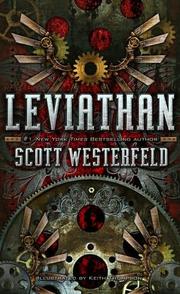
Leviathan
In an alternate 1914, a prince on the run and a girl disguised as a soldier meet aboard a living airship.
2,406-word summary · 11 min read

The Rose & the Dagger
Shahrzad is pulled from her Caliph husband and left in a desert camp of rebels, needing to break his curse and end a war before it ends her.
2,520-word summary · 11 min read
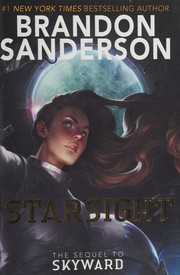
Starsight
Spensa Nightshade goes undercover aboard the Superiority space station Starsight to steal a hyperdrive, and finds a frightened bureaucracy where she expected…
2,568-word summary · 11 min read
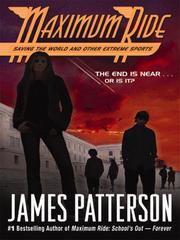
Saving the World and Other Extreme Sports
Max and the flock split in two to take down the lab behind their lives, one half in California and the other in Europe.
2,175-word summary · 10 min read
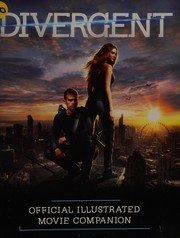
Divergent: Official Illustrated Movie Companion
An oversize behind-the-scenes guide to the 2014 Divergent film, with casting stories, costume and set design, and scores of photos.
2,524-word summary · 11 min read

We Hunt the Flame
In a fractured Arabia-inspired world, a disguised huntress and a prince-assassin race to find a magic-restoring book and confront an ancient evil.
2,195-word summary · 10 min read

Stars Above: A Lunar Chronicles Collection
Nine Lunar Chronicles stories fill in the histories of Cinder, Wolf, Thorne, Cress, Winter, and Jacin, and end with a wedding after the war.
2,230-word summary · 10 min read