
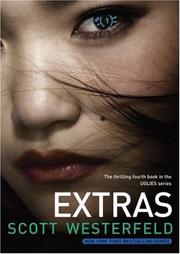
Extras
2,816-word summary 13 min read 384 pages in the book
- First published
- 2007
- Publisher
- Simon Pulse
- Pages
- 384
- ISBN
- 9781416954804
- Series
- Uglies (#4)
Reading options
What's inside (8 sections)
I came to Extras right after Specials and felt the jolt Westerfeld wanted me to feel. Tally Youngblood, who carried three books, steps to the side. A new girl takes over. At first I missed Tally. Then I got pulled into the new game. Extras came out in 2007 from Simon Pulse, about 384 pages, and it is book four in the Uglies series after Uglies, Pretties, and Specials. The world has changed. The pretty operation is no longer forced. Cities have woken up. And fame has become money.
The new lead is Aya Fuse, fifteen, living in Yokohama. She is small, quick, hungry to be known. In her city, your face rank decides a lot. Rank high and doors open, feeds follow you, kickers quote you. Rank low and you are an extra, background in other people stories. Aya is near the bottom. She has a hovercam named Moggle that follows her, a little flying eye she rescued and rebuilt, and she kicks stories to the feed hoping one will lift her. Her older brother Hiro is already famous for a kicker story about train surfing girls, which both inspires her and makes her feel left behind.
What hooked me was how close this feels to now, even though Westerfeld wrote it before TikTok and before influencer pay became normal talk. He saw where reputation systems were heading and built a city around them.
A world after the mind rain
To follow Aya, you have to know what broke open at the end of Specials. Tally and her friends helped spread the cure for pretty brain lesions. Dr. Cable lost control. Diego started curing people openly. Across the world, cities that had kept their citizens docile and pretty and calm suddenly had to deal with awake, argumentative people.
Three years later, the result is messy and fun. No one is forced to become pretty at sixteen anymore, though many still choose surgery because they like it. Cities trade and argue. Yokohama is crowded, bright, vertical, full of feeds. Everyone carries a feed, a personal stream of what they see and say. Kickers are the new reporters, kids and adults who find true stories, verify them, and kick them out to the city feed. If a story gets picked up, your face rank jumps. If you lie or kick junk, your rank drops fast because the system tracks truth.
Aya explains this the way a fifteen year old would, half proud, half annoyed. She checks her rank a dozen times a day. She studies what ranks, cute tricks, freak accidents, secret spots. Her best trick so far is nothing much, which she knows. She films her school, her family apartment, her brother Hiro acting cool. Moggle wobbles when the wind hits. She loves that little cam anyway because it is hers.
I liked this opening because it resets the stakes without erasing the past. The old control was brain surgery. The new control is softer, attention and approval, but it still shapes choices. Westerfeld does a lot of explaining here about ranks and kicks, and some of it lands as info dumps. I pushed through because Aya voice is lively, but if you want action right away, the start may test you.
Aya Fuse and the fame hunt
Aya wants one big story. She stalks rumors of girls who do something wild on the mag lev lines. Hiro, her brother, already kicked a famous story about mysterious Sly Girls who surf trains, and his rank jumped into the thousands. Aya was jealous in a specific sibling way, proud of him at dinner and sick about it in her room. She decides she will find the Sly Girls herself and get the full story they would not give Hiro.
She starts hanging around transit stations at night with Moggle hidden in her sleeve. She learns schedules, watches maintenance doors, follows a girl with strange shoes. She gets caught once, talks fast, pretends she is lost. She nearly gets hurt jumping a fence. Her mother worries. Her father tells her to focus on school. Hiro tells her to stop copying him, then feels bad and gives her a tip that actually helps.
What makes Aya fun to follow is that she is not heroic in the Tally way. Tally was brave and physical and often reckless for others. Aya is clever and social and often reckless for herself. She lies to her parents about where she goes. She is also kind to Moggle, fixing its rotor with tape, talking to it when she is lonely. That small friendship kept me on her side when her fame hunger got sharp.
She finally finds them by being stubborn. She follows a sound, a low hum on the rails after midnight, and sees lights move where no train should be. She films a blur, kicks a teaser, and her rank ticks up a little. That little tick is enough. She is hooked. She will risk more for the rest.
A fair criticism here is that Aya can feel thin next to Tally at first. Tally had three books of scars. Aya has wants. I missed the weight. But Westerfeld knows this and lets Aya grow into weight later, when telling the truth will cost her the fame she chased.
The Sly Girls and the train
The Sly Girls are exactly what Hiro said and stranger. Frizz Mizuno is sweet and nervous and famous for his large eyes after surgery he chose to look kind. Ren Takahashi is calm and dry. Their friend, cool and sharp, rounds out the group. They ride mag lev trains from the outside, skipping along the top with magnetic boards, ducking tunnels, lying flat when supports pass. It is illegal, dangerous, and beautiful to watch.
Aya begs to join. They say no. She follows anyway. She proves she can keep quiet. She learns to balance when the train tilts, to breathe shallow in a tunnel, to trust the board pull. Westerfeld writes these rides with speed and clear space. You feel the wind, the hum in your teeth, the lights of Yokohama blurring below, the sudden dark of a tunnel and the slap of air. Moggle films from a distance, wobbling, almost lost twice.
Frizz likes Aya quickly. He is gentle in a way that stands out among daredevils. He worries about her, lends her gloves, checks her board. Ren respects that Aya does not scream or show off. Slowly they let her in. They show her their hideout, an old maintenance room with blankets and snacks and a wall of train times. They teach her the rules, never ride alone at first, never ride in rain, never tell.
Aya kicks the story. Not the hideout, not yet, but the ride itself, faces hidden just enough to keep trust. Her rank jumps. Comments pour in. Older kickers praise her eye. Strangers recognize her at school. For a chapter or two she floats. It is the happiest she has been in the book.
Then she learns the Sly Girls have a second secret, bigger than surfing. They have found something in the wild outside the city, something they visit by train and do not talk about on the feed. Aya, hungry for a kicker story that will push her into the top hundred, follows them one night when she was told not to. That choice drives the rest of the book.
If you love action, this middle stretch is the best part. I thought two surf runs could have been one. But the friendship work is good. Frizz, Ren, and Hiro feel like real teens, teasing, scared, brave in flashes.
Tally and David walk back in
Aya trail leads to a wooded hill with a strange sight, huge metal balls half buried, humming faintly. The Sly Girls call them the gifts of the Extraterrestrials. Someone has been leaving them. Rumor says aliens are signaling Earth. Some kids leave offerings. Some adults want to sell the metal. Aya films, heart pounding, sure this is the story that will make her.
That is when Tally Youngblood walks back into the series, and the tone shifts. Tally is older now, early twenties, still fast and scarred from her Special days. She kept her Special body by choice at the end of Specials, to help guard the wild, but had the brain work cured so she thinks clear. She travels with David, her old love from the Smoke, who is steady and serious about nature. They are not famous in Yokohama in the way Aya understands fame. They are legends to a few and rumors to most.
Tally is blunt with Aya in a way that stings. She tells her to stop filming. She tells her the metal balls are not alien gifts. She tells her the Sly Girls are in over their heads. Aya, who has dreamed of meeting Tally the way kids dream of meeting pop stars, is crushed and thrilled at once. David is kinder. He explains that he and Tally are part of a loose group called the Cutters, or the Cut, young people who watch cities so they do not repeat the Rusty past, the old age when humans wrecked the climate and nearly wrecked themselves.
Their warning is plain. The balls are connected to a plan to build something dangerous, a mass driver on the mountain that could launch metal into orbit and, in the wrong hands, drop it back down as weapons. They call such weapons city killers, rods or slugs that hit with huge force, enough to break a city without nukes. Someone in Yokohama, or selling to Yokohama, wants the prestige and power of space launch without the rules that keep launch from becoming attack.
Aya does not want to believe them at first because belief would kill her story. Aliens rank higher than warnings. I felt that conflict was honest. She likes Tally but she loves her own rising rank more. Frizz begs her to be careful. Hiro smells a bigger story and pushes her to dig. Ren says nothing, which says a lot.
The cameo works for me, though I see the disconnect criticism. Readers who loved Tally may feel she is different here, harder, more tired, less central. Readers who never read the first three books may wonder why they should care about this intense woman and her quiet boyfriend. This book really asks you to know Tally already, or to accept learning her on the fly.
Metal balls and city killers
The back half turns into a detective story with hovercams. Aya, Hiro, Frizz, and Ren track where the balls come from. They find a hidden site in the hills, rails cut into rock, parts delivered at night, workers who do not ask questions. Moggle proves useful here, small and quiet, able to slip through vents and film serial numbers. Aya learns to read shipping marks, to follow a truck without being seen, to kick encrypted backups in case she is caught.
What they find is not aliens. It is people, which is scarier. A faction with money and engineers has been testing a mass driver, a long magnetic track that can throw payloads into orbit cheaply. Pitched as science and prestige, a way for Yokohama to lead, it can also be turned. Anything thrown up can be brought down. A slug of metal dropped from orbit hits like a bomb. The old cities banned this for a reason after the Rusties fell. Tally and David have seen other cities try and have stopped some. Yokohama is next.
Westerfeld explains the physics in plain terms, push, speed, orbit, fall, without drowning the story. He also shows the politics, city councils who want jobs and pride, engineers who tell themselves research is neutral, feed commenters who call warnings paranoia. Aya interviews a young engineer who loves rockets and hates weapons and does not know which he is building. That scene stuck with me because the man is not evil. He is excited, which is how bad tools get built.
The Sly Girls split on what to do. Ren wants to expose everything now. Frizz is scared of being crushed by powerful adults. Hiro wants the perfect kicker, timed for max rank. Aya swings between them. She films proof, hides copies, argues with Tally about method. Tally wants to smash the site if needed. David wants proof and votes and pressure, not just force. Aya starts to see that fame and truth are not the same job. Fame wants a clean alien story. Truth wants documents, dates, names, which rank slower.
There are chases here that move fast, a night run on the train with security drones behind, a scramble through woods with Moggle light blinking red, a close call in a tunnel where Aya has to lie flat and trust Frizz hand on her back. I liked that the action stays teen scale. No armies. Just kids with boards and cams against adults with money and locks.
My gripe is info dumps. Twice the story stops for a lecture on orbital mechanics and city history. The facts matter, but they arrive in big blocks, often from David in patient teacher voice. I wanted them folded into movement.
Truth or fame
The choice Aya faces is simple to state and hard to live. She has footage that could make her one of the most famous kickers in Yokohama if she cuts it as aliens and mystery. She also has dull, damning footage that proves the mass driver plan, which will rank lower at first, anger powerful people, and may put her friends at risk. Hiro tells her to think like a kicker, build audience, drop hints, save the hard proof for part two. Frizz tells her to think like a friend, protect the Sly Girls. Tally tells her to think like a citizen, kick the truth whole and fast before launches move forward.
Aya tries to have both. She cuts a flashy teaser that spikes her rank into the range she dreamed about. Strangers shout her name. Feeds quote her. For a day she is the girl who found aliens. Then the comments turn. Skeptics pick apart shadows. Believers demand more. Powerful accounts call her a fraud or a pawn. Her rank wobbles. Worse, the attention brings security to the Sly Girls hideout. Ren gets hurt in a fall during a rushed escape. Frizz cries and says they trusted her.
That fall is the turn for Aya. She stops checking rank every minute and starts copying files. She sits with Ren in a clinic while nurses wrap an ankle and lecture about trains. She apologizes to Frizz without excuses. She lets Hiro be angry when she refuses to hold the story for better timing. She goes to Tally and David and says she will kick everything, names and maps and serials, even if it burns her new fame.
The final kicker is not flashy. It is long, careful, boring in the right way, documents first, then video, then a plain voiceover where Aya says what she knows and what she does not. She kicks it across multiple feeds so it cannot be buried. Her rank drops at first because conspiracy and aliens are more fun than shipping manifests. Then other kickers verify pieces, engineers confirm, city council members start asking questions on record. The story spreads because it is true, not because it is fun. The launch site is raided, work stops, arrests start. Tally and David do what they do best in the background, making sure the hardware cannot quietly restart.
Aya does not end as queen of the feed. She ends as trusted, which is different and better. Her rank settles in a solid middle range, high enough to be heard, not so high she has to perform every hour. Frizz stays close, kinder than before. Ren forgives her but keeps distance, which felt true. Hiro learns from his little sister instead of the other way around. Tally leaves as quickly as she came, with a nod that means more than praise.
Westerfeld closes by circling back to the series themes. The first three books were about surgery that controlled minds. This one is about attention that shapes minds. Aya choice to trade hot fame for slow truth is her cure moment, the parallel to Tally taking the pills or keeping her scars.
Would I hand Extras to a new reader first. Probably not. Start with Uglies, where the world and Tally earn their weight. But if you like fame satire that saw influencer culture coming, teen friendship under pressure, and train surfing that actually thrills, this is worth your time. Just expect a new cast to learn, some slow teaching chapters, and a fame system that feels dated in details but prescient in shape.
FAQ
When was Extras published?
Simon Pulse published it in 2007. The edition runs 384 pages and the ISBN is 9781416954804.
Who are the main characters?
Aya Fuse, Frizz Mizuno, Ren Takahashi, Hiro Fuse, with Tally Youngblood and David returning.
Is it part of a series?
Yes. It is book four in the Uglies series, after Uglies, Pretties, and Specials.
Similar books
More from Uglies first, then related titles.



Never Fade
Ruby, now a leader in the Children's League, must track down the boy whose memories she erased, because he holds the only proof of what caused the disease that…
2,188-word summary · 10 min read
Under the Never Sky
Exiled from her Pod, Aria crosses a storm-scarred wilderness with Outsider Perry to find family and the fabled Still Blue.
2,572-word summary · 11 min read
Warcross
Emika Chen glitches into the Warcross Tokyo championship, joins the Phoenix Riders to hunt the masked Zero, and must face Hideo Tanaka's plan to read minds for…
2,826-word summary · 13 min read
The City of Ember
Two twelve-year-olds trade jobs and chase a chewed-up note to save their fading underground city before its lights fail.
2,998-word summary · 13 min read
The Death Cure
Thomas refuses WICKED's final test, remembers too much, and runs with the Gladers toward a last cure and a ship north.
2,955-word summary · 13 min read
Leviathan
In an alternate 1914, a prince on the run and a girl disguised as a soldier meet aboard a living airship.
2,406-word summary · 11 min read
Iron Widow
Wu Zetian enlists to avenge her sister, kills her pilot, and becomes an Iron Widow in a mecha Huaxia where the machines are built to kill women.
2,444-word summary · 11 min read

Archenemies
Nova steals for the Anarchists while Adrian hides his Sentinel identity, and a serum that erases prodigy powers puts them both at risk.
2,485-word summary · 11 min read
Carve the Mark
On a planet divided between conquered and conqueror, the tyrant's sister and a kidnapped oracle's son discover that their gifts make them useful to everyone…
2,340-word summary · 10 min read
The House of the Scorpion
A clone raised in a drug lord's poppy fields learns what he was made for and chooses what to do with the life he was given.
2,527-word summary · 11 min read
Starsight
Spensa Nightshade goes undercover aboard the Superiority space station Starsight to steal a hyperdrive, and finds a frightened bureaucracy where she expected…
2,568-word summary · 11 min read
Saving the World and Other Extreme Sports
Max and the flock split in two to take down the lab behind their lives, one half in California and the other in Europe.
2,175-word summary · 10 min read
Divergent: Official Illustrated Movie Companion
An oversize behind-the-scenes guide to the 2014 Divergent film, with casting stories, costume and set design, and scores of photos.
2,524-word summary · 11 min read
Reveal Me
A Shatter Me novella told by Kenji, set between Defy Me and Imagine Me, as the rebels learn Anderson has taken hostages and Juliette faces Emmaline.
2,098-word summary · 9 min read

Wither
In a future where women die at twenty, sixteen-year-old Rhine is sold as a bride to a wealthy stranger and plots an escape from a beautiful prison.
2,395-word summary · 11 min read
The Rise of Nine
John, Six and Nine race to India to find Eight before the Mogs strike.
2,321-word summary · 10 min read
Y: The Last Man, Vol. 1: Unmanned
Yorick Brown and his monkey Ampersand survive a plague that kills every Y-chromosome mammal and cross a collapsed America.
2,525-word summary · 11 min read
Cryptonomicon
Codebreakers in World War II and hackers in the 1990s chase gold, ciphers, and a secret data haven.
2,280-word summary · 10 min read
Shadow Me
Kenji Kishimoto narrates for the first time as he joins Nazeera on a quiet mission after Restore Me, carrying painful secrets into Defy Me.
2,512-word summary · 11 min read
School's Out - Forever
The bird kids try normal school under FBI guard until hunters crash class and chase them to Itex in Florida.
2,584-word summary · 11 min read
Life As We Knew It
Sixteen-year-old Miranda keeps a diary while an asteroid strike on the moon brings tsunamis, blackouts, and a frozen year of hunger to her Pennsylvania town.
2,485-word summary · 11 min read
Armada
Gamer Zack learns Armada game trains real defense against alien Europans.
2,004-word summary · 9 min read
Among the Hidden
Twelve-year-old Luke, an illegal third child, befriends Jen and faces the cost of stepping out of hiding.
2,923-word summary · 13 min read
The Power of Six
John and Six run from the FBI and Mogs while Marina plots escape from a Spanish convent.
2,904-word summary · 13 min read
The Infinite Sea
Cassie and Squad 53 wait out winter in a hotel while Ringer is retaken and learns the truth behind the 5th Wave.
2,985-word summary · 13 min read