
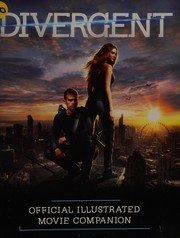
Divergent: Official Illustrated Movie Companion
2,524-word summary 11 min read 156 pages in the book
- First published
- 2014
- Publisher
- Katherine Tegen Books
- Pages
- 156
- ISBN
- 9780062315625
Reading options
What's inside (10 sections)
My reason for buying this book was narrow. I had seen the film twice and I wanted to know what the Dauntless pit was made of, and how anyone in Chicago could stand on a ledge and jump into a hole seven stories deep. Kate Egan's Official Illustrated Movie Companion answers those questions and a good many others, and it answers them in the tone of a press kit, which is both its strength and its limit. It is a lavish, photo-heavy souvenir of a shoot that was already finished when the book went to print. This site already has a summary of Veronica Roth's novel Divergent. This post is about the tie-in volume that came out to sell the film, not about the book that came before it.
Katherine Tegen Books, an imprint of HarperCollins, published it on March 4, 2014, a bit under two and a half weeks before the film opened. The US print edition runs 156 pages in an oversize format, wide and tall enough that the photographs are the point, and it carries the ISBN 9780062315625. The UK and Australian editions list 160 pages. Egan had already written the companion volume for The Hunger Games, and the two books share a house style: short chapters, lots of pictures, a handful of interviews, and a lot of page turning.
What is really inside
The contents run in production order, and that is the book's best structural decision. The section list in the back matter runs: The Story of Divergent, Moving Toward a Film, A Search for the Perfect Cast, Training, Building the World of Divergent, A Look for Each Faction: Costumes and Makeup, and Shooting the Film. Underneath those are smaller headings that show how carefully the book was planned. Moving Toward a Film breaks into Enter Hollywood, Finding a Screenwriter, a heading that reads Who Will Direct, A Vision for Divergent, The Details Emerge, and A City Becomes a Stage. Building the World of Divergent goes location by location: Scouting Locations, A Home for Each Faction, The Abnegation Village, Inside the Priors' Home, The Dauntless Compound, The Dauntless Dining Hall, The Dorms, Four's Apartment, Fear Simulations, The Fence, and The Trains. The costume chapter ends on Tattoos, Piercings, and Hardware. The last section, Shooting the Film, includes Do I Do My Own Stunts, Meeting Kate Winslet, Divergent Fans in the House, and It's a Wrap.
The photography is by Jaap Buitendijk, who shot the filming itself, and the back cover promises more than a hundred and fifty full-color photographs. That number is about right, and they are good ones. Set photos of the Dauntless pit, the Abnegation village, the four faction dormitories, Roth on set, her novel's covers in a spread of foreign editions. If you want to know what the world looked like before the visual effects teams touched it, this is where it is.
Roth's version, from a dorm room to a best-seller
The book opens by going back further than most tie-ins dare, to the novelist's own account of where Divergent came from. Roth tells Egan that she started it in her first year of college, in a psychology class, while studying exposure therapy, the treatment for anxiety that works by repeated exposure to whatever frightens you. She began with a single image of somebody jumping off a building, and the idea of a boy she was calling Tobias confronting his fears in an artificial environment. The idea for Dauntless grew from that. The other four factions followed as the other human virtues: Abnegation because selfishness is an easy explanation for the world's problems, Erudite for intelligence, Amity for peace, Candor for honesty.
What she could not make work was the point of view. She wrote thirty pages of Tobias and set it aside for years. Then, in her senior year at Northwestern, she switched to a girl from Abnegation named Tris, and the book took off over winter break. The agent was Joanna Volpe, who had rejected an earlier manuscript from her and whom Roth sent the finished novel to first. Volpe took her on and sold the rights to the whole trilogy, which did not exist yet, to Katherine Tegen Books.
Egan's account of the publishing side is affectionate and specific. Editors Molly O'Neill and Katherine Tegen circulated advance copies, booksellers and librarians read them and came back loud about it, and Roth's candid blog posts kept the buzz going. The novel came out in May 2011, debuted at number six on the New York Times best-seller list, and kept climbing to the top. There are photographs of all of this, including Roth's first visit to her publisher's offices and the magazine cover with the book on it.
Enter Hollywood
The film rights were sold before the book was published, which surprises people. Red Wagon Entertainment's Doug Wick and Lucy Fisher read the manuscript and brought it to Gillian Bohrer, then an executive vice president of production at Lionsgate. Bohrer's story is the best in the book. She read the novel in January 2011, before publication, from photocopied pages in a coffee shop, and the page describing Tris's decision at the Choosing Ceremony was missing from her copy. She read ahead to find out what happened, and could not put it down. By Monday she was telling people at Summit that the story had set pieces built into it, from the Choosing Ceremony to the Ferris wheel to the zip line.
Pouya Shahbazian, Roth's film rights manager, met with Summit's Erik Feig in New York a few weeks later, and Feig came in with what Shahbazian calls a playbook. Two months before the novel was published, the rights were sold with Red Wagon attached to produce. Wick talks about why he wanted it: the novel compresses a whole lifetime into a few months of one girl's life, and it has a female protagonist who is genuinely credible, which he did not think the action genre had room for.
A script, a director, and a world with rules
Evan Daugherty, fresh off Snow White and the Huntsman, wrote the screenplay, and the book includes a page of it. The script had its own nickname, Catbird, and Daugherty had condensed a novel of nearly five hundred pages into a script of about a hundred and thirty. He told Bookish that Tris starts off in a sheltered, selfless world and then joins the equivalent of the navy SEALs, and that is a big character arc to track. He also wanted the romance to grow out of the action rather than be dropped on top of it, and each fear simulation to push the story forward.
Neil Burger had not wanted to make a science fiction film. What changed his mind was the script, and he says so plainly: no creatures, no artificial sci-fi furniture, no superheroes, and a future used to examine human nature rather than to decorate it. He says the script asks universal questions about loyalty, whether to yourself, your family or your faction, and that those questions are not exclusive to teenagers. Bohrer's take is more technical, that the fear simulations were like a sandbox for a director and that Burger's advantage was making the audience feel they were with Tris at every step.
The chapter called The Details Emerge is the one I found most interesting, because it covers the world-building Roth and Burger did together while she was well into writing the third novel, Allegiant, and therefore knew things about her own world that nobody else did. Burger asked whether there should be visible destruction in the city and where it should be. He asked how commerce worked between factions, whether they ever cooperated, whether there would be Amity present on Visiting Day. They settled on a city about a hundred and fifty years in the future and a hundred years past an event that stopped technological progress, populated by roughly thirty thousand people. There are wind turbines on some rooftops and cables swooping between buildings. Nobody drives. Roth's line is that Burger is the most detail-oriented person she met during the whole process.
Finding Tris, and the long search for Four
The casting chapter is the one fans will turn to first, and the table of contents tells you the mood of it, since one subheading reads Still Not Found: The Perfect Four. Casting Four is presented as the hard problem, and Theo James got the part. The chapter covers the supporting roles as well, including Zoë Kravitz as Christina, Ansel Elgort as Al, Miles Teller as Caleb, Ashley Judd as Natalie, Tony Goldwyn as Andrew, Ray Stevenson as Marcus, Maggie Q as Tori, and Kate Winslet as Jeanine. Winslet gets her own subheading, Meeting Kate Winslet, which is the book's way of flagging that her casting was an event in its own right. Woodley was a television actor being asked to play a physical action lead, and the chapter spends real space on what that asked of her.
Training, stunts, and the pit
The Training and Shooting sections are where the practical detail lives, and it is the best material in the book after the interviews. The Dauntless fighting style was built from martial arts including Muay Thai, with a lot of hammer fists, striking with the side of the hand in a way that raises the risk of breaking bones. The train jumps were not green screen. The second unit built a rooftop set on the ground and towed a train car alongside it at about ten miles an hour, and stunt performers timed real jumps from the moving car, one of whom caught a foot on the ledge and nearly went over it. Twenty stuntmen jumped onto the passing train in one sequence. The nighttime zip line was shot separately with remote-control LED units mounted around the tops of the buildings.
Shailene Woodley's stunt double, Alicia Vela-Bailey, trained with her for roughly six weeks before filming, and the book includes her account of it. The Dauntless compound itself was built locally as a pit two hundred and twenty feet by a hundred and twenty, with tunnels running out of it, and the cinematographer Alwin Küchler explains the lighting choice that gives those corridors their look, strips of turquoise light from an English company called Surelight, so that Dauntless feels welcoming at first and frightening later. Locations include the Navy Pier Ferris wheel, which was treated with dirt and rust, the Seventeenth Church of Christ, Scientist on East Wacker for the Choosing Ceremony, the University of Chicago's Joe and Rika Mansueto Library, and Cinespace Chicago Film Studios for the interiors. Principal photography ran from April 16 to July 16, 2013, and reshoots in Los Angeles in January 2014 closed it out.
Five factions, five wardrobes
The costume chapter is the one I would keep. Carlo Poggioli, who had designed Romeo and Juliet and The Zero Theorem, took it on and worked with Burger on the look of each faction. Everything in the film was made to measure except some shoes and underwear, the volume ran to more than fifty thousand yards of fabric, and the workshops were in Rome, Budapest, Bucharest, Chicago and Los Angeles.
Dauntless is black, with rank colors to sort the initiates out: orange for newcomers like Tris, red for the Dauntless-born, purple for instructors such as Four and Eric. Candor was the hardest, because the novel says almost nothing about what its people wear, so Poggioli dressed them in black and white, the faction's own division between truth and lies. Erudite got shades of blue and a sharp cut inspired by a lab coat, on Burger's suggestion. Amity are the farmers, in earth-tone cotton and linen, every piece dyed by hand in colors you cannot buy in a shop, and the makeup department head Brad Wilder describes them as the Topanga Canyon hippies of the fifties. Abnegation is plain, gray, wool and linen, cut in simple sack-like shapes, with special stitching to give the gray some depth.
Tattoos get their own pages, because production designer Andy Nicholson wrote what he called a bible of the future that set rules for what the world would look like, including ink that a small isolated society could plausibly produce. Shailene Woodley's three birds, for her mother, father and brother, were mapped to her moles so they could be reapplied the same way every morning, and the tattoo ink was pushed in through a tube rather than brushed on.
What the book leaves out
Two things are worth saying before anyone buys this expecting analysis. The first is that it is a marketing tie-in, and it behaves like one. The prose is thin. The captions often restate what the photograph already shows you, the interviews run a paragraph or two apiece, and hard choices get mentioned and then smoothed over. Readers who bought the Twilight and Hunger Games companions expecting a crafts record come away disappointed, and one Amazon reviewer puts it plainly: less glossy, weaker binding, and not enough detail about why the screenwriter made the changes he made. The book also freezes the franchise in March 2014, before Insurgent arrived with a different director, so it cannot tell you how any of it turned out.
The second is that the film itself was not the hit the tie-in was hoping for. Divergent opened on March 21, 2014 to about $54.6 million domestically, the biggest live-action opening of the year to that point and the second biggest opening weekend of 2014 behind The Lego Movie, and audiences gave it an A CinemaScore even as critics did not. Rotten Tomatoes settled at 41 percent, with the consensus reading that the film adheres to formula in a way that undercuts its own message, and Metacritic put it at 48. It went on to earn $150.9 million in the United States and $288.9 million worldwide against an $85 million budget, so the money was fine and the reputation was not. None of that is the book's fault. Egan wrote it while the publicity was still going.
There is also a different book you may be looking for. Inside Divergent: The Initiate's World, by Cecilia Bernard, is a separate tie-in, closer to a photo handbook of the film's factions and characters, and it is not the same volume.
What Egan has made is a well-designed artifact of a specific moment, the kind of thing that sits on a shelf and gets opened by people who liked the movie and want to know what the Dauntless set looked like before the camera touched it. If you want to understand the adaptation rather than admire it, the interviews with Roth are where the value is, because she is unusually candid about the process and a little rueful about it. Read the novel first. Read this second, with the film running, and notice how much of what you thought was the novel was really the movie all along.
FAQ
Is this the same book as Inside Divergent: The Initiate's World?
No. This is Kate Egan's illustrated guide to the making of the 2014 film, with interviews, costume and set notes, and production photographs. Inside Divergent: The Initiate's World, by Cecilia Bernard, is a separate tie-in, more of a photo handbook of the film's factions and characters.
Is it worth reading if I have already read Veronica Roth's novel?
It does not replace the novel, and the retelling of the story in the first chapter is the shortest part of it. What it offers is the making of the film: how the factions were designed, how the actors trained, and what the shoot in Chicago was like.
How well did the film do?
Divergent opened on March 21, 2014 to about $54.6 million domestically and became the biggest live-action opening of the year so far, though critics were unkind. It finished at $150.9 million in the United States and $288.9 million worldwide against an $85 million budget.
Similar books
The Hunger Games: Official Illustrated Movie Companion
Behind the scenes guide to the 2012 film, from casting and sets to costumes and arena effects.
2,892-word summary · 13 min read
The Hunger Games Tribute Guide
The official 2012 companion to the first Hunger Games film profiles all twenty-four tributes and walks through the reaping, training, and interviews.
2,092-word summary · 9 min read

Iron Widow
Wu Zetian enlists to avenge her sister, kills her pilot, and becomes an Iron Widow in a mecha Huaxia where the machines are built to kill women.
2,444-word summary · 11 min read

The House of the Scorpion
A clone raised in a drug lord's poppy fields learns what he was made for and chooses what to do with the life he was given.
2,527-word summary · 11 min read
Reveal Me
A Shatter Me novella told by Kenji, set between Defy Me and Imagine Me, as the rebels learn Anderson has taken hostages and Juliette faces Emmaline.
2,098-word summary · 9 min read

Wither
In a future where women die at twenty, sixteen-year-old Rhine is sold as a bride to a wealthy stranger and plots an escape from a beautiful prison.
2,395-word summary · 11 min read

Never Fade
Ruby, now a leader in the Children's League, must track down the boy whose memories she erased, because he holds the only proof of what caused the disease that…
2,188-word summary · 10 min read
Under the Never Sky
Exiled from her Pod, Aria crosses a storm-scarred wilderness with Outsider Perry to find family and the fabled Still Blue.
2,572-word summary · 11 min read
Twilight Director's Notebook
Director Catherine Hardwicke shares photos, storyboards, and notes on casting, looks, sets, and key scenes from Twilight.
2,863-word summary · 13 min read
Shadow Me
Kenji Kishimoto narrates for the first time as he joins Nazeera on a quiet mission after Restore Me, carrying painful secrets into Defy Me.
2,512-word summary · 11 min read
Life As We Knew It
Sixteen-year-old Miranda keeps a diary while an asteroid strike on the moon brings tsunamis, blackouts, and a frozen year of hunger to her Pennsylvania town.
2,485-word summary · 11 min read
Among the Hidden
Twelve-year-old Luke, an illegal third child, befriends Jen and faces the cost of stepping out of hiding.
2,923-word summary · 13 min read
The Infinite Sea
Cassie and Squad 53 wait out winter in a hotel while Ringer is retaken and learns the truth behind the 5th Wave.
2,985-word summary · 13 min read
Requiem
Lena fights in the Wilds while cured Hana marries into Portland power.
2,232-word summary · 10 min read
Messenger
Matty carries messages through a living Forest for Village until Trade Mart greed, a closing border, and his hidden gift force a final run.
2,363-word summary · 11 min read
New Moon: The Complete Illustrated Movie Companion
Behind the scenes guide to the New Moon film: Weitz, the wolves, and the Volterra shoot, with cast interviews.
2,602-word summary · 12 min read
The Darkest Minds
A teen with mind powers escapes a government camp and joins three runaways in Bracken's 2012 dystopia, first in The Darkest Minds series.
2,038-word summary · 9 min read
Imagine Me
Juliette remembers who she was and storms the capital to end the Reestablishment for good.
2,090-word summary · 9 min read

The Kill Order
Mark survives flares and Flare virus as WICKED forms thirteen years before maze.
2,129-word summary · 9 min read

The Twilight Saga Breaking Dawn Part 1: The Official Illustrated Movie Companion
Official photo guide to the Breaking Dawn Part 1 film, from the wedding to Isle Esme to the birth scene crew work.
2,931-word summary · 13 min read
The City of Ember
Two twelve-year-olds trade jobs and chase a chewed-up note to save their fading underground city before its lights fail.
2,998-word summary · 13 min read
Destroy Me
Shot by Juliette, Warner holds his base together while his father arrives with harsher plans for her.
2,556-word summary · 11 min read