
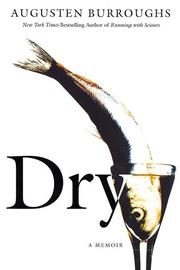
Dry
2,643-word summary 12 min read 293 pages in the book
- First published
- 2003
- Publisher
- St. Martin's Press
- Pages
- 293
- ISBN
- 9780312272050
Reading options
What's inside (9 sections)
Dry nearly put me off Burroughs for good, and I still think about it in patches. Most readers meet Running with Scissors first and then Dry, which is the wrong order but the only order the books were published in. I expected more of the same: the filth, the house with no rules, the shed in the backyard. What I got was an ad man in a good suit, a bottle of Dewar's, and thirty days in Minnesota. It is funnier than the first book in places and much harder to sit still in, because the subject is not a terrible childhood. The subject is what you do with your own life when nobody is coming to save you.
St. Martin's Press published Dry on 2 June 2003. The hardcover runs 293 pages and carries the ISBN 9780312272050. There is no series, though it is part of a loose trilogy of memoirs that ends with Lust & Wonder in 2016. One oddity to know before you start: Burroughs wrote this book before he wrote Running with Scissors. He wrote it largely in real time, starting the day he left rehab in 1996 and finishing after a relapse and a second run at sobriety in 1999, and St. Martin's Press simply published it second, because they liked the other one more.
The ad man in the nice suit
The book opens on Augusten at twenty-four, working as an advertising copywriter in Manhattan. He landed the job at nineteen with no diploma, no connections and no spelling, which is the sort of thing that sounds like a joke until you read how the ad business actually works. He opens the book looking at his own profession with a gimlet eye. Advertising, he writes, "is an industry based on giving people false expectations," and that is why it suits him so well.
His drinking is the kind that looks functional from the outside. Nice suit, loud tie, automated wake-up calls, cologne on the tongue to cover the smell of the night before. He is good at his job because he is fast, funny and tireless, and he drinks the way he does everything else, without a plan and without a limit. His drinking buddy is Jim, an undertaker, and the two of them are good for each other in the worst way. One night they start with a few drinks and end up singing the theme from The Brady Bunch at a karaoke bar at four in the morning, with an early client meeting waiting for him.
The meeting goes badly. He is hungover, he smells like a bottle, and his partner Greer covers for him. Then he misses a bigger meeting, and the firm's boss, Elenor, corners him with Greer in the room. It is an intervention in everything but the name. Rehab or lose the job. He agrees, mostly because arguing would require energy he does not have.
There is a reason the intervention lands, and it comes out in the telling. His best friend Pighead, whose real name is George Stathakis, is HIV positive, and Augusten has been avoiding him, using the drinking as cover for a cowardice he can barely name. His father gets a passage of his own: a burn scar between his eyes from a cigarette held against him at six, a memory that stayed buried until he was twenty and a dermatologist asked about it in a bright office. He had accused his father of abusing him, and the book makes clear that the accusation was true and that admitting it was not a cure.
Thirty days in Minnesota
The Proud Institute is in Minnesota, and it serves gay and lesbian clients, which in 1996 was unusual enough to be a selling point in a memoir. He imagines it as a spa with a Frank Lloyd Wright compound behind trimmed boxwood, firm mattresses and steamed trout. What he gets is indestructible dorm furniture and breaded veal cutlets with a sauce of Velveeta and half and half. He calculates that he will not last a day, and he is close to right about the first day.
He does not have a drinking problem, he explains, because he has never actually drunk cologne, and the staff have to explain that people have done that. There are affirmations. There are sessions where patients hold up stuffed animals named Monkey Wonkey and Blue Blue Kitten. He compares the whole program to the movie Groundhog Day: an endless loop, which tells you how he felt about month one of a regimen that runs on its own repetitions.
The place is saved by the people in it. Brian is a doctor hooked on Valium, and Augusten recognizes him immediately as a man doing the same math he is doing. Kavi is a sex addict who will tell him about the lover he left when AIDS came, a story Burroughs recognizes as his own story about Pighead. There is a counselor named Rae who admits that her marriage fell apart and that she drank her way down to the bottom and back up, and who defines the goal in one word, sober, which fills him with sadness because the word sounds final. The exercise that breaks something open is a letter. Assigned to write to someone close, he writes to Pighead, brutally and honestly, admitting that he stays away so that he does not have to watch the man die. Reading it aloud in the group, he cries for the first time in years, and finds the crying more frightening than the drinking ever was.
Day twenty brings Hayden, an angry and cynical man who also wants to leave. Augusten decides to be his big brother, which is the first time in the book that he does something for somebody else instead of something about himself.
Sober in New York
He comes home to an apartment full of empty scotch bottles, fruit flies and a path he has to find to walk. He spends a day cleaning it. Then he goes to a meeting on Perry Street and listens to a woman named Nan talk about wasted years with a joke in the middle of her story, and he is grateful for the joke because the alternative is unbearable.
The sobriety is not what he expected. He is a stranger to himself without the drink. He goes back to work, where the new client is a German beer company, which is a joke with a long fuse. He meets Foster in group therapy, a painfully handsome man with a crack habit and an abusive former partner named Kyle, and he is attracted to him in exactly the way that will cost him the most. Hayden, the friend from rehab, moves into his apartment so the two of them can keep each other sober. Foster keeps turning up, and keeps being a reason to pick up a pipe.
His work, meanwhile, becomes an obstacle course of temptation. He shoots a beer commercial in Los Angeles, and the book has him alone in a hotel room with a mirror, admiring himself and hating himself in about the same breath. The minibar charges him $1,600 for bottles he did not drink. He fondles them. On the plane home, he fills in an expense report and does not look forward to anything.
There is a chapter in here that surprises people. His mother is alive in this book, disabled by a stroke that paralysed one side of her, and he has not visited her in more than a year and a half. She is not a ghost in these pages. She is a woman in a wheelchair who gave him away to her psychiatrist when he was thirteen, and who now expects him to change a light bulb in her apartment. He says she has not earned the right to expect that, and then admits that the not going is the part he cannot stop thinking about. It is the ugliest, most honest thing in the first half of the book.
Pighead
Pighead is the best friend and former love interest. He is funny, he is loyal, and he is dying. His decline is slow and then it is not. He goes into the hospital with hiccups that will not stop and blood work the doctors cannot explain. Augusten writes the funny version of this, the version where his best friend is more annoying than sick, and that version is also true, and both things are happening at once.
Foster relapses and disappears. Hayden takes a job in London and leaves, after confessing that hearing about Foster's crack use nearly triggered a relapse of his own. Augusten's anchor is gone. His therapist, Wendy, tells him plainly that he is drawn to people who are wrecked, and that wrecked is exciting rather than stable. Foster buys a house in Brooklyn and tells him his abusive ex is moving in, and Augusten sees, in a flash, that Foster is simply his own earlier self.
Then he starts to slip. He stops going to meetings, or goes and hates it. He takes a leave of absence to nurse Pighead, changing diapers and giving injections, and three days into the leave he stops at a liquor store on the way home and buys a pint of scotch. The book is very good at showing how small that step is and how enormous it becomes.
Pighead codes. Augusten is at his bedside when the staff restart his heart. Later, drunk, he goes back to the hospital and looks at Pighead, who is barely conscious, and sees a message in one tear-filled eye. Pighead dies during the night. The funeral is a formality. The real mourning happens afterward, in a bar, and it lasts nearly a year.
The pig's head
The relapse is worse than the drinking ever was. He drinks for months, uses cocaine, and then meets Foster in a brownstone with no furniture and smokes crack for the first time. He describes it as reaching a place inside himself he had never been able to reach. He cashes in his retirement account. He cannot smoke it properly, so a sex worker on St. Marks Place shows him how, and he does not much notice what else is happening around him.
Then a jeweler calls. Pighead had ordered something for him before he died. It is a large gold pig's head with an inscription on the back:
I'M WATCHING YOU. NOW STOP DRINKING
He carries it down the street sobbing. It does not fix him. He buys two more bottles of scotch and drinks them. That night he sees a spider on the wall that is not there when he turns the light on. The next night there are several. He wakes up shaking, covered in welts, and for the first time in the story he is afraid. He buys hard cider because it calms him, and he lies in bed afraid to sleep because he is not sure he will wake up.
He nearly dies. He stops anyway. A year later he is sober, working freelance, and leaving a meeting with Jim, who is also sober now and no longer funny about it. They walk under a streetlight that flickers on as they pass, and Burroughs allows himself to think it is Pighead saying hello. The book ends on that small light in the dark.
The voice, and the wall
The humor is the engine of this book, and it is also the argument against it. Burroughs has said that his sense of humor formed between twelve and fourteen, in a household where the alternative was checking out, and that it is a defense mechanism that happens to be funny. In Dry it works as a survival tool. He counts the bottles in his apartment and feels bad about the number. He is funny about the affirmations, the group, the food, the clients, and the small ugliness of his own drinking. And when he finally breaks down in group therapy, the line before it is a joke, and the effect is like a brake being hit.
It also builds a wall, and critics noticed. A New York Times Book Review essay by David Kamp was openly hostile, opening by asking why any reader would subject himself to the sustained unpleasantness of an addiction memoir, and it put Dry side by side with James Frey's A Million Little Pieces. Library Journal's Nancy R. Ives admired the way Burroughs personalizes the difficulties of recovery without lapsing into sentimentality, while reviewers in Contemporary Authors complained that the book was overfull of introspection, and one went further, saying that Burroughs's new addiction was memoir writing and that he may have overdosed on it after only two books. The PopMatters reviewer noted that Dry brought more real sentiment and fewer quirks than Running with Scissors. The Guardian called it gruelling yet comic. The A.V. Club called the horrors in it garden-variety compared with the first book, but credited the book's plainness with giving ordinary temptation a universal feel.
So it is a harder sell than Scissors, and I understand why. Running with Scissors has a freak show in it: a house of rules without rules, a psychiatrist's patients and children under one roof, a pedophile in a shed, a mother reciting poetry in a hospital gown. Dry has a man in an apartment, and the man is the one doing the damage. It is also a better book by the standards most memoirists are judged against. It has a real shape: intervention, thirty days, sobriety, relapse, recovery. It has a scene where a grown man weeps over a letter to a dying friend, and it is not undercut. Time called Burroughs less the walking quirk this time and more a brave, funny, unhappy human being. The USA Today called it a deeper book than Scissors.
One note for anyone reading it as fact. The first pages carry an author's note saying the memoir is based on ten years of his experiences, that names have been changed and characters combined and events compressed, and that certain episodes are imaginative re-creation. Minnesota Public Radio made something of that in 2003, asking whether the book is fiction, nonfiction or creative nonfiction, and noting that some of its strongest scenes are invented. If you want a rule of thumb, treat the people as real and the timing as elastic.
Where Dry sits
The memoir is about addiction and recovery, and almost nothing else, which is why it feels leaner than the first book. The events I could verify are all in there: the intervention, the Proud Institute, the letter to Pighead, the hospital, the relapse, the pig's head, the year of sobriety. What is not in this book are the episodes readers sometimes expect. The suicide attempt of his adolescence belongs to Running with Scissors. His mother is present only as a woman he has not visited in more than a year, not as a loss, since she was still writing a memoir of her own years later. The disasters of his middle years and the life in Connecticut with his husband belong to later volumes.
He kept the journals from rehab and turned them into this book, and he has said plainly that he wrote it to navigate his own sober life, not for publication. The book is funnier and sadder than he probably expected. It is also the one where the jokes are the price of admission. If you read it after Running with Scissors and find yourself waiting for the next terrible room, the wait is the point. There are no more terrible rooms. There is a bottle, a phone, a meeting, and a man trying to make it to tomorrow.
FAQ
Is Dry a sequel to Running with Scissors?
It reads like one, but the order ran the other way. Burroughs wrote Dry first, largely in real time after his 1996 rehabilitation, and St. Martin's Press published Running with Scissors in 2002 and Dry in June 2003.
Does Dry have a happy ending?
Not a tidy one. He relapses hard after his friend Pighead dies, drinks and uses crack for months, nearly dies of alcohol poisoning, and is still sober a year later when the book ends.
Why do reviewers say Dry is funnier but bleaker than Running with Scissors?
Because it is an adult book about an adult addiction: no eccentric household, just a well-paid copywriter, a bottle, and the slow machinery of relapse. The jokes come faster and the material is thinner.
Similar books
Scar Tissue
Kiedis's memoir follows the Red Hot Chili Peppers from Hollywood house parties to fame, heroin, and the long work of staying clean.
2,217-word summary · 10 min read

Dear Girls: Intimate Tales, Untold Secrets & Advice for Living Your Best Life
Ali Wong's debut collects fourteen letters to her daughters, covering sex, money, work, marriage, Vietnam, and being a working Asian American mother.
2,266-word summary · 10 min read

Scrappy Little Nobody
Anna Kendrick's essays trace her path from a Portland childhood and Broadway to Hollywood, with jokes, anxiety, and a refusal to pretend fame fixed her.
2,092-word summary · 9 min read
Between Two Kingdoms: A Memoir of a Life Interrupted
Diagnosed with leukemia at twenty-two, Suleika Jaouad survives treatment and then takes a 100-day road trip to meet the strangers who wrote to her.
2,311-word summary · 10 min read

Seriously...I'm Kidding
DeGeneres strings show stories and home jokes into light life advice.
2,292-word summary · 10 min read

Open Book
Simpson replays pop fame, love and drink through recovery work.
2,552-word summary · 11 min read

My Horizontal Life: A Collection of One-Night Stands
Handler turns dating disasters and family chaos into brash comic essays about single life in Los Angeles.
2,304-word summary · 10 min read
How to Be a Woman
Moran mixes girlhood and work stories into plain feminist advice.
2,600-word summary · 12 min read
Notes from a Small Island
Bill Bryson's 1995 farewell tour of Britain, funny and fond, from Dover to London, the north, Scotland and Wales.
2,301-word summary · 10 min read

In a Sunburned Country
Bryson revisits Australia by city walks and long trains, with reef trips, critter comedy, and explorer history.
2,387-word summary · 11 min read

The Girl with the Lower Back Tattoo
Amy Schumer mixes raunchy jokes with frank essays on family, dating, body image, and the shooting that pushed her into gun control advocacy.
2,259-word summary · 10 min read
Open
Tennis star Andre Agassi recalls hating tennis, falling to No. 141, and rebuilding his life on his own terms.
2,352-word summary · 10 min read
Not That Kind of Girl: A Young Woman Tells You What She's Learned
Girls creator Lena Dunham's essays on work, bodies, love, and family, frank and funny with uneven edges.
2,156-word summary · 10 min read

Beyond the Wand: The Magic and Mayhem of Growing Up a Wizard
Tom Felton looks back on ten years as Draco Malfoy, from schoolboy auditions to fame, music, and getting sober.
2,267-word summary · 10 min read

Calypso
Sedaris buys a Carolina beach house, grieves his sister Tiffany, tends his aging father, and turns illness and marriage into dry family comedy.
2,835-word summary · 13 min read

Are You There, Vodka? It's Me, Chelsea
Handler mines family, jail, dating, and travel for brash essays where oversharing is both joke and shield.
2,186-word summary · 10 min read
Surely You're Joking, Mr. Feynman!
Feynman drums, cracks safes, and learns by doing from Los Alamos to Caltech classrooms.
1,946-word summary · 9 min read
Naked
Growing up odd in Carolina, working bad jobs, and learning to watch people closely and kindly.
2,020-word summary · 9 min read
A Million Little Pieces
Marketed memoir of addiction and rehab that proved partly invented, still read for sentences.
2,049-word summary · 9 min read

Dress Your Family in Corduroy and Denim
Sedaris on snow days, rental houses, Dutch Christmas, and the family that made him funny.
3,098-word summary · 14 min read
Everything I Know About Love
Dolly Alderton recalls bad dates flatshares and female friendship in her twenties memoir.
2,194-word summary · 10 min read
Running with Scissors
A boy sent to live with his mother's psychiatrist grows up in a chaotic house with no rules.
2,036-word summary · 9 min read

Long Walk to Freedom
Mandela's account of a Thembu childhood, a law practice, a banned movement, twenty-seven years in prison, and the negotiation that ended apartheid.
2,454-word summary · 11 min read

In Order to Live: A North Korean Girl's Journey to Freedom
A young North Korean girl crosses the Yalu, survives trafficking in China, and rebuilds her life in Seoul in this unsparing memoir.
2,027-word summary · 9 min read

Too Much and Never Enough: How My Family Created the World's Most Dangerous Man
Mary L. Trump's 2020 memoir traces how a cold, zero-sum Queens household shaped her uncle, and uses family tax documents to challenge his self-made story.
2,059-word summary · 9 min read
Same Kind of Different as Me
An art dealer and a formerly homeless sharecropper tell the story of the friendship that began at a Fort Worth mission and the woman who insisted on it.
2,023-word summary · 9 min read

Infidel
Ayaan Hirsi Ali's memoir of a Somali childhood, a forced marriage, a Dutch asylum claim, and the political fight that followed the murder of Theo van Gogh.
2,041-word summary · 9 min read

Down and Out in Paris and London
Orwell's account of washing dishes in Paris hotels and tramping through London does not ask for pity, only for a clear look at how poverty actually works.
2,282-word summary · 10 min read
Year of Yes: How to Dance It Out, Stand in the Sun and Be Your Own Person
Shonda Rhimes takes her sister’s accusation seriously and spends a year saying yes to the things that frighten her, from live television to her own reflection.
2,585-word summary · 11 min read

The Girl with Seven Names: A North Korean Defector's Story
Hyeonseo Lee crossed the frozen Yalu River at seventeen, spent years hidden in China, escaped to South Korea, and later returned to rescue her family.
2,404-word summary · 11 min read