
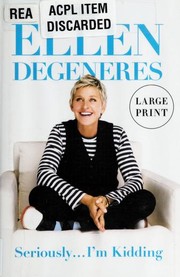
Seriously...I'm Kidding
2,292-word summary 10 min read 256 pages in the book
- First published
- 2011
- Publisher
- Grand Central Publishing
- Pages
- 256
- ISBN
- 9780446585026
Reading options
What's inside (8 sections)
I picked up Seriously...I'm Kidding because my mom watched the talk show every afternoon for years and I absorbed Ellen DeGeneres in clips between kitchen chores. The book came out in 2011 from Grand Central Publishing, 256 pages in hardcover, ISBN 9780446585026, and it reads exactly like that era of her public life. Chatty. Silly. Determined to keep things light even when the subject turns toward money or aging or work. I read it across three evenings on the couch, laughing out loud twice and skimming once, which seems like the response she wanted.
DeGeneres strings show stories and home jokes into light life advice, as the cover copy promises in so many words. She talks about growing up in Louisiana and Texas, bombing early sets, hosting a daytime show, living with Portia de Rossi, loving dogs, buying houses, and worrying about getting older in public. Nothing here aims for confession. It aims for company. She writes as if you sat next to her at lunch while she riffed.
My copy has a bent corner on the home chapter. That section got read twice.
Louisiana kid to comedy clubs
DeGeneres was born in Metairie, Louisiana in 1958 and raised there and in Texas after her parents split. She writes about her brother Vance, her mother Elizabeth, and a childhood full of funny voices and class clown energy. I don't recall the exact order of every school move she mentions, probably because she tells it in bits between jokes rather than as a straight timeline. The point she keeps returning to is simple. She was the kid who tried to ease tension by making people laugh.
Early work stories take up a good stretch. She did odd jobs, including work as a waitress and house painter and oyster shucker, before trying stand-up in New Orleans clubs. She describes driving to small rooms, forgetting bits, winning over a few tables at a time. Her big break in her telling is less a single night and more a slow build. She won a Showtime comedy contest in the early eighties, appeared on The Tonight Show with Johnny Carson in 1986, and earned a reputation for clean observational material about phones and travel and animals.
What I appreciated here is how little she leans on score settling. She could have named names or aired old grievances about club owners and TV executives. She mostly does not. She pokes at herself for bad hair and bad apartments and bad early material. That restraint keeps the early chapters warm.
A fair criticism starts here too. If you want dates and club names and a clear map of how she moved from New Orleans to Los Angeles, you will not get it. She prefers a funny scene to a precise record. Readers who love comedy history may wish for more detail about who helped her and what act she cut. Readers who want laughs will not mind.
Sitcom years and starting over
She moves through her sitcom Ellen, which ran on ABC from 1994 to 1998, with a light touch that almost understates what happened. She came out as gay in 1997, both in real life and as the character, in the famous Puppy Episode. She writes about the pressure around that decision without turning the chapter into a heavy memoir section. She jokes about headlines and network nerves and then moves on to what came after. Work dried up for a while. She toured again. She rebuilt.
I wish she had stayed longer on this period. She mentions the talk show rescue that began in 2003, but she skips quickly past the years when pilot deals fell apart and press coverage turned sharp. Maybe she did not want to revisit it. Maybe her team advised against it. Either way, the gap shows. One minute she is doing stand-up in theaters, the next she is dancing down a daytime aisle. The middle step gets a paragraph when it deserved ten pages.
Still, her take on fame is sharper than expected. She writes about being recognized in airports, getting free desserts she did not ask for, and trying to stay polite when tired. She kids about award shows and red carpets and gift bags. Under the jokes is a practical view of celebrity labor. Smile. Thank the crew. Remember names. Go home and walk the dogs. She never claims fame is hard in the way real jobs are hard, which saves her from sounding spoiled. She presents it as strange and tiring and often very fun.
Short detour worth noting. She includes a bit about hosting award shows and judging American Idol for one season. She treats Idol as a brief adventure that taught her she prefers hosting to judging. She does not trash other judges or contestants. She says she hated saying no on camera. That reads honest. She built a career on kindness as a bit, and open criticism did not suit her.
Daytime, dancing, and staff bits
A large middle chunk reads like a week of monologues stitched together. She writes about her writers, her producer Andy Lassner, her DJ, and the audience games that became signatures. She describes scaring staff, handing out gifts, and dancing with viewers. People who watched the show from 2003 onward will recognize the pace of setup and payoff. People who never watched may get lost for a few pages when she refers to recurring bits by nickname.
This is where the book is most purely entertaining and also most disposable. A bit about phone manners made me laugh. A bit about airline seats made me snort. A bit about award show seating charts dragged because it depends on knowing who sat where in a specific year. Humor tied to 2010 headlines ages fast. Some references to gadgets and apps already sound dated, which is normal for this kind of book but worth knowing before you buy.
She does include some backstage detail that saves these chapters from reading like leftovers. She explains how monologue meetings work, how producers pitch human interest stories, how she picks charities for giveaways. She credits writers by first name and describes arguments over a single word in a joke. That shop talk interested me more than the jokes themselves. It shows a work ethic behind the easy grin.
One complaint. She repeats a move where a sweet staff story ends with a punchline that undercuts the sweetness. After the third or fourth time, I started predicting it. The pattern goes like this. Praise someone. Add a tease. Exit before sentiment sticks. It keeps the tone safe, but it also keeps readers at arm's length. I wanted one story where she let the praise stand without a topper.
Portia, dogs, houses, and home life
The warmest chapters cover home life with Portia de Rossi, whom she married in 2008, and their many rescued dogs and cats. She writes about morning routines, dog beds taking over the couch, vet visits, and the guilt of leaving pets to tape a show. Animal people will enjoy these pages a lot. She clearly adores her animals and she writes about them with more patience than she gives most human subjects.
Home design takes up almost as much space as pets. DeGeneres and de Rossi bought and sold a string of California houses around this time, and she jokes about paint colors and couches and real estate agents calling at dinner. She presents herself as obsessed with moving furniture and rehanging art. She kids that Portia pretends to be surprised each time a new house appears. Under the jokes is a real eye for space and light. She notices how a room sounds as well as how it looks.
She also writes about family holidays and gift giving. She prefers experiences to objects, or so she claims, while admitting she gives excellent scarves. She describes Thanksgiving traffic and Christmas wrapping marathons with the same exasperated affection she gives airport lines. These chapters work because the stakes are low and the details are concrete. Brands of dog food. Names of streets. The way a new puppy chews a table leg.
If there is a blind spot, it is money. She jokes about being rich without ever really addressing what wealth does to daily life. She says she is grateful. She says she knows she is lucky. Then she moves on to drapes. Readers living paycheck to paycheck may find the house hopping hard to relate to, even with jokes attached. A little more candor about class distance would have helped. She gestures at it and retreats.
Advice, lists, beauty tips, and nonsense
Near the middle and again toward the end, she pivots to mock advice. How to look younger. How to eat better. How to survive parties. How to talk to customer service. The trick is that every tip starts almost sensible and then slides into absurdity. Drink water. Stretch. Sleep. Then adopt twelve dogs and let them set your schedule. The slide is the joke, and it usually works because her persona sells common sense.
Some of these chapters read like magazine columns padded to book length. A section on fashion advises readers to wear what fits and ignore trends, then spends pages on shoes she hates. A section on technology complains about passwords and chargers and autocorrect. These are not fresh observations even for 2011, but her delivery adds charm. She sounds like a friend venting over coffee rather than a columnist chasing clicks.
She also loves lists and fake quizzes. What kind of sleeper are you. What your handbag says about you. What to pack for every trip even if you never leave town. I enjoyed the packing list because it named real objects I also overpack. I skimmed the handbag quiz because it leaned on stereotypes about women shoppers that already seemed tired. Humor about gender roles is where the book wobbles most. She usually punches up or sideways, but here she sometimes reaches for easy material about men snoring and women shopping.
Parents may want to know about language and content. It is mild. A little innuendo. No graphic scenes. Teens could read it without trouble. The humor is clean in the stand-up sense, built on wordplay and exaggeration rather than shock.
What sags and what still charms
No honest account can skip what sags. The book has no real through line. Chapters jump from childhood to pets to beauty tips without bridges. That looseness suits a comedian killing time between tours, but it makes the read snacky in a scattered way. You can open anywhere and enjoy ten pages. You may struggle to remember what you read the night before. I had to flip back twice to check if I had already read a story about moving. I had. It just sounded like the other moving story.
Repetition is the main issue. There are only so many jokes about getting older, losing keys, hating paperwork, loving animals, and buying pillows before they blur. She varies the wording, but the targets stay fixed. By page 180 I could predict the turn in several bits. Setup about modern hassle. Escalation with a long catalog of examples. Closer where she gives up and naps with the dogs. Amusing, then familiar, then a little wearying.
Length is both a mercy and a problem. At 256 pages with wide margins and short chapters, it moves quickly. You never sit long with a weak bit. You also never sit long with a strong one. A story about her father Elliott, who died before the book, hints at deeper sorrow and then ends in two pages. A story about her mother gets the same quick treatment. I wanted her to stay in those rooms longer. She chose jokes over ache, which is her right, but the book seems thinner for it.
Who will enjoy this most. Daytime viewers who miss the early show years. Animal lovers. Readers who want a light bedside book in short bursts. Who should skip. Readers seeking a full memoir about coming out or Hollywood politics. Readers allergic to celebrity real estate chat. Readers who want sharp satire rather than gentle teasing.
Facts for the shelf are plain. First published in 2011 by Grand Central Publishing. Hardcover runs 256 pages. ISBN 9780446585026. No series. Author slug ellen-degeneres. Tags that fit from the site list are memoir and humor plus nonfiction and comedy and celebrity. Excerpt on the site will note that DeGeneres strings show stories and home jokes into light life advice.
I closed it thinking about her skill as a host rather than as a writer. She keeps a crowd comfortable. She avoids hard stares. She hands out treats. That talent fills arenas and sells books, even when the material thins. I laughed, I skimmed, I dog eared the pet chapters for my mom. For a comedy memoir that never promised more than an afternoon of company, that counts as doing the job.
A last note on tone. Some later coverage of the talk show workplace raised hard questions about conditions behind the scenes. This 2011 book predates that reporting and reads like a time capsule from before those stories broke. New readers may sense a clash between the kind host on the page and later headlines. I did. It does not erase the jokes, but it changes the air around them. Read with that context in mind.
I would hand this to someone recovering from surgery or stuck on a long flight with delays. Short chapters. Kind voice. Dogs on nearly every other page. Do not expect revelations. Expect a familiar face telling airport stories until the lights dim.
FAQ
When was Seriously...I'm Kidding published?
In 2011 by Grand Central Publishing in a 256 page hardcover with ISBN 9780446585026.
Does Ellen address her sitcom coming out?
Briefly. She covers the 1997 Puppy Episode and rebuilding after, but leaves the hardest years light.
Is it suitable for teens?
Yes. Language stays mild with innuendo and clean observational humor about pets and travel.
Similar books
Scrappy Little Nobody
Anna Kendrick's essays trace her path from a Portland childhood and Broadway to Hollywood, with jokes, anxiety, and a refusal to pretend fame fixed her.
2,092-word summary · 9 min read
Born Standing Up: A Comic's Life
Steve Martin's memoir of how a shy Disneyland magician's assistant built a strange avant-garde act, and why he walked away from stand-up at his peak.
2,034-word summary · 9 min read
Open Book
Simpson replays pop fame, love and drink through recovery work.
2,552-word summary · 11 min read
My Horizontal Life: A Collection of One-Night Stands
Handler turns dating disasters and family chaos into brash comic essays about single life in Los Angeles.
2,304-word summary · 10 min read
The Girl with the Lower Back Tattoo
Amy Schumer mixes raunchy jokes with frank essays on family, dating, body image, and the shooting that pushed her into gun control advocacy.
2,259-word summary · 10 min read
Are You There, Vodka? It's Me, Chelsea
Handler mines family, jail, dating, and travel for brash essays where oversharing is both joke and shield.
2,186-word summary · 10 min read
Dry
A memoir of drinking, rehab and relapse, and the strange business of getting sober one morning at a time.
2,643-word summary · 12 min read

Dear Girls: Intimate Tales, Untold Secrets & Advice for Living Your Best Life
Ali Wong's debut collects fourteen letters to her daughters, covering sex, money, work, marriage, Vietnam, and being a working Asian American mother.
2,266-word summary · 10 min read
How to Be a Woman
Moran mixes girlhood and work stories into plain feminist advice.
2,600-word summary · 12 min read
Notes from a Small Island
Bill Bryson's 1995 farewell tour of Britain, funny and fond, from Dover to London, the north, Scotland and Wales.
2,301-word summary · 10 min read
In a Sunburned Country
Bryson revisits Australia by city walks and long trains, with reef trips, critter comedy, and explorer history.
2,387-word summary · 11 min read
Not That Kind of Girl: A Young Woman Tells You What She's Learned
Girls creator Lena Dunham's essays on work, bodies, love, and family, frank and funny with uneven edges.
2,156-word summary · 10 min read
Calypso
Sedaris buys a Carolina beach house, grieves his sister Tiffany, tends his aging father, and turns illness and marriage into dry family comedy.
2,835-word summary · 13 min read
Surely You're Joking, Mr. Feynman!
Feynman drums, cracks safes, and learns by doing from Los Alamos to Caltech classrooms.
1,946-word summary · 9 min read
Naked
Growing up odd in Carolina, working bad jobs, and learning to watch people closely and kindly.
2,020-word summary · 9 min read
Dress Your Family in Corduroy and Denim
Sedaris on snow days, rental houses, Dutch Christmas, and the family that made him funny.
3,098-word summary · 14 min read
Everything I Know About Love
Dolly Alderton recalls bad dates flatshares and female friendship in her twenties memoir.
2,194-word summary · 10 min read

Bossypants
Tina Fey moves from Pennsylvania childhood through improv and SNL to 30 Rock in this funny 2011 memoir. Expect backstage stories, jokes about work and…
2,301-word summary · 10 min read

Long Walk to Freedom
Mandela's account of a Thembu childhood, a law practice, a banned movement, twenty-seven years in prison, and the negotiation that ended apartheid.
2,454-word summary · 11 min read

In Order to Live: A North Korean Girl's Journey to Freedom
A young North Korean girl crosses the Yalu, survives trafficking in China, and rebuilds her life in Seoul in this unsparing memoir.
2,027-word summary · 9 min read

Too Much and Never Enough: How My Family Created the World's Most Dangerous Man
Mary L. Trump's 2020 memoir traces how a cold, zero-sum Queens household shaped her uncle, and uses family tax documents to challenge his self-made story.
2,059-word summary · 9 min read
Same Kind of Different as Me
An art dealer and a formerly homeless sharecropper tell the story of the friendship that began at a Fort Worth mission and the woman who insisted on it.
2,023-word summary · 9 min read

Infidel
Ayaan Hirsi Ali's memoir of a Somali childhood, a forced marriage, a Dutch asylum claim, and the political fight that followed the murder of Theo van Gogh.
2,041-word summary · 9 min read

Down and Out in Paris and London
Orwell's account of washing dishes in Paris hotels and tramping through London does not ask for pity, only for a clear look at how poverty actually works.
2,282-word summary · 10 min read
Year of Yes: How to Dance It Out, Stand in the Sun and Be Your Own Person
Shonda Rhimes takes her sister’s accusation seriously and spends a year saying yes to the things that frighten her, from live television to her own reflection.
2,585-word summary · 11 min read

The Girl with Seven Names: A North Korean Defector's Story
Hyeonseo Lee crossed the frozen Yalu River at seventeen, spent years hidden in China, escaped to South Korea, and later returned to rescue her family.
2,404-word summary · 11 min read
Scar Tissue
Kiedis's memoir follows the Red Hot Chili Peppers from Hollywood house parties to fame, heroin, and the long work of staying clean.
2,217-word summary · 10 min read
Love Does
A lawyer and activist tells stories of saying yes, showing up, and loving people through ordinary, often ridiculous actions.
2,411-word summary · 11 min read
George's Marvellous Medicine
George stirs a brew of dozens of household chemicals and gives it to his grumpy grandmother, and the medicine works far better than anyone planned.
2,014-word summary · 9 min read
Beautiful Boy: A Father's Journey Through His Son's Addiction
David Sheff recounts watching his son Nic slide into meth addiction, and his own desperate, humbling search for how to help without destroying them both.
2,076-word summary · 9 min read