
Reading options
What's inside (9 sections)
Most celebrity memoirs are written from the summit, looking back down at a friendly version of the climb. Born Standing Up is written from the middle of the mountain, by a man trying to explain a craft that almost killed him. Steve Martin published it in 2007, when he was in his sixties and long since safe, and the book's great achievement is that it refuses to be safe at all. It runs 209 pages in the Scribner hardcover, which makes it short for a memoir of an eighteen-year stand-up career. The book is short because it is precise.
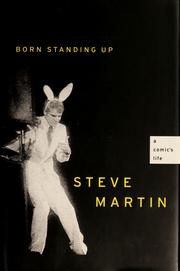
I picked it up after falling down a hole of old Tonight Show clips, the ones where a young man in a white suit does not tell jokes so much as inhabit a joke that has no punch line. I wanted to know how that happened. The memoir is the answer, and the answer is stranger and sadder than the clips suggest.
Garden Grove
Martin was born in Texas in 1945 and grew up in Southern California, in Garden Grove, in a house that looked like a childhood and worked like a pressure vessel. His father, Glenn, had wanted to be a performer and did not become one, and he governed the family with a mix of ambition, disappointment, and long enraged silences. Martin describes the house as controlled by moods rather than rules, and describes himself as learning early to be anywhere else inside his own head.
The breakout fact of his childhood is geography. Disneyland opened about two miles from his house in 1955, and the ten-year-old Martin started selling programs there. At fifteen he was demonstrating tricks in a magic shop on Main Street, where the inventory included the arrow-through-the-head and the nose glasses that would later become props in his act. This is one of the book's quiet revelations: the weirdest comedian of his generation got his start in the most wholesome place in America, behind a counter, selling gags to tourists.
He worked at Knott's Berry Farm in a vaudeville-style revue, which he calls the soft primordial core of his act. He studied philosophy in college, first at Long Beach State and then at UCLA, and did the thing that most future comedians do not admit to: he thought about comedy as a problem. In a letter from 1966 he wrote that he had decided his act was going to go avant-garde, because it was the only way to do what he wanted. Then he asked the question that organized the next fifteen years of his life. What if there were no punch lines?
The years nobody applauded
The middle of the book is the part I had never heard anyone talk about, and it is the best part. Martin spent roughly a decade playing small clubs for audiences that did not want him. He performed for near-empty rooms, for drunks, for people who had come to see someone else. He learned to play banjo because it was a skill he could control. He developed bits that were anti-bits: magic tricks that failed, jokes that stopped, silences that lasted until a room turned hostile. He was not yet the strange performer people loved. He was a strange performer people tolerated, which is a different job.
What makes these chapters work is that Martin does not claim he knew the plan would work. He describes the failure years as failures, with the specific humiliations of show business as a series of small towns and wrong microphones. The narrative voice is restrained to the point of clinical. Janet Maslin in the New York Times described it as written in the straight-from-the-couch voice of a dutiful analysand, and that is exactly right. There is very little exclamation in this book. There is an astonishing amount of noticing.
The book is also unusually good on money and mechanics. He talks about booking, about agents, about how a comedian's act is assembled in pieces, about the way a laugh is a physical event that can be engineered through rhythm and expectation. Writers who have studied comedy call this the rare step-by-step account of how a performer built an aesthetic and a set of chops, and it deserves that reputation. If you have any interest in performance, the how is more interesting than the what.
What the book teaches about craft
There are a handful of passages in Born Standing Up that I have gone back to more than the rest of the book, and they are all about technique. Martin explains how a joke is a physical object with a shape, how an audience laughs in a rhythm that can be led or lost, and how the pause before a punch line is doing as much work as the punch line. He explains how his act was assembled from failures, one bit at a time, so that the final product looked like an explosion of personality when it was actually a carefully maintained machine. He talks about club owners, lighting, and the difference between a crowd that is with you and a crowd that is deciding whether to eat you.
For anyone who has ever tried to make a room of strangers feel something, this is the useful part. Martin's central insight, which he states plainly and then demonstrates for two hundred pages, is that his comedy worked because of what he withheld. The audience spent his act waiting for a release that never came, and the waiting became the experience. He calls the resulting feeling tension without release, and by the time he gets to the arenas, the book has shown you why that particular weapon does not scale. You cannot build intimacy with twenty thousand people in the dark. You can only build a bigger noise. The memoir is honest that he chose the noise for a while and did not like who he became inside it. That is a rarer confession in a show business book than any scandal would be.
The breakthrough
The breakthrough has a date. In 1974, Martin appeared on The Tonight Show with Sammy Davis Jr., and by his own account something clicked in front of a national audience. He wore the white three-piece suit for reasons he explains like an engineer: it was visible from the cheap seats, the vest kept his shirt tucked during physical bits, and it made him look like a visitor from the straight world who had gone seriously awry. Balloon animals, "Happy Feet," the arrow through the head, the banjo, the absurdist confidence of a man who seemed to enjoy his own act more than any audience could. The albums Let's Get Small and A Wild and Crazy Guy followed, and then Saturday Night Live turned him into a phenomenon that even he treats with a certain anthropological distance.
The celebrity section of the book is the shortest in proportion to what it describes, and I think that is deliberate. Martin is not especially interested in being famous. He is interested in the fact that fame is a machine with a throttle, and he is one of the few people who ever decided to let go of the throttle on purpose.
The end of the act
By 1979 he was booked two years ahead, playing arenas that were far too big for what his act actually was. A comedian whose weapon is intimacy and unease cannot scale to twenty thousand seats without becoming a different comedian, and Martin knew it. He started having panic attacks. The best one is a hospital scene where a nurse asks him to autograph his own EKG while he is being treated for what turns out to be anxiety. The critical backlash arrived on schedule, because it always does. And in 1981, after a dispiriting week in Atlantic City, he quit, at the commercial peak, with the machine still running. His explanation in the book is a sentence worth the price of admission: his act was like an overly plumed bird whose next evolutionary step was extinction. He got out before the extinction.
The decision is presented as neither heroic nor tragic. It is presented as an artist treating his own career like a structure that has reached its load limit, which is a rarer kind of courage than it sounds. Most people who quit at the top tell you they were brave. Martin tells you the arithmetic.
His parents
The part of the book that has nothing to do with comedy is the part that lasts. Martin had spent years in a state of near-total estrangement from his father, a man who could not say a warm sentence about his son's success and then could not forgive himself for it. The memoir describes the silence not as a wound being nursed but as a debt, one of the psychological debts he says came due later in romantic misconnections and a wrong-headed quest for solitude. He examined his own life the way he examined his act.
In the last chapters he visits his parents, separately, in the way adult children do when the visit is a negotiation. He writes about his mother's late-life candor and his father's late-life softness. Both parents die within the span of the book, and Martin does the thing that makes the memoir more than a success story: he writes the repair scenes plainly, without a victory lap, and then lets the book end. The last pages are about a man in his sixties understanding that the thing he has spent decades explaining, comedy, was never the main subject. The main subject was the house he could not live in and could not stop returning to.
Should you read it
Jerry Seinfeld called it one of the best books about comedy and being a comedian ever written, which is an endorsement from the one person who could give it. Lev Grossman, in Time, put it on his 2007 list of the best nonfiction books. The audiobook, read by Martin himself, was nominated for a Grammy. The praise is unanimous enough to be a small warning: this is a book that does not have many detractors, and the reason is that it does not try to do very much. It is 209 pages. It has no score to settle and no secrets to spill. It is one craftsman explaining his craft and his father, in that order, with the flat affect of a man who has lived long enough to stop performing.
A note on the reading experience, since the audiobook is a different book in a useful way. Martin narrates it himself, decades after the fact, in a voice that is calm and slightly amused and almost never sentimental, and hearing him deliver his own worst years adds a register the page cannot carry. If you are deciding, I would read it first and listen later. The page version keeps the Britannica quality of his sentences, and the clinical distance is the point of the whole exercise: a man performing an autopsy on his own ambition, in a lab coat, with a light touch. The audio version lets you hear the affection under the analysis, which the prose deliberately suppresses. Both are worth your time, which is not a thing I say about many showbiz memoirs.
What it gives you, in the end, is a working theory of why the white suit worked. Steve Martin was funny in the way that nothing else on television was funny, and the memoir shows you the decade of unglamorous training that made the funniness look effortless and the exit look inevitable. There is a famous Elvis Presley encounter in the book, a famous Tonight Show moment, a famous decision to walk away. But the scenes I remembered a week after finishing are smaller: a teenager demonstrating tricks in a magic shop, a man alone on a stage in a small room, waiting, and no punch line coming. That is the whole book, and it is enough.
FAQ
What is Born Standing Up about?
It is Steve Martin's memoir of his eighteen-year stand-up career, from Disneyland and small clubs to fame and his decision to quit in 1981.
Why did Steve Martin quit stand-up comedy?
He writes that the act had become an arena spectacle too large for what it was, and after panic attacks and a rough Atlantic City run he left at the peak.
Does Born Standing Up cover his movie career?
No. It ends around 1981 and focuses on his childhood, his stand-up years, and his relationship with his parents.
Similar books
Seriously...I'm Kidding
DeGeneres strings show stories and home jokes into light life advice.
2,292-word summary · 10 min read

Scrappy Little Nobody
Anna Kendrick's essays trace her path from a Portland childhood and Broadway to Hollywood, with jokes, anxiety, and a refusal to pretend fame fixed her.
2,092-word summary · 9 min read
Open Book
Simpson replays pop fame, love and drink through recovery work.
2,552-word summary · 11 min read
My Horizontal Life: A Collection of One-Night Stands
Handler turns dating disasters and family chaos into brash comic essays about single life in Los Angeles.
2,304-word summary · 10 min read
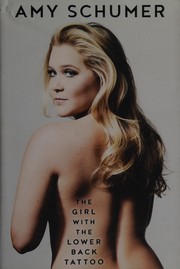
The Girl with the Lower Back Tattoo
Amy Schumer mixes raunchy jokes with frank essays on family, dating, body image, and the shooting that pushed her into gun control advocacy.
2,259-word summary · 10 min read
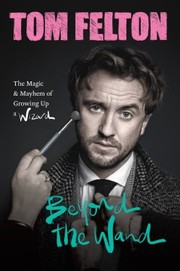
Beyond the Wand: The Magic and Mayhem of Growing Up a Wizard
Tom Felton looks back on ten years as Draco Malfoy, from schoolboy auditions to fame, music, and getting sober.
2,267-word summary · 10 min read
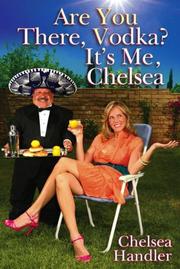
Are You There, Vodka? It's Me, Chelsea
Handler mines family, jail, dating, and travel for brash essays where oversharing is both joke and shield.
2,186-word summary · 10 min read
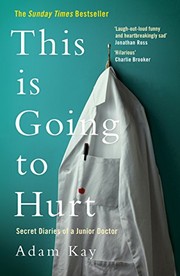
This Is Going to Hurt
Adam Kay retells his junior doctor diaries with humour and strain, from labour ward nights to leaving medicine.
2,869-word summary · 13 min read
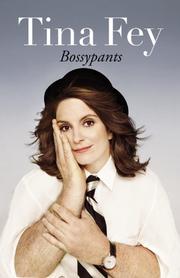
Bossypants
Tina Fey moves from Pennsylvania childhood through improv and SNL to 30 Rock in this funny 2011 memoir. Expect backstage stories, jokes about work and…
2,301-word summary · 10 min read

Long Walk to Freedom
Mandela's account of a Thembu childhood, a law practice, a banned movement, twenty-seven years in prison, and the negotiation that ended apartheid.
2,454-word summary · 11 min read

Infidel
Ayaan Hirsi Ali's memoir of a Somali childhood, a forced marriage, a Dutch asylum claim, and the political fight that followed the murder of Theo van Gogh.
2,041-word summary · 9 min read

The Girl with Seven Names: A North Korean Defector's Story
Hyeonseo Lee crossed the frozen Yalu River at seventeen, spent years hidden in China, escaped to South Korea, and later returned to rescue her family.
2,404-word summary · 11 min read
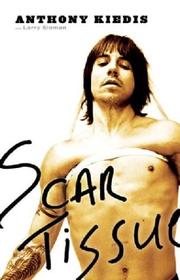
Scar Tissue
Kiedis's memoir follows the Red Hot Chili Peppers from Hollywood house parties to fame, heroin, and the long work of staying clean.
2,217-word summary · 10 min read
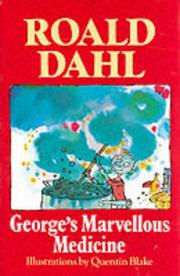
George's Marvellous Medicine
George stirs a brew of dozens of household chemicals and gives it to his grumpy grandmother, and the medicine works far better than anyone planned.
2,014-word summary · 9 min read
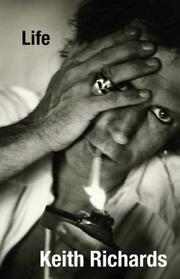
Life
The Rolling Stones guitarist tells his own story: a Dartford childhood, the band's first gigs, the drug raids, the tax years and Patti Hansen.
2,761-word summary · 12 min read
Hogfather
Death fills in for a missing Father Christmas, Susan Sto Helit hunts the Hogfather, and the twentieth Discworld novel turns Santa into a management problem.
2,871-word summary · 13 min read
Dry
A memoir of drinking, rehab and relapse, and the strange business of getting sober one morning at a time.
2,643-word summary · 12 min read
Dear Girls: Intimate Tales, Untold Secrets & Advice for Living Your Best Life
Ali Wong's debut collects fourteen letters to her daughters, covering sex, money, work, marriage, Vietnam, and being a working Asian American mother.
2,266-word summary · 10 min read
The Letters of Vincent van Gogh
Vincent van Gogh's letters to his brother Theo, in a Penguin Classics selection edited by Ronald de Leeuw, trace a decade of work, faith, and obsession.
2,611-word summary · 12 min read
The Stranger Beside Me
Ann Rule's classic memoir of her friendship with Ted Bundy, written by the true-crime author who knew him long before the world learned what he had done.
2,481-word summary · 11 min read
Liar's Poker
Michael Lewis recalls his years as a Salomon Brothers bond salesman in the 1980s, when bluffing paid better than analysis and the mortgage machine was just…
2,405-word summary · 11 min read
Redshirts
Ensigns realize they die to serve a bad TV show's narrative.
2,152-word summary · 10 min read
Reaper Man
Death gets fired and farms while Windle Poons refuses to die.
2,579-word summary · 11 min read
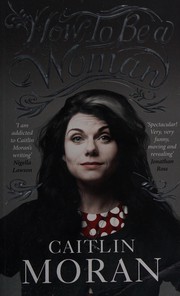
How to Be a Woman
Moran mixes girlhood and work stories into plain feminist advice.
2,600-word summary · 12 min read
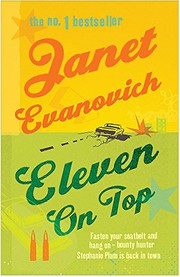
Eleven on Top
Stephanie quits bounty hunting for normal jobs, but a killer and a wedding keep pulling her back.
2,508-word summary · 11 min read
Bridget Jones: The Edge of Reason
Bridget doubts Mark, takes a job with Daniel, and lands in trouble in Thailand.
2,198-word summary · 10 min read
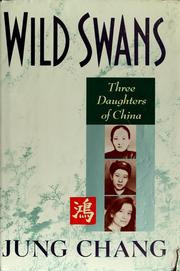
Wild Swans
Three generations of women survive warlords, revolution, and the Cultural Revolution in Jung Chang's family memoir.
2,356-word summary · 10 min read
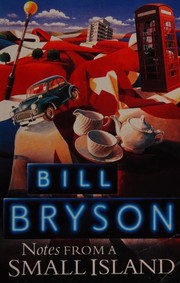
Notes from a Small Island
Bill Bryson's 1995 farewell tour of Britain, funny and fond, from Dover to London, the north, Scotland and Wales.
2,301-word summary · 10 min read
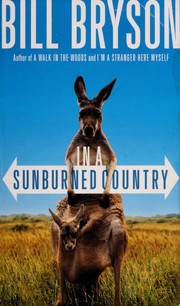
In a Sunburned Country
Bryson revisits Australia by city walks and long trains, with reef trips, critter comedy, and explorer history.
2,387-word summary · 11 min read
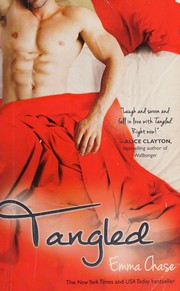
Tangled
Told by a cocky businessman, a bet to win the new associate who rejects him turns into real pursuit, strict rules, a painful reveal and a wedding-level happy…
2,868-word summary · 13 min read