
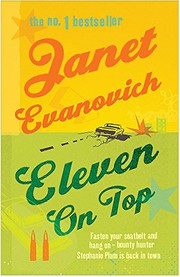
Eleven on Top
2,508-word summary 11 min read 288 pages in the book
- First published
- 2005
- Publisher
- St. Martin's Press
- Pages
- 288
- ISBN
- 9780755328031
- Series
- Stephanie Plum (#11)
Reading options
What's inside (8 sections)
I picked up Eleven on Top because I wanted something funny after heavier books, and Stephanie Plum always delivers that mix of crime and mess. First published in 2005 by St. Martin's Press at 288 pages in hardcover, it is book eleven in the Stephanie Plum series. Stephanie is a bounty hunter in Trenton, New Jersey, who has had cars blown up, dogs eat her homework, and two men circle her life. Here she quits. She is tired of garbage piles and guns, so she tries normal jobs. It goes badly in the best way. I laughed a lot and still cared who was trying to kill her.
Stephanie starts burned out. She tells her boss Vinnie she is done chasing skips who run and bite. She wants regular hours, no one shooting, a job where her uniform does not smell. Her mom is thrilled because bounty hunting embarrassed the family at church. Her sister Valerie is planning a wedding and needs a maid of honor in an eggplant dress. Her Grandma Mazur just wants gossip and a ride to funerals. Stephanie thinks a button factory will be calm. It is not.
The normal jobs are the funniest part. First a button factory, where she sews and gossips and learns buttons have drama. Then Kan-Kleen dry cleaning, where chemicals and customers test her. Then Cluck-in-a-Bucket, fast food chicken, where a man throws a bomb through the drive through window and she sees a scarred face before he speeds off. Each job ends with fire or police, not references. Evanovich writes these scenes with slapstick that never feels mean. Stephanie is clumsy but not stupid. She notices details while mopping. She remembers plates while serving. Her talent for trouble is also talent for finding trouble makers.
Someone is stalking her through all this. A car bomb takes her Saturn while her ex boss is driving it. Morelli, her on and off cop boyfriend, gets run over at a funeral home and breaks his leg. Bombs follow her to workplaces. At first she thinks it is Spiro Stiva, son of the local undertaker Constantine, whose funeral home she and Grandma once accidentally burned down in an earlier book. Spiro vanished after that fire. Scarred man back for revenge fits. Morelli tells her she made many enemies, which is true and not helpful.
Ranger and Morelli
The love triangle stays fun without taking over. Joe Morelli is Trenton cop, Italian, possessive in a caring way, stuck in a cast for much of this book after the hit and run. He loves Stephanie but hates her chaos. He wants her safe at home, which she cannot do. Ranger is ex Special Forces, runs a security company, calm, competent, sexy in a quiet way. He offers Stephanie a job doing background checks, safer than chasing, closer to him. She takes it partly for safety, partly because Ranger makes her feel capable.
I like how Evanovich keeps both men decent. Morelli is jealous but shows up. He tells Stephanie she is not boring when she feels stupid and stuck. He watches her dog Bob. He argues about the wedding and the cello and still drives her when his leg heals. Ranger is professional but tender. He searches for her nonstop when she vanishes for six hours, then handcuffs her to his man Tank to keep her safe, which is over the top and sweet in their world. Stephanie cares for both and chooses neither fully here, which frustrates some readers but felt honest. She cannot pick a life till she picks a job.
Valerie's wedding gives domestic comedy. Valerie, once perfect, now with kids and a hapless lawyer fiance Albert Kloughn, wants to lose sixty pounds in ten days after he insults her weight at dinner. She will not marry unless she does. The family debates crash diets, exercise, and whether Albert deserves her. Stephanie gets roped into playing cello at the wedding after lying that she can play. Her mother rents a cello. Stephanie panics. The payoff, involving Morelli's garage and a bomb and a cancelled trip to Disney World, is pure Plum. I laughed out loud on a train and did not care.
Grandma Mazur steals scenes as always. She loves funerals, views bodies, comments on makeup, carries a gun in her purse. She drags Stephanie to Stiva's funeral home to snoop, where Stephanie later gets tased and wakes in a coffin. Grandma treats danger like bingo. Her lines are short and perfect. She wants action and cake. Without her, the book would be darker. With her, even a coffin scene has air.
Old Army money
The mystery underneath is solid. While doing background checks for Ranger, Stephanie finds four older men from the Burg who vanished the same day and were found shot in a shallow grave outside Trenton. All were Army vets at Fort Dix with Constantine Stiva. Thirty six years ago they stole seven million from an armored car and hid it in a vault under the funeral home, needing all five to open. Constantine learned the combo, borrowed over years, then needed it all after the fire rebuild. When one partner sick with cancer asked for his share, Constantine called a meeting and killed them all. Now he needs Stephanie dead to keep the Spiro story alive.
Constantine as villain works because he is ordinary evil. Not a mastermind with lasers, but an undertaker who did books and burials and decided money mattered more than friends. He locks Stephanie in a basement and goes to play Spiro once more. She is saved by Ranger's crew, then stakes out herself with her family's Buick and rear ends Constantine's car, trapping him with an airbag. It is not elegant. It is Stephanie, using what she has, a big car and timing. She feels better after, not because she likes hurting, but because she acted instead of hiding.
The vault detail is fun. Needing five men to open, shares every ten years, borrowing. It explains why old men stayed tied and why one illness broke it. Evanovich keeps the exposition short, through Ranger and Morelli explaining while Stephanie asks plain questions. Readers who want hard heist mechanics may want more. I liked that it stayed about people. Greed rotting a friendship over decades, not clever codes.
What makes Eleven on Top stand out in the series is Stephanie quitting. She tells Morelli she feels stupid and boring, no career, no hobby, nothing she is good at. He says stupid is debatable, boring never. That talk hit me. Many books in long series keep heroes static. Here Stephanie admits burnout and tries change. She learns normal jobs bore her because she likes helping, noticing, moving. She misses the rush and the purpose, even if she hates the danger. By the end she decides her life is already interesting, cello or not. It is not growth into a new person. It is acceptance of who she is, mess and all.
What shines and what repeats
What shines is voice and pace. Short chapters, Jersey dialogue, food and family and cars. Stephanie narrates in first person, funny, self deprecating, observant about small things like how a funeral home smells and how a chicken uniform itches. Lula, her friend and former file clerk turned bounty helper, gets great lines about men and clothes and danger. Bob the dog eats things. The Burg talks. You feel Trenton without a travel guide.
The humor respects stakes. Bombs kill cars, break legs, scare workers. Stephanie gets bruised, tired, scared. She cries once and keeps going. Evanovich never makes murder funny, only Stephanie's reactions to life around murder. That balance keeps the series going eleven books in without feeling cruel. If you are new, you can start here. Old jokes are explained fast. Who Ranger is, why cars explode, why Grandma loves funerals. You will miss some warmth but follow plot fine.
What repeats is formula, and fans either love or tire of it. Car destroyed, job fails, Morelli jealous, Ranger rescues, Grandma says something wild, Stephanie eats cake. Eleven books of that can feel samey if you binge. I read them spaced out, so it felt like visiting friends. If you want Stephanie to finally choose a man or leave Trenton, you will be frustrated. She does not here. She stays in motion.
Content is light for crime. Language moderate, some sex talk but closed door, violence mostly explosions and threats, no gore. Good for adults who want cozy with edge. Teens older will get jokes but miss Burg politics.
Who should read it
Read it if you like funny mysteries like High Five or Hard Eight, or shows with competent messy women. Read it for a bad week, for planes, for when you want laughs with a body count that stays low. Start with One for the Money if you want from the beginning, but Eleven on Top works alone because quitting resets her.
Skip it if you need dark realism or dislike love triangles that never end. This is not noir. People survive blasts and joke after. That is the deal.
For me, the image that stays is Stephanie in a chicken hat, holding a mop, watching a scarred man through grease and glass and thinking, not again. Then later, rear ending a killer with a Buick while Ranger yells and Grandma cheers. Useless jobs taught her to watch, wait, act. Normal did not fit, and that is okay. I closed the 288 pages feeling lighter, rooting for Valerie to skip the diet and marry or not on her terms, for Morelli's leg to heal, for Ranger to smile once fully. Mostly rooting for Stephanie to stop calling herself stupid. She is not. She is Eleven on Top for a reason, still standing when smarter plans blow up. That resilience, funny and tired, is why I will keep reading.
The Burg and family pressure
I want to say more about the Burg, because Trenton's Chambersburg neighborhood acts like family and judge at once. Everyone knows who quit, who got fired, who wears what to weddings. Stephanie's mother cares what neighbors think about bounty hunting, about Valerie's weight, about cellos at weddings. She cleans when stressed, cooks when worried, criticizes because she fears. Her father is quiet, drives a cab, reads papers, loves his girls without saying much. Their house smells of sauce and laundry. Sunday dinners are interrogations with dessert. Stephanie dreads them and needs them. That push and pull feels true to anyone from a close ethnic neighborhood where love shows as food and worry.
Valerie's arc deserves more credit. Once the perfect sister who married well and moved away, she returned divorced with kids, broke, humbled. Now she tries to marry Albert, a kind, clumsy lawyer who loves her but says stupid things about weight when nervous. Valerie decides she must lose sixty pounds in ten days or cancel. It is absurd and sad. She starves, cries, fights with Albert, leans on Stephanie. Her demand is not really about pounds. It is about control when life feels out of control. Will marrying again fix the last failure. Will looking different make her worthy. Stephanie, who feels stupid about jobs, recognizes the same fear in Valerie about bodies. Sisters mirror without meaning to. When Valerie finally calls from the airport to cancel and take kids to Disney, with or without Albert, I cheered. She chose joy over performance. That choice echoes Stephanie choosing messy purpose over normal.
Grandma Mazur's funeral habit also says more than jokes. She goes to viewings of strangers, comments on hair, takes notes for her own service. At first it seems morbid comedy. After a while I saw it as control too. Old, widowed, with little money, she asserts taste where she can. She also seeks company. Funerals gather the Burg. She sees friends, hears news, feels alive among dead. Dragging Stephanie along is both selfish and generous. She gives Stephanie cover to snoop, and gives herself a driver. Their dynamic, young woman embarrassed and old woman delighted, carries books when plots sag. Here, Grandma spotting details at Stiva's parlor moves the case. She notices who cries real and who performs. Age sees.
Work as identity
Stephanie quitting bounty hunting to try normal jobs asks what work means. Button factory pays little, smells of oil, has women who have done it for years and take pride. Stephanie learns their names, their kids, their aches. She is bad at sewing but good at listening. Dry cleaning teaches chemicals and stains and rushed mornings. Fast food teaches heat and rude customers and managers who count seconds. None fit, but each teaches her she can learn fast and people like her. Her depression about being stupid and boring lifts not because she finds a dream job, but because she sees she brings care to any job. That reframe matters. Worth is not title. It is how you treat people while doing tasks.
Ranger's offer of background checks bridges both worlds. Office work with purpose, using her street sense without chasing. She runs plates, finds old Army records, links four dead men to Fort Dix and Constantine. She does it well because she knows the Burg and asks dumb questions smart people skip. Ranger praises specifically, not flatters. You spot patterns fast. That praise lands after Morelli's worry. One man fears for her. The other trusts her skill. She needs both, but trust heals more. I liked seeing her competent at a desk, proving quitting did not mean failing. It meant redirecting.
Morelli's injury forces him to receive care, which he hates. Tough cop with a broken leg, stuck on a couch, needing Stephanie to bring food and Bob to walk. He grumbles, flirts, worries. Stephanie mothers him badly and lovingly. That role reversal softens their fight about her safety. He feels helpless and understands why she hates being told to stay home. They do not discuss it neatly. They bicker about medication and TV. But something shifts. He stops ordering and starts asking. Will you check in. Can you take Tank. That asking, not telling, is love learning.
The cello lie ties it together. Stephanie tells her mother she plays to sound accomplished at a jobless moment. Mother rents one. Now Stephanie must perform at the wedding or confess. She practices badly, squeaks, annoys Bob. The cello sits huge in her small apartment, symbol of pretending to be normal and cultured. When Morelli's garage blows up with the cello inside, I laughed with relief. Fate saved her from faking. Then Valerie cancels anyway. Both sisters escape performances they set for others. The message is gentle. You do not need a new skill to matter. Your life, with Buicks and bombs and bad jobs, is already interesting. Stephanie says she feels better, and I believed her. Not fixed, but kinder to herself. That kindness, after eleven books of self mockery, felt like growth worth keeping.
FAQ
When was Eleven on Top published?
It was first published in 2005 by St. Martin's Press at 288 pages. It is book eleven in the Stephanie Plum series.
What is the setup?
Stephanie Plum quits bail enforcement after burnout. She tries normal jobs while someone tries to kill her, with Morelli and Ranger helping.
Similar books
More from Stephanie Plum first, then related titles.

One for the Money
Janet Evanovich's One for the Money fully retold: Stephanie Plum's first bounty hunt, Morelli on a murder charge, Ranger, Lula, Ramirez, and why Trenton still…
2,339-word summary · 10 min read

Two for the Dough
Janet Evanovich's Two for the Dough retold: Stephanie Plum's second hunt, a missing gun dealer, Morelli and Ranger, and why Trenton still charms.
3,677-word summary · 16 min read
Three to Get Deadly
Stephanie hunts a beloved candy man holding army money everyone wants.
1,981-word summary · 9 min read

Four to Score
Stephanie hunts waitress Maxine Nowicki through coded clues, firebombs, and counterfeit cash while living with Morelli in Trenton.
2,870-word summary · 13 min read

High Five
Stephanie hunts missing Fred with Ranger's help while Morelli sulks and Grandma shops for funerals and husbands.
2,228-word summary · 10 min read

Hot Six
Stephanie Plum hunts a missing bail jumper tied to Ranger's mentor while Morelli, Lula, and Grandma Mazur stir Trenton chaos.
2,035-word summary · 9 min read

Seven Up
Stephanie hunts old mobster Eddie DeChooch, finds a body, a missing heart, and trouble from Morelli to Ranger.
2,798-word summary · 12 min read
Hard Eight
Janet Evanovich's Hard Eight fully retold: a missing mother and child, Abruzzi's medal hunt, Valerie's rescue, and Ranger crossing a line.
2,961-word summary · 13 min read
To the Nines
Janet Evanovich's ninth Stephanie Plum case retold: a missing skip, threats in Trenton, and a rescue run to Las Vegas.
2,839-word summary · 13 min read

Ten Big Ones
Stephanie witnesses a gang robbery dressed as a devil, and the Comstock Street Slayers put her on a list of people to kill.
2,062-word summary · 9 min read

Twelve Sharp
Stephanie Plum is stalked by a woman claiming to be Ranger's wife, and when Ranger's daughter is kidnapped, Stephanie becomes both bait and target.
2,064-word summary · 9 min read
Lean Mean Thirteen
Stephanie Plum's ex-husband disappears after she attacks him, leaving her suspected of murder and chasing a forty-million-dollar secret through Trenton.
2,100-word summary · 9 min read
Fearless Fourteen
Bounty hunter Stephanie Plum babysits a teenager, guards a fading singer, and hunts nine stolen million dollars under her boyfriend's basement.
2,466-word summary · 11 min read
Finger Lickin' Fifteen
Lula sees a celebrity chef decapitated and talks Stephanie into entering a barbecue contest to lure the killers, while Ranger hires her to find a security leak…
2,248-word summary · 10 min read
Finlay Donovan Knocks 'Em Dead
Someone has put a contract on Finlay Donovan's ex-husband, and the novelist and her nanny have to find the hitman before the school pickup.
1,990-word summary · 9 min read

Men at Arms
The City Watch gets new recruits and a murder case when the Disc's only handgun turns up in Ankh-Morpork, in the fifteenth Discworld novel.
2,216-word summary · 10 min read
Finlay Donovan Is Killing It
A broke single mom novelist is mistaken for a hitwoman over lunch and takes the job. Funny crime caper, first in the series.
2,538-word summary · 11 min read

What She Knew
Rachel lets her eight-year-old son run ahead in a Bristol park, and the nine-day search turns her into a suspect in the public eye.
2,952-word summary · 13 min read

The Beach House
A young valet is beaten to death at a Hamptons party, and his law-student brother spends a year building a case against the family that covered it up.
2,049-word summary · 9 min read
The Art Forger
A disgraced Boston painter agrees to copy a Degas stolen from the Gardner Museum, then begins to suspect the original she is copying is itself a forgery.
2,117-word summary · 9 min read
Size 12 Is Not Fat
Former teen pop star Heather Wells investigates two dorm elevator deaths while juggling her ex, her crush, and a size-12 wardrobe.
2,805-word summary · 12 min read

Six Years
A professor who promised to forget the woman he loved sees her husband's obituary and discovers that the wedding, the marriage, and the woman herself may never…
2,076-word summary · 9 min read

How the Light Gets In
Gamache investigates the murder of the last Ouellet quintuplet while the Sûreté he served is dismantled from inside by the man who took his protégé.
2,279-word summary · 10 min read

First Grave on the Right
Charley Davidson is a private investigator in Albuquerque and the grim reaper. When three murdered lawyers come back as ghosts, her two jobs collide.
2,770-word summary · 12 min read

Bury Your Dead
Recovering from a failed raid that killed his officers, Gamache investigates a murder in a Quebec City library while Beauvoir reopens a case in Three Pines.
2,022-word summary · 9 min read

The Trespasser
A Dublin Murder Squad detective investigates a staged dinner-party killing and finds a cover-up that reaches into her own department.
2,051-word summary · 9 min read

Rules of Prey
Minneapolis detective Lucas Davenport hunts a killer who leaves a new rule at every scene and treats murder as a game of wits.
1,914-word summary · 9 min read

The Late Show
Exiled to the LAPD night shift after accusing her supervisor, Renée Ballard keeps two cases that were meant to be handed off at dawn: a brutal assault and a…
2,563-word summary · 11 min read

The Black Dahlia
James Ellroy builds a fiction around the real Black Dahlia murder, following two Los Angeles cops whose partnership and obsessions destroy them.
2,533-word summary · 11 min read

4th of July
Lindsay Boxer shoots two armed teenagers in self-defense, faces a wrongful-death trial, and spends her leave chasing a string of throat-slashing murders in…
2,192-word summary · 10 min read