
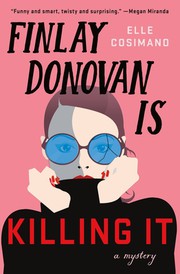
Finlay Donovan Is Killing It
2,538-word summary 11 min read 368 pages in the book
- First published
- 2021
- Publisher
- Minotaur Books
- Pages
- 368
- ISBN
- 9781250241702
- Series
- Finlay Donovan (#1)
Reading options
What's inside (7 sections)
I started Finlay Donovan Is Killing It on a friend's recommendation, with the warning that it reads fast and ends with you wanting the next one immediately. Both things turned out to be true. This is the first book in Elle Cosimano's Finlay Donovan series, published by Minotaur Books in 2021, a 368 page hardcover that launched her adult fiction career after years of writing for younger readers. The setup sounds like a joke, and it is, but Cosimano plays it with enough domestic detail that the joke keeps generating real story for three hundred odd pages.
Finlay Donovan is a suspense novelist and a single mother of two small kids in suburban Virginia, and she is failing at both jobs when we meet her. The novel she owes her agent is barely started. Her ex husband Steven has fired their nanny Vero without telling her. Her daughter Delia is four going on fourteen, her toddler son Zach is at the destructive age, and one memorable morning Finlay sends Delia to school with her hair held together by duct tape after an incident with scissors. Then Finlay goes to lunch with her agent Sylvia to talk through the plot of her stalled book, describing in public how a fictional killer might dispose of a husband. A woman at a nearby table hears only the method, not the context, assumes Finlay is for hire, and offers her money to make her own problem husband disappear. Finlay, who needs cash the way drowning people need air, takes the woman's card. That decision powers everything after.
What hooked me was not the high concept but the texture around it. Cosimano writes the logistics of broke single parenthood with total conviction. School pickups, babysitter math, custody tension, the agent calling about pages that do not exist, the ex who weaponizes helpfulness. The crime plot keeps colliding with the childcare plot, and every collision is funny, until suddenly one of them is not funny at all, and then it is funny again. That gear shifting is the book's whole trick, and it works far better than it has any right to.
Lunch, a misunderstanding, and the worst yes
The opening chapters do a lot of efficient work. We meet Finlay behind on her book, taking notes on murder methods for fiction, which is a normal Tuesday for a crime writer and a terrible look in a restaurant. Her agent Sylvia is supportive the way agents are in novels, meaning she wants pages and will accept excuses exactly once more. The conversation Finlay and Sylvia have about killing a husband is shop talk, craft discussion, two professionals batting around plot mechanics over sandwiches. The stranger hears a service being offered.
Cosimano stages the misunderstanding carefully. The woman, Patricia, does not lay out a full confession in the restaurant. She passes a note, or slides close, with money mentioned and details to follow. The vagueness matters, because it lets Finlay rationalize. She tells herself she is just gathering material, just taking a meeting, just hearing someone out. Vero, the nanny Steven supposedly fired, is still in the picture, because Vero answers to Finlay more than to Steven, and Vero has opinions. Vero's opinion is that they need the money, that this woman is serious, and that Finlay should at least learn the details before deciding. Between the two of them, curiosity plus poverty beats caution.
I should say what kind of book this is, because readers arrive with different contracts. This is a comic caper with bodies, not a police procedural and not a puzzle mystery in the classic sense. Finlay is not clever in the detective way. She is clever in the novelist way, which means she understands motive and structure right up until real blood shows up, at which point she panics like anyone would. The fun is watching story instincts misfire against reality. Every plan she makes would work in a manuscript and fails in a driveway. Every lie she tells buys a day and costs a week.
The early surveillance chapters set the template. Finlay and Vero stake out the target house the way civilians do it, badly, conspicuously, with snack wrappers and kid related interruptions. They bicker about approach. Vero, blunt and practical, keeps suggesting the direct route. Finlay, trained by fiction to love complexity, keeps adding steps. Nothing goes as drawn up. Someone sees something. Someone's phone rings at the wrong second. A neighbor notices the car. By the time they actually get close to the husband, the situation has already outgrown the original deal, and new players are visible at the edges who were not in Patricia's version of events.
Vero, or the nanny every disaster needs
Every caper needs a duo, and Vero is the reason this series took off. On paper she is the nanny, hired help, background. In practice she becomes Finlay's partner, driver, lookout, muscle, and financial officer, often in the same chapter. She is direct where Finlay spirals, calm where Finlay catastrophizes, and funny in the dry way that makes Finlay's narration funnier. Their conversations in the car, before and after each botched operation, are the best written passages in the book. Cosimano gives them distinct rhythms. Finlay talks in run on anxiety. Vero answers in short verdicts.
The class and money angle sneaks in through Vero. She needs this job. Finlay needs this job. Neither of them is playing at crime the way rich amateur sleuths play at detection. The bills are specific. The threat of losing the kids' stability is specific. Steven, the ex, hovers as the respectable alternative, the man with the steadier household who could make a custody argument if Finlay's life looks chaotic enough. That pressure explains why Finlay keeps going after a sane person would call the police. She cannot afford to look like a mess, so she commits a felony to protect the appearance of order. It is absurd, and it is also how financial fear actually works.
Vero has her own secrets, parceled out slowly. She is sharper about money movement and cover stories than any nanny has a right to be, and Finlay notices without quite asking. I liked that Cosimano does not over explain her in book one. You finish with a sense that Vero's competence has a history, that the history is complicated, and that later books will open that drawer. For now she functions as the friend who says yes when the right answer is no, and every reader has had that friend, or been that friend.
The kids, meanwhile, are never props. Delia is old enough to repeat things adults say, which creates constant tension, because the adults are saying terrible things. Zach is young enough to need carrying, feeding, and rescuing from his own curiosity at the worst moments. Cosimano uses them for comedy, yes, the timing of a toddler's needs against a criminal's schedule is inherently comic, but she also uses them as stakes. Finlay's fear is never abstract. It is always: what happens to Delia and Zach if this goes wrong. That keeps the caper from floating away.
The cop next door and the walls closing in
No crime comedy works without pressure, and Detective Nick Anthony supplies it. He is investigating the mess Finlay keeps stepping around, he is inconveniently attractive, and he is inconveniently good at his job. Their scenes together run on dramatic irony. He asks reasonable questions. She gives answers that are technically true and completely misleading. He notices her. She notices him noticing. The romance thread stays light in this installment, more spark than fire, which suits a book where the heroine has no business dating anyone while burying evidence.
What I liked about Nick is that Cosimano never makes him stupid to keep the plot alive. He follows evidence, he clocks inconsistencies, and he gives Finlay chances to come clean that she keeps refusing. That choice raises the tension honestly. Every failed chance narrows her options. By the last third, she is lying to a man who is professionally trained to detect lies, about events he is actively investigating, while developing feelings that make the lying worse. It is a strong engine, and Cosimano resists resolving it too neatly. The book ends with the romantic question very much open, which is correct for book one of a series.
Steven gets more shading than the standard useless ex. He is difficult, controlling about money and schedules, quick to criticize Finlay's chaos while contributing to it. But he loves the kids, and Cosimano lets that be true without letting him off the hook. The custody shadow gives his scenes weight. When he threatens, politely, through lawyers or through concern, Finlay hears what he means. Get your life together or lose time with Delia and Zach. For a woman secretly disposing of problems for cash, that threat lands like a second plot engine humming under the first.
Around these three orbit the actual criminals, and here the book widens. The job Patricia offered turns out to involve people who do this for a living, including a fixer type who treats Finlay as either an asset or a loose end depending on the day. I will keep the details light because the reveals are the pleasure of the back half. What matters structurally is that Finlay's amateur mess attracts professional attention, and the professionals are not comic. The tone modulation in these chapters impressed me. Cosimano lets real menace into the farce without breaking the book's promise. A scene can be frightening and ridiculous within the same page, which is exactly how it would feel.
Writing about writing, without the preciousness
Books about writers often collapse into vanity, but this one earns its meta layer because Finlay's job keeps mattering to the plot. She thinks in scenes and beats. She drafts alibis the way she drafts chapters, revising when they do not play. She studies people for material, which makes her observant in useful ways and exploitative in ways the book quietly notes. Late in the story she starts feeding the real events back into the novel she owes Sylvia, fiction laundering life, and the passages about that process are the smartest in the book. A suspense writer learning that real violence has no revision history is a genuine idea that could only come from living the plot first.
Themes sit lightly but they are there. Motherhood under money pressure. The performance of okayness for courts, schools, and exes. The way women are asked to manage every consequence while men create half the messes. Cosimano never speechifies. She lets a scene do it: Finlay scrubbing a stain out of something while taking a call from Sylvia, negotiating a criminal payoff around nap time, smiling at a teacher while her trunk holds something it should not. The comedy and the commentary are the same material. That is harder to pull off than it looks, and it is why the book outlasted its gimmick.
Pace deserves a mention. Short chapters, cliffhanger chapter ends, constant intercutting between domestic chaos and criminal chaos. I read the back half in one sitting because stopping felt unnatural. Cosimano learned structure writing for teens, where every chapter must earn the next, and it shows. If there is a cost, it is depth. Scenes rarely linger. Feelings get a paragraph, then the phone rings. Readers who want slow interiority should look elsewhere. This is momentum fiction, and it knows it.
The ending, the loose ends, and who should read it
The climax gathers every thread, the client, the fixer, the cop, the ex, the kids' schedule, and shakes them together. Without spoiling the turns, I can say the resolution is satisfying on the mystery level and honest on the character level. The guilty face consequences, though not always through the system. Finlay survives more by luck and Vero than by skill, which the book admits. The most dangerous people learn enough to be useful later, which sets up the series without cheating this book's ending. And Finlay finishes her novel, in a sense, by living a worse draft of it first. That closing irony lands.
Let me be fair about the weak spots, because they are real even if they did not spoil my week. The middle relies heavily on coincidence. People arrive exactly when arrival is worst, overhear exactly what must be overheard, and miss exactly what must be missed. One or two of those turns would be fine. There are more than two. Cosimano's pace papers over most of it, but readers who audit plots will feel the seams around the two thirds mark. Relatedly, the actual investigation, the professionals' side, stays thin. The fixer and his world operate mostly off page, which keeps the tone comic but means the menace sometimes feels declared rather than shown.
The romance is the thinnest thread. Nick is charming and the chemistry reads, but he and Finlay share too few quiet scenes for the feelings to deepen beyond attraction plus guilt. I suspect Cosimano was saving the slow burn for later books, which is a legitimate series strategy, but it leaves this volume's romantic beats a little schematic. Steven, by contrast, gets sharper scenes, because conflict writes itself faster than courtship. Readers who come for romance should calibrate. This is a caper with romantic elements, not the reverse.
None of that stopped me from ordering the sequel. The voice is the asset. Finlay's narration is warm, frazzled, and specific about the thousand small humiliations of her life, from agent emails to daycare politics. Vero steals scenes without breaking them. The kids feel like kids instead of plot tokens. And the premise, which could have been a short story stretched thin, turns out to have genuine legs, because the collision of motherhood and murder is renewable. Every school event is a potential alibi problem. Every playdate is a potential witness. Cosimano built a machine that makes stories.
Who is it for. Readers who like comic mysteries with heart, the Stephanie Plum crowd, fans of funny women in over their heads, and anyone who wants a crime novel where nobody broods in a parked car for forty pages. Readers who need grit, procedure, or moral darkness should skip it. There are bodies, threats, and genuine fear, but the book's center of gravity is comic and domestic. Think cozy leaning rather than cozy pure: the stakes bite, the banter flies, and the kids always need dinner in the middle of the felony.
A note on the series for planners. This is firmly book one, and it reads like it. The main plot closes, but the personal knots, Nick, Steven, Vero's past, the fixer world, stay open by design. Later books pick them up. If you dislike starting unfinished business, wait until you have book two on hand. If you like watching a cast assemble, start here and enjoy the introductions. Finlay Donovan Is Killing It does exactly what a first in series should. It makes you care about the people fast, forgives its own shortcuts through charm, and ends with you checking the author's page for what comes next.
FAQ
Is this the first book in the Finlay Donovan series?
Yes. This is book one of the Finlay Donovan series, and it introduces Finlay, Vero, the kids, the ex, and the cop whose paths keep crossing in later books.
Is Finlay actually a contract killer?
No. Finlay writes suspense novels but has never hurt anyone. The comedy comes from a fiction writer treating a real crime like a plot problem she can revise.
Is it a cozy mystery or a thriller?
It reads like a cozy leaning mystery with romantic threads and some dark situations. There are dead bodies and threats, but the tone stays comic and the focus stays on Finlay's family chaos.
Similar books
More from Finlay Donovan first, then related titles.
Finlay Donovan Knocks 'Em Dead
Someone has put a contract on Finlay Donovan's ex-husband, and the novelist and her nanny have to find the hitman before the school pickup.
1,990-word summary · 9 min read
Fearless Fourteen
Bounty hunter Stephanie Plum babysits a teenager, guards a fading singer, and hunts nine stolen million dollars under her boyfriend's basement.
2,466-word summary · 11 min read
Lean Mean Thirteen
Stephanie Plum's ex-husband disappears after she attacks him, leaving her suspected of murder and chasing a forty-million-dollar secret through Trenton.
2,100-word summary · 9 min read
Twelve Sharp
Stephanie Plum is stalked by a woman claiming to be Ranger's wife, and when Ranger's daughter is kidnapped, Stephanie becomes both bait and target.
2,064-word summary · 9 min read
Size 12 Is Not Fat
Former teen pop star Heather Wells investigates two dorm elevator deaths while juggling her ex, her crush, and a size-12 wardrobe.
2,805-word summary · 12 min read
First Grave on the Right
Charley Davidson is a private investigator in Albuquerque and the grim reaper. When three murdered lawyers come back as ghosts, her two jobs collide.
2,770-word summary · 12 min read
Finger Lickin' Fifteen
Lula sees a celebrity chef decapitated and talks Stephanie into entering a barbecue contest to lure the killers, while Ranger hires her to find a security leak…
2,248-word summary · 10 min read

Say You're Sorry
A widowed prosecutor defends the teenager accused of killing her babysitter, uncovering a small town's secrets and a killer hiding in plain sight.
2,116-word summary · 9 min read

Ten Big Ones
Stephanie witnesses a gang robbery dressed as a devil, and the Comstock Street Slayers put her on a list of people to kill.
2,062-word summary · 9 min read
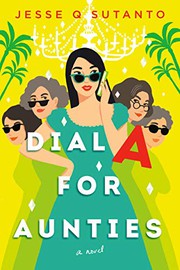
Dial A for Aunties
A wedding photographer accidentally kills her blind date, and her mother and three aunties help her hide the body during the biggest wedding of their careers.
2,076-word summary · 9 min read
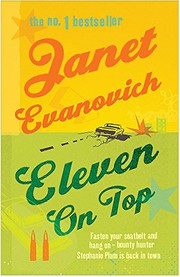
Eleven on Top
Stephanie quits bounty hunting for normal jobs, but a killer and a wedding keep pulling her back.
2,508-word summary · 11 min read
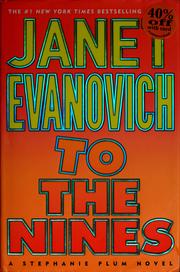
To the Nines
Janet Evanovich's ninth Stephanie Plum case retold: a missing skip, threats in Trenton, and a rescue run to Las Vegas.
2,839-word summary · 13 min read
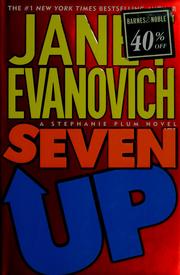
Seven Up
Stephanie hunts old mobster Eddie DeChooch, finds a body, a missing heart, and trouble from Morelli to Ranger.
2,798-word summary · 12 min read
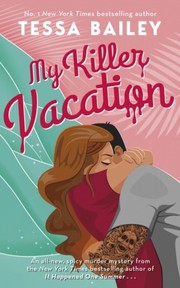
My Killer Vacation
A teacher and a bounty hunter share a Cape Cod rental with a corpse and a growing attraction.
2,625-word summary · 12 min read
Hot Six
Stephanie Plum hunts a missing bail jumper tied to Ranger's mentor while Morelli, Lula, and Grandma Mazur stir Trenton chaos.
2,035-word summary · 9 min read
High Five
Stephanie hunts missing Fred with Ranger's help while Morelli sulks and Grandma shops for funerals and husbands.
2,228-word summary · 10 min read
Hard Eight
Janet Evanovich's Hard Eight fully retold: a missing mother and child, Abruzzi's medal hunt, Valerie's rescue, and Ranger crossing a line.
2,961-word summary · 13 min read
Four to Score
Stephanie hunts waitress Maxine Nowicki through coded clues, firebombs, and counterfeit cash while living with Morelli in Trenton.
2,870-word summary · 13 min read
Three to Get Deadly
Stephanie hunts a beloved candy man holding army money everyone wants.
1,981-word summary · 9 min read
Naked in Death
In 2058 New York, Lt. Eve Dallas hunts the killer of a senator's granddaughter and collides with suspect Roarke.
2,470-word summary · 11 min read
One for the Money
Janet Evanovich's One for the Money fully retold: Stephanie Plum's first bounty hunt, Morelli on a murder charge, Ranger, Lula, Ramirez, and why Trenton still…
2,339-word summary · 10 min read

What She Knew
Rachel lets her eight-year-old son run ahead in a Bristol park, and the nine-day search turns her into a suspect in the public eye.
2,952-word summary · 13 min read

The Beach House
A young valet is beaten to death at a Hamptons party, and his law-student brother spends a year building a case against the family that covered it up.
2,049-word summary · 9 min read
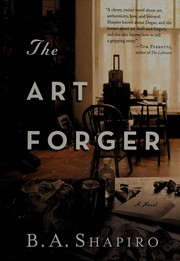
The Art Forger
A disgraced Boston painter agrees to copy a Degas stolen from the Gardner Museum, then begins to suspect the original she is copying is itself a forgery.
2,117-word summary · 9 min read

Six Years
A professor who promised to forget the woman he loved sees her husband's obituary and discovers that the wedding, the marriage, and the woman herself may never…
2,076-word summary · 9 min read

How the Light Gets In
Gamache investigates the murder of the last Ouellet quintuplet while the Sûreté he served is dismantled from inside by the man who took his protégé.
2,279-word summary · 10 min read

Bury Your Dead
Recovering from a failed raid that killed his officers, Gamache investigates a murder in a Quebec City library while Beauvoir reopens a case in Three Pines.
2,022-word summary · 9 min read

Austenland
A New York graphic designer obsessed with Mr. Darcy inherits a trip to a Jane Austen theme park, where the fantasy of Regency romance collides with the men…
2,030-word summary · 9 min read

Anatomy: A Love Story
In 1817 Edinburgh, a noblewoman who wants to be a surgeon disguises herself to study anatomy and falls for the grave robber who supplies her with bodies.
2,031-word summary · 9 min read

The Trespasser
A Dublin Murder Squad detective investigates a staged dinner-party killing and finds a cover-up that reaches into her own department.
2,051-word summary · 9 min read