

Anatomy: A Love Story
2,031-word summary 9 min read 352 pages in the book
- First published
- 2022
- Publisher
- Wednesday Books
- Pages
- 352
- ISBN
- 9781250774156
- Series
- The Anatomy Duology (#1)
Reading options
What's inside (9 sections)
The best thing about this book is how quickly it commits. Hazel Sinnett is seventeen, the daughter of a titled Scottish family, and she wants to cut people open. Not in a metaphorical way. She wants to be a surgeon in 1817, when the only bodies available for study are the ones dug up at night and the only students allowed in the lecture hall are men. Dana Schwartz does not spend a hundred pages easing her heroine toward that desire. Hazel is already dressing as a boy in the first chapters, already sneaking into Dr. Beecham's anatomy class, already taking notes on the iliac artery while the men around her sharpen their pencils.
It is a young adult novel with a gothic streak, and it knows exactly what it is doing. There is a castle, a plague, a handsome grave robber, a sinister professor, and a girl who would rather be elbow deep in a cadaver than married to her cousin. The pleasure of the book is watching those ingredients collide.
The girl in the lecture hall
Hazel lives at Hawthornden Castle outside Edinburgh with her mother and her younger brother Percy. Her father is dead. The family has a title and not much money, and the plan for Hazel is marriage to Bernard, her cousin, who will inherit the viscountcy. Bernard is not a monster. He is a decent, dull young man who assumes the world will arrange itself around him. Hazel finds him bearable. She does not want to be his wife.
What she wants is medicine. She has read the anatomists, she has practiced on animals, and she has a steady hand. When she disguises herself and takes a seat in Dr. Beecham's class, she is not playing at rebellion. She is trying to learn the thing she is good at. Beecham spots her almost immediately. He is not scandalized so much as interested. He agrees to a wager: if Hazel can pass the physician's examination, he will sponsor her. She will have to prepare on her own, because no one will teach her.
That bargain is the engine of the plot, and it is also the book's sharpest joke. The gatekeeping is absurd, and everyone knows it, but the absurdity is enforced by law and custom. Hazel has to become a man to be allowed to be a doctor, and even then the door closes as soon as she is recognized.
Jack Currer and the business of bodies
To study, Hazel needs corpses. The medical schools get them from resurrection men, the men who dig up fresh graves and sell the contents. Jack Currer is one of them. He is young, practical, and tired in a way that makes him seem older than he is. He has a mother and a small circle of friends, and he knows the city's underside better than any surgeon.
Hazel hires him. Their first transactions are brisk and businesslike, and then they become something else. Schwartz writes the romance with a light hand. There are long looks over a dissection table, arguments about whether a person is a soul or a machine, and a growing sense that these two are the only people in the book who see each other clearly. Jack does not care that Hazel is a lady. Hazel does not care that Jack digs graves for a living. They are both outsiders who have found a use for each other.
The novel is at its most fun when it is following them through Edinburgh's night streets, carrying a body in a sack, dodging watchmen, arguing about which cemetery has the loosest soil. It is grisly and funny and romantic at the same time, which is a hard tone to sustain and Schwartz mostly sustains it.
The Roman fever
Around the love story, people are dying. A disease the characters call Roman fever is sweeping through the poor quarters, and Hazel, left alone at the castle while her mother and brother go to London, turns the ground floor into a makeshift hospital. She treats patients with what she has: clean water, rest, and a folk remedy called wortflower that Jack shows her. The wortflower seems to help. Hazel notices, and starts to wonder why the established doctors are not using it.
The fever plot gives the book its social conscience. The rich are insulated, the poor are not, and the doctors who should be helping are mostly interested in their own reputations. Hazel's clinic is underfunded, overcrowded, and morally complicated. She is practicing medicine without a license, on people who have no other options, and she knows that if she is caught she will be ruined.
Then Jack's friend Munroe disappears and comes back missing an arm. He says a doctor took it. That detail turns the fever story into something darker. People are not only dying of disease. They are being taken.
Dr. Beecham
The villain of the book is a surgeon who has decided that the rules do not apply to him, and Schwartz makes him genuinely unsettling because he is not a cackling madman. Beecham believes in progress. He believes that the suffering of a few paupers is a fair price for medical knowledge that will save thousands. He is also, as Hazel discovers, something more than a man. He has been alive for a very long time, kept that way by a golden tonic, and his long life has worn away whatever moral resistance he once had.
On the morning of her examination, Hazel goes to the Anatomists' Society and sees him transplanting an eye from a living boy into a wealthy man's head. The scene is deliberately over the top. It is also the logical endpoint of the book's argument about who gets to be a body and who gets to be a patient. Beecham's accomplices grab Jack. Beecham wants to cut out Jack's heart, and he wants Hazel to watch, because he thinks she is the one person who might understand him.
Hazel and Jack escape. Jack is injured. Hazel hides him at the castle, and Bernard, who has finally understood that he has lost her, reacts by having Jack arrested for the murders of the missing poor. It is a small, believable betrayal. Bernard is not evil. He is entitled, and entitlement turns quickly into cruelty when it is denied.
The trial and the tonic
Jack is tried and convicted. Hazel has no legal way to save him. What she has is Beecham's vial of immortality, which he left with her when he sailed for America, hoping she would join him. She takes it to the prison and gives it to Jack. He understands what it means. If he drinks it, he will survive the hanging, but he will also be a man who cannot die, and he will spend the rest of his existence running.
The hanging scene is the emotional center of the novel. Jack drinks. The rope takes him, and the book lets the horror sit for a beat before the truth arrives. He wakes in the university hospital, or his body does, and then he is gone. Hazel does not get a reunion. She gets a letter, months later, postmarked New York, unsigned but unmistakable. He is alive. He loves her. He is waiting.
That ending is bittersweet in a way that suits the book. Hazel does not abandon medicine to chase him. She stays at Hawthornden, running her clinic, treating the poor, trying to understand the fever. The novel is honest about the cost of her ambition. She gets to be a doctor. She does not get the boy.
The world around Hazel
The novel's secondary characters do a lot of work. Hazel's mother, Lady Sinnett, is not a caricature. She is worried about money, about reputation, about her daughter's future in a world where a woman without a husband is a problem. Her solution is Bernard, and her blindness to Hazel's ambition is not cruelty. It is the only future she can imagine. Percy, Hazel's younger brother, is a small, bright presence who keeps the castle from feeling like a tomb. Charles and Iona, the servants, are loyal without being servile, and their wedding near the end is a quiet reminder that life goes on outside the plot.
Then there is Bernard. He is the book's most interesting minor character because he is not a villain and he is not a fool. He is a young man who has been told his whole life that the world will arrange itself around him, and when it does not, he becomes dangerous. His decision to have Jack arrested is not a sudden betrayal. It is the logical end of a lifetime of never being told no. Schwartz does not excuse him, but she makes him understandable, which is better.
The Edinburgh setting is also doing more than atmosphere. The city in 1817 is a place of Enlightenment ambition and brutal poverty, where surgeons need bodies and the poor are the only ones available. The novel does not linger on the squalor, but it does not hide it either. Hazel's clinic is a few rooms in a castle, and the people who come to it are the ones the city has decided not to count. That is the political heart of the book, and it is handled without a lecture.
What works and what does not
The romance is the weakest part for me, not because it is bad but because it is easy. Jack is charming and loyal and handsome, and his only real flaw is that he is poor. Hazel's family is awful in familiar ways. The obstacles are external, which means the love story never has to interrogate itself. It is a pleasant thread, and it does not carry the weight the book sometimes asks it to carry.
The medicine is better. Schwartz clearly enjoys the history, and the details of dissection, infection, and nineteenth-century medical politics feel researched without being showy. The book is also good on the particular trap of being a clever girl in a society that has decided cleverness is unfeminine. Hazel's mother is not a villain, but she is an obstacle, and the novel understands that the pressure to marry well is not irrational in a world where women cannot own much.
The prose is efficient, sometimes plain, and occasionally lovely. The pacing sags in the middle, when Hazel is shuttling between the castle, the clinic, and the cemetery, and the mystery of the missing poor takes a while to cohere. The last third moves fast and a little too neatly. Beecham's immortality is a big swing, and readers who wanted a grounded historical novel may find it jarring.
The book also has a problem with consequences. Hazel breaks the law repeatedly, digs up corpses, practices medicine without a license, and lies to her family, and the worst that happens to her is a broken heart and a lost boyfriend. The novel wants to be a gothic adventure, and it is, but the adventure softens the stakes. A story about a woman fighting an entire profession should make the profession fight back harder than this one does.
The ending is the most divisive part. Jack survives the hanging because of a magic potion, which is either a bold genre swing or a cheat, depending on how invested you are in the historical realism. I found it charming. The book has been flirting with the supernatural since Beecham first appeared, and the tonic is the logical conclusion of that flirtation. It also gives Hazel a way to save the man she loves without giving up the life she wants, which is a neat trick, and maybe too neat.
Still, the book does what it sets out to do. It gives you a heroine who is smart and stubborn and not always kind, a romance that earns its tenderness, and a mystery that turns out to be about the price of progress. It is a gothic romance with a scalpel in its hand, and it is not afraid to get blood on the page.
FAQ
Does Anatomy: A Love Story have a happy ending?
It ends on a hopeful but unresolved note. Hazel gives Jack the immortality tonic before his hanging, he survives and disappears, and months later she receives an unsigned letter from New York saying he still loves her and is waiting.
Is this book appropriate for younger teenagers?
It is marketed as young adult and is usually recommended for ages thirteen and up. It includes detailed dissection, grave robbing, a plague, and surgical violence, so sensitive readers should be aware.
Is Anatomy based on real history?
The setting and the practices of resurrection men and anatomy schools are drawn from real nineteenth-century Edinburgh, but Hazel, Jack, and Dr. Beecham are fictional, and the immortality plot is fantasy.
Similar books
More from The Anatomy Duology first, then related titles.

Last Night at the Telegraph Club
The 2021 National Book Award winner follows Lily Hu, a Chinese American teenager in 1954 San Francisco, as she falls for Kath and learns what it costs to be…
2,336-word summary · 10 min read

Belladonna
Poison-immune orphan Signa Farrow hunts a gothic killer at Thorn Grove with Death as ally and suitor, while cousin Blythe fades and her ghost mother asks for…
2,868-word summary · 13 min read
Stalking Jack the Ripper
Lord's daughter Audrey Rose studies corpses in secret while the Ripper works Whitechapel beside Thomas.
2,030-word summary · 9 min read
Cross My Heart and Hope to Spy
Cammie Morgan returns to Gallagher Academy for a second year of spy training, only to fall for a boy from a rival spy school and hunt a mole in her own school.
2,567-word summary · 11 min read
I Kissed Shara Wheeler
Shara Wheeler kisses her rival Chloe Green at prom and disappears, leaving a scavenger hunt that forces Chloe to rethink everything she knew about her.
2,083-word summary · 9 min read
Once Upon a River
A wounded man stumbles into a riverside inn carrying what appears to be a drowned child who is not quite dead, and the story braids the guesses of everyone who…
2,173-word summary · 10 min read
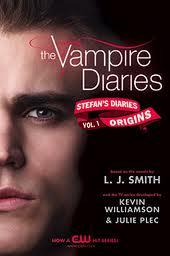
Origins
Stefan's diary of 1864 and 1888: how he and Damon fell for Katherine, became vampires, and went looking for a killer in London.
2,056-word summary · 9 min read
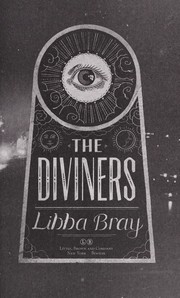
The Diviners
In 1920s New York, Evie O'Neill's ability to read objects pulls her into an occult investigation that awakens something far older and more dangerous.
2,045-word summary · 9 min read
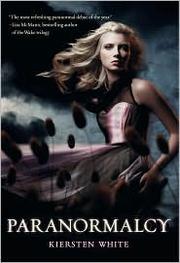
Paranormalcy
A teenage agent who can see through glamour falls for a shape-shifter and learns the agency she works for is hiding her true nature.
2,041-word summary · 9 min read
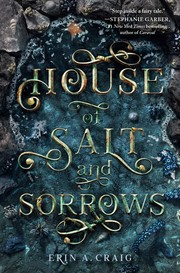
House of Salt and Sorrows
Annaleigh Thaumas investigates her sister's death in a cursed island manor where the balls are illusions and the sea god is always listening.
2,025-word summary · 9 min read
The Evolution of Mara Dyer
Back in Miami after the asylum collapse, Mara Dyer is treated at Horizons while Jude, who should be dead, stalks her. Noah stays close as the experiments…
2,577-word summary · 11 min read
The Brothers Hawthorne
Jameson infiltrates an underground London gambling club for the father he never knew while Grayson protects his half-sisters in Phoenix from a dead man's…
2,019-word summary · 9 min read
The Prisoner of Heaven
Fermin Christmas past returns with a stranger and a prison debt.
2,388-word summary · 11 min read
Grave Mercy
Convent assassin Ismae spares Gavriel and hunts traitors in Brittany.
2,357-word summary · 10 min read
Chain of Gold
Cordelia and James hunt demons in Edwardian London while hearts tangle.
2,364-word summary · 11 min read
The House at Riverton
In 1999, ninety eight year old maid Grace Bradley tapes the truth about a 1924 shooting at Riverton Manor, poet Robbie Hunter, two sisters and a lie held for…
2,433-word summary · 11 min read
Across the Universe
Frozen teen Amy wakes early on ship Godspeed and joins heir Elder to stop cryo murders and expose Eldest's drugged rule in this January 2011 Razorbill series…
2,430-word summary · 11 min read
The Lake House
Detective Sadie reopens 1933 Edevane baby vanishing tied to writer Alice.
2,055-word summary · 9 min read
The Seven Sisters
Maia follows Pa Salt clue from Geneva to Rio and Christ the Redeemer.
2,210-word summary · 10 min read
The Gentleman's Guide to Vice and Virtue
Bisexual heir Monty flees across Europe with his crush Percy and sister Felicity after stealing a dangerous box.
2,724-word summary · 12 min read
Lord of Shadows
Emma and Julian face faerie war and forbidden love as the Cohort rises.
2,496-word summary · 11 min read
Blue Bloods
At an elite Manhattan school, Schuyler Van Alen learns she is a forbidden half-vampire as someone starts killing her kind.
2,725-word summary · 12 min read
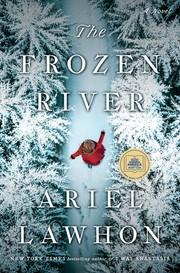
The Frozen River
Midwife Martha Ballard pens a frozen man's wounds in 1789 Maine while standing men demand forgetting.
2,043-word summary · 9 min read
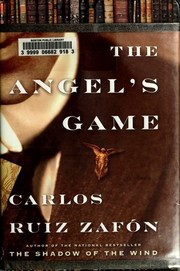
The Angel's Game
In 1920s Barcelona, a young writer accepts a strange publisher's offer to write an impossible book and finds his life turning into a ghost story.
2,699-word summary · 12 min read
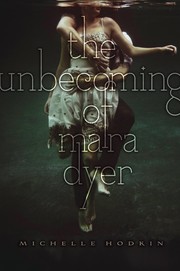
The Unbecoming of Mara Dyer
Sole survivor of a collapse that killed her friends, Mara Dyer moves to Miami, where visions that come true suggest her grief hides something darker.
2,152-word summary · 10 min read
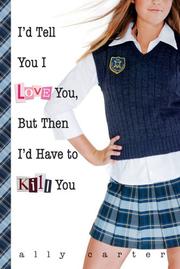
I'd Tell You I Love You, But Then I'd Have to Kill You
Cammie Morgan trains at a secret spy school and falls for a town boy she can never tell the truth.
2,179-word summary · 10 min read
The Forgotten Garden
A Brisbane woman traces a century old abandonment from an English country house to a Cornish cove and a hidden author.
2,056-word summary · 9 min read
Lady Midnight
Emma and Julian hunt killer echoing old murders while parabatai love grows.
1,982-word summary · 9 min read
The Historian
A daughter traces her father's search for Dracula through letters and archives across Europe.
3,237-word summary · 14 min read
Silence
Nora wakes in a cemetery with five months missing and a stranger called Jev who feels familiar.
3,615-word summary · 16 min read