
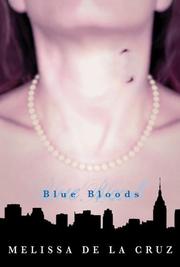
Blue Bloods
2,725-word summary 12 min read 302 pages in the book
- First published
- 2006
- Publisher
- Hyperion
- Pages
- 302
- ISBN
- 9780786838929
- Series
- Blue Bloods (#1)
Reading options
What's inside (9 sections)
I picked up Blue Bloods because a friend kept describing it as Gossip Girl with fangs, and that sounded too silly to work. Then I kept hearing about it from people who do not even read vampire books, so I gave in. Melissa de la Cruz published it in 2006 with Hyperion, and the first hardcover runs 302 pages. It is the opening volume of the Blue Bloods series, which means it has to do two jobs at once. It must introduce a hidden society with centuries of rules, and it must make you care about a fifteen year old who feels out of place in her own school. For the most part it pulls that off, though not without some creaky spots I will get into later.
The hook is simple. In Manhattan, among the families whose names show up on museum wings and charity boards, there is a group of teenagers who are not what they seem. They are vampires, but not the kind that sleep in coffins or burst into flame in sunlight. They call themselves Blue Bloods. They remember past lives. They drink small amounts of blood from willing humans. And someone has started killing them.
A girl who does not fit at Duchesne
Schuyler Van Alen is the kind of kid who eats lunch alone by choice. She goes to the Duchesne School, a private academy filled with girls in designer clothes and boys with family names that open doors. Schuyler wears vintage castoffs. She lives with her grandmother Cordelia in a crumbling mansion that used to be grand and now mostly leaks. Her mother Allegra has been in a coma since Schuyler was born, and nobody will give her a straight answer about it.
Her circle is small. Oliver Hazard-Perry has been her best friend for years, steady and funny and a little more loyal than she deserves some days. Dylan Ward is the other friend, a sweet stoner type who drifts through the edges of things. Then Bliss Llewellyn arrives from Texas, all nerves and good manners, and Schuyler finds herself with someone new to talk to. Bliss does not know anyone. Her father is a senator with big plans. She wants to belong, which at Duchesne means getting close to Mimi Force.
Mimi is the girl everyone watches. She is beautiful in a sharp way, rich beyond normal measure, and mean when she feels like it. Her twin brother Jack is the boy version, golden and polite and popular with both students and parents. The twins run the Committee, which most students treat as a social club for the chosen few. Invitations matter. Rejections sting. Schuyler wants no part of it until the day a letter arrives with her name on it and Cordelia tells her she has to go.
What I liked right away was how specific the school feels. De la Cruz names the labels and the clubs and the apartments, and at first that reads as shallow. After a while it starts to feel like the point. Status is the camouflage these families use. Nobody looks twice at a rich kid acting strange, because rich kids are allowed to be strange.
The night at the club
The plot turns on a death. Aggie Carondolet, one of Mimi's friends, is found dead after a night out at a downtown club. The adults call it an accident or an overdose, depending on who is talking. The kids whisper. Schuyler was there that night, and what she saw does not line up with the official story. There was blood, far too much of it, and something about the scene felt wrong in a way she cannot explain.
Around the same time, her body starts changing. Blue veins rise on her arms in patterns that look almost drawn on. She craves raw meat, which disgusts her. She gets flashes of places she has never been, ballrooms and old streets, and once she wakes up speaking words in a language she never learned. She tells herself it is stress. Grief does odd things. But the flashes keep coming, and they feel more like memories than dreams.
Then Dylan vanishes. One day he is around, the next he is simply gone, and the adults are vague about where he went. Schuyler knows something scared him. Bliss knows more than she says. Jack starts paying attention to Schuyler in a way that confuses everyone, Mimi most of all.
If I am being honest, this stretch is the best part of the book. The mystery has room to breathe. Schuyler sneaks around, asks questions, compares notes with Oliver. Every answer opens another door. I read these chapters fast, partly because I wanted to know what happened to Aggie and Dylan, and partly because Schuyler finally stops drifting and starts pushing.
What Cordelia tells her at last
Cordelia cannot dodge Schuyler forever, so she sits her down and explains the family business. The Blue Bloods are angels who refused to take sides in the old war in heaven and were sent to earth as punishment. They live human lives in cycles. They are born, they grow up, they remember their past selves around age fifteen, and when they die they are reborn again. Between lives they rest. During lives they feed, taking small sips from human companions called conduits, who offer blood willingly and in return get some of the glamour and long life that clings to the vampires.
There are rules on top of rules. Blue Bloods marry within their ranks. Each vampire has a bonded mate, chosen long ago, and the bond is treated as sacred. Humans are for feeding and friendship, never for children. That last rule is the one that broke Schuyler's family. Her mother Allegra fell in love with a human man, and Schuyler is the result. A half human, half vampire child was supposed to be impossible. Allegra has been wasting away in a coma ever since, and the coven treats Schuyler as either a mistake to hide or a problem to solve.
Cordelia delivers most of this in long conversations, and here the book drags a little. Pages of history arrive in big chunks, and Schuyler mostly sits and listens. I get why it is needed. The series runs on this lore. Still, I found myself wishing the facts came out during scenes instead of lectures. A walk through the mansion would have done nicely. Cordelia knows where every portrait came from, and those portraits are all former selves.
One thing the book does well here is Oliver's part. Schuyler asks him to be her conduit, which means letting her drink from him. He says yes. The scenes that follow are awkward in a good way. He gets lightheaded. She hates needing him. Their friendship bends under the new shape of things, and neither of them knows how to talk about it. It felt true to me, the way a favor can tilt a friendship even when both people mean well.
Something is hunting them
The coven has a name for what killed Aggie. Silver Bloods. Long ago, a faction of the angels followed Lucifer into rebellion and were cast out with him. Unlike Blue Bloods, who take small sips and keep their humans healthy, Silver Bloods feed without restraint. They drink from other vampires, draining them completely, which destroys the victim beyond any rebirth. The coven believed the Silver Bloods were destroyed centuries ago. The killings suggest otherwise.
Charles Force, Mimi and Jack's father, leads the coven's Conclave, and he does not want panic. He urges calm. He calls the deaths isolated incidents. Cordelia disagrees, and the disagreement has teeth, because the two of them have opposed each other before. While the elders argue, Schuyler keeps digging with Oliver. They visit the club where Aggie died. They track down people who saw Dylan last. They compare the marks on the victims. Each step makes the official story look thinner.
Then Cordelia is murdered in her own home, and the book goes cold in a way I did not expect. Up to that point the danger felt distant, something happening to other families. Cordelia's death puts it inside Schuyler's house, in the rooms where she grew up. The scene is handled without gore for its own sake. What lands is the quiet after, Schuyler standing in rooms that suddenly feel too big, realizing the one person who explained things is gone.
I should note that the investigation never turns into a police procedural. There are no forensics montages. Schuyler is fifteen, with classes and a grandmother to bury and a mother in a clinic bed. She follows hunches between school days. Some readers may find that frustrating. That read as believable to me. She misses things. She misreads people. At one point she trusts someone she should not have, and the cost of that mistake follows her for the rest of the book.
Bliss carries a sad side plot through all of this. She misses Dylan, who was kind to her when Mimi's crowd was not. She tells Schuyler pieces of what she knows and holds other pieces back, not from malice but from fear. Her father wants her to keep her head down and her grades up. I think Bliss is the most human character in the book, and I say that knowing she becomes far more important later in the series. Here she is simply a girl caught between loyalty to her new friends and pressure from everyone above her.
Parties where nobody says what they mean
A big part of the season is social, and de la Cruz uses the parties the way other writers use battlefields. There is the Four Hundred Ball, the grandest event on the coven calendar, where old families show off and old scores get settled under chandeliers. Invitations are politics. Seating is politics. Who dances with whom gets noticed and discussed for weeks.
Schuyler goes, and the ball scene earns its pages. She borrows a dress. Oliver escorts her. Jack watches her across the room in a way that makes Mimi furious. Nothing explodes. That is the point. In this world, a look held too long is an explosion. I enjoyed how much tension de la Cruz gets from small gestures, a hand offered, a dance refused, a door left open.
The trouble is the bond. Jack and Mimi are twins and bonded mates, promised to each other by coven law and by souls that go back centuries. Jack's interest in Schuyler breaks something sacred, and the book will not let anyone forget it. Mimi reacts with open cruelty. Jack reacts with long silences and sudden kindness that he then takes back. Schuyler reacts by wanting him anyway, which she knows is foolish.
This is where I have to register a complaint. The romance runs on withholding. Jack knows things he will not say. He appears, says something intense, and leaves. Schuyler spends many pages turning his sentences over in her mind. After the third or fourth round of this, I wanted to shake both of them. Teenage longing only carries a plot so far. The book knows it too, I think, because the strongest romantic scenes are not the swoony ones. They are the plain ones, Schuyler and Oliver doing homework while something unspoken sits between them, or Schuyler realizing that Jack's attention has made her daily life harder, not easier.
Mimi gets the shortest end of the stick in this volume. She is vicious to Schuyler in scene after scene, with little shading. Later books give her far more depth, or so I am told by readers who stuck with the series. Here she reads as the rich girl villain the plot needs. A few moments crack the shell. There is one where her worry over Jack slips past her pride, and it passed so fast I almost missed it. I wished for more of that.
Running toward the answers
By the final stretch, staying in New York means waiting to be picked off. Cordelia is dead. The Conclave is split. Schuyler's blood, half human, may be exactly what the Silver Bloods want, or exactly what can stop them. Nobody agrees on which. Her grandfather Lawrence Van Alen, who left the family years ago and knows more about the old wars than anyone living, is somewhere in Venice. Cordelia's last instructions point Schuyler toward him.
So Schuyler and Oliver run. I will not spoil the last scenes beat by beat, since they set up the next book directly, but the shape of it is this. Schuyler stops waiting for the elders to protect her. She takes what Cordelia taught her, takes Oliver's steady help, and goes looking for the one person who might tell her the whole truth about her parents and her blood. The book closes with threads hanging everywhere. Dylan is still missing. Bliss is left behind with her fear. Jack has made promises he may not keep. Mimi is angrier than ever.
Does it work as an ending? Partly. The main mystery, who and what is killing Blue Bloods, gets an answer in shape if not in full detail. The personal story stays open on purpose. This is the first of many volumes, and it reads like one. If you need every thread tied, you will be annoyed. If you like a finale that points at the next map, you will turn the last page already reaching for Masquerade.
Let me be plain about the flaws, because the book earns its fans despite them. The middle sags under lore. Some dialogue sounds like press releases for wealth, all brand names and apartment sizes. Schuyler can be passive for long runs, letting others explain her life to her. And the Silver Bloods, for all their menace, stay vague here. They are a shadow on the wall rather than a face. That vagueness is deliberate, I think, but it means the scariest parts happen off the page.
Still, there is a lot here that charmed me. The reincarnation idea gives the teen drama real weight. When Mimi talks about centuries with Jack, she is not being dramatic in the high school sense. She means centuries. When Cordelia looks at Schuyler, she sees a daughter she lost and a granddaughter she may lose the same way. The past life memories let de la Cruz write grief with layers, and the best pages have that layered ache.
Who should read it? Anyone who likes secret societies, old New York money, and slow burn mysteries with romance woven through. Readers who want hard magic systems or horror with teeth should look elsewhere. The blood here is mostly symbolic, and the rules bend for story reasons. Also, anyone bothered by love triangles with a bonded pair at the center should know that knot does not loosen in this volume. It tightens.
For me, the test of a series opener is simple. Do I care where these people go next? I do. I want to know what Lawrence tells Schuyler in Venice. I want to know if Oliver gets anything back for all he gives. Mostly I want to know what happens to Bliss, who struck me as the one person in this book with no protection at all. That is enough to carry me into volume two, and for a first book with this much setup to do, enough counts as a win.
A few things worth keeping in mind
Schuyler being half human matters more than any single murder. It breaks coven law, explains Allegra's coma, and makes Schuyler valuable to both sides. Whenever the plot feels scattered, return to that fact and the pieces line up again.
The conduits matter too. Oliver offering his blood is not a small favor. It binds them, changes how they act around each other, and shows the cost of the Blue Blood way of life better than any lecture does.
And keep an eye on who benefits from fear. Charles Force urges calm while consolidating control. Mimi uses the crisis to close ranks. Cordelia, for all her secrets, is the only elder who tells Schuyler the dangerous parts straight. Noticing who talks and who stalls will prepare you well for the later books.
FAQ
Is Blue Bloods the first book in the series?
Yes. Published in 2006 by Hyperion, Blue Bloods opens the Blue Bloods series, and its ending leads directly into Masquerade.
What does half-blood mean in this book?
Schuyler is half vampire and half human, which breaks coven law. Her birth is the reason her mother Allegra has been in a coma since Schuyler was born.
Is this book only for vampire romance readers?
No. Romance drives much of it, but the Silver Blood killings and the hidden-society mystery give readers who like secrets and detective work plenty to follow.
Similar books
More from Blue Bloods first, then related titles.

Masquerade
After Cordelia's death, Schuyler flies to Venice to find her exiled grandfather, then returns to the Blue Bloods as they prepare for a masked ball and a hidden…
2,543-word summary · 11 min read
House of Salt and Sorrows
Annaleigh Thaumas investigates her sister's death in a cursed island manor where the balls are illusions and the sea god is always listening.
2,025-word summary · 9 min read

The Indigo Spell
Sydney Sage hunts an aging witch, learns forbidden magic, and finally admits she loves Adrian, while the Alchemist tattoo on her cheek may be controlling her.
2,604-word summary · 12 min read
Deadlocked
A dead woman on Eric's lawn starts a murder investigation, a vampire queen wants Eric as her consort, and the fairies in Sookie's life close in.
2,885-word summary · 13 min read

Belladonna
Poison-immune orphan Signa Farrow hunts a gothic killer at Thorn Grove with Death as ally and suitor, while cousin Blythe fades and her ghost mother asks for…
2,868-word summary · 13 min read

Vampire Knight, Vol. 1
Guardian Yuki protects Day students from secret vampire Night Class while Zero hates what he may become.
2,106-word summary · 9 min read
Dead Reckoning
Sookie confronts the firebombing of Merlotte's, Sandra Pelt's revenge, and a vampire power struggle while questioning her future with Eric.
2,391-word summary · 11 min read
Lord of Shadows
Emma and Julian face faerie war and forbidden love as the Cohort rises.
2,496-word summary · 11 min read
Guilty Pleasures
Animator Anita hunts a vampire killer while Jean-Claude pulls her close.
2,136-word summary · 9 min read
Burned
Zoey's soul hides in the Otherworld while Stark must die to fetch her and Stevie Rae burns secrets.
2,074-word summary · 9 min read
Dead in the Family
Sookie shelters fairy kin and a telepathic boy while pack murder and Eric's vampire kin close in.
2,412-word summary · 11 min read
From Dead to Worse
Sookie mediates a Were war and vampire takeover while learning about her fairy blood.
2,533-word summary · 11 min read
Dead and Gone
Weres reveal themselves as Sookie faces a murder, a Fellowship trap, and a brutal fairy war.
2,798-word summary · 12 min read

Bloodlines
Alchemist Sydney Sage hides Moroi princess Jill in Palm Springs, where tattoo shops and old vampires test every rule she was taught.
2,622-word summary · 12 min read
Definitely Dead
Sookie heads to New Orleans for her dead cousin estate and finds witches, vamps, and family curses.
2,027-word summary · 9 min read
Dead as a Doornail
Sookie tracks a sniper hunting shifters as Jason faces his first panther change and pack justice looms.
2,440-word summary · 11 min read
Lady Midnight
Emma and Julian hunt killer echoing old murders while parabatai love grows.
1,982-word summary · 9 min read
Club Dead
Sookie hunts missing Bill in Jackson, posing with a werewolf at vampire Club Dead.
2,324-word summary · 10 min read
Chosen
Zoey juggles Erik, Heath and Loren as undead fledglings rise around Tulsa while Neferet schemes for full control of the school.
2,398-word summary · 11 min read
Dead to the World
Sookie hides a blank Eric for Christmas while hunting the witch who cursed him and finding Jason.
1,997-word summary · 9 min read
Midnight Sun
Twilight retold by Edward Cullen: a silent mind, singer blood in Forks, and restraint tested to the edge.
3,824-word summary · 17 min read

Shadow Kiss
Rose trains for field trials as Strigoi threaten and Mason dies haunting her.
2,386-word summary · 11 min read
Frostbite
Rose guards royals at ski lodge as Strigoi hunt Moroi during break.
2,584-word summary · 11 min read
Dead Until Dark
Sookie Stackhouse, a telepathic waitress in Bon Temps, falls for vampire Bill Compton as local murders close in.
2,751-word summary · 12 min read
City of Fallen Angels
Simon is turned and Jace dreams of killing Clary while Lilith plots to birth evil in New York.
2,249-word summary · 10 min read
New Moon
Twilight book 2 retold: Edward leaves, Jacob warms, the cliff dive, and Volterra.
2,403-word summary · 11 min read
Eclipse
Twilight book 3 retold: Bella caught between Edward and Jacob as Victoria builds an army in Seattle.
2,060-word summary · 9 min read
Breaking Dawn
Breaking Dawn retold: Bella and Edward marry, Renesmee arrives, the Volturi gather in Forks snow.
2,020-word summary · 9 min read