
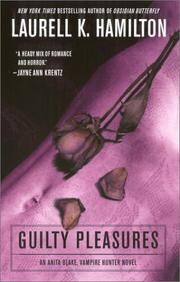
Guilty Pleasures
2,136-word summary 9 min read 266 pages in the book
- First published
- 1993
- Publisher
- Ace Books
- Pages
- 266
- ISBN
- 9780441304837
- Series
- Anita Blake, Vampire Hunter (#1)
Reading options
What's inside (8 sections)
I came to Guilty Pleasures late, after hearing it named as the start of 90s vampire crime. Laurell K. Hamilton published it in 1993 with Ace Books. My reading follows the 266 page edition. It introduces Anita Blake in St Louis, animator and licensed vampire executioner, hired by the city's master vampire to find a killer who targets vampires. It is mystery first, horror close second, romance circling.
Anita is small, stubborn, Catholic in a loose way, afraid of vampires and good at killing them. She raises zombies for a firm called Animators Inc., testifies about preternatural law, carries a gun she actually uses, and keeps a cross close. She tells herself she hates the monsters. Then she takes money from them and walks into their clubs. That split drives the book. Principles stated firm. Practice messy.
St Louis here has rules for the undead. Vampires gained legal status. They own businesses. They can be executed under warrant if they murder. Anita holds one of few warrants to do it. Cops call her. Masters call her. Everyone assumes she can be bought or scared. She proves them half right, which keeps her human.
St Louis where vampires pay taxes
The setting does heavy lifting early. Vampires are citizens with teeth. They run clubs, pay lawyers, threaten lawsuits. Humans adapted with stakes and silver and paperwork. Police have preternatural units. Courts issue execution warrants. Churches argue doctrine. It feels like a city that learned to live with a new danger by filing it.
Animators Inc. sits inside that economy. Clients pay to raise zombies to settle wills, find hidden deeds, ask one last question. Anita explains the limits plainly. A fresh corpse answers better. An old one lies or rambles. Chicken blood helps. Human sacrifice works stronger and costs more than most will pay. She refuses the worst jobs, not from squeamishness but from sense. Power has price. She will not let clients pay it blind.
Her office life grounds her. Bert, her boss, pushes profitable cases and hates when she turns work down. Colleagues joke to cover nerves. Phones ring. Coffee cools. Then a cop or a vampire calls with a body, and the day tilts. Hamilton writes those shifts well. Normal office talk, then a morgue visit where the corpse has punctures that do not match animal teeth.
Anita's apartment is small and guarded. Guns cleaned. Wards checked. Neighborly chat kept short. Ronnie, her friend, is one of few people let inside. That closed door tells you about trust. Anita likes control because control kept her alive. Vampires smell fear and exploit cracks. She gives them flat voice and paperwork. It works until it does not.
What I liked is how legal detail shapes scares. Anita cannot just shoot a vampire she dislikes. She needs cause, warrant, witnesses. That restraint forces talk first, which lets Hamilton build dread through conversation. A master smiles across a desk. A cop warns off record. Paper protects monsters as well as people.
Nikolaos and the job Anita cannot refuse
Nikolaos is the master of the city, or claims to be, and meeting her is the book's first jolt. A thousand years old in a child's body, red-haired, cold, fond of pain, worshipped by followers who mistake cruelty for order. She summons Anita through intermediaries, then with force. Refusal is not really an option. Masters can ruin a business, close a club, stop a heart from across a room.
The offer is simple. Vampires are being murdered in St Louis, staked and left, some old and strong. Nikolaos wants the killer found. She hires Anita because Anita kills vampires for a living and knows how they die. Pay is high. Threat is higher. Serve well and earn favor. Fail or betray and die badly. Anita accepts because saying no would be read as guilt or war.
This setup flips the usual hunter plot. The hunter works for the hunted. Cops suspect Anita is bought. Vampires suspect she is a spy. She walks crime scenes with both sides watching. A warehouse with ash. A coffin pried open. A victim who should have fought free but did not. Clues point to someone who knows vampire habits, someone with access, someone with strength or help.
Nikolaos herself stays scary by staying brief. She appears, gives orders, punishes a servant to make a point, vanishes. Followers flinch when her name sounds. Anita, who faces down corpses for cash, feels sick after one audience. That reaction sells power better than fight scenes. A child vampire who makes killers quiet is worse than fangs in an alley.
Anita's plan is practical. List dead vampires. Learn who gains. Check alibis. Keep cops fed with enough truth to stay free. Keep Nikolaos fed with enough progress to stay alive. It is detective work with stakes where a wrong knock means death. Hamilton keeps the count tight across 266 pages, so no thread sags long.
Jean-Claude and Guilty Pleasures
Jean-Claude owns Guilty Pleasures, the vampire strip club where humans pay to be teased by the undead, and he steals every scene he enters. Tall, dark, French, polite in a way that means threat, he wants Anita. He offers help, information, protection, and himself. She says no with a gun in hand and listens anyway because he knows the city dead.
Their talks are the book's tease and test. He calls her ma petite. She calls him a monster to his face. He laughs, touches her hand, reads her pulse, tells her she fears desire more than death. She hates that he is partly right. Hamilton writes attraction as power play rather than swoon. A hand held too long. A mind brushed by vampire gaze. Anita breaks contact by pain if needed, digging nails into palms to stay clear.
The club itself is smart set dressing. Velvet. Loud music. Strippers with bite marks as jewelry. Human regulars who like danger served safe. Back rooms where deals happen. Anita visits to question staff and leaves with more questions about herself. Why does she keep coming back. Why does she let him close. Why does refusal feel like effort rather than reflex.
Phillip belongs to this orbit. A stripper at the club, pretty and damaged, bitten and drawn to vampires in ways that shame him, he latches onto Anita as rescuer. She tries to keep distance. He pushes for kindness she cannot give cleanly. His arc shows how vampire allure ruins willing victims before it kills them. Wanting to be taken is its own wound here.
Jean-Claude's help has strings. He warns Anita about Nikolaos, feeds her names, pulls her from traps, then asks for loyalty she will not give. Is he using her against his master. Does he love her or collect her. Hamilton keeps answers short. A smile. A rescue timed too well. Anita banks the help and doubts the motive, which is exactly right for book one of a long series.
Edward, Phillip, Ronnie, and the dead who talk
Edward is my favorite kind of problem. Called The Death by people who hire him, blond and bland and cheerful about murder, he kills preternatural targets for money and treats Anita as a friend he might one day have to shoot. He arrives in town on related business, trades tips, watches her back, and scares her more than vampires do because he has no hunger to blame. Choice, not thirst.
His scenes cut tension with dry humor. Gun talk over diner food. Advice on staking angles. A warning given flat: stay out of my contract. Anita trusts his skill and distrusts his ease. Their friendship is built on respect between professionals who know the other could be the job. That cold clarity feels very 90s action, and it still works.
Ronnie, Anita's friend, gives normal human contrast. She helps with legwork, listens to complaints, teases about dating, and reminds Anita what life outside death looks like. When Ronnie gets pulled toward danger, the stakes sharpen. Anita can risk herself on principle. Risking a friend costs more. Hamilton uses that sparingly, which keeps it sharp.
The zombie raising scenes show craft often skipped in later urban fantasy. A graveside at night. Circle drawn. Blood offered. Anita calling a name with authority, feeling the dead rise through her, asking questions while the flesh holds. One raising involves a murder victim whose family needs truth. The corpse speaks in fragments. Hunger grows. Anita puts it down clean when it turns. Those pages mix pity and procedure. The dead deserve rest. The living need answers. She stands between.
Phillip's end in this thread lands hard because Hamilton refuses easy rescue. Anita cannot save everyone who wants saving wrong. She shoots, stakes, prays, fails, tries again. The body count is not for shock alone. It proves the job's math. Every mercy has risk. Every delay bills in blood.
Catching a killer among monsters
The murder plot tightens in the back third without cheating. Anita compares kills. Young vampires staked clumsily. Older ones taken with planning. Someone knows who sleeps where, who is weak after feeding, who trusts whom. Human hunters could do it with tips. Vampires could do it with strength. Both options stay open while bodies drop.
I will keep the killer's name out to leave the reveal fresh, but the shape is fair. Hamilton plants access and motive early, then distracts with vampire politics. Reread the club scenes and the office scenes and the clues line up. Who benefits if Nikolaos looks weak. Who wants Jean-Claude exposed. Who hates vampires enough to stake them but loves them enough to know them. That knot is the point. Murder here is politics by other means.
Action beats are short and brutal. A graveyard fight in mud. A warehouse ambush with shotguns and claws. Anita gets hurt, bleeds, keeps moving, reloads while talking. She makes mistakes under pressure, wastes a shot, trusts the wrong smile, then corrects fast. Her survival feels earned because it costs. Bruises last chapters. Fear lasts longer.
The final confrontation mixes law and fang. Warrants cited. Masters invoked. Crosses raised. Anita uses knowledge rather than raw power. She remembers vampire custom, uses true names, calls in debts from Edward and Jean-Claude at once, and turns enemies against each other while she lines up the kill. It is clever without being cute. Talk buys seconds. Seconds let her aim.
Resolution closes the case but not the war. Killer stopped. Nikolaos paid and still dangerous. Jean-Claude closer and still hungry. Cops satisfied and still wary. Anita alive, paid, shaken, more famous among the dead than she wants. That open door into book two feels planned rather than rushed. Justice done. Peace not.
What crackles and what creaks
What crackles is voice. Anita narrates in short bars, funny and blunt, scared and defiant in the same breath. She prays, swears, shoots, apologizes to no one. Hamilton gives her strong opinions about clothes, guns, zombies, men, vampires, and coffee, and those opinions carry thin patches. At 266 pages there is no room to stall. Bodies, jokes, threats, kisses that bite. Pace holds.
The mystery structure also holds. Clues, interviews, false leads, a reveal that reframes earlier smiles. Horror fans get blood and graves. Mystery fans get means and access. Romance fans get a long slow pull with Jean-Claude that promises more. Blending those without dropping any is the book's real feat for a debut series opener.
What creaks is early installment roughness. Some dialogue snaps into 90s tough talk that now reads stiff. Anita's insistence that she hates all vampires while flirting with one can feel forced across repeat scenes. A few side men blur. Phillip gets depth. Others get jobs and jaws. Readers who want polished world rules may find gaps. How exactly does vampire gaze work here. How far does master power reach. Book one gestures more than it maps.
There is edge that will bother some readers. Violence is graphic. Sex work at the club is played for thrill with thin care for workers beyond Phillip. Anita judges women who like vampires harshly while excusing her own pull. That double standard reflects era and character youth, but it still stings. Go in knowing it is 1993 with fangs.
Give Guilty Pleasures to mystery readers who want horror bite, to vampire fans tired of soft immortals, to anyone curious where Anita Blake began before later books turned steamier. It suits a fast weekend, two sittings, doors locked for fun. At 266 pages Hamilton moves quick and leaves marks. Anita starts as a hired gun for the dead and ends as a player the masters must reckon with. That rise, paid in blood and wit, is why the series caught fire.
FAQ
When was Guilty Pleasures published?
Laurell K. Hamilton published it in 1993 with Ace Books. The first edition runs 266 pages and the ISBN is 9780441304837.
Is Guilty Pleasures the first Anita Blake book?
Yes. It is book 1 in Anita Blake, Vampire Hunter, followed by The Laughing Corpse. Start here for Jean-Claude and Edward.
Is it very violent?
It mixes mystery, horror, and romance with graphic violence. Readers sensitive to blood, assault, or 90s edge should skim reviews first.
Similar books
More from Anita Blake, Vampire Hunter first, then related titles.
Circus of the Damned
A rogue master vampire arrives in St. Louis and Anita Blake is caught in an undead turf war, with a science teacher in the crossfire.
2,757-word summary · 12 min read
House of Salt and Sorrows
Annaleigh Thaumas investigates her sister's death in a cursed island manor where the balls are illusions and the sea god is always listening.
2,025-word summary · 9 min read
Deadlocked
A dead woman on Eric's lawn starts a murder investigation, a vampire queen wants Eric as her consort, and the fairies in Sookie's life close in.
2,885-word summary · 13 min read
Dead Reckoning
Sookie confronts the firebombing of Merlotte's, Sandra Pelt's revenge, and a vampire power struggle while questioning her future with Eric.
2,391-word summary · 11 min read
Blue Bloods
At an elite Manhattan school, Schuyler Van Alen learns she is a forbidden half-vampire as someone starts killing her kind.
2,725-word summary · 12 min read
Dead in the Family
Sookie shelters fairy kin and a telepathic boy while pack murder and Eric's vampire kin close in.
2,412-word summary · 11 min read
From Dead to Worse
Sookie mediates a Were war and vampire takeover while learning about her fairy blood.
2,533-word summary · 11 min read
Dead and Gone
Weres reveal themselves as Sookie faces a murder, a Fellowship trap, and a brutal fairy war.
2,798-word summary · 12 min read
Definitely Dead
Sookie heads to New Orleans for her dead cousin estate and finds witches, vamps, and family curses.
2,027-word summary · 9 min read
Dead as a Doornail
Sookie tracks a sniper hunting shifters as Jason faces his first panther change and pack justice looms.
2,440-word summary · 11 min read
Club Dead
Sookie hunts missing Bill in Jackson, posing with a werewolf at vampire Club Dead.
2,324-word summary · 10 min read
Dead to the World
Sookie hides a blank Eric for Christmas while hunting the witch who cursed him and finding Jason.
1,997-word summary · 9 min read
Dead Until Dark
Sookie Stackhouse, a telepathic waitress in Bon Temps, falls for vampire Bill Compton as local murders close in.
2,751-word summary · 12 min read
The Tale of the Body Thief
Lestat trades bodies with a psychic thief for one day of mortality and ends up trapped, sick, and hunting his own vampire body.
2,069-word summary · 9 min read
Six Scorched Roses
A dying scholar bargains with a reclusive vampire for blood, and six roses turn a transaction into a slow, dangerous romance.
2,663-word summary · 12 min read
At Grave's End
Cat and Bones face Max, a zombie-raising ancient vampire, and a prophecy that ties their marriage to Patra's death in the third Night Huntress novel.
2,061-word summary · 9 min read
Lover Unleashed
Paralyzed vampire warrior Payne and surgeon Manny Manello collide in an adult paranormal romance, as Xcor's Band of Bastards arrives in Caldwell for revenge.
2,374-word summary · 11 min read
Locke & Key, Vol. 1: Welcome to Lovecraft
After their father is murdered, the Locke children move into a haunted family estate where keys unlock doors to ghosts, other places, and dangerous secrets.
2,019-word summary · 9 min read

The Indigo Spell
Sydney Sage hunts an aging witch, learns forbidden magic, and finally admits she loves Adrian, while the Alchemist tattoo on her cheek may be controlling her.
2,604-word summary · 12 min read
Soulless
A soulless spinster in Victorian London nullifies supernaturals and solves disappearances.
2,362-word summary · 10 min read
One Foot in the Grave
Cat hunts vampires with Bones while her Sire plots from the grave.
2,200-word summary · 10 min read
Anna Dressed in Blood
Ghost hunter Cas meets Anna, the ghost who kills back.
2,622-word summary · 12 min read
A Soul of Ash and Blood
Casteel retells Poppy fall and rise while she sleeps under siege.
2,458-word summary · 11 min read
Lover Mine
Mute fighter John Matthew loves scarred Xhex as Lash and the war close in on Caldwell.
2,516-word summary · 11 min read
Lover Avenged
Half symphath Rehvenge hides behind ZeroSum and drugs while nurse Ehlena pulls him toward truth.
2,421-word summary · 11 min read

Belladonna
Poison-immune orphan Signa Farrow hunts a gothic killer at Thorn Grove with Death as ally and suitor, while cousin Blythe fades and her ghost mother asks for…
2,868-word summary · 13 min read

Vampire Knight, Vol. 1
Guardian Yuki protects Day students from secret vampire Night Class while Zero hates what he may become.
2,106-word summary · 9 min read
NOS4A2
Vic McQueen's bike finds lost things through a bridge, pitting her against Manx's Rolls-Royce ride to Christmasland.
2,060-word summary · 9 min read
King of Battle and Blood
A bride sent to marry vampire king Adrian plans to kill him, fails, and must survive his court.
2,465-word summary · 11 min read