
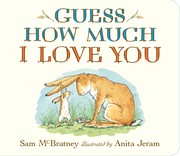
Guess How Much I Love You
2,282-word summary 10 min read 32 pages in the book
- First published
- 1994
- Publisher
- Walker Books
- Pages
- 32
- ISBN
- 9780763641757
Reading options
What's inside (8 sections)
My nephew got this book for his second birthday and I ended up reading it four times in one afternoon because he kept dragging it back. That is the whole story of this book in real life. It is short, it is sweet, and small kids want it again right away. Sam McBratney wrote it, Anita Jeram drew it, Walker Books put it out in the UK in 1994 with Candlewick Press bringing it to the US soon after, and the standard edition runs 32 pages. You can finish it in about five minutes, which is part of why parents keep it on the nightstand.
If you have never opened it, here is the setup. Bedtime is coming. Little Nutbrown Hare has decided he is not quite ready to sleep and wants Big Nutbrown Hare to know how much he loves him. Big Nutbrown Hare plays along. They take turns trying to show a bigger love. That back and forth is the entire plot, and somehow it has carried the book for thirty years through baby showers, preschools, and grandparents houses.
I came to it late, after hearing people joke about the moon line at weddings and on valentines. I expected something sugary and thin. It is sugary in places, yes, but the mechanics are smarter than I thought, and Jerams pictures do a lot of quiet work. This is a book built for being held close and read slow.
A stall for bedtime that becomes the book
Every parent knows the bedtime stall. One more drink. One more story. One more question that cannot wait until morning. McBratney just makes that stall into the story instead of fighting it.
Little Nutbrown Hare grabs hold of Big Nutbrown Hares long ears and pulls him down close. It is night in the meadow and it is time to sleep, but the little one has something urgent to say. He wants the big one to guess. The big one says he cannot guess, tell me. And off they go.
What I like about this opening is how physical it is. This is not two characters talking about feelings in the abstract. The little hare is hanging on, pulling, wiggling, trying to stay awake a few minutes longer. The big hare is patient in the way tired grown ups try to be. He settles in. He listens. He answers each try with something a little larger, but never in a way that shuts the game down.
You can feel the day winding down in those first pages. The light looks late. The grass looks soft. Jeram leaves a lot of white space so your eye stays on the two hares. There is no busy background to distract a sleepy toddler. Just the pair, close together, with room to move.
For a book this short, that choice matters. Kids who are wound up at 7:30 do not need a new world to learn. They need someone they know, doing something they understand. Trying to stay up past bedtime qualifies.
The measuring game, round by round
The middle of the book is a contest with no loser. Little Nutbrown Hare tries to show his love with his body, and Big Nutbrown Hare shows his back with a body that is bigger.
It starts with arms. The little hare stretches his arms out as wide as they will go, from tip to tip, to show how much. The big hare stretches too, and of course his reach is longer. The little one has to admit that is a lot, but he does not quit.
Then comes hopping. The little hare hops as high as he can, legs kicking, ears flying, proud of the height. The big hare hops higher, much higher, because long legs help. Again the little one watches and laughs and tries to think of something better.
McBratney keeps the pattern going through a few more tries that use the meadow around them. The little hare looks for tall things and far things he can borrow as comparisons. A tree, a hill, a stretch of river, that sort of scale. Each time the big hare finds a taller or farther version. The fun for a toddler is guessing what the little one will try next and then stretching along with him. My nephew throws his own arms out every time, even though he knows how this round ends.
What keeps it from feeling mean is the tone. Big Nutbrown Hare never teases. He never says the little ones love is small. He just shows a bigger one, warmly, and waits. Little Nutbrown Hare never sulks. He giggles, thinks hard, and tries again. It feels like wrestling on a rug where the grown up always lets the kid almost win.
Parents reading aloud will notice how easy the rhythm is to perform. Short exchanges. Lots of movement. You can lift your voice for the little hares tries and drop it low for the big hares answers. You can pause and let your kid do the stretching and hopping on the bed. The book invites that without telling you to do it in some boxed instruction. It just happens.
How the moon settles it
After a while the little hare starts to run out of ideas and get sleepy at the same time. You can see it in the pictures before the words tell you. His hops get lower. His arms droop a little. He leans against the big hare more.
Then he looks up. He thinks of the moon, far above the meadow, and decides that will do. He tells the big hare he loves him all the way up there. For a two year old listening, this feels huge. The moon is the farthest thing they know. It is outside the window every night. It follows the car. It must be the end of measuring.
Big Nutbrown Hare agrees the moon is far. Then, after the little one has drifted off, he settles him in the grass, leans close, and tells him he loves him all the way to the moon and back again. The there and back idea is the whole trick. However far you can point, someone who loves you can point farther and still come home.
I am paraphrasing on purpose here because the exact wording gets quoted a lot on mugs and cards and I do not want to reduce it to a slogan. In context it plays softer. It is not a punchline. It is a whisper after the kid is asleep. The big hare is not trying to win anymore. He is just answering so the night feels safe.
That ending explains why the book stuck. It gives grown ups a line to use when they are too tired for a speech. You do not need to explain attachment or safety or unconditional anything. You point at the window and say goodnight in a way that covers it.
What Anita Jeram is doing on the page
Jeram carries half the book, maybe more. McBratney gives her very few words per page, sometimes only a sentence, and she fills the quiet with hares that look real enough to touch.
She works in watercolor with pen lines under it, in browns and soft greens and gray. Publishers Weekly once called it pen and wash in earthy tones of moss and brown and gray, made to calm kids before sleep, and that matches what you see. Nothing glows. Nothing flashes. The meadow looks like late evening, a little hazy, with grass that bends.
The hares themselves are gangly in a good way. Long back legs, long ears, thin arms, round bellies on the little one. They do not look like cartoon bunnies with big eyes. They look like actual hares, with joints and fur that sticks up. When Little Nutbrown Hare stretches, you can see the effort in his shoulders. When Big Nutbrown Hare hops, you believe the weight of him landing.
She is also careful with distance. On some spreads the two are tumbling together, filling the page. On others they are small in a wide field, with sky above them. That push and pull helps the measuring idea without a chart or diagram. Big love looks big because sometimes the world around them looks big.
Facial expressions stay simple. A closed eye, a tilt of the head, ears up or flopping. She does not oversell the cuteness. The tenderness comes from how they lean on each other. The big hares paw around the little ones shoulders. The little ones head tucked under a chin. Anyone who has held a sleepy kid will recognize those shapes.
One practical note. The type sits in open space away from the art, large and clear. In a dim bedroom you can still read it without squinting. Someone thought about that.
Why it works after lights out
Ask preschool teachers and most will tell you this is a nap time or bedtime regular, not a circle time showpiece. There is a reason.
First, length. At 32 pages with very little text, you can read it in four or five minutes. That fits the window when a toddler is in pajamas, teeth brushed, starting to fade. Longer books risk a second wind. This one lands before that happens.
Second, participation without chaos. Kids can stretch, hop on the mattress, point at the moon through the curtains. They can try to outdo you the way the little hare tries to outdo the big hare. But the actions are contained. You are not running around the house looking for props. You are moving your arms and then settling back down. The energy curve goes down, which is what you want.
Third, repetition that soothes instead of wires. The back and forth has a lullaby feel. Try, answer, try, answer. Young brains love knowing what comes next. After three or four reads many kids mouth along with the tries. That predictability lowers the stakes. No surprise villain. No loud twist. Just a voice they trust getting softer.
I have seen it work with kids who do not usually sit for books. A friend's daughter, three, wiggly, prefers trucks and blocks. She sat for this because she could be the little hare. She did the hops. She flopped at the moon part. Then she asked for water and went to bed. The book did not teach her to love reading in some grand sense. It just gave her a routine she could hold.
If you are reading it at bedtime, a couple of small things help. Keep your pace slow. Let the pauses breathe. Do the motions with your kid the first few times, then let them do it while you watch. When you get to the sleepy pages, drop your voice. You do not need funny voices here. Plain and warm beats clever.
Sequels, the show, and why some grown ups groan
A book that sells this well does not stay single for long. McBratney, who lived in Ireland and wrote many books for kids before his death in 2020, came back to the hares more than once. Jeram came with him.
In 2004 they made You Are All My Favourites, another parent and child animal book that many families shelve next to this one. Then came a run of small Nutbrown Hare storybooks for younger toddlers. Titles like When I Am Big and books built around colors and snow and surprises. Later those seasonal tales were gathered in collections for reading across the year. A 72 page compilation called The Adventures of Little Nutbrown Hare bundles four meadow stories with friends and small problems to solve. The direct follow up many people know now is Will You Be My Friend, which revisits the hares with a new companion question about friendship.
Television followed. In 2011 an animated series built around Little Nutbrown Hare and friends started airing, with short episodes about exploring, hiding, wondering about stars, that kind of gentle adventure. It keeps the palette soft and the stakes low. If your kid finds it, expect the same meadow logic. Wander, notice, come home.
All of that is nice to have, but here is the fair criticism, and you hear it from parents by the twentieth read. The original is extremely repetitive. That is the point for a toddler and also the thing that wears on an adult. Same pattern, slightly bigger answer, page after page. If you want plot, surprise, jokes for grown ups, they are not here. Some families find it too sweet, too smooth, with no friction to talk about the next day. A kid who loves trucks or dinosaurs or silly rhymes may shrug at hares measuring love.
The thinness shows when you stretch it. The TV episodes and the leveled storybooks add friends and little lessons because the original game cannot carry twenty minutes on its own. That is fine. Not every book needs to support a franchise. But it helps to know going in. This is a ritual object more than a story with turns.
My take after living with it for a while is simple. Keep expectations right. Do not hand it to an eight year old who wants chapters and twists and then blame the hares. Hand it to a one to four year old at 7:45 at night, when arms can stretch and a window shows the sky. Read it close, do the hops, whisper the moon part. Put it back on the shelf in the morning. It will be there when you need it again, which will probably be tonight.
FAQ
When was Guess How Much I Love You published?
Walker Books published it in the UK in 1994, with Candlewick Press bringing it to the US soon after. Standard editions run 32 pages with ISBN 9780763641757.
What ages is it best for?
It suits ages 1 to 4 as a bedtime read. Toddlers can stretch and hop along, while the short text and calm art help them settle.
Are there sequels or a show?
Yes. McBratney and Jeram returned for books like Will You Be My Friend and seasonal Nutbrown Hare storybooks, and a gentle animated series began in 2011.
Similar books
Love You Forever
A mother sings the same song through a lifetime until her son sings it back.
2,235-word summary · 10 min read
Goodnight Moon
A small bunny says goodnight to each object in the green room in this 1947 bedtime classic.
2,600-word summary · 12 min read

Make Way for Ducklings
A pair of mallards raise eight ducklings on the Charles River and lead them across Boston to the Public Garden, with a little help from a friendly policeman.
2,044-word summary · 9 min read
Don't Let the Pigeon Drive the Bus!
A bus driver leaves the reader in charge with one rule, and a very persuasive pigeon spends the rest of the book trying to break it.
2,084-word summary · 9 min read
Stellaluna
A baby fruit bat falls into a bird nest, learns to perch and eat bugs, then reunites with her mother in Cannon's acclaimed 1993 picture book about difference…
2,486-word summary · 11 min read
Harold and the Purple Crayon
Harold draws a moon and a path with one purple crayon and walks into the night, through woods and water until he finds his way home.
2,941-word summary · 13 min read
Alexander and the Terrible, Horrible, No Good, Very Bad Day
Alexander has one bad day from gum in his hair to bedtime, while his family copes and his mother stays honest.
2,548-word summary · 11 min read
Are You My Mother?
A newborn bird falls from the nest and asks a kitten, a hen, a dog, a cow, a plane and a giant Snort if any will be his mother.
2,351-word summary · 10 min read
If You Give a Mouse a Cookie
A mouse gets a cookie and turns one small favor into a whole busy day.
2,560-word summary · 11 min read

The Japanese Lover
A Polish refugee and the son of a Japanese gardener fall in love in San Francisco in 1939, then keep the affair secret for nearly seventy years.
2,286-word summary · 10 min read
Go the Fuck to Sleep
A rhyming bedtime book for adults in which an exhausted father narrates the fourth hour of a toddler's stalling, one profane couplet at a time.
2,291-word summary · 10 min read

Little Town on the Prairie
In the spring after the Long Winter, fifteen-year-old Laura sews shirts, studies for a teaching certificate, and helps send her blind sister Mary to college.
2,071-word summary · 9 min read

Amelia Bedelia
A literal-minded housekeeper follows her employer's list to disastrous and funny effect in the 1963 picture book that made wordplay a children's staple.
2,038-word summary · 9 min read

Hard Luck
Rowley has a girlfriend, so Greg turns to a Magic 8 Ball, a family Easter hunt and the school yearbook for answers.
2,586-word summary · 11 min read
The Mitten
Jan Brett retells a Ukrainian folktale about a boy, a lost white mitten, and the woodland animals that crowd inside until a bear sneezes.
2,609-word summary · 12 min read
Clifford the Big Red Dog
Emily Elizabeth picks the smallest puppy in the litter, loves him as hard as she can, and wakes up to a dog the size of a house.
2,092-word summary · 9 min read
The Story of Ferdinand
A gentle Spanish bull would rather smell flowers than fight, and when he is taken to the bullring he simply sits down among the flowers in the ladies' hats.
2,135-word summary · 9 min read
Go, Dog. Go!
Dogs drive, work, play, and climb a tree for a party in this Beginner Book built on repetition, opposites, and one very unpopular hat.
2,196-word summary · 10 min read
Click, Clack, Moo: Cows That Type
Cows learn to type, demand electric blankets, and go on strike in a deadpan picture book about negotiation and withheld labor.
2,617-word summary · 12 min read
Caps for Sale
A peddler balances his caps on his head, naps under a tree, and wakes to find monkeys wearing his stock in this 1940 picture book.
2,787-word summary · 12 min read
George's Marvellous Medicine
George stirs a brew of dozens of household chemicals and gives it to his grumpy grandmother, and the medicine works far better than anyone planned.
2,014-word summary · 9 min read
Frog and Toad Are Friends
Five short stories about a cheerful frog and a grumpy toad who need each other for waking up, swimming, and waiting for the mail.
1,969-word summary · 9 min read
The Stinky Cheese Man and Other Fairly Stupid Tales
Scieszka and Lane Smith take nine fairy tales apart, joke by joke, while Jack, the narrator, keeps losing the pages.
2,206-word summary · 10 min read
The Borrowers
A family of tiny people live under the floorboards of an English house, borrowing what they need until a lonely boy and a suspicious housekeeper change…
2,164-word summary · 10 min read
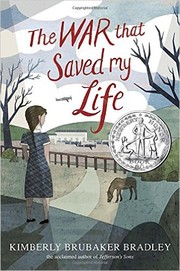
The War That Saved My Life
Ten-year-old Ada has never left her London flat, hidden away because of her clubfoot. Wartime evacuation sends her to Kent, where a reluctant guardian and a…
2,252-word summary · 10 min read
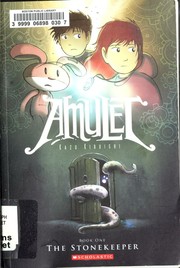
The Stonekeeper
After their father's death, Emily and Navin chase a monster into a hidden world to save their mother, and Emily's great-grandfather's amulet offers power at a…
2,753-word summary · 12 min read
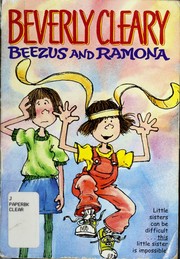
Beezus and Ramona
Nine year old Beezus tries to be a good older sister while four year old Ramona turns every ordinary day into a disaster, until a tenth birthday forces honesty.
2,062-word summary · 9 min read
Miss Nelson Is Missing!
Room 207 gets kind Miss Nelson, then terrible Viola Swamp instead.
2,597-word summary · 12 min read
Horton Hears a Who!
An elephant protects tiny Whos on a clover while jungle mocks.
2,375-word summary · 11 min read