
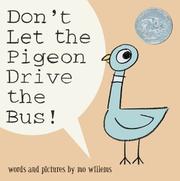
Don't Let the Pigeon Drive the Bus!
2,084-word summary 9 min read 40 pages in the book
- First published
- 2003
- Publisher
- Hyperion Books for Children
- Pages
- 40
- ISBN
- 9780786819881
Reading options
What's inside (10 sections)
There are picture books that adults read to children, and there are picture books that give children a job. This one gives them the best job in children's literature: the power to say no to a pigeon. The entire book is a negotiation between a bird who wants something forbidden and a reader who has been left in charge, and the reader almost always wins. That is why it has sold millions of copies, why it is still the first book many children borrow from a library, and why teachers who need thirty first graders to settle down reach for it before almost anything else.
The Setup
The book begins with the bus driver, drawn in a flat, friendly style, speaking directly to the reader. He has to leave for a little while, he says, and he needs someone to watch things until he gets back. Then he delivers the rule that becomes the title: "Don't let the Pigeon drive the bus!" He walks off the page, and the pigeon appears immediately, because the pigeon has been waiting behind the edge of the frame for this exact moment.
That direct address is the whole trick, and Willems understands how rare it is. Most picture books speak about a character. This one speaks to the child, makes the child responsible, and then applies pressure. The pigeon does not know that he is talking to a child. He thinks he is talking to a pushover. The child knows better, and the gap between what the pigeon wants and what the child can grant is where every laugh comes from.
The Escalation
The pigeon's argument develops in stages, each one a little less dignified than the one before, and the sequence is a masterclass in comic structure. He starts with a reasonable request: "Hey, can I drive the bus?" Then he adds reassurance: "I'll be careful." Then a compromise: "I'll just steer." Then a credential: "My cousin Herb drives a bus almost every day. True story." Then a fantasy spread in which he is at the wheel, grinning, with the bus stretching out behind him.
When the fantasy does not move the reader, he changes tactics. "I never get to do anything!" he protests. He proposes a game: "Let's play 'Drive the Bus.' I'll go first." He asks for a tiny favor, just once around the block. He offers friendship: "I'll be your best friend!" He tries bribery: "How about I give you five bucks?" He tries logic: "What's the big deal? It's just a bus!" He tries outrage: "No fair!" He tries to divide the reader from the parent: "I bet your mom would let me." And finally he goes for pathos, arms flung wide: "I have dreams, you know!"
Every one of those moves is something a child has personally attempted, usually that same week. A friend recently told me her four-year-old started shouting "I have dreams, you know!" at bedtime, and she had to check whether her kid had found the book on the shelf by himself. He had. That is what Willems is doing here. He is not inventing a character so much as holding up a mirror to the audience and letting them laugh at the reflection.
The Tantrum
Then comes the red page. The pigeon, having exhausted every argument in his repertoire, simply loses it. The background turns solid red, the speech bubble explodes across the spread, and the text reads, "LET ME DRIVE THE BUS!!!" It is the only time the book raises its voice, and the placement is perfect: it arrives after ten pages of buildup, it lasts a single page, and it lands with all the weight of a real tantrum, which is funny because it is exactly what tantrums are. The adult reading aloud gets to do the shout, and the child gets to feel the thrill of a meltdown without having one.
What makes the tantrum page work is that the reader has caused it. The pigeon is not a bad bird. He is a bird who was told no by someone he underestimated, and he takes it about as well as any of us would if a stranger held the thing we wanted most and refused to share. The book is careful not to punish him, and it is careful not to reward him either.
The End
The driver returns on the next page, exactly as promised. "I'm back. You didn't let the pigeon drive the bus, did you? Great. Thanks a lot. Bye." And he leaves again, and the pigeon is still there, defeated, sitting on the ground, staring off to the side in the posture of a child who has just been told the answer is final.
Then Willems gives the book its true ending. The pigeon notices something: a big red tractor-trailer rolling through the background. "Hey . . ." he says, and the story stops. On the back endpaper, the pigeon is dreaming of driving the semi, horn blaring, wind in his feathers. No lesson is delivered. No apology is offered. The desire simply resets and aims at a larger target, which is the most accurate depiction of childhood I have ever seen in forty pages.
Why Children Love It
The book is funny, but funny is not why it works. It works because it gives the child a role and the role is real. When a child says no to the pigeon, the pigeon hears it. He reacts, he bargains, he sulks. The child's refusal causes the next page. That is not true of most stories, where the child listens and the plot advances regardless. This book turns reading into a game with rules and stakes, and once a child understands that their voice is doing the work, they will demand the book again and again.
The design supports the joke. Willems, who spent years writing for Sesame Street before this was published in 2003, draws simple lines and big empty spaces, and the empty spaces matter. The reader can see the pigeon's whole thought process in the angle of an eyebrow and the position of a wing. The pigeon's eyes are enormous, and the book spends entire spreads on nothing but a face and a speech bubble, which is why the tantrum page detonates. There are no subplots, no extra characters, and no scenery to get lost in. The book is a conversation, and it respects the fact that a conversation has only two people in it.
How to Read It Aloud
There is a technique to this book, and parents figure it out by the third reading. The pigeon's lines need to be performed with escalating confidence, and the pauses need to be held long enough for the child to deliver the refusal. If you rush the pauses, the book dies. The other half of the technique is playing fair: the child has to be allowed to actually say no, in their own voice, and the adult has to react as if the pigeon heard it. When that happens, the child starts leaning into the performance, adding gestures, shaking a finger, doing the voice. You are not reading a story at that point. You are playing a scene with a partner.
Teachers use it for more than laughs. First-grade classrooms use the book to teach persuasive language, because the pigeon's argument structure is so visible: claim, evidence, compromise, appeal to authority, bribe, tantrum. There are lesson plans that ask students to identify which technique the pigeon is trying at which point, and lesson plans that ask them to write their own page in which they argue with him. Librarians use it as a first read-aloud of the year, because it teaches children that books can talk back to them, and once a child believes that, everything else on the shelf is easier to sell.
The design deserves one more note. Willems uses big, empty white pages, thick line drawings, and a limited palette, and the pigeon's expressions carry the whole emotional arc of the book. There is a famous feature of the endpapers, where the pigeon appears in different poses depending on the edition, which children notice and love. The typography is part of the joke too. Speech bubbles shrink and grow with the pigeon's mood, and the tantrum page stretches the letters until they bang against the edge of the paper. Almost everything a child learns about how a book signals emotion, they can learn here in forty pages.
The Publishing Story
This was Willems' debut picture book, which is remarkable in retrospect. He had won six Emmy Awards as a writer and animator on Sesame Street, and the pigeon began as a doodle that he kept drawing while trying to work on something else. The character was too much fun to abandon, so he built a book around him, and Hyperion published it on April 1, 2003. It won a Caldecott Honor in 2004, one of the highest recognitions in American picture books, and it was named to the American Library Association's Notable Children's Books list.
The success has been enormous. More than six million copies have been sold. In a 2012 poll of the top 100 picture books ever published, School Library Journal's readers ranked it third, behind only Where the Wild Things Are and The Very Hungry Caterpillar. It was inducted into the Picture Book Hall of Fame in the inaugural class of 2009. The Weston Woods animated version won a Carnegie Medal in 2010. There is a Pigeon opera now, and a television series in development, and a twentieth-anniversary edition, and none of it feels like a stretch for a character whose whole appeal is that he wants one thing and cannot have it.
Willems turned the formula into a series, and not every entry is equal. The Pigeon Finds a Hot Dog! arrived in 2004 and gave the pigeon an even better foil, a tiny duckling. Don't Let the Pigeon Stay Up Late! came in 2006, The Pigeon Wants a Puppy! in 2008, and the sequence has grown to more than a dozen titles, including The Pigeon Needs a Bath!, The Pigeon HAS to Go to School!, and holiday entries like Don't Let the Pigeon Drive the Sleigh! The first book is still the purest version of the idea, because the request is so impossible and the reader's authority is so clean.
The character has also outgrown the books. There is now a Pigeon opera, premiered at the Kennedy Center in 2023 with Renée Fleming involved, a stage show about a bird whose entire dramatic arc is wanting something he cannot have, which is either the funniest or the most logical thing that has ever happened in American arts programming. A television series has been announced, the twentieth-anniversary edition came out in 2023 with bonus material, and there are board book adaptations for toddlers who are not yet ready for the negotiation. The pigeon keeps finding new vehicles to dream about, exactly like the end of the book predicted.
The Criticism
Adults who dislike the book tend to make the same two complaints. The first is that the pigeon is entitled and that the book rewards bad behavior by making it funny. This is wrong in an interesting way. The pigeon does not get what he wants, and he does not learn a lesson, and the refusal is what the reader practices. The second complaint is that the series repeats itself, which is true, and also the point. Willems built a template as clean as a knock-knock joke, and he has been telling variations on it for twenty years. If you read all of them in one sitting, you will feel the seams. One at a time, at bedtime, with a child who gets to shout "NO," the seams are invisible.
The book also has a small practical virtue that gets overlooked. It is a genuinely excellent first reader for tone and punctuation, because nearly every sentence is a question, an exclamation, or a plea, and the child can hear the difference immediately. Teachers use it for persuasive writing units, which is a polite way of saying that a pigeon has been teaching American children the structure of an argument since 2003. He would be proud. He would also immediately ask for ten dollars.
FAQ
What age is Don't Let the Pigeon Drive the Bus! for?
It is aimed at children around three to six, though the joke works for older readers and for adults doing the reading aloud.
How many Pigeon books are there?
The series has grown to more than a dozen titles, beginning with this one in 2003 and including The Pigeon Finds a Hot Dog! and The Pigeon Needs a Bath!
Why do children love this book?
Because it asks them to hold the line. Saying no to the pigeon is the whole game, and being the one who decides is what makes it work as a first read-aloud.
Similar books
Go the Fuck to Sleep
A rhyming bedtime book for adults in which an exhausted father narrates the fourth hour of a toddler's stalling, one profane couplet at a time.
2,291-word summary · 10 min read
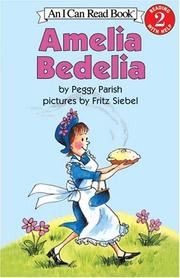
Amelia Bedelia
A literal-minded housekeeper follows her employer's list to disastrous and funny effect in the 1963 picture book that made wordplay a children's staple.
2,038-word summary · 9 min read
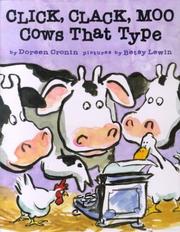
Click, Clack, Moo: Cows That Type
Cows learn to type, demand electric blankets, and go on strike in a deadpan picture book about negotiation and withheld labor.
2,617-word summary · 12 min read
Caps for Sale
A peddler balances his caps on his head, naps under a tree, and wakes to find monkeys wearing his stock in this 1940 picture book.
2,787-word summary · 12 min read
The Stinky Cheese Man and Other Fairly Stupid Tales
Scieszka and Lane Smith take nine fairy tales apart, joke by joke, while Jack, the narrator, keeps losing the pages.
2,206-word summary · 10 min read
Miss Nelson Is Missing!
Room 207 gets kind Miss Nelson, then terrible Viola Swamp instead.
2,597-word summary · 12 min read
Horton Hears a Who!
An elephant protects tiny Whos on a clover while jungle mocks.
2,375-word summary · 11 min read
The Monster at the End of This Book
Grover begs readers not to turn pages for fear of a monster, until the ending reveals himself.
2,061-word summary · 9 min read
Harold and the Purple Crayon
Harold draws a moon and a path with one purple crayon and walks into the night, through woods and water until he finds his way home.
2,941-word summary · 13 min read
Guess How Much I Love You
Two nutbrown hares try to outshow their love at bedtime in this gentle picture book classic.
2,282-word summary · 10 min read
Curious George
Curious George retold: a monkey sails from Africa to the city, phones the fire station, floats off on balloons, and finds home.
2,979-word summary · 13 min read
Cloudy with a Chance of Meatballs
A grandfather tells of Chewandswallow, where soup rains and meatballs fall, until giant food storms force everyone to flee.
2,873-word summary · 13 min read
True Story of the Three Little Pigs
A. Wolf tells his side from the Pig Pen: he only wanted sugar for a cake, had a bad cold, and sneezed. You decide.
2,975-word summary · 13 min read
Alexander and the Terrible, Horrible, No Good, Very Bad Day
Alexander has one bad day from gum in his hair to bedtime, while his family copes and his mother stays honest.
2,548-word summary · 11 min read
Madeline
Ludwig Bemelmans's 1939 Madeline: the twelve girls in Paris, Miss Clavel, the midnight appendix scare, and why the smallest girl became a classic.
2,944-word summary · 13 min read
If You Give a Mouse a Cookie
A mouse gets a cookie and turns one small favor into a whole busy day.
2,560-word summary · 11 min read
Goodnight Moon
A small bunny says goodnight to each object in the green room in this 1947 bedtime classic.
2,600-word summary · 12 min read
Witches
Colin Hawkins's rhyming picture book teaches small readers to spot witches, flaps and all.
2,783-word summary · 12 min read
The Cat in the Hat
A tall Cat turns a rainy day upside down for Sally and her brother, with Thing One and Thing Two in tow.
2,546-word summary · 11 min read
Strega Nona
A village witch doctor hires a boy who does not listen, and the pasta pot he was told not to touch floods Calabria with noodles he cannot stop.
2,587-word summary · 11 min read

Make Way for Ducklings
A pair of mallards raise eight ducklings on the Charles River and lead them across Boston to the Public Garden, with a little help from a friendly policeman.
2,044-word summary · 9 min read

Hard Luck
Rowley has a girlfriend, so Greg turns to a Magic 8 Ball, a family Easter hunt and the school yearbook for answers.
2,586-word summary · 11 min read
The Mitten
Jan Brett retells a Ukrainian folktale about a boy, a lost white mitten, and the woodland animals that crowd inside until a bear sneezes.
2,609-word summary · 12 min read

Clifford the Big Red Dog
Emily Elizabeth picks the smallest puppy in the litter, loves him as hard as she can, and wakes up to a dog the size of a house.
2,092-word summary · 9 min read
The Story of Ferdinand
A gentle Spanish bull would rather smell flowers than fight, and when he is taken to the bullring he simply sits down among the flowers in the ladies' hats.
2,135-word summary · 9 min read
Go, Dog. Go!
Dogs drive, work, play, and climb a tree for a party in this Beginner Book built on repetition, opposites, and one very unpopular hat.
2,196-word summary · 10 min read
George's Marvellous Medicine
George stirs a brew of dozens of household chemicals and gives it to his grumpy grandmother, and the medicine works far better than anyone planned.
2,014-word summary · 9 min read
Frog and Toad Are Friends
Five short stories about a cheerful frog and a grumpy toad who need each other for waking up, swimming, and waiting for the mail.
1,969-word summary · 9 min read
The Third Wheel
Greg tries to find a date for the Valentine's dance, ends up the third wheel in his own plan, and watches Rowley get the girl.
2,019-word summary · 9 min read
Sideways Stories from Wayside School
Thirty stories, one class per floor, and a teacher who turns students into apples: Louis Sachar's absurd school classic.
2,045-word summary · 9 min read