
The Mitten
2,609-word summary 12 min read 32 pages in the book
- First published
- 1989
- Publisher
- G. P. Putnam's Sons
- Pages
- 32
- ISBN
- 9780399219207
Reading options
What's inside (9 sections)
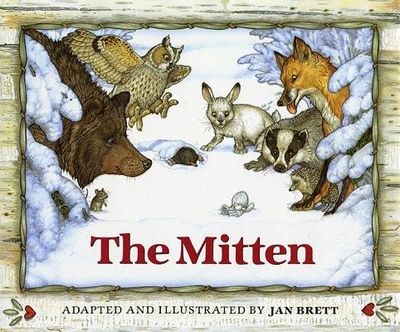
I read The Mitten on a January afternoon with a six year old who had already heard it at school and wanted to know whether the book was better. It was. Jan Brett's retelling came out in 1989 from G. P. Putnam's Sons, thirty-two pages, and it has the odd quality of being both very simple and very carefully built. The plot fits in a paragraph. A boy named Nicki asks his grandmother, Baba, for mittens as white as snow. She warns that he will lose one. He does. A line of woodland animals moves into the mitten. A mouse tickles a bear's nose, the bear sneezes, and the mitten sails back to Nicki. That is the whole thing.
What makes it last is not the plot. It is the engineering. Brett builds a machine out of page turns, repeated situations, and two narrow side panels that tell a second story while the main picture tells the first. The white mitten disappears against white snow, which is why the loss is believable, and then it reappears as a white shape against a blue sky, which is the payoff. A book about a lost object becomes a book about seeing.
I had read it once before to a library group and thought it pleasant and a little thin. Reading it slowly with one child changed my mind. She found the next animal in the border before every page turn, and by the fourth animal she was explaining the pattern back to me. The book had given her a job.
A white mitten and a grandmother's warning
Nicki wants his new mittens made from wool as white as snow. Baba does not want to knit them. Her reason is practical: if you drop one in the snow, you will never find it. Nicki insists, and she gives in, because that is how grandmothers in folktales operate. Before he goes out she sets a small ritual. When he comes home, she says, first she will look to see that he is safe and sound, and then she will look to see whether he still has his snow white mittens. It is a loving check disguised as a threat.
That promise does two jobs. It tells us the mitten will be lost, and it gives Baba a reason to be watching at the end. The warning also makes the white color a problem rather than a preference. A white mitten in a white world is a design joke, and the book knows it. On the page where the mitten falls, it is almost invisible. The loss is not dramatic. It is the ordinary way things vanish in snow.
Nicki goes out to play and does not notice when one mitten drops. The text does not make a scene of it. "It wasn't long until one of his new mittens dropped in the snow and was left behind," Brett writes, and that flat sentence is the right choice. Nicki keeps playing. The mitten lies there. The story has already split into two tracks, and only the reader can see both.
Baba's warning is not a curse and the book does not punish Nicki. Brett lets him be a boy who is busy. The consequence is comic, not moral. The mitten will come back, changed, and Baba will be left holding the evidence.
Eight animals and a shrinking room
The first animal is a mole, tired from tunneling. It discovers the mitten and burrows inside. Then comes a snowshoe rabbit, stopping to admire its winter coat. It wiggles in feet first. The mole does not think there is room for two, but the rabbit has big kickers, so the mole moves over. Next is a hedgehog, snuffling through wet leaves. The mole and rabbit are bumped and jostled, but they do not argue with someone covered in prickles.
Then an owl, drawn by the commotion, with glinty talons. Then a badger, who is given the thumb of the mitten because of his diggers. Then a fox, whose shiny teeth make the others generous. Then a bear, who is simply too large to argue with. Finally a meadow mouse, no bigger than an acorn, squeezes into the one space left on top of the bear's nose.
The order is exact: mole, snowshoe rabbit, hedgehog, owl, badger, fox, bear, mouse. Each animal is larger than the last, except the mouse, and each arrival repeats the same little drama. There is a reason to come in, an objection from the residents, a feature that ends the objection, and a stretch of wool. Brett varies the verbs so the pattern does not feel mechanical. The rabbit wiggles, the hedgehog snuffles, the owl swoops, the badger climbs, the fox pokes his muzzle, the bear noses his way in, the mouse wriggles.
What I like most is that this is not a story about sharing. The animals make room because they are intimidated. The rabbit's kickers, the owl's talons, the badger's claws, the fox's teeth, the bear's bulk: each new resident wins space by being dangerous or large. A parent looking for a gentle lesson about generosity will not find it here. A parent looking for a funny, accurate animal story will. The mitten is a shelter, not a commune.
The mitten itself holds. Brett tells us it is pulled and bulged to many times its size, but Baba's good knitting holds fast. The tension is not whether the mitten will burst. It is how much wool can take before something gives. The answer is the sneeze, not a rip. The mitten survives the animals. It just comes out enormous.
The badger gets the thumb, a small piece of physical comedy that rewards looking at the shape of the object. A mitten is not a bag. It has a thumb, and Brett uses it. The animals are packed into a real piece of clothing, with a real opening and a real limit.
The sneeze, the sky, and the stretched mitten
The mouse is the smallest animal and the one that ends the arrangement. It does not push. It settles on the bear's nose, and its whiskers tickle. The bear sneezes, and the force shoots the mitten into the sky and scatters the animals in all directions. Brett draws the sneeze as a full page event, with the animals tumbling and the wool flying. It is the release the whole book has been building toward.
Nicki, on his way home, sees a white shape in the distance. It is the mitten, silhouetted against the blue sky. He runs to catch it. In the same moment he sees Baba's face in the window. She looks first to see that he is safe and sound, and then she sees that he still has his new mittens. The order of her looking is the emotional hinge of the book. She checks the boy before the object. The warning was never really about wool.
The final page has no text. Nicki is by the fire, warming his feet, and Baba is holding the mitten. One mitten is normal and one is enormous. She looks at it with an expression somewhere between puzzlement and suspicion. We know what happened. She does not. That gap is the last joke, and it is a generous one. The mystery stays in the cottage.
The ending is also a little sly about evidence. Baba has spent the book prepared to catch Nicki in a loss, and he has technically come home with both mittens. The proof of his carelessness is right there in her hands, stretched to the size of a small sack, and she cannot read it. The book does not spell this out. It trusts the picture.
The story in the borders
The most distinctive thing about The Mitten is the border. Each spread has a large central painting and narrow panels at the sides, and those panels are not decoration. One panel follows Nicki through his day. He walks, plays, and heads home, unaware. The other panel shows the next animal on its way. Sometimes Nicki's play has disturbed the animal, which is a neat causal link: his ordinary afternoon sends one creature after another toward the wool.
This is Brett's signature move. She has described the borders as a way of telling more than one story at once, so that a child can see what is coming and feel a step ahead of the text. The border creates dramatic irony: we see Nicki before he sees the mitten, and we see the next animal before it arrives in the story. A child can predict, confirm, and feel clever.
The panels also solve a problem of scale. In the central picture, the mitten is small and the animals are crowded. In the border, Brett can show a single animal approaching across clean snow, with tracks behind it. The border gives the eye a rest and gives the story a second tempo.
The paintings themselves are full of Ukrainian folk detail. The tale is identified on the title page as a Ukrainian folktale, and Brett dresses the cottage with painted plates, woven cloth, carved wood, and patterned borders. The animals are rendered as animals, not as people in coats. That choice keeps the forest believable. The mitten is white wool with visible knitting, and the snow is layered with blue and gray shadows.
The visual research is part of the pleasure. The embroidery patterns on the borders echo the textiles in the house. The mitten's shape repeats in the page design. The book feels handmade in the same world it describes, even though the world is a folktale. That coherence is why the white mitten on white snow does not read as a mistake. It reads as the whole point.
A practical warning: the side panels are easy to miss. In a lap, a child can study them. In a classroom, the pictures are small and the reader is often holding the book away from the group. If you read this to a room without pointing out the borders, you lose half the design.
Reading it aloud without rushing the page turns
The text is longer than a typical board book. Thirty-two pages, but a fair number of words, and the cumulative structure means each animal gets a full beat. With questions and pointing, a read-aloud takes ten to twelve minutes. That is a long time for a two year old and a good length for a four or five year old. The publisher lists it for ages four to eight, which feels right.
The pattern is the engine. Pause before each page turn and ask who is coming. The side panel answers. Let the child find the animal first, then read the sentence that confirms it. By the third animal, most children are racing ahead. The repetition is not a flaw to be endured; it is the game.
The sneeze is the set piece. Brett writes it out in letters, and it invites a performance. Draw it out. Let the children sneeze with you. Then slow down for the last pages. The white shape against the blue sky, Baba at the window, the silent final spread: these need air. If you race to the end, the joke lands but the image does not.
Voices help. The mole can be small and sleepy, the rabbit proud, the owl grand, the bear slow and huge. The text does not assign personalities, so you have to. The one thing I would not do is make the animals sound like a chorus of polite guests. They are not polite. They are making room for a creature with talons.
For classrooms, the book is a staple for sequencing and retelling. Felt boards, masks, and paper mittens all work, and the story is easy to act out with a blanket or a sheet. The border is a natural lesson in foreshadowing: ask what the side panel shows and what it tells you about the next page. That is a sophisticated idea delivered in a picture a five year old can read.
Where the book is thin
The characters are types. Nicki wants mittens. Baba warns him. The animals want warmth and are scary or strong. Nobody changes. If you want a story about a boy learning to be careful, this is not it. Nicki does not lose the mitten in the end; he catches it. The warning is validated but not paid for. That is the joke, but it means the book has no moral arc.
The prose is plain, and occasionally clumsy. "Not being one to argue with someone covered with prickles" is a mouthful for a read-aloud. The sentences do not have the musical repetition of a true cumulative tale; there is no refrain that children can chant. The structure is cumulative, but the language is not. That is a deliberate choice, and it keeps the book from feeling sing-song, but it also means the verbal pleasure is lower than the visual pleasure.
The cultural framing is light. Baba is the only Ukrainian word in the text. The Ukrainian setting lives in the patterns, the cottage, and the title page, not in the language or a specific regional telling. The tale exists in many versions, including Alvin Tresselt's 1964 retelling with illustrations by Yaroslava and Jim Aylesworth's 2009 version with Barbara McClintock. Brett's is one of several. If you want a version rooted in a particular telling, read around. The book is an adaptation, not a documentary.
The ending is abrupt. A sneeze solves everything. Some children love that; some adults find it arbitrary. The final page is silent, which is bold, but it also means the book stops rather than lands.
And the book can overstimulate. The borders, the patterns, the animals, the white-on-white mitten: there is a lot to look at. A child who needs a clean page may find it busy. A child who is easily distracted may spend the whole read hunting for details and lose the plot. It rewards attention, and it demands it.
The mitten after the last page
The book has stayed in print for decades and has become a winter fixture in schools and libraries. It is used for animals, hibernation, sequencing, and snow. Brett followed it with The Hat in 1997, a companion in the same visual mode about a hedgehog who gets a wool stocking stuck on its head, and later with The Snowy Nap. There is a Spanish edition, El mitón, and a board book. The story has been adapted for stage and for read-aloud videos.
Its biggest contribution may be the border. A generation of readers learned to read a picture book's edges because of this one. The idea that the main image is not the whole story, that a small panel can carry a parallel narrative, is a real lesson in how pictures work.
The last time I read it, the child asked why the bear did not wake up when the mouse climbed on his nose. I said the bear was sleepy, and she said that was not a good answer, and we went back to the page where the mouse arrives. She looked at the border, found the mouse coming, and nodded as if the picture had settled it. The text gives you a bear and a sneeze. The pictures give you a world where a mouse can be seen before it arrives, and a mitten can be lost and found and come home the wrong size. We read it again the next night.
FAQ
What age group is The Mitten for?
The publisher lists it for ages four to eight. Younger toddlers may not sit through the longer text, while older readers can use the borders to practice prediction.
Is The Mitten a Ukrainian folktale?
Yes. Brett identifies it as a Ukrainian folktale on the title page and retells it with Ukrainian folk details in the cottage and borders. Several other versions exist, including Alvin Tresselt's 1964 retelling.
Why is the mitten white if Baba knows it will be lost?
Nicki insists on wool as white as snow, and Baba gives in. The white color is also the visual joke: the mitten disappears against the snow and later stands out against the blue sky.
Similar books

Make Way for Ducklings
A pair of mallards raise eight ducklings on the Charles River and lead them across Boston to the Public Garden, with a little help from a friendly policeman.
2,044-word summary · 9 min read

Clifford the Big Red Dog
Emily Elizabeth picks the smallest puppy in the litter, loves him as hard as she can, and wakes up to a dog the size of a house.
2,092-word summary · 9 min read
The Story of Ferdinand
A gentle Spanish bull would rather smell flowers than fight, and when he is taken to the bullring he simply sits down among the flowers in the ladies' hats.
2,135-word summary · 9 min read
Caps for Sale
A peddler balances his caps on his head, naps under a tree, and wakes to find monkeys wearing his stock in this 1940 picture book.
2,787-word summary · 12 min read
The Snowy Day
Peter in his red snowsuit explores fresh snow, from footprints and angels to a melted pocket snowball, in Keats classic winter day.
2,375-word summary · 11 min read
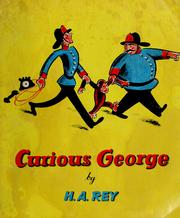
Curious George
Curious George retold: a monkey sails from Africa to the city, phones the fire station, floats off on balloons, and finds home.
2,979-word summary · 13 min read
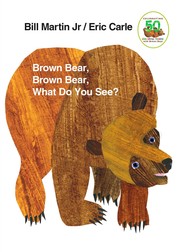
Brown Bear, Brown Bear, What Do You See?
A rhythmic animal parade teaches colors and names, from brown bear to schoolchildren.
3,226-word summary · 14 min read
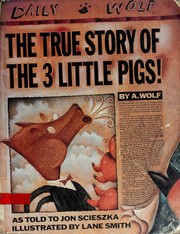
True Story of the Three Little Pigs
A. Wolf tells his side from the Pig Pen: he only wanted sugar for a cake, had a bad cold, and sneezed. You decide.
2,975-word summary · 13 min read
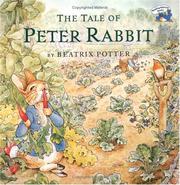
The Tale of Peter Rabbit
Peter Rabbit disobeys his mother, squeezes under the gate into Mr. McGregor garden, and ends in a chase back home to chamomile tea.
2,157-word summary · 10 min read
Are You My Mother?
A newborn bird falls from the nest and asks a kitten, a hen, a dog, a cow, a plane and a giant Snort if any will be his mother.
2,351-word summary · 10 min read
Amelia Bedelia
A literal-minded housekeeper follows her employer's list to disastrous and funny effect in the 1963 picture book that made wordplay a children's staple.
2,038-word summary · 9 min read
Go, Dog. Go!
Dogs drive, work, play, and climb a tree for a party in this Beginner Book built on repetition, opposites, and one very unpopular hat.
2,196-word summary · 10 min read
Click, Clack, Moo: Cows That Type
Cows learn to type, demand electric blankets, and go on strike in a deadpan picture book about negotiation and withheld labor.
2,617-word summary · 12 min read
Frog and Toad Are Friends
Five short stories about a cheerful frog and a grumpy toad who need each other for waking up, swimming, and waiting for the mail.
1,969-word summary · 9 min read
The Stinky Cheese Man and Other Fairly Stupid Tales
Scieszka and Lane Smith take nine fairy tales apart, joke by joke, while Jack, the narrator, keeps losing the pages.
2,206-word summary · 10 min read
The Complete Fairy Tales
Mermaids, snow queens and tin soldiers in the full Andersen collection.
2,414-word summary · 11 min read
The Little Engine That Could
Watty Piper follows a stranded toy train past proud engines that refuse, to a small blue switcher who agrees to try the mountain and pulls her chanting load…
2,311-word summary · 10 min read
Stellaluna
A baby fruit bat falls into a bird nest, learns to perch and eat bugs, then reunites with her mother in Cannon's acclaimed 1993 picture book about difference…
2,486-word summary · 11 min read
The Jungle Book
Mowgli, raised by wolves in the Seeonee Hills, learns the Law from Baloo and Bagheera while Shere Khan circles. Kipling's 1894 story collection.
2,799-word summary · 12 min read
The Twits
Mr. and Mrs. Twit trade vile pranks and torment caged monkeys until the birds and monkeys flip the house on them.
2,864-word summary · 13 min read
Fantastic Mr. Fox
Mr. Fox raids three cruel farmers to feed his family, then outdigs tractors and a siege to host a feast underground.
2,910-word summary · 13 min read
Cloudy with a Chance of Meatballs
A grandfather tells of Chewandswallow, where soup rains and meatballs fall, until giant food storms force everyone to flee.
2,873-word summary · 13 min read
Chicka Chicka Boom Boom
Letters race up a coconut tree, tumble down with a boom, then climb again with help in this chant classic.
2,120-word summary · 9 min read
Mrs. Frisby and the Rats of NIMH
A widowed mouse races the spring plow to save her sick son Timothy, and finds help from the intelligent rats of NIMH hiding under the rosebush.
3,159-word summary · 14 min read
Alexander and the Terrible, Horrible, No Good, Very Bad Day
Alexander has one bad day from gum in his hair to bedtime, while his family copes and his mother stays honest.
2,548-word summary · 11 min read
One Fish, Two Fish, Red Fish, Blue Fish
Counting fish and silly creatures from here to there, with rhymes for beginning readers.
1,900-word summary · 8 min read
Madeline
Ludwig Bemelmans's 1939 Madeline: the twelve girls in Paris, Miss Clavel, the midnight appendix scare, and why the smallest girl became a classic.
2,944-word summary · 13 min read
The Polar Express
A doubting boy rides a night train to the North Pole and keeps a bell only believers hear.
2,195-word summary · 10 min read
The Lorax
The Once-ler fells Truffula Trees for Thneed greed despite the Lorax, who speaks for the trees, warning him to stop.
2,563-word summary · 11 min read
Goodnight Moon
A small bunny says goodnight to each object in the green room in this 1947 bedtime classic.
2,600-word summary · 12 min read