
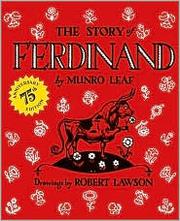
The Story of Ferdinand
2,135-word summary 9 min read 72 pages in the book
- First published
- 1936
- Publisher
- Viking Press
- Pages
- 72
- ISBN
- 9780670013234
Reading options
What's inside (10 sections)
The image I remember is not the bullfight. It is Ferdinand sitting under a cork tree, smelling flowers. He is enormous, gentle, and completely content. The other bulls are running and butting heads in the field, and Ferdinand is doing his own thing. His mother worries about him, but she sees that he is happy, and she lets him be. That small act of acceptance is the emotional center of the book, and it is why the story has lasted for almost ninety years.
Munro Leaf wrote The Story of Ferdinand in 1936, and Robert Lawson illustrated it. It was published by Viking Press and became one of the most famous picture books of the twentieth century. It is a simple story, told in simple language, with black-and-white drawings that are full of life. It is also a political book, whether or not Leaf intended it to be. The story of a bull who refuses to fight has been read as a pacifist fable, and it has been banned by governments that did not want their children to get the message.
The story
Ferdinand is a young bull in Spain. He lives in a pasture with other bulls, and he does not like to run or butt heads. He likes to sit under a cork tree and smell the flowers. His mother, a cow with a kind face, asks him why he does not play with the others. He tells her he is happy. She understands. She sits down next to him, and they smell the flowers together.
As Ferdinand grows, he becomes the biggest and strongest bull in the pasture. The other bulls dream of being chosen for the bullfights in Madrid. They practice charging and snorting. Ferdinand keeps sitting under his tree. One day, men come from the city to choose the fiercest bull. Ferdinand is not interested. He sits on a bee, gets stung, and bellows in pain. The men see a huge bull jumping and roaring, and they decide he is the one.
They take him to Madrid. The bullring is crowded. The picadors come out on horses, the banderilleros wave their capes, and the matador strikes a pose. Ferdinand is led into the ring. He looks around at the crowd, the noise, the bright colors. Then he sees the flowers in the ladies' hats. He sits down and smells them. Nothing the matador does can make him fight. The crowd is disappointed. The matador is furious. Ferdinand is taken back home, where he sits under his cork tree and is happy.
That is the whole plot. There are no subplots, no villains with names, no complicated backstory. The book is about a bull who refuses to do what everyone expects him to do, and the refusal is not a rebellion. It is simply who he is.
The illustrations
Robert Lawson's drawings are the other half of the book. They are black and white, with soft shading and a lot of detail. The bulls have expressive faces. Ferdinand's mother looks tired and loving. The men from Madrid look ridiculous in their hats. The bullring is drawn with a sense of scale, so you feel how small Ferdinand is compared to the crowd and how large he is compared to the men.
Lawson was a fine artist, and he brought a European sensibility to the book. The Spanish setting is rendered with care: the cork trees, the stone walls, the costumes of the bullfighters. The drawings are not cute. They are warm and slightly satirical. The matador is a vain little man. The picadors are comic. The crowd is a blur of hats and faces. Ferdinand is the only calm figure in the whole book.
The most famous image is Ferdinand sitting in the bullring, smelling a flower. Lawson draws him with his eyes closed and his nose in the air. The matador is screaming. The crowd is jeering. Ferdinand is at peace. The contrast is the whole story in one picture.
The politics
The Story of Ferdinand was published in September 1936, a few months after the Spanish Civil War began. It was an immediate success in the United States. It was also banned in Nazi Germany, where it was seen as a pacifist tract that undermined the martial spirit. It was banned in Franco's Spain, where it was seen as an insult to the bullfight and to the regime. It was burned in Berlin. Leaf and Lawson became famous, and the book became a symbol of nonconformity.
The political reading is not hard to find. Ferdinand is a bull who will not fight. He is surrounded by men who want him to be violent. He refuses. The book was published at a time when Europe was marching toward war, and it told children that it was okay not to want to fight. That message was dangerous enough to be banned.
But the book is not a sermon. Leaf does not lecture. He tells a funny story about a bull and a bee. The politics are in the structure, not the text. That is why the book works for children who are too young to understand fascism. They understand that Ferdinand is different, that his mother loves him anyway, and that the men who want him to be fierce are silly.
Leaf reportedly wrote the text in an afternoon as a vehicle for his friend Robert Lawson, who wanted to illustrate a children's book. If that is true, it is a useful reminder that some books are made by accident. The story is not the work of a philosopher constructing a parable. It is the work of a man who found a simple image and trusted it. The politics came later, imposed by readers who saw what they needed to see.
The timing was not deliberate, but it was decisive. The book appeared in September 1936, two months after the Spanish Civil War began. American readers were watching a country tear itself apart, and here was a picture book about a Spanish bull who would not fight. The connection was unavoidable. Leaf always denied that he had written a political allegory, and he was probably telling the truth. He wanted to write a funny story about a gentle animal. The world supplied the meaning.
The book became a bestseller, and the bans made it famous. Nazi Germany objected to its pacifism. Franco's Spain objected to its disrespect for the bullfight. Both regimes understood that a children's book can carry a message more effectively than a pamphlet, because children do not know they are being taught. That is the power and the danger of the form. A story about a bull can outlast a speech about peace.
Why it still works
The book is about being yourself, but it is not sentimental about it. Ferdinand does not convince the other bulls to stop fighting. He does not change the bullfight system. He just refuses to participate. That is a modest kind of heroism, and it is more honest than a story about a bull who wins everyone over.
The mother is an important character, and she is often overlooked. She does not tell Ferdinand to be like the other bulls. She does not worry about what the neighbors will think. She sees that he is happy, and she accepts him. That is a model of parenting that is still rare in children's books. She is not permissive in a careless way. She is attentive. She knows her son.
The humor is another reason the book lasts. The men from Madrid are ridiculous. The bee is a perfect plot device. The bullring is a theater of vanity. The book is funny without being mean. It laughs at the people who want Ferdinand to be something he is not, but it does not hate them. They are just confused.
The book is also unusually honest about the limits of nonconformity. Ferdinand does not liberate the other bulls. He does not shut down the bullring. He does not persuade the matador to take up gardening. He simply goes home. That is a modest ending, and it is the right one. Most acts of refusal do not change the system. They change the person who refuses, and sometimes they make a small space where someone else can refuse too.
That modesty is why the book does not feel like a lecture. It is not asking every child to become an activist. It is asking them to notice that they are allowed to prefer flowers to fighting. The distinction matters. A story about a hero who saves everyone is a fantasy. A story about a bull who saves himself is a possibility.
What does not work
The book is very simple, and some adults find it too simple. The characters are types rather than people. The plot is a single joke. The message is clear from the first page. If you are looking for nuance or moral complexity, you will not find it here. Ferdinand is good. The bullfighters are foolish. The mother is wise. There is not much gray area.
The ending is also a little too easy. Ferdinand goes home and is happy. The bullfight industry continues. The other bulls are still dreaming of glory. The book does not ask what happens to them. It is a fable, so it does not have to, but a modern reader might want more.
The illustrations, beautiful as they are, are of their time. The Spain of the book is a tourist's Spain: cork trees, castanets, handsome matadors. It is not a real place. That is fine for a fable, but it is worth noticing.
The legacy
The Story of Ferdinand has never gone out of print. It has been translated into dozens of languages. It was made into a Disney short in 1938, which won an Academy Award. It was adapted into a feature film in 2017, which was not very good but introduced the character to a new generation. It is a staple of children's literature courses, and it is often used to teach themes of nonconformity and peace.
The book's cultural influence is larger than its page count. It is one of the few picture books that is also a political document. It was banned in Nazi Germany and in Franco's Spain, which is a strange pair of censors for a story about a bull and a flower. It is a book that adults argue about and children enjoy. That is a rare combination.
How to read it
If you are reading this with a child, take your time with the pictures. Ask why Ferdinand likes flowers. Ask why the men think he is fierce. Ask what the other bulls want. Let the child notice that Ferdinand is happy when he is alone and unhappy when he is forced to perform. The book is simple enough to read in five minutes, but it is rich enough to talk about for an hour.
If you are reading it as an adult, try to read it without the politics for a moment. It is a story about a mother who loves her son, a bull who knows what he likes, and a world that keeps trying to make him into something else. That story is not dated. It is the story of every child who has ever been told to be more like the other kids.
The book is also a good lesson in how pictures tell a story. Lawson uses scale to make Ferdinand look small in the bullring and enormous in the pasture. He uses white space to isolate him. He gives the matador a tiny moustache and a ridiculous pose. None of that is in the text, and all of it is part of the meaning. A child who learns to read those details is learning to read images as well as words.
Who should read it
The Story of Ferdinand is for children who are learning that it is okay to be quiet, for parents who want a book that models acceptance, and for adults who want to remember that a picture book can be a work of moral seriousness. It is not for readers who want a complex plot or a lot of text. It is for readers who want a small, perfect story about a bull and a flower.
I read it again while writing this, and I was surprised by how much of it I remembered. The bee. The cork tree. The flowers in the hats. The matador's face. The book had stayed with me, not because it was clever, but because it was kind. Ferdinand does not win. He just goes home. That is enough. It is more than enough.
FAQ
Why was The Story of Ferdinand banned?
It was read as a pacifist fable and was banned in Nazi Germany and in Franco's Spain, where its refusal of violence was considered subversive.
What is the moral of The Story of Ferdinand?
The book celebrates being true to yourself and refusing to perform violence for other people's expectations, while his mother's acceptance models kindness.
Who illustrated The Story of Ferdinand?
Robert Lawson illustrated the book, and his black-and-white drawings are central to its enduring appeal.
Similar books
Make Way for Ducklings
A pair of mallards raise eight ducklings on the Charles River and lead them across Boston to the Public Garden, with a little help from a friendly policeman.
2,044-word summary · 9 min read
The Mitten
Jan Brett retells a Ukrainian folktale about a boy, a lost white mitten, and the woodland animals that crowd inside until a bear sneezes.
2,609-word summary · 12 min read
Clifford the Big Red Dog
Emily Elizabeth picks the smallest puppy in the litter, loves him as hard as she can, and wakes up to a dog the size of a house.
2,092-word summary · 9 min read
Caps for Sale
A peddler balances his caps on his head, naps under a tree, and wakes to find monkeys wearing his stock in this 1940 picture book.
2,787-word summary · 12 min read
Curious George
Curious George retold: a monkey sails from Africa to the city, phones the fire station, floats off on balloons, and finds home.
2,979-word summary · 13 min read
Brown Bear, Brown Bear, What Do You See?
A rhythmic animal parade teaches colors and names, from brown bear to schoolchildren.
3,226-word summary · 14 min read
The Tale of Peter Rabbit
Peter Rabbit disobeys his mother, squeezes under the gate into Mr. McGregor garden, and ends in a chase back home to chamomile tea.
2,157-word summary · 10 min read
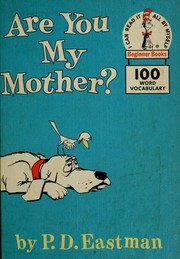
Are You My Mother?
A newborn bird falls from the nest and asks a kitten, a hen, a dog, a cow, a plane and a giant Snort if any will be his mother.
2,351-word summary · 10 min read
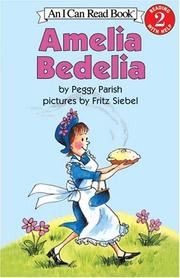
Amelia Bedelia
A literal-minded housekeeper follows her employer's list to disastrous and funny effect in the 1963 picture book that made wordplay a children's staple.
2,038-word summary · 9 min read
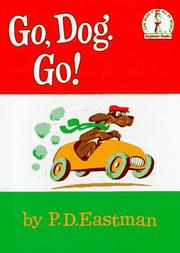
Go, Dog. Go!
Dogs drive, work, play, and climb a tree for a party in this Beginner Book built on repetition, opposites, and one very unpopular hat.
2,196-word summary · 10 min read
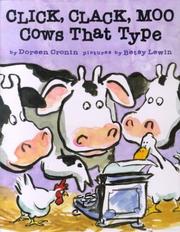
Click, Clack, Moo: Cows That Type
Cows learn to type, demand electric blankets, and go on strike in a deadpan picture book about negotiation and withheld labor.
2,617-word summary · 12 min read
Frog and Toad Are Friends
Five short stories about a cheerful frog and a grumpy toad who need each other for waking up, swimming, and waiting for the mail.
1,969-word summary · 9 min read
The Snowy Day
Peter in his red snowsuit explores fresh snow, from footprints and angels to a melted pocket snowball, in Keats classic winter day.
2,375-word summary · 11 min read
The Little Engine That Could
Watty Piper follows a stranded toy train past proud engines that refuse, to a small blue switcher who agrees to try the mountain and pulls her chanting load…
2,311-word summary · 10 min read
Stellaluna
A baby fruit bat falls into a bird nest, learns to perch and eat bugs, then reunites with her mother in Cannon's acclaimed 1993 picture book about difference…
2,486-word summary · 11 min read
The Jungle Book
Mowgli, raised by wolves in the Seeonee Hills, learns the Law from Baloo and Bagheera while Shere Khan circles. Kipling's 1894 story collection.
2,799-word summary · 12 min read
Aesop's Fables
Short animal tales of hares, foxes, ants, and wolves that still sting: old fables in plain modern English.
2,916-word summary · 13 min read
The Twits
Mr. and Mrs. Twit trade vile pranks and torment caged monkeys until the birds and monkeys flip the house on them.
2,864-word summary · 13 min read
Fantastic Mr. Fox
Mr. Fox raids three cruel farmers to feed his family, then outdigs tractors and a siege to host a feast underground.
2,910-word summary · 13 min read
Cloudy with a Chance of Meatballs
A grandfather tells of Chewandswallow, where soup rains and meatballs fall, until giant food storms force everyone to flee.
2,873-word summary · 13 min read
Chicka Chicka Boom Boom
Letters race up a coconut tree, tumble down with a boom, then climb again with help in this chant classic.
2,120-word summary · 9 min read
Mrs. Frisby and the Rats of NIMH
A widowed mouse races the spring plow to save her sick son Timothy, and finds help from the intelligent rats of NIMH hiding under the rosebush.
3,159-word summary · 14 min read
True Story of the Three Little Pigs
A. Wolf tells his side from the Pig Pen: he only wanted sugar for a cake, had a bad cold, and sneezed. You decide.
2,975-word summary · 13 min read
Alexander and the Terrible, Horrible, No Good, Very Bad Day
Alexander has one bad day from gum in his hair to bedtime, while his family copes and his mother stays honest.
2,548-word summary · 11 min read
One Fish, Two Fish, Red Fish, Blue Fish
Counting fish and silly creatures from here to there, with rhymes for beginning readers.
1,900-word summary · 8 min read
Madeline
Ludwig Bemelmans's 1939 Madeline: the twelve girls in Paris, Miss Clavel, the midnight appendix scare, and why the smallest girl became a classic.
2,944-word summary · 13 min read
The Polar Express
A doubting boy rides a night train to the North Pole and keeps a bell only believers hear.
2,195-word summary · 10 min read
The Lorax
The Once-ler fells Truffula Trees for Thneed greed despite the Lorax, who speaks for the trees, warning him to stop.
2,563-word summary · 11 min read
Goodnight Moon
A small bunny says goodnight to each object in the green room in this 1947 bedtime classic.
2,600-word summary · 12 min read
The Very Hungry Caterpillar
Eric Carle's hungry caterpillar eats through the week and turns into a butterfly: what the holes, counts, and days teach, and why kids still ask for it again.
2,413-word summary · 11 min read