
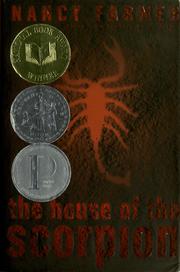
The House of the Scorpion
2,527-word summary 11 min read 380 pages in the book
- First published
- 2002
- Publisher
- Atheneum Books for Young Readers
- Pages
- 380
- ISBN
- 9780689852220
- Series
- Matteo Alacran (#1)
Reading options
What's inside (10 sections)
The scene I keep returning to is a boy pulling back a sheet in a hospital room to show two friends a clone with its brain destroyed. Tom does it out of spite, and it lands on the reader as hard as it lands on Matt and Maria. That is the book in miniature: a child's curiosity turned into a weapon, and a machine underneath the whole country that nobody wants to name out loud.
Nancy Farmer published it in 2002 with Atheneum Books for Young Readers, an imprint of Simon & Schuster, at 380 pages. It won the National Book Award for Young People's Literature that year and took Newbery and Printz Honors in 2003. It opens the Matteo Alacran series. People file it under dystopia, and the label fits, but it misses the pulse. This is a coming of age novel first, a boy working out whether he counts, with a drug economy and a border wrapped around him.
I had heard it described as a science fiction thriller. It is that for maybe a hundred pages. Then it slows into something more uncomfortable, a study of how a household teaches a child his own worth, and the thriller machinery comes back only at the end.
The boy in the poppy field
Opium is a strip of poppy farmland wedged between the United States and Aztlan, the country that used to be Mexico. It exists because two governments found it useful to have a place where the unpleasant work could happen out of sight. Matteo Alacran, El Patron, has ruled it for over 140 years. The fields are worked by eejits, people with computer chips in their skulls who can follow orders and nothing else. They do not talk. They do not complain. Farmers and workers who cross the wrong people become eejits, and the transformation is treated as a routine cost of doing business.
Matt grows up in a small house in those fields with Celia, the cook, the only person who has ever held him. He is six before he understands there are other children. Celia keeps him hidden, washes him, feeds him, and will not explain why the door stays shut. When Steven, Emilia, and Maria find him and carry him up to the big house, they think they have discovered a stray. Mr. Alacran's reaction is the first real information Matt gets about himself. The man is not curious. He is disgusted, the way you are disgusted by a rat in a cupboard.
What follows is the worst stretch of the book and the one I would warn sensitive readers about. Matt is handed to Rosa, a maid who enjoys cruelty, and to a doctor named Willum who treats him as a specimen. He lives in filth, eats scraps, is strapped down, is told he is not a person. Farmer does not soften it with comedy or cut away. The humiliation is specific: dirty clothes, a locked door, adults who talk over him as if he were furniture.
Celia and Maria get him out. That rescue matters, because it establishes the pattern the novel keeps testing. Matt survives on the stubborn love of a few people, not on the goodwill of institutions. Every adult with power in this book either wants something from him or cannot be bothered to protect him.
Lessons in the big house
El Patron meets Matt and, to everyone's confusion, likes him. He orders that the boy be educated, protected, and given a bodyguard. This is where the book's best character walks in. Tam Lin is a large, scarred, funny man who teaches Matt to ride, to shoot, to swim, to keep his word, and to look at a situation and decide what kind of person he wants to be in it. Their conversations are the moral spine of the novel. Tam Lin does not tell Matt that he is good. He tells him that being good is a choice you make repeatedly, sometimes when it costs you, and that a man who has done terrible things is not excused by them but is not finished either.
Matt turns out to be quick. He is good at schoolwork and better at music, and the household starts to treat him as a favorite, which is more dangerous than being treated as a pest. El Patron's relatives resent him. Tom, the legitimate grandson, is a bully with a streak of real intelligence, and he understands earlier than Matt that a clone with privileges is still a clone. The servants understand it too. Their politeness has a ceiling, and Matt keeps bumping into it.
The birthday party is the turn. Matt, showing off in front of guests, demands that Maria kiss him. She is furious, and rightly so. He has treated her like a prize in front of people who already think he is property, and he has done it because he wanted to prove something to the room. Tom then takes Matt and Maria to see the clone with its brain destroyed, kept alive as spare parts. Maria stops speaking to Matt after that. He has humiliated her, and he has also been shown what he is, and neither of them can unsee it.
Then a dog dies and Matt is blamed. The accusation sticks because everyone is ready to believe it. The truth is that Felicia, Tom's mother, killed the animal, and the episode shows how easily a community can agree on a lie about a boy it has already decided is not quite human. Maria forgives him at El Viejo's funeral and makes him promise to live morally. It is a strange, heavy promise for two children to make over a grave, and it holds the rest of the book together.
What the clones are for
Matt finds out gradually, which is worse than finding out at once. Clones in Opium are grown for organs. Hearts, kidneys, corneas, skin: the bodies in the hospital are an inventory, and the eejits are the labor, and the poppies are the money. Matt convinces himself that El Patron would never let it happen to him. The reasoning is childish and completely believable. He is special, he is loved, he is the old man's favorite, and none of that is the same as being safe.
Tam Lin's history complicates everything. He was a terrorist once, and a bomb he built killed twenty children. He carries that. He does not ask to be forgiven, and he does not pretend the dead were collateral damage in a worthy cause. His insistence that character is chosen, not inherited, is aimed at Matt but also at himself. It is the book's answer to the question the clone raises. Nature gives you a body and a set of talents. What you do with them is yours.
El Patron has a heart attack. Matt is rushed to the hospital, becomes sick himself, and learns that his body is being prepared as a replacement. El Patron survives with a transplant from another clone, and Matt goes home believing he has been spared. The reader knows better, or suspects, and the gap between Matt's hope and the reader's dread is where the last hundred pages get their tension.
At Steven and Emilia's wedding, El Patron collapses again. Matt is taken to the hospital to give up his heart. Celia stops it by confessing that she has been feeding him poison for years, small doses, enough to ruin his organs for transplant. She has been poisoning the boy she raised in order to keep him alive. That is the most complicated act of love in the book, and Farmer does not make it easy to admire. Celia is not a saint. She is a woman who made a calculation and kept it secret from the person it would cost the most.
El Patron dies. Mr. Alacran orders Tam Lin to kill Matt. Tam Lin, who has spent years teaching the boy to choose, chooses. He helps Matt over the mountains into Aztlan.
Aztlan and the Lost Boys
The first two thirds of the book happen in a mansion; the last third is a refugee road. Matt falls in with the Keepers, who run a camp of orphaned children called the Lost Boys, kids whose parents were arrested or killed crossing into Opium. The place runs on a mixture of charity and exploitation that feels familiar. The children are fed and housed and also used, and the adults who run the camp have their own priorities.
Matt escapes with Chacho, Fidelito, and Ton-Ton, three boys with distinct voices and quick loyalties. Fidelito is small and attached. Chacho is older and harder. Ton-Ton is the one who notices things. Their scenes are the warmest in the novel, partly because none of them care that Matt is a clone. They care whether he shares food and whether he can run.
Then he finds Maria, working at a convent with her mother, Esperanza. Esperanza is an activist, and she gives Matt the information that changes the scale of the story. Opium is on lockdown. The border economy has frozen. Only El Patron's DNA can reopen the country's systems, and Matt carries that DNA. He is not just a boy on the run. He is the genetic copy of a drug lord, and therefore the only person who can walk into the country's security apparatus and be recognized as its owner.
That revelation is the novel's cleverest turn, because it converts a survival story into a political one without letting Matt off the hook. He could disappear into Aztlan. Nobody would blame him. Instead he goes back.
The house of the dead
What he returns to is a tomb. El Patron left poisoned wine for the family and the servants at his funeral, and most of them drank it. Only Celia and a few others are alive. Tam Lin knew about the wine and drank it anyway, as atonement for the children he killed. That detail is the book's hardest sentence, and Farmer gives it no drumroll. A man chooses his death because he has been carrying a debt, and the choice is both noble and wasteful at once.
Matt is furious, and he stays. He stays with Maria, with Celia, with the Lost Boys, to try to undo what El Patron built. The ending is not a coronation. It is a boy standing in a ruined house deciding that the only response to an inheritance of cruelty is work, and the work is not romantic. There are crops to replant, eejits to free or bury, and a border to explain to people who have every reason to hate him.
I found the ending's optimism hard won rather than easy. Matt does not get a speech about hope. He gets a list of things to do and a few people willing to do them with him.
The argument underneath
The novel's central question is not whether clones are human. It is whether being made by someone gives that someone a claim on you. El Patron believes it does. He made Matt, so Matt is his organ bank, his heir, his property, depending on the day and the mood. Matt's answer is that he was made, and then he became. The becoming happens in small scenes: learning a song, keeping a promise to Maria, refusing to shoot, choosing to come back across a border when he could have stayed away.
Farmer is good on the drug economy as a system rather than a villain. Opium exists because the United States and Aztlan would rather have the poppies on a strip of land between them than in their own countries. The eejits are the human cost of that arrangement, and the novel never lets you forget that the comfortable characters are comfortable because of them. The border is not scenery. It is the machine, and everyone in the book is either feeding it or caught in it.
The violence is unflinching. Children die, a dog is killed, a clone is kept alive with no mind, a man drinks poison at a funeral. Farmer does not linger for shock value, but she does not look away either. The result is a book that trusts its readers with the actual stakes of its premise, which is rarer in young adult fiction than it should be.
The moral center is Tam Lin, not Matt. Matt is the one who has to live with the answers. Tam Lin is the one who has already failed and keeps teaching anyway, which is a more interesting position. His line about choosing what you are is easy to quote and hard to live, and the book knows it.
Where it strains
Not everything works. The villains are thin. Mr. Alacran is a snob with a temper, Rosa is cruelty with an apron, Tom is a bully who occasionally says something sharp. El Patron is the exception, mostly because his charm and his appetite are so specific. The rest of the family blurs into a crowd of grasping relatives, and I stopped trying to remember which cousin wanted which piece of the estate.
The long middle of tutors, lessons, and household maneuvering can drag. There is a stretch where Matt is being educated and observed and tested, and the plot moves in small increments while the reader waits for the other shoe. The schoolroom chapters are doing thematic work, showing how a clever child is flattered into compliance, but they are doing it slowly. A reader who wants the chase to start early will get restless.
The final movement is rushed. The return to Opium, the discovery of the poisoned funeral, and Matt's decision to stay all happen quickly, and characters who should have a scene get a paragraph. The Aztlan sequence has the opposite problem: it introduces the Keepers, the Lost Boys, and half a dozen children in a short space, and I had to flip back to keep Chacho and Fidelito straight. Esperanza arrives late and carries a lot of exposition, which is a lot to ask of a character we have just met.
None of this ruins the book. It means the novel is better at its questions than at its architecture. The first hundred pages are close to perfect, the last fifty are too fast, and the middle is a long walk through a house that is more interesting in memory than in the moment.
What stays
I finished it thinking about the hospital, the sheet, the clone with the ruined brain, and about how quickly a child can be taught that another child is not a child. The House of the Scorpion is a young adult novel that assumes its readers can handle a body count and a moral argument at the same time. It is not subtle about its politics, and it does not need to be. What I keep is Matt at the end, in a house built on other people's suffering, deciding to stay and work. Not redeemed. Not forgiven. Just there, with a promise to keep.
FAQ
Is The House of the Scorpion the first book in a series?
Yes. It is the first book in the Matteo Alacran series by Nancy Farmer, and the story continues in The Lord of Opium.
What age group is The House of the Scorpion written for?
It is a young adult novel, though it includes violence, dehumanization, and medical exploitation that may be too intense for younger readers.
Does the novel explain what happens to Matt after the ending?
The novel ends with Matt choosing to stay in Opium and rebuild, and the sequel The Lord of Opium continues from that decision.
Similar books
More from Matteo Alacran first, then related titles.
Life As We Knew It
Sixteen-year-old Miranda keeps a diary while an asteroid strike on the moon brings tsunamis, blackouts, and a frozen year of hunger to her Pennsylvania town.
2,485-word summary · 11 min read

Wither
In a future where women die at twenty, sixteen-year-old Rhine is sold as a bride to a wealthy stranger and plots an escape from a beautiful prison.
2,395-word summary · 11 min read
Never Fade
Ruby, now a leader in the Children's League, must track down the boy whose memories she erased, because he holds the only proof of what caused the disease that…
2,188-word summary · 10 min read
Among the Hidden
Twelve-year-old Luke, an illegal third child, befriends Jen and faces the cost of stepping out of hiding.
2,923-word summary · 13 min read
The Infinite Sea
Cassie and Squad 53 wait out winter in a hotel while Ringer is retaken and learns the truth behind the 5th Wave.
2,985-word summary · 13 min read
The Knife of Never Letting Go
Todd Hewitt flees Prentisstown with silent Viola as Noise exposes the town lie, hunted by Aaron and Mayor Prentiss toward Haven and a cure rumor.
2,512-word summary · 11 min read

The Kill Order
Mark survives flares and Flare virus as WICKED forms thirteen years before maze.
2,129-word summary · 9 min read

The Death Cure
Thomas refuses WICKED's final test, remembers too much, and runs with the Gladers toward a last cure and a ship north.
2,955-word summary · 13 min read
The 5th Wave
Cassie Sullivan crosses ruined Ohio to save Sammy after four alien waves, trusting Evan Walker while doubting him.
3,063-word summary · 14 min read
The Scorch Trials
Thomas and the Gladers cross a burned wasteland to reach haven while WICKED watches.
2,097-word summary · 9 min read
The Maze Runner
Maze Runner retold: Thomas wakes in Glade, walls move, Grievers sting, Teresa triggers end.
1,907-word summary · 8 min read
The Giver
Lois Lowry's The Giver retold: Jonas's Assignment, the memories, release, and the sled ride out.
2,510-word summary · 11 min read
The Hunger Games
Suzanne Collins's The Hunger Games explained: the reaping, Rue, the tracker jackers, the nightlock berry standoff, and what the arena is really for.
2,295-word summary · 10 min read
Catching Fire
Suzanne Collins's Catching Fire explained: the Quarter Quell, the arena's secret, Finnick and Johanna, and the moment the Games turn into a rescue.
2,459-word summary · 11 min read

Iron Widow
Wu Zetian enlists to avenge her sister, kills her pilot, and becomes an Iron Widow in a mecha Huaxia where the machines are built to kill women.
2,444-word summary · 11 min read
Wilder Girls
At a quarantined boarding school off Maine, three girls with strange mutations search for a missing friend and learn what the adults have hidden.
2,594-word summary · 12 min read

Ms. Marvel, Vol. 1: No Normal
Kamala Khan, a Jersey City teenager and Carol Danvers fan, gains shapeshifting powers and has to decide what kind of hero she wants to be.
2,579-word summary · 11 min read

The Age of Miracles
A California girl grows up while the Earth's rotation slows, and ordinary adolescence continues alongside slow catastrophe.
2,417-word summary · 11 min read

Starsight
Spensa Nightshade goes undercover aboard the Superiority space station Starsight to steal a hyperdrive, and finds a frightened bureaucracy where she expected…
2,568-word summary · 11 min read
Divergent: Official Illustrated Movie Companion
An oversize behind-the-scenes guide to the 2014 Divergent film, with casting stories, costume and set design, and scores of photos.
2,524-word summary · 11 min read
The Ask and the Answer
Todd and Viola are separated in occupied Haven, where the Mayor's Ask tortures suspects and the Answer plants bombs in the name of freedom.
2,265-word summary · 10 min read
Reveal Me
A Shatter Me novella told by Kenji, set between Defy Me and Imagine Me, as the rebels learn Anderson has taken hostages and Juliette faces Emmaline.
2,098-word summary · 9 min read
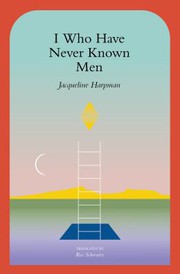
I Who Have Never Known Men
Forty women in a cage, one child who remembers nothing, and a nearly empty world above the bunker. Harpman's quiet, unexplained dystopia.
2,025-word summary · 9 min read
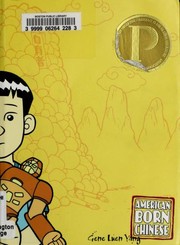
American Born Chinese
Three stories, a monkey king, a Chinese-American boy and a sitcom cousin, converge in a graphic novel about shame, assimilation and learning to accept yourself.
2,107-word summary · 9 min read
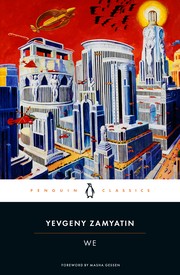
We
In a city of glass ruled by the Benefactor, a state engineer building a spaceship falls for a woman who wants to tear the One State down.
2,247-word summary · 10 min read
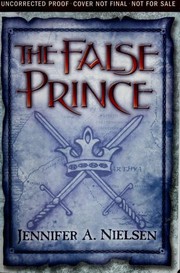
The False Prince
A nobleman buys four orphans and tells them only one will survive to impersonate the missing prince. The narrator, a defiant thief named Sage, has other plans.
2,044-word summary · 9 min read