
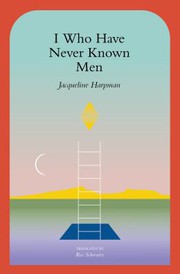
I Who Have Never Known Men
2,025-word summary 9 min read 184 pages in the book
- First published
- 1995
- Publisher
- Transit Books
- Pages
- 184
- ISBN
- 9781945492600
- Original title
- Moi qui n'ai pas connu les hommes
Reading options
What's inside (9 sections)
The first thing to know about this book is that it does not explain itself. Jacqueline Harpman published Moi qui n'ai pas connu les hommes in France in 1995 with Éditions Stock, and the English translation by Ros Schwartz followed in 1997. The edition I read is the 2022 Transit Books paperback, 184 pages, and it has the quality of a dream that stays coherent while you are inside it and collapses the moment you try to describe it to someone else. Forty women are held in a cage underground. One of them is a child who remembers nothing before the cage. There are three guards. No one knows why.
That is the setup, and Harpman does not cheat by giving us a reveal. The novel is the first-person account of the child, now an old woman, writing by hand in a comfortable bunker with a library, knowing she is dying. She says at the start that her story is over. Then she tells it.
The Cage
The narrator is the youngest of forty prisoners: thirty-nine adult women and one girl who is perhaps ten or twelve when the book begins. They live in a cage inside an underground bunker, watched by three silent, armed men who never speak to them. The women remember fragments of a previous life, husbands, children, cities, but the memories are dim and unreliable. The child remembers nothing. She does not know her name, her parents, or the world before.
The guards are not sadistic in the ordinary sense. They are remote. They feed the women, take them to wash, prevent suicide, and otherwise treat them as livestock. The child becomes obsessed with the youngest guard, a tall, slim man with blue eyes, and stares at him until he notices. She invents erotic fantasies she calls "eruptions," which are less about desire than about having a private life in a place designed to erase privacy. The novel is frank about her body and her curiosity without being explicit. It is the curiosity of someone who has never been taught what anything is for.
She also befriends Anthea, the most educated of the women, a former nursing student who becomes her teacher. Anthea answers questions about the body, the world, and the guards, and gradually the child learns to think in categories. She begins counting her heartbeats to measure time, which turns her into the group's living clock. That detail is one of the novel's best inventions. Time in the cage has no markers, so a girl with nothing else to do becomes the marker.
The title is a fact about her, not a complaint. She has never known men in the ordinary sense: not as lovers, not as fathers, not as the guards who are present but silent. The men in the book are a bus full of skeletons and three guards who run away. The novel is about what a woman becomes when the entire structure of human relations has been removed, and it refuses to treat that removal as either liberation or simple tragedy. She is free in a way no one would choose. She is also, by the end, a writer. Both things are true.
The Escape
One day a siren sounds while a guard is opening the hatch with food. The guards panic and flee, leaving the keys in the lock. The child retrieves the key and frees the women, who climb roughly a hundred steps to the surface for the first time in years. What they find is not a rescue.
Above ground is an immense, featureless plain with almost no seasons, no animals, and no sign of civilization. They cannot even be sure they are on Earth. The sky is wrong, or perhaps it is the absence of everything else that makes it feel wrong. They loot the bunker for tools, canned goods, and frozen meat. They build a latrine, bathe in a river, and eat their first meal that is not boiled. The ordinary pleasures are described with the intensity of religious experience, because for these women they are.
Dorothy, the eldest and most respected, insists that they walk in search of answers. The group sets out across the plain. The narrator hears Rose sing and experiences music and color for the first time, which is one of the most beautiful passages in the book. She has spent her life underground and has never seen a horizon. Now she has a horizon, and it is empty.
The Bunkers
After about twenty-six days they find a cabin identical to the one above their prison. They descend and find a bunker containing a locked cage with the bodies of thirty-nine women. Later they find another bunker filled with male corpses. For months or years they wander from mass grave to mass grave, leaving a circle-over-cross sign at each one so they can find their way and so the dead are marked.
The pattern is unmistakable and never explained. Someone built these bunkers. Someone ran these cages. The women were part of a system, and the system failed or was abandoned. Harpman refuses to say who built it or why. The novel is not interested in the conspiracy. It is interested in what people do after the explanation fails.
Dorothy, who has a bad heart, refuses to stop walking and dies on a stretcher the women carry. Mary-Jane, suffering from what Anthea identifies as cancer, hangs herself in a men's bunker. The remaining women abandon the search and build a village by a river, constructing stone and mud houses. Couples form. Anthea explains sexuality and reproduction to the narrator, who realizes that her own body will never develop or bear children. The cage has taken that from her too, though no one says it cruelly.
The Village
The village section is the heart of the book and the reason it is more than a survival story. The women create a small society. They assign work, raise what they can, bury their dead, and develop rituals. The narrator becomes the group's euthanist. Angela, dying and in pain, asks Anthea to stab her through the heart. Anthea cannot, so the narrator offers. Anthea teaches her where to place the knife. She then performs mercy killings for many women, including Anna, partially paralyzed after a stroke, and Frances, who breaks her legs and asks to die.
This is not sensationalism. Harpman writes it with the flat attention of someone describing a job. The narrator is not like the other women, and she knows it. She was formed in the cage, without a before, and the village cannot give her the memories it gives the others. Her detachment makes her useful and isolates her. She is the one who can do the necessary thing, and she is also the one who cannot fully join the life she is preserving.
Anthea dies of grief and exhaustion, asking the narrator, who recoils from physical contact, to hold her. She does, and later says she does not know exactly when Anthea stopped breathing. That scene is the emotional center of the novel. Two women who have shared a cage and a village, one dying and one learning to touch. The book does not sentimentalize it. It just holds still for a moment.
The Last Two
At last only the narrator and Laura remain. Laura has a healthy body but no will to live. She fades and dies on a bench outside their cottage, and the narrator says, "My last tie had been cut." She buries her, packs supplies, and walks east alone for years, finding only empty plains and more corpse bunkers, including an abandoned bus holding the skeletons of some twenty-three guards with weapons, gas masks, and a gardening handbook. The bus is one of the few concrete clues about the world before, and it raises more questions than it answers. The guards had gas masks. They had a gardening handbook. They were prepared for something, and whatever it was, it happened without them. The narrator does not speculate. She records. That refusal to theorize is what makes the empty world feel so large. A lesser novel would have given us a radio broadcast or a journal explaining the catastrophe. Harpman gives us a bus and a stack of bones and lets us sit with them.
After about two years of solo wandering she finds a stone mound hiding a spiral staircase and an eighty-step descent into a different kind of bunker: a wood-panelled, carpeted residence with a kitchen, hot running water, a bath, a bed, armchairs, and a bookshelf. Shakespeare, Dostoevsky, Don Quixote, and works on astronautics. She makes it her home base for more than twenty years. She learns to read fluently and to write. She sees her reflection in a mirror for the first time. She learns of a world of astronauts and literature that she can only partly understand.
That library is the novel's final argument. The world that built the cages also built the books. The same civilization that treated these women as livestock produced Shakespeare and space travel. Harpman does not resolve the contradiction. The narrator reads and cannot reconcile the two. She is a person made by the worst of the world, trying to make sense of its best.
The Ending
In old age she grows lonely, screams Anthea's name, builds enormous signal fires, and finally develops the same uterine cancer she saw kill Mary-Jane. The line she writes is devastating: "Strange that I am dying from a diseased womb, I who have never had periods and who have never known men." She decides to write her life story for an unknown reader who may never exist. She arranges cushions so her body will be found sitting upright with dignity, sharpens a knife, and intends to pierce her own heart when she finishes. The novel ends before she does it.
The ambiguity is not a trick. The whole book has been about living without answers, and the ending honors that. She does not know who imprisoned her, why the world is empty, or whether anyone will read her account. She knows that she existed, that she loved Anthea, that she learned to read, and that she has a story. That is enough to justify the writing.
Why It Stays With You
I have read a lot of dystopian fiction, and most of it is eager to explain the catastrophe. Harpman is not. The cage is not a metaphor for a specific regime, though readers have mapped it onto patriarchy, fascism, and the surveillance state. It is a condition. The women are stripped of history, agency, and reproduction, and then the book asks what is left. The answer is not heroic. It is stubborn, ordinary, and often cruel.
The prose is spare in a way that makes the horror land. Schwartz's translation keeps a flat, first-person cadence that sounds like testimony. There are few metaphors and almost no rhetorical flourishes. The effect is claustrophobic even when the narrator is standing on an open plain.
The weaknesses are deliberate choices that some readers will find frustrating. Nothing is explained. The men are barely characters. The middle section with the village can feel repetitive, because life there is repetitive. The novel withholds the pleasure of a solution. If you need your dystopias to have a cause and a resistance, this is not that book.
What it offers instead is a portrait of a woman who was never allowed to be a person and becomes one anyway. She learns to read at an age when most people have stopped. She learns to touch when Anthea is dying. She writes a book. The world is empty and she fills it with sentences. That is not hope in the usual sense. It is something harder and more credible: the decision to leave a record, even if no one comes. The book is bleak, and it is also stubbornly alive, which is why readers keep pressing it into each other's hands.
FAQ
Why were the women imprisoned?
No one knows. The guards flee, the women escape, and they find only empty plains and bunkers full of corpses. Harpman deliberately never explains who built the cages or why.
Who is the narrator?
She is the youngest prisoner, called the child by the others, and she has no memories of life before the cage. She becomes the group's timekeeper and later its euthanist.
How does I Who Have Never Known Men end?
She develops uterine cancer, writes her life story for a reader who may never exist, and prepares to kill herself with a knife. The novel ends before she does it.
Similar books

Iron Widow
Wu Zetian enlists to avenge her sister, kills her pilot, and becomes an Iron Widow in a mecha Huaxia where the machines are built to kill women.
2,444-word summary · 11 min read
The House of the Scorpion
A clone raised in a drug lord's poppy fields learns what he was made for and chooses what to do with the life he was given.
2,527-word summary · 11 min read

The Age of Miracles
A California girl grows up while the Earth's rotation slows, and ordinary adolescence continues alongside slow catastrophe.
2,417-word summary · 11 min read
Her Body and Other Parties: Stories
Eight stories where bodies, medicine and old fairy tales get taken apart, with a green ribbon running through the whole book.
2,997-word summary · 13 min read

Wither
In a future where women die at twenty, sixteen-year-old Rhine is sold as a bride to a wealthy stranger and plots an escape from a beautiful prison.
2,395-word summary · 11 min read

The Memory Police
On an unnamed island, ordinary things keep vanishing from memory, and a novelist hides her editor from the police who make sure the vanished stay forgotten.
2,440-word summary · 11 min read

Never Fade
Ruby, now a leader in the Children's League, must track down the boy whose memories she erased, because he holds the only proof of what caused the disease that…
2,188-word summary · 10 min read
The Twelve
The middle volume of the Passage trilogy braids the year America died, a picnic massacre decades earlier, and the survivors' war against the twelve master…
2,089-word summary · 9 min read
Severance
Candace keeps office routine as fever empties New York, then joins survivors.
2,340-word summary · 10 min read
The School for Good Mothers
A mother sent to a reform school fights to keep her daughter under cold surveillance and strict rules.
2,114-word summary · 9 min read
The Year of the Flood
Toby and Ren live through the plague apart, guided by God's Gardeners, then join to find Amanda.
2,422-word summary · 11 min read
Life As We Knew It
Sixteen-year-old Miranda keeps a diary while an asteroid strike on the moon brings tsunamis, blackouts, and a frozen year of hunger to her Pennsylvania town.
2,485-word summary · 11 min read
Among the Hidden
Twelve-year-old Luke, an illegal third child, befriends Jen and faces the cost of stepping out of hiding.
2,923-word summary · 13 min read
The Running Man
Out of work in a broken 2025, Ben Richards enters a televised manhunt where each hour alive pays cash.
2,922-word summary · 13 min read
The Infinite Sea
Cassie and Squad 53 wait out winter in a hotel while Ringer is retaken and learns the truth behind the 5th Wave.
2,985-word summary · 13 min read
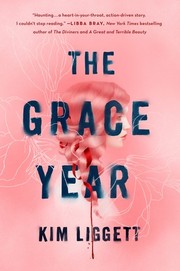
The Grace Year
In Garner County, Tierney James faces her grace year exile, where girls are blamed for magic and must survive a year outside the fence before they can return…
2,817-word summary · 13 min read
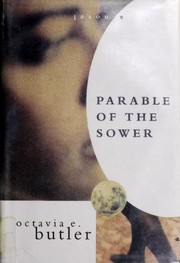
Parable of the Sower
Lauren Olamina flees burning Robledo with her Earthseed verses and walks north to plant a new faith.
2,311-word summary · 10 min read
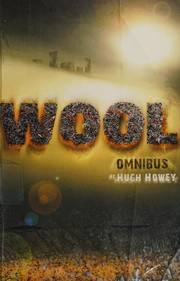
Wool Omnibus
In a buried silo, a sheriff asks to go outside, and a mechanic learns why no one returns from cleaning.
2,095-word summary · 9 min read
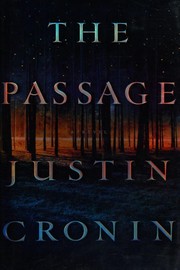
The Passage
A failed Army experiment makes blood-hungry virals, and a quiet girl named Amy may hold the answer a century later.
2,755-word summary · 12 min read

The Power
Girls gain electric skeins and the world reorders through four witnesses.
2,070-word summary · 9 min read
The Kill Order
Mark survives flares and Flare virus as WICKED forms thirteen years before maze.
2,129-word summary · 9 min read

Tender Is the Flesh
After a virus makes animal meat lethal, states legalize breeding humans for meat. Marcos Tejo grieves at a processing plant when he is given a live female…
2,372-word summary · 11 min read
Attack on Titan, Vol. 1
Humanity hides behind three walls until the Colossal Titan breaks Wall Maria and Eren Yeager vows to destroy every Titan.
2,357-word summary · 10 min read
Blindness
A white blindness sweeps a city, and an eye doctor's wife who can still see guides seven strangers through camp and ruin.
2,772-word summary · 12 min read
The Testaments
Aunt Lydia, Agnes and Nicole conspire to bring down Gilead fifteen years later.
2,516-word summary · 11 min read
The Death Cure
Thomas refuses WICKED's final test, remembers too much, and runs with the Gladers toward a last cure and a ship north.
2,955-word summary · 13 min read
The 5th Wave
Cassie Sullivan crosses ruined Ohio to save Sammy after four alien waves, trusting Evan Walker while doubting him.
3,063-word summary · 14 min read