

Wither
2,395-word summary 11 min read 368 pages in the book
- First published
- 2011
- Publisher
- Simon & Schuster Books for Young Readers
- Pages
- 368
- ISBN
- 9781442409057
- Series
- The Chemical Garden Trilogy (#1)
Reading options
What's inside (9 sections)
The first chapter of Wither does not waste time being polite. Rhine Ellery is in the back of a van with other girls, kept in the dark so long that they lose track of their eyelids, and she hears a gunshot from the van where the rejected girls were taken. Then she wakes in a satin bed in a mansion, sick from medication, and a boy tells her she has been asleep for two days. That is the bargain the novel offers: a soft bed bought with the sound of a gunshot. Lauren DeStefano's debut, published by Simon & Schuster Books for Young Readers in 2011 and running 368 pages, is the first book of The Chemical Garden Trilogy, and it is much more interested in that bargain than in the science that caused it.
A world with a clock in it
The world of the novel is a botched utopia. Scientists of the first generation engineered babies free of disease and defects. It worked, in the sense that the first generation is healthy and immune. It also created a virus that kills their children and grandchildren: women at twenty, men at twenty-five. Nobody knows why. The first generation runs what is left of the world, and the young die on schedule while doctors search for a cure.
The result is a society that treats young women as scarce resources. Gatherers kidnap girls off the street. The lucky ones are sold as brides to rich men. The others go to laboratories, brothels, or a shallow grave. Rhine is sixteen, living in Manhattan with her twin brother, Rowan, in their dead parents' house. Their parents were scientists killed in a lab explosion when the twins were twelve. Rhine and Rowan have heterochromia, one blue eye and one brown, and the book makes that detail matter: Rhine believes her eyes are why she was chosen instead of shot.
She is sold to Linden Ashby, a twenty-one-year-old architect who lives on a wealthy estate in Florida. Linden already has a wife, Rose, who is twenty and dying. At the start of the novel he takes three more: Jenna, eighteen, who is angry and tired; Cecily, thirteen, who is thrilled; and Rhine, who wants to go home. The wedding is closer to an arrangement than a ceremony. The wives are installed in a wing of the mansion, given clothes and food and servants, and watched.
The worldbuilding is thin in places. We get Manhattan's poverty and Florida's wealth, the Gatherers, the orphanages, the brothels, and the first generation's vague authority, but not much about how the country functions, what happened to the rest of the world, or why the virus has not been studied to death. The novel is not interested in the mechanics of the plague. It is interested in the feeling of living inside a countdown.
The house and its wives
The mansion is the best thing in the book. It is all marble, gardens, silk, and locked gates. Rhine has a room with a closet full of dresses, a bathroom, a balcony, and a wing she cannot leave without permission. The luxury is real, and that is the problem. The danger here is comfort, not hunger. Rhine has to keep reminding herself that she is not a guest.
The sister wives are the novel's richest relationship. Rose, the first wife, is bedridden and worn out by Vaughn's medicines. She is kind to Rhine and resigned to her own death. She tells Rhine that she and Linden are perfect for each other because they have the same amount of time left, which is one of the cruelest compliments in the book. Jenna is eighteen, sharp, and closed off. She came from the Scarlet District, a brothel, and she was taken with her two younger sisters, who were killed when they were not chosen. She has nothing to go back to, so she would rather die in comfort than run. Cecily is thirteen, an orphan who wants a family so badly that she treats the marriage as a rescue. She plays piano, asks for attention, and is both a child and a rival. Rhine's feelings about her move between irritation, protectiveness, and dread.
Then there is Gabriel, the servant assigned to Rhine. He is eighteen, bought at an orphanage auction when he was nine, and he moves through the house like someone who has learned not to be seen. He and Rhine talk in the corridors and the library, in the small spaces the household leaves unguarded. He is gentle, literate, and interested in boats. The romance between them is the engine of the escape plot, although it is also the thinnest part of the book. They have chemistry, but not enough shared time for the depth the novel wants us to feel.
Rhine's plan is simple. She will be a good wife in public, win Linden's favor, and become First Wife. The title is a position of trust rather than a mark of seniority, with privileges: she can move through more of the house, attend events, and eventually get an elevator card that opens doors. She needs those doors. She also needs Gabriel, who knows the servants' routes, and she needs luck. For a long time she has none of those things.
The basement
Vaughn Ashby is the novel's real monster, and he is a monster with a laboratory. He is Linden's father, the Housemaster, a first-generation doctor who is trying to cure the virus. He controls the household, the money, and Linden. He is polite in a way that makes your skin crawl. When he looks at Rhine, he is not looking at a daughter-in-law. He is looking at a body with a useful lifespan.
Rose dies. Rhine and Gabriel, wandering where they should not be, see attendants pushing a gurney with Rose's body toward the basement. Later, Deirdre, Rhine's young maid, tells her that Vaughn experiments on the dead. Rose had a stillborn daughter, but Deirdre says she heard the baby cry after birth. Rhine starts to believe that Vaughn took the child, or killed it, to study it. The novel never gives a clean answer, which is the right choice. The suggestion is worse than a confirmation.
The middle of the book is a series of attempts. Rhine tries to run during a hurricane, breaks a window, and is nearly killed by flying debris. She is found and carried back. She recovers, and Gabriel admits he was afraid of losing her. They kiss. A noise in the hall interrupts them, and soon after Gabriel is reassigned to the basement. Rhine is left alone with Cecily, who is pregnant, and Jenna, who is counting down her own clock.
Linden is not a villain, and the book is careful about that. He is twenty-one, grieving Rose, and genuinely believes that his wives are his family. He shows Rhine his architectural drawings, takes her to parties, and almost kisses her. He is also the man who bought three girls and sleeps with a thirteen-year-old. His ignorance insulates him from the harm he causes. The novel wants us to feel both pity and disgust, and for the most part it earns that double response. The scenes where Rhine enjoys his attention are uncomfortable in a useful way. She is learning how captivity works, and her growing ease with him is part of that lesson.
Cecily gives birth to a son, Bowen. Vaughn suggests the name, and neither Linden nor Cecily knows that Linden had an older brother named Bowen who died of the virus. The christening of the baby with a dead child's name is one of the book's quietest horrors. Cecily is fourteen by then, and the novel treats her motherhood as both a triumph and a violation. It does not always know what to do with that contradiction. At times it plays the baby for warmth. At other times it lets the horror show.
Jenna's fire and the cost of escape
Jenna sets fire to the sitting room. It is a diversion, and it works. While the household runs with buckets and blankets, Rhine slips down to the basement, finds Gabriel, and plans the escape. The plan is almost derailed by Jenna's illness. She begins to show the signs of the virus and deteriorates much faster than Rose did. Rhine suspects that Vaughn is speeding it along, or that Jenna has been given something. Vaughn's treatments fail. Jenna dies early one morning.
Her death breaks the house open. Rhine grieves, Cecily grieves, and Linden retreats. Then Cecily confesses. She was the noise in the hall when Rhine and Gabriel first kissed. She told Vaughn. She also told him that Jenna had been helping Rhine. Rhine, hysterical, says that Cecily got Jenna killed. Cecily denies it, but the damage is done. The scene is ugly and believable. Cecily is a child who wanted to be the favorite, and her jealousy had consequences she did not understand. Rhine's cruelty toward her is also believable. Grief does not make people fair.
The escape happens in a snowstorm. Rhine leaves without saying goodbye to Cecily. She gives Linden a cryptic farewell, something that sounds like gratitude and is not. She goes through the storm to the gate. Gabriel arrives, helped by another attendant. They reach the docks and board a ship. Gabriel, who knows boats, sails them away. Rhine looks forward to finding Rowan. The book ends there, on the water, with the mansion behind them and the virus still in their blood. It is a cliffhanger, and it is meant to send you to Fever.
What the book is really about
Wither is usually described as a dystopian romance, and it is one, but the romance is not the most interesting thing in it. The most interesting thing is the way the world turns people into resources and then calls it family. The wives are chosen, dressed, fed, and displayed. Their bodies are the only thing that matters to the state and to Vaughn. Linden's affection is real, but it is built on the assumption that ownership can be love. Rhine's escape is a refusal to be a vessel. The title is a verb, and the book never lets you forget it: everything in the house is withering, including the people who believe they are safe.
The novel is also about complicity. Jenna survives by accepting the house. Cecily survives by believing in it. Rhine survives by pretending. Even Gabriel, who is kind, works inside the system and keeps his head down. Vaughn is the system's clearest face, but the system is made of ordinary people who look away. That is why the scenes with Linden are more unsettling than the scenes with Vaughn. Vaughn knows what he is doing. Linden does not want to know.
The sisterhood is the emotional core. The wives are competitors for a man's attention and for the privilege that comes with it. DeStefano lets them be petty, jealous, and tender by turns. The moments when they braid each other's hair or sit with Rose show what the competition looks like when the people in it are still human. That is more interesting than a simple solidarity story.
Where it wobbles
The book has real weaknesses. The world outside the mansion is sketchy. The first generation is mentioned but rarely seen. The virus functions as a clock rather than a biology. The Gatherers are terrifying in the opening and then disappear. The middle stretches repeat: Rhine walks the halls, Rhine remembers Rowan, Rhine plans, Rhine is watched. The prose is lush and readable, but it can also be repetitive, especially in the interior monologue. The first-person present tense gives the book immediacy, and it also flattens some scenes into a report of what Rhine notices.
The romance with Gabriel is the weakest thread. They have a few charged conversations and one kiss, and then the book asks us to believe that he is worth risking everything for. He is kind, but he is also a device: the good man inside the bad house. The escape depends on him and on Jenna's fire more than it depends on Rhine's own planning. Rhine is brave, but she is often passive. She spends a lot of the book waiting for a door to open.
The treatment of Cecily is the hardest thing to defend. A thirteen-year-old bride is a horror, and the novel knows it, but it also uses her pregnancy for warmth and drama. Linden's decision to sleep with her is not examined enough. The age gap between Rhine and Linden is smaller than Cecily's, but it is still a relationship between a captive and her owner. The book wants us to see Linden as a victim of his father, and he is, but he is also a man who benefits from the arrangement. The sympathy is right, but it is not always pressed hard enough.
The ending is abrupt. If you want a standalone, this is not one. The story continues in Fever and Sever, and the first book stops at the beginning of the next problem. That is a commercial choice, and it works as a hook, but it leaves the central question of the virus unanswered.
Who it is for
Wither is for readers who like their dystopias intimate rather than political, who want a fast, atmospheric book with a creepy house and a complicated set of sister wives. It is for readers who can hold sympathy and judgment at the same time, because the book asks that of you. It is not for readers who need rigorous science fiction, a complete arc, or a careful reckoning with the ethics of child marriage. It is also not for readers who are looking for a romance first. The love story is there, but it is not the point.
What I keep thinking about is the gunshot in the opening. The novel never lets you forget that Rhine's satin bed was paid for with the lives of girls who were not chosen. The mansion is warm, the food is good, and the garden is beautiful. That is the horror. The book is at its best when it trusts that contrast and does not try to make it pretty.
FAQ
What is Wither about?
It follows sixteen-year-old Rhine Ellery, who is kidnapped and sold as a bride in a future where women die at twenty and men at twenty-five.
Is Wither a standalone?
No. It is the first book of The Chemical Garden Trilogy and ends on a cliffhanger; Fever and Sever continue the story.
What happens to Rhine at the end of Wither?
She escapes the Ashby mansion with Gabriel during a snowstorm and they leave by boat, hoping to find her twin brother Rowan in Manhattan.
Similar books
More from The Chemical Garden Trilogy first, then related titles.

The House of the Scorpion
A clone raised in a drug lord's poppy fields learns what he was made for and chooses what to do with the life he was given.
2,527-word summary · 11 min read

Reveal Me
A Shatter Me novella told by Kenji, set between Defy Me and Imagine Me, as the rebels learn Anderson has taken hostages and Juliette faces Emmaline.
2,098-word summary · 9 min read

Never Fade
Ruby, now a leader in the Children's League, must track down the boy whose memories she erased, because he holds the only proof of what caused the disease that…
2,188-word summary · 10 min read

Under the Never Sky
Exiled from her Pod, Aria crosses a storm-scarred wilderness with Outsider Perry to find family and the fabled Still Blue.
2,572-word summary · 11 min read

Shadow Me
Kenji Kishimoto narrates for the first time as he joins Nazeera on a quiet mission after Restore Me, carrying painful secrets into Defy Me.
2,512-word summary · 11 min read
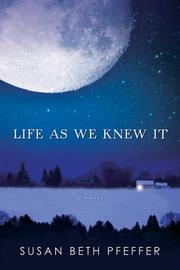
Life As We Knew It
Sixteen-year-old Miranda keeps a diary while an asteroid strike on the moon brings tsunamis, blackouts, and a frozen year of hunger to her Pennsylvania town.
2,485-word summary · 11 min read
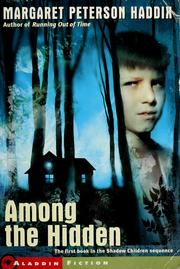
Among the Hidden
Twelve-year-old Luke, an illegal third child, befriends Jen and faces the cost of stepping out of hiding.
2,923-word summary · 13 min read
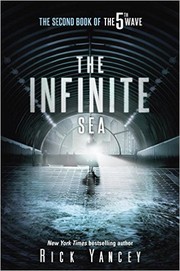
The Infinite Sea
Cassie and Squad 53 wait out winter in a hotel while Ringer is retaken and learns the truth behind the 5th Wave.
2,985-word summary · 13 min read

Requiem
Lena fights in the Wilds while cured Hana marries into Portland power.
2,232-word summary · 10 min read

Imagine Me
Juliette remembers who she was and storms the capital to end the Reestablishment for good.
2,090-word summary · 9 min read

The Kill Order
Mark survives flares and Flare virus as WICKED forms thirteen years before maze.
2,129-word summary · 9 min read

Pandemonium
Lena survives the Wilds and spies in New York after losing Alex at the fence.
2,314-word summary · 10 min read
Crossed
Cassia crosses the Outer Provinces canyons seeking Ky after labor camp, while Xander returns as medic with Rising secrets to shift her search.
2,322-word summary · 10 min read


Destroy Me
Shot by Juliette, Warner holds his base together while his father arrives with harsher plans for her.
2,556-word summary · 11 min read
The Death Cure
Thomas refuses WICKED's final test, remembers too much, and runs with the Gladers toward a last cure and a ship north.
2,955-word summary · 13 min read
The 5th Wave
Cassie Sullivan crosses ruined Ohio to save Sammy after four alien waves, trusting Evan Walker while doubting him.
3,063-word summary · 14 min read
Delirium
In a America where love is treated as disease, Lena Haloway counts down to her Cure until she meets Alex in Portland.
2,425-word summary · 11 min read

The Scorch Trials
Thomas and the Gladers cross a burned wasteland to reach haven while WICKED watches.
2,097-word summary · 9 min read


Shatter Me
Juliette Ferrars, whose touch kills, is locked up by the Reestablishment until Adam and Warner pull her into war.
2,115-word summary · 9 min read

The Maze Runner
Maze Runner retold: Thomas wakes in Glade, walls move, Grievers sting, Teresa triggers end.
1,907-word summary · 8 min read
Insurgent
Insurgent retold: Tris guilty after war, Erudite hunts Divergent, Amity talks, Candor serum.
1,951-word summary · 9 min read

The Hunger Games
Suzanne Collins's The Hunger Games explained: the reaping, Rue, the tracker jackers, the nightlock berry standoff, and what the arena is really for.
2,295-word summary · 10 min read

Divergent
Veronica Roth's Divergent explained: the five factions, Tris's choice of Dauntless, the aptitude test, and where the trilogy's premise starts to crack under…
2,494-word summary · 11 min read
Catching Fire
Suzanne Collins's Catching Fire explained: the Quarter Quell, the arena's secret, Finnick and Johanna, and the moment the Games turn into a rescue.
2,459-word summary · 11 min read

Iron Widow
Wu Zetian enlists to avenge her sister, kills her pilot, and becomes an Iron Widow in a mecha Huaxia where the machines are built to kill women.
2,444-word summary · 11 min read