
Reading options
What's inside (9 sections)
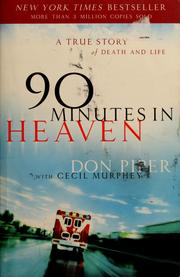
I am not the target audience for this book, which is part of why I wanted to read it. It has sold more than six million copies, spent years on the New York Times bestseller list, spawned a sequel, a study guide, a movie, and a small industry of debate among Christians and skeptics about what actually counts as death. I had absorbed the arguments secondhand for a decade without ever reading the source. So I sat down with the 2004 Revell edition, the original one Don Piper wrote with Cecil Murphey, to hear the account in its own voice rather than through the fight about it.
The short version: it is two books stapled together, and the better one is not the one in the title. The famous thirty pages describe the ninety minutes Piper says he spent in Heaven after a truck crushed his car on a Texas bridge in 1989. The other hundred and seventy pages describe thirteen months in hospitals and a man learning how to be a person again. The second book is the one I could not put down, and it is also the one that makes the first book mean something, which is not a compliment the book's marketing has ever known what to do with.
The bridge
Piper was thirty-eight years old on January 18, 1989, an ordained Baptist minister on staff at South Park Baptist Church in Alvin, Texas, driving home from a pastors' conference at Trinity Pines on the north shore of Lake Livingston. He made a last-minute decision to take his own car, a red Ford Escort, rather than ride with friends, which is the kind of detail that makes the whole story feel unbearable in retrospect, the way small choices always do when something enormous follows them.
South of the conference, on Highway 19 near Huntsville, he crossed the old bridge over the Trinity River. An eighteen-wheeler crossed the center line and hit him head on. The truck's driver was an inmate in a work program for the Texas Department of Corrections, a trusty, driving a truck that weighed as much as the bridge railing it pushed him against. The Escort folded. The roof came down onto Piper's head. The steering wheel went into his chest. The dashboard collapsed onto his legs. His left arm was torn off at the shoulder and ended up in the back seat area. His left leg was nearly severed. He was bleeding from his ears and his eyes.
When emergency crews reached him, they found no signs of life. They covered him with a tarp and moved on to other victims, because that is the arithmetic of triage, and left him there for roughly ninety minutes while waiting for the medical examiner to come and make it official. Four separate sets of EMTs, according to the book's account, examined him and declared him dead. In the language the book uses and its critics dispute, he died at 11:45 and un-died at 1:15.
Ninety minutes on the span
Here is what the skeptic in me wants to note, and the book itself does not hide: no medical examiner ever pronounced Piper dead. The "death" was the judgment of EMTs at a scene with multiple casualties, which is a serious judgment but not the same as a clinical declaration. This matters later, because it is the hinge of the whole debate about the book, and I give Piper and Murphey credit for presenting the facts openly enough that the argument can be had honestly.
While Piper was under the tarp, something happened that the book is built around. Another pastor at the same conference, Dick Onerecker, felt an inexplicable pull to go to the accident site, which he had no professional reason to visit. He arrived, identified himself as a minister, and asked to pray over the body. The EMTs told him the man was dead and to stay back. Onerecker, whose wife Anita was with him, insisted. He crawled under the tarp, laid a hand on Piper's shoulder, prayed, and then, because he could not think of anything else to do, began to sing the old hymn "What a Friend We Have in Jesus".
And Piper, from beneath the tarp, in a body the state had informally written off, began to sing along.
The book describes the EMT's face when it happened, and I believe the book. Whatever one makes of the ninety-minute claim, the singing under the tarp is the part of this story that no one has been able to explain away, and it belongs to Onerecker as much as to Piper. It is also, structurally, where the book quietly stops being about Heaven and starts being about people doing unreasonable things for each other.
What he says he saw
The Heaven account itself is brief, which surprised me given the title. Piper says he did not travel through a tunnel of light. One moment he was in pain on a bridge; the next he was standing, uninjured, in what he can only describe as another place entirely. He heard music, a choir of a size he says he cannot convey, and he saw colors and gates and streets and structures that the book describes in pearlescent and golden terms, drawn from the imagery of Revelation, which is the only vocabulary the experience left him with.
He says he met his great-grandmother. He says he felt a joy and a peace that made the concept of time meaningless, in the specific way people who have been through near-death experiences keep describing across cultures. And he says the experience ended before he reached the throne, before he saw God, cut off mid-song, which he attributes to God having other business for him and which the critical reading attributes to the fact that the whole thing lasted ninety minutes of unconsciousness.
There is one more detail in this section that I have not been able to shake, and it is a small one. Anita Onerecker, listening to Piper describe Heaven years later, realized that the hand Piper remembered holding there, the presence that anchored him through the whole experience, could not have been her husband's, because her husband was singing to him from outside the car, not with him in the vision. The book does not assert what the hand was. It just reports what Anita said, and leaves the reader holding the question.
The account's most honest chapter
The most honest page in the book comes right after the most famous one, when Piper describes the return. He says the transition back into his body was instant, total, and terrible: one moment peace, the next moment the bridge, the weight of the dashboard, and pain he compares to being crushed for real, because he was. The book does not soften this. The first thing the man saw of the afterlife was followed by the worst minute of his life.
What follows is the medical long haul, and it is where the book earns its keep. He was taken to a hospital about thirty-five miles away and then transferred to a trauma center in Houston, eighty-five miles further. The staff expected brain damage and catastrophic internal injuries. Tests found no brain damage. His right arm was the only limb that had come through unbroken. The book tracks the surgeries the way a hospital chart tracks them: sixteen in the first year by his own count in later interviews, thirty-four in total by the time he was done, rods and pins and skin grafts and a leg that had to be rebuilt and rebuilt again. He spent the better part of thirteen months in hospitals, and the book does not make that sentence sound romantic for even one paragraph.
The depression chapters are the best writing in the book. Piper describes lying in a hospital bed, in pain that would not stop, in a body he could not move, with a celebrated spiritual experience behind him and a life of sermons ahead of him, and feeling absolutely nothing but despair. He says he hit the bottom one night in that hospital room, and the scene reads like it was written because the author needed it to be true, not because it made him look good. There is no cheerful turnaround here. There is a man on the floor of his own life, and nurses, and his wife Eva holding the household together while a priest of the story goes dark.
I imagine this is the part that keeps the book selling in hospital gift shops and church libraries. Not the gates and the streets of gold. The floor.
The long reckoning
Recovery in this book is measured in unglamorous units. A leg brace. A walk down a hospital corridor. Preaching again within a year, at Dick Onerecker's church, on rebuilt legs and in front of a congregation that had prayed him through. Piper later served at First Baptist Church in Pasadena, Texas, and began telling the story publicly: before church groups first, then rallies, then television, and by the count the book gives, more than three thousand live audiences and more than a million and a half people hearing it in person, which is a number that either moves you or exhausts you and in my case did both.
The book's spiritual argument arrives here rather than in the Heaven pages. It is an argument about usefulness. Piper says, in effect, that he wanted to stay in Heaven and was sent back to work, and the work was this: being a display case for a story that gets people through hospital corridors of their own. The theology is light. The application is heavy. That combination is, I suspect, one of the secrets of the book's sales, though critics would put it differently.
The book, the movie, and the argument
Commercially the story is a phenomenon. The 2004 Revell edition stayed on the New York Times bestseller list for years by the publisher's count, passed six million copies by the mid-2010s, and was reported at eight million within fourteen years. Cecil Murphey, the co-writer, is a veteran of religious publishing and shaped the material into short, plain, testimony-shaped chapters, the kind a church study group can read one of per week. A sequel followed, People I Met at the Gates of Heaven, and in September 2015 a film version arrived with Hayden Christensen and Kate Bosworth, which earned about five million dollars and is not why the book is famous.
The criticism, meanwhile, is real and worth laying out fairly. The most cited critical review, by the Reformed writer Tim Challies, makes three arguments: that the Heaven Piper describes is man-centered, built from what comforts a person rather than from Scripture; that the book has little actual Bible in it and little gospel; and that Piper was probably not dead, since the dead do not revive spontaneously minutes before the medical examiner arrives. Challies notes the arithmetic that has become the most-quoted fact about the book's structure: of roughly 205 pages, about 15 concern Heaven. In a 2014 essay in The New York Review of Books, Robert Gottlieb surveyed the boom in heaven-visit memoirs, this one included, as a publishing genre with a formula, and that essay has become the standard skeptical bookmark for the category.
Piper and his defenders respond, reasonably, that he never claims the account is systematic theology. It is testimony. It is what one man remembers. The book itself says as much. Whether you find that satisfying depends on what you brought to the cover, which is exactly true of the book's target audience too, and which is why no review has ever changed anyone's mind about it.
Who this book is for
If you or someone you love is walking through catastrophic injury or church-shaped grief, the recovery narrative here is genuinely useful, and I understand the bookseller who keeps it by the register. It is a book about the long middle of suffering, with a famous prologue attached. If you are theologically serious, Challies has already made the case against it better than I can, and you should read his review before you read the book. If you are a skeptic who reads books like this the way I do, as documents in the sociology of American belief, it is a fast, well-shaped read that tells you a great deal about its audience by way of what it leaves out, including any doubt that lasts longer than a page.
What I will say on the way out is this. The book is not dishonest in the way its harshest critics imply. It is a survivor's story with one unverifiable hinge at the center, and the parts that hold the weight are the parts no one disputes: the truck, the bridge, the tarp, the hymn, the thirteen months, the man on the floor of the hospital room, and the congregation in braces. Strip the title away and what remains is an unusually vivid account of what it costs to come back, and of why a person might spend the rest of his life telling strangers about it. That is the true story of death and life. And it is not ninety minutes long.
FAQ
Was Don Piper actually dead?
Emergency crews found no vital signs and he lay covered for about ninety minutes, but no medical examiner formally pronounced him dead. Critics, including reviewer Tim Challies, argue he may not have met the criteria for clinical death.
How much of the book is actually about Heaven?
Less than you would expect from the title. The critic Tim Challies counted roughly fifteen of about 205 pages. The rest covers the crash, his thirteen months in hospital, about thirty-four surgeries, and his depression.
Was 90 Minutes in Heaven made into a movie?
Yes, a film released in September 2015 starring Hayden Christensen and Kate Bosworth. It earned about five million dollars, and the book's following came mostly from churches and word of mouth.
Similar books
Love Does
A lawyer and activist tells stories of saying yes, showing up, and loving people through ordinary, often ridiculous actions.
2,411-word summary · 11 min read
Same Kind of Different as Me
An art dealer and a formerly homeless sharecropper tell the story of the friendship that began at a Fort Worth mission and the woman who insisted on it.
2,023-word summary · 9 min read

The Magnolia Story
How Chip and Joanna Gaines met, closed their first shop, nearly lost everything in a housing development, and built Fixer Upper.
2,994-word summary · 13 min read
10% Happier
An ABC newsman panics on air, then finds meditation without losing his edge.
2,590-word summary · 12 min read
Blue Like Jazz
Donald Miller leaves youth group faith in Texas for Portland and Reed College, where a confession booth and shared house life reshape his view of Christian…
2,366-word summary · 11 min read

Crazy Love: Overwhelmed by a Relentless God
Francis Chan argues that comfortable faith is no faith at all, calling lukewarm Christians toward awe, generosity, and costly obedience.
2,240-word summary · 10 min read
The Hiding Place: The Triumphant True Story of Corrie Ten Boom
The Ten Booms hide Jews in Haarlem, suffer Ravensbruck, lose Betsie, and learn forgiveness.
2,593-word summary · 12 min read
Eat, Pray, Love
Eat, Pray, Love retold: divorce, Italy for pleasure, India for practice, Bali for balance.
1,962-word summary · 9 min read

Long Walk to Freedom
Mandela's account of a Thembu childhood, a law practice, a banned movement, twenty-seven years in prison, and the negotiation that ended apartheid.
2,454-word summary · 11 min read

In Order to Live: A North Korean Girl's Journey to Freedom
A young North Korean girl crosses the Yalu, survives trafficking in China, and rebuilds her life in Seoul in this unsparing memoir.
2,027-word summary · 9 min read

Too Much and Never Enough: How My Family Created the World's Most Dangerous Man
Mary L. Trump's 2020 memoir traces how a cold, zero-sum Queens household shaped her uncle, and uses family tax documents to challenge his self-made story.
2,059-word summary · 9 min read

Infidel
Ayaan Hirsi Ali's memoir of a Somali childhood, a forced marriage, a Dutch asylum claim, and the political fight that followed the murder of Theo van Gogh.
2,041-word summary · 9 min read

Down and Out in Paris and London
Orwell's account of washing dishes in Paris hotels and tramping through London does not ask for pity, only for a clear look at how poverty actually works.
2,282-word summary · 10 min read
Year of Yes: How to Dance It Out, Stand in the Sun and Be Your Own Person
Shonda Rhimes takes her sister’s accusation seriously and spends a year saying yes to the things that frighten her, from live television to her own reflection.
2,585-word summary · 11 min read

The Girl with Seven Names: A North Korean Defector's Story
Hyeonseo Lee crossed the frozen Yalu River at seventeen, spent years hidden in China, escaped to South Korea, and later returned to rescue her family.
2,404-word summary · 11 min read

Beautiful Boy: A Father's Journey Through His Son's Addiction
David Sheff recounts watching his son Nic slide into meth addiction, and his own desperate, humbling search for how to help without destroying them both.
2,076-word summary · 9 min read

Lone Survivor: The Eyewitness Account of Operation Redwing and the Lost Heroes of SEAL Team 10
Marcus Luttrell's account of the 2005 SEAL mission in Afghanistan that killed three of his team and left him alone.
2,144-word summary · 10 min read
Life
The Rolling Stones guitarist tells his own story: a Dartford childhood, the band's first gigs, the drug raids, the tax years and Patti Hansen.
2,761-word summary · 12 min read
Dry
A memoir of drinking, rehab and relapse, and the strange business of getting sober one morning at a time.
2,643-word summary · 12 min read

Dear Girls: Intimate Tales, Untold Secrets & Advice for Living Your Best Life
Ali Wong's debut collects fourteen letters to her daughters, covering sex, money, work, marriage, Vietnam, and being a working Asian American mother.
2,266-word summary · 10 min read
Travels with Charley
Steinbeck drives across America with his poodle Charley, looking for the country he remembers and finding a place that has changed.
2,039-word summary · 9 min read
The Road Less Traveled: A New Psychology of Love, Traditional Values and Spiritual Growth
M. Scott Peck argues that maturity begins with accepting difficulty, then builds discipline, love, and spiritual growth through honest, often painful work.
2,200-word summary · 10 min read
Smoke Gets in Your Eyes: And Other Lessons from the Crematory
A young medieval history graduate takes a job at an Oakland crematory and becomes a mortician, confronting the physical reality of death and the funeral…
2,003-word summary · 9 min read

Scrappy Little Nobody
Anna Kendrick's essays trace her path from a Portland childhood and Broadway to Hollywood, with jokes, anxiety, and a refusal to pretend fame fixed her.
2,092-word summary · 9 min read
Red Notice
An American financier in Moscow exposes a $230 million tax fraud, watches his lawyer die in prison, and turns the case into an international human rights law.
2,008-word summary · 9 min read
A Voice in the Wind
A young Christian slave in Rome serves a spoiled patrician daughter and catches the eye of her brother, while a captured German gladiator fights for freedom.
2,322-word summary · 10 min read

The Letters of Vincent van Gogh
Vincent van Gogh's letters to his brother Theo, in a Penguin Classics selection edited by Ronald de Leeuw, trace a decade of work, faith, and obsession.
2,611-word summary · 12 min read
Lucky
Alice Sebold's memoir of the 1981 rape she survived as a college freshman, the courtroom that followed, and a conviction later proven to be a case of mistaken…
2,091-word summary · 9 min read
Between Two Kingdoms: A Memoir of a Life Interrupted
Diagnosed with leukemia at twenty-two, Suleika Jaouad survives treatment and then takes a 100-day road trip to meet the strangers who wrote to her.
2,311-word summary · 10 min read
The Stranger Beside Me
Ann Rule's classic memoir of her friendship with Ted Bundy, written by the true-crime author who knew him long before the world learned what he had done.
2,481-word summary · 11 min read