
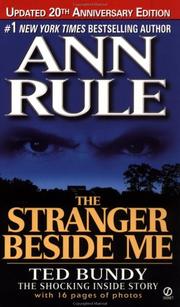
The Stranger Beside Me
2,481-word summary 11 min read 350 pages in the book
- First published
- 1980
- Publisher
- W. W. Norton & Company
- Pages
- 350
- ISBN
- 9780393013993
Reading options
What's inside (9 sections)
I read this the way a lot of people read their first true-crime classic: knowing the headline and almost none of the texture. Ann Rule, the famous chronicler of Pacific Northwest crime, had been friends with Ted Bundy years before his name meant anything to anyone, and she wrote a book about it. What surprised me is that the friendship is not a hook or a framing device. It is the whole structure, and the book returns to it the way a tongue returns to a chipped tooth, through every revision Rule made across three decades. The question underneath everything is simple and unanswerable: how did she sit across from a man for hundreds of nights and see someone decent?
The night shift
The story begins in 1971 at a crisis clinic in Seattle, where Rule worked overnight shifts answering calls from people in crisis, many of them on the edge of suicide. She was in her late thirties, raising four children, and supporting the household with writing: detective magazine articles under male pen names, the kind of work that paid by the column inch and rarely carried a byline anyone would remember.
Near her on those shifts sat a young University of Washington student, a volunteer in his early twenties. Quiet, polite, a little shy. His name was Ted Bundy. He took calls with the same calm she did. He remembered the regular callers. In the book, Rule describes how struck she was by his gentleness with people who had nothing left, and how easy he was to talk to between calls, when they shared meals, traded stories, and confided ordinary frustrations. He talked about law school and politics. She talked about her children and the crime articles she was writing. They stayed in each other's orbit for about two years, until he drifted away from the clinic in late 1973.
She never saw a flicker of anything wrong. That sentence does not sound dramatic, and the book knows it. This is the quiet terror of the opening chapters: no smoking gun, no bad night, no moment she could point to later and say, there, that is when I should have known. He was the young man who walked her to her car and asked about her daughters.
The women who vanished
Then the decade turns. In the first months of 1974, young women started disappearing around Seattle and the towns around it, close to campus, close to home, often from places that felt safe. Lynda Ann Healy vanished from her basement bedroom. Others followed over the winter and spring, a woman from a college campus, a woman walking between bus stops, a woman leaving a tavern. The pace was roughly one a month, and the region's confidence in its own safety went with them. In March 1975, searchers found remains of several of the missing women in woods outside Issaquah, which turned the case from a string of vanishings into a mass investigation.
On July 14, 1974, two women, Janice Ott and Denise Naslund, disappeared from Lake Sammamish State Park within hours of each other. Witnesses described a handsome man with one arm in a sling, and they remembered his name because he offered it: Ted. He had asked for help with a sailboat. A composite sketch went up in storefronts and on newscasts everywhere. Rule, who was already writing magazine articles about the missing women, was in an odd position. She was covering the case, and she lived inside it: same parks, same bus stops, same campus paths.
The book is careful with these women. Rule names them and reconstructs their ordinary last days, and in a genre that often treats victims as props, that care is one of the book's genuine decencies. She also shows how the coverage worked then, the speculation, the questions about why a woman was out alone, the pressure on women to be less trusting. Rule reports those attitudes without endorsing them, and a modern reader can feel her discomfort with them sitting on the page.
The friend in the sketch
When the sketch of the Lake Sammamish suspect circulated, Rule looked at it and felt her stomach drop. The drawing, with its beard and shadowed eyes, did not quite match the friend she remembered. It was close enough that she and a colleague at the clinic talked about it. So did other people. Ted's name came up in more than one conversation, including her own.
She called the police. That fact sits near the center of the book, and Rule does not let herself off the hook for it or take too much credit for it. She gave investigators Bundy's name in a flood of thousands of tips, and the case was so wide by then that a tip like hers was easy to file and hard to chase. Detectives, overwhelmed and hunting for someone who fit a much grimmer profile than a clean-cut law student, did not focus on him. There is no version of this story where Rule withheld information. There is a version where she hoped, for years, that her information was wrong, and the middle of the book lives inside that hope.
Bundy moved to Utah for law school in the fall of 1974. He wrote to her. They spoke on the phone. He sounded like the same person, and she kept sounding like the same person back. She kept writing about the cases, and she kept not believing, even as the evidence around the country began arranging itself into a pattern.
Utah, Colorado, two escapes
The case files turn up in the book chapter by chapter, and Rule is good at showing how slowly the pattern formed. In Utah, a young woman named Carol DaRonch escaped from a man who flashed a badge and tried to handcuff her in his car. The cuffs closed on only one wrist, and she fought her way out. In August 1975, a traffic stop outside Salt Lake City led police to Bundy's Volkswagen, and the search turned up a small collection of items that would trail him forever: handcuffs, a crowbar, a ski mask. He called Rule from Utah and asked her to find out why Seattle police wanted his law school records. She made some calls, and she wanted the traffic stop to be a misunderstanding.
Utah convicted him of aggravated kidnapping in 1976 and sent him to prison for one to fifteen years. Colorado then charged him in the death of a young nurse, Caryn Campbell, who had disappeared from a ski resort area in 1975. He was extradited in 1977, and in June of that year, during a court appearance in Aspen, he jumped from a second-floor window of the courthouse law library and stayed free for six days before searchers caught him in the mountains.
That winter, in late December 1977, he escaped again, from the jail in Glenwood Springs. He had lost weight on purpose for weeks to make himself small enough to slip through an opening above his cell, and this time he got out of Colorado entirely. He sent Rule postcards from the road, insisting on his innocence, asking for money to help him cross into Canada. She wrote back. He rode buses across the country and surfaced in Tallahassee, Florida, in January 1978.
The letters are the part of the book that is hardest to read now, because they work. He sounds like himself. He sounds innocent. Rule knew he sounded innocent, and she knew what that was worth, and she still answered.
Tallahassee
On January 15, 1978, someone entered the Chi Omega sorority house at Florida State University before dawn and attacked four young women in their beds. Two of them, Margaret Bowman and Lisa Levy, died. Two survived with serious injuries, and a fifth woman was attacked in her own apartment a few blocks away that same night and lived. Rule watched the coverage like everyone else, and for a while she still held out the private hope that the man in custody in Florida would turn out to be someone else.
Then, on February 9, twelve-year-old Kimberly Leach was taken from outside her junior high school in Lake City, and whatever hope was left drained out of the story. On February 15, a stolen orange Volkswagen and a fight with police in Pensacola ended the manhunt. Bundy was caught.
The Miami trial in 1979 became a national spectacle because Bundy, who had studied law, chose to represent himself, with standby counsel at his elbow, and defended the case in front of Judge Edward Cowart as if he were the smartest person in the room. He was not. The state had a bite mark on the body of one victim, and a forensic dentist matched it, in open court, to Bundy's teeth. Rule was in the gallery. She describes hearing the testimony, leaving the courtroom, and being sick in a bathroom down the hall, because the one piece of evidence that could not be argued away had arrived. After that, she stopped doubting.
He was convicted of the Chi Omega murders in July 1979 and sentenced to death. In 1980, he stood trial in Orlando for Kimberly Leach's murder, and in the middle of that trial he married an old friend from Washington, Carole Ann Boone, who had testified as a character witness. It became one more piece of the legend, a courtroom stunt that played as romance to a man on trial for his life. He was convicted again and sentenced to death again. W. W. Norton published this book the same year, 1980, while the wounds of the Florida cases were still open. The first edition ran to 350 pages, and it ended at the convictions, not knowing how any of it would finish.
Death row, confession, execution
The years between 1980 and 1989 became a run of appeals, stays, and rescheduled dates, with Bundy aging into a strange, macabre celebrity from death row. Rule revised the book in 1986 to carry the story forward, and the revisions themselves became part of her method: a living document that she kept feeding as the case kept moving.
By January 1989, Florida had set the execution. Days before it, in a televised interview, Bundy blamed violent pornography for his crimes, an excuse Rule recounts with open contempt. Then he started confessing. First in that interview, then in detail to investigators, he admitted to at least thirty murders across the country, trading facts only the killer could know, confirming suspicions that had followed him from Washington to Utah to Colorado to Florida. For some families, the confessions were the first real answer they had ever received about a daughter who simply did not come home.
He was executed in the electric chair at Florida State Prison on January 24, 1989. Crowds gathered outside the prison that night, some of them cheering, which Rule records with visible unease. Her updated edition that year added a final chapter about the confessions, the execution, and her own tangled feelings about the death of a man she had once considered a friend.
Later afterwords kept coming. The twentieth-anniversary edition in 2000 added material, including an old suspicion about a girl who disappeared in Tacoma in 1961, when Bundy was a teenager, and a flood of letters from women who wrote to Rule about close calls with men they believed were Bundy. A later update added a question-and-answer section, addressing myths and misattributions, including one 1973 killing long blamed on Bundy that DNA eventually tied to another man who was tried and convicted for it. The recent paperback reissue adds a foreword by the podcast host Georgia Hardstark, and some editions carry a subtitle, Ted Bundy: The Shocking Inside Story, that never appeared on the original spine.
What the book gets right and where it strains
The strongest thing about The Stranger Beside Me is not the Bundy material. It is the access to a specific kind of memory: a smart, observant woman combing through years of ordinary nights for clues, and finding that the clue was the ordinariness itself. Serial killer profiles are cheap now. This book shows what it is to be fooled by someone up close, at a shared desk and a shared coffee pot, not at a distance. It also sits with the victims' families in a way that many later Bundy books do not bother to.
The weaknesses are real. The book was assembled from magazine assignments and hindsight, and the seams show. Stretches of court procedure drag, and the updates stacked across editions make the later versions read like a diary with footnotes. Rule reconstructs conversations and scenes from memory, years later, and no one can verify those exchanges. That is the standing hazard of the way she reported, and it deserves the skepticism it gets, even when the portrait feels true.
Then there are the assumptions of the era. Rule was writing in and about a time when a woman's trustworthiness was casually measured by where she was and how she behaved, and some of that framing sits in the pages without enough distance from it. Modern readers will notice the language around women, around mental health, around who counts as a reliable narrator of her own experience, and they should.
The deepest question is whose book this is. Rule's empathy for Bundy is both the engine and the problem. He takes up pages and pages that might have gone to the women he killed, and there is no way around the fact that the reader's attention, like the era's, keeps drifting back to him. Rule knows it. The whole book is, at bottom, a long answer to her own guilt, and she never claims the answer is clean. She kept writing to him after the convictions, for years, because stopping meant abandoning a friend without explanation, and continuing meant giving a killer an audience of one who remembered him as human. Both choices cost something. She puts that cost on the page and leaves it there.
What remains after all the criticism is the thing the book documents better than anything else written about him: what it is like to be the person who knew. Rule spent her life afterward answering for the friendship, and the editions of this book are the record of her trying. She kept returning to the case until her death in 2015, and the versions most readers pick up now carry the whole long perspective, the early certainty, the middle doubt, the later confessions, the afterwords. Read it as a memoir of misjudgment and it holds. Read it as the anatomy of a friendship that turned out to be evidence, and it will follow you around for a while.
FAQ
Is The Stranger Beside Me more memoir or true crime?
It is both. Rule narrates as a participant, describing her night-shift friendship with Bundy and her conflicted reporting as the evidence against him grew, alongside the case history itself.
Does the book cover Ted Bundy's trials, escape attempts, and execution?
Yes. Later revised editions follow the story from his 1975 Utah arrest through his Colorado escapes and Florida convictions, and add chapters on his January 1989 confessions and his execution.
How many pages is The Stranger Beside Me?
The 1980 first edition from W. W. Norton ran to 350 pages. Revised editions expanded the book to well over five hundred pages as Rule added new material over the years.
Similar books
Catch and Kill: Lies, Spies, and a Conspiracy to Protect Predators
Ronan Farrow recounts how NBC killed his Harvey Weinstein reporting, then how The New Yorker published it and helped ignite #MeToo.
2,057-word summary · 9 min read

Long Walk to Freedom
Mandela's account of a Thembu childhood, a law practice, a banned movement, twenty-seven years in prison, and the negotiation that ended apartheid.
2,454-word summary · 11 min read

Infidel
Ayaan Hirsi Ali's memoir of a Somali childhood, a forced marriage, a Dutch asylum claim, and the political fight that followed the murder of Theo van Gogh.
2,041-word summary · 9 min read

The Girl with Seven Names: A North Korean Defector's Story
Hyeonseo Lee crossed the frozen Yalu River at seventeen, spent years hidden in China, escaped to South Korea, and later returned to rescue her family.
2,404-word summary · 11 min read
Columbine
Ten years of reporting on the 1999 school massacre, including a journalist's correction of the myths he helped create in the first hours.
2,232-word summary · 10 min read
Life
The Rolling Stones guitarist tells his own story: a Dartford childhood, the band's first gigs, the drug raids, the tax years and Patti Hansen.
2,761-word summary · 12 min read
Red Notice
An American financier in Moscow exposes a $230 million tax fraud, watches his lawyer die in prison, and turns the case into an international human rights law.
2,008-word summary · 9 min read

The Letters of Vincent van Gogh
Vincent van Gogh's letters to his brother Theo, in a Penguin Classics selection edited by Ronald de Leeuw, trace a decade of work, faith, and obsession.
2,611-word summary · 12 min read
The Poet
A crime reporter investigates his twin brother's apparent suicide and uncovers a killer who leaves Edgar Allan Poe quotes behind, in the novel that took…
2,020-word summary · 9 min read
Wild Swans
Three generations of women survive warlords, revolution, and the Cultural Revolution in Jung Chang's family memoir.
2,356-word summary · 10 min read
Open
Tennis star Andre Agassi recalls hating tennis, falling to No. 141, and rebuilding his life on his own terms.
2,352-word summary · 10 min read
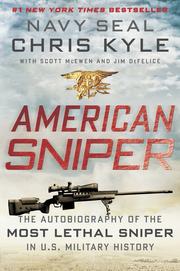
American Sniper: The Autobiography of the Most Lethal Sniper in U.S. Military History
Navy SEAL sniper Chris Kyle recounts Texas roots, SEAL training, four Iraq tours, and the strain combat placed on his marriage and health.
2,011-word summary · 9 min read
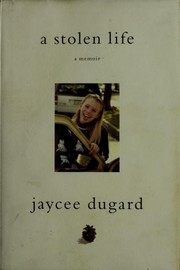
A Stolen Life
Kidnapped at eleven in 1991, Jaycee Dugard survived eighteen years in an Antioch backyard and tells her own story of endurance and motherhood.
2,807-word summary · 12 min read
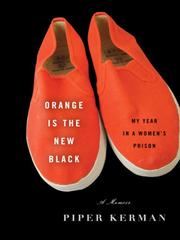
Orange Is the New Black: My Year in a Women's Prison
A Smith graduate serves a year in Danbury for an old drug crime and learns how women share, fight and survive inside.
2,583-word summary · 11 min read
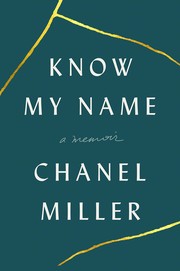
Know My Name
Chanel Miller reclaims her story after the Stanford assault case, tracing family support, trial strain, her viral 2016 statement, and leaving Emily Doe for her…
3,092-word summary · 14 min read
The Autobiography of Malcolm X
Malcolm X traces his life from Michigan childhood through Harlem, prison, and the Nation of Islam to Mecca in this 1965 memoir told to Alex Haley.
2,816-word summary · 13 min read

Spare
Prince Harry recalls Diana's death in 1997, two tours in Afghanistan, and stepping back from royal life with Meghan in this frank 2023 memoir of grief, love…
2,586-word summary · 11 min read
I Am Malala: The Story of the Girl Who Stood Up for Education and Was Shot by the Taliban
Malala grows up in Swat, blogged for school under ban, and survives a bus shooting.
2,015-word summary · 9 min read
In Cold Blood
Capote reconstructs the Clutter murders and the killers' flight in the book that invented true crime.
1,965-word summary · 9 min read

Becoming
Michelle Obama traces her path from South Side Chicago through Princeton, Harvard law and the White House years in this warm, candid memoir of family, work and…
2,143-word summary · 10 min read

Sybil
A 1973 case study of a woman treated for multiple personalities, and the book that made dissociative identity disorder a household phrase.
2,054-word summary · 9 min read

Rules of Prey
Minneapolis detective Lucas Davenport hunts a killer who leaves a new rule at every scene and treats murder as a game of wits.
1,914-word summary · 9 min read
Nothing to Envy
Barbara Demick follows six defectors from Chongjin through the North Korean famine, showing how ordinary people lived, believed, and finally left.
2,068-word summary · 9 min read

In Order to Live: A North Korean Girl's Journey to Freedom
A young North Korean girl crosses the Yalu, survives trafficking in China, and rebuilds her life in Seoul in this unsparing memoir.
2,027-word summary · 9 min read

Too Much and Never Enough: How My Family Created the World's Most Dangerous Man
Mary L. Trump's 2020 memoir traces how a cold, zero-sum Queens household shaped her uncle, and uses family tax documents to challenge his self-made story.
2,059-word summary · 9 min read
Same Kind of Different as Me
An art dealer and a formerly homeless sharecropper tell the story of the friendship that began at a Fort Worth mission and the woman who insisted on it.
2,023-word summary · 9 min read

Down and Out in Paris and London
Orwell's account of washing dishes in Paris hotels and tramping through London does not ask for pity, only for a clear look at how poverty actually works.
2,282-word summary · 10 min read
Year of Yes: How to Dance It Out, Stand in the Sun and Be Your Own Person
Shonda Rhimes takes her sister’s accusation seriously and spends a year saying yes to the things that frighten her, from live television to her own reflection.
2,585-word summary · 11 min read
Love Does
A lawyer and activist tells stories of saying yes, showing up, and loving people through ordinary, often ridiculous actions.
2,411-word summary · 11 min read
The Wright Brothers
David McCullough tells the story of two self-taught Ohio brothers, working largely alone and out of a bicycle shop, who solved the problem of flight before…
2,027-word summary · 9 min read