
Nothing to Envy
2,068-word summary 9 min read 336 pages in the book
- First published
- 2009
- Publisher
- Spiegel & Grau
- Pages
- 336
- ISBN
- 9780385523912
Reading options
What's inside (10 sections)
The title comes from a song North Korean children were taught to sing about their country: we have nothing to envy in the world. Barbara Demick uses it without sarcasm, which is the right choice. The people in this book believed it, or wanted to believe it, long after the evidence had turned against them. That is the subject. Not the cartoon dictatorship, not the nuclear threats, but the ordinary people who kept going to work, kept singing, kept marrying and having children while the system around them starved.
Demick is a journalist who spent years reporting on North Korea for the Los Angeles Times. She interviewed more than a hundred defectors and chose six people from Chongjin, an industrial city in the northeast, to carry the narrative. The names are changed. The details are drawn from interviews, and Demick is careful about what she can and cannot verify. The result reads like a novel in its pacing, but it is built on testimony, and the book is honest about the gaps.
Chongjin matters. It is not Pyongyang. It was once a steel town, a place of factories and workers, and it suffered the famine more directly than the capital. Demick chose it because it is more representative of the country than the elite circles of Pyongyang, and because the defectors she met came from there. The choice gives the book a texture that a policy history would lack. You can smell the coal smoke, see the broken windows, feel the cold.
Six lives
Mrs. Song is a loyal housewife with good songbun, the hereditary class ranking that determined almost everything in North Korea. She runs the inminban, the neighborhood watch group that reported on residents to the secret police. She is not a villain. She is a woman who believed in the system and did what it asked, and her loyalty is one of the book's most uncomfortable subjects. Her daughter Oak-hee is rebellious and practical. She talks back, avoids the worst of the ideological rituals, and eventually becomes a market trader when the official economy collapses.
Mi-ran is the emotional center. Her father was a South Korean prisoner of war who stayed in the North, which gave the family bad songbun and limited her prospects. She becomes a kindergarten teacher just as the economy begins to fail. Jun-sang is her secret boyfriend, a university student in Pyongyang from a Zainichi Korean family, which gives him privileges Mi-ran does not have. Their courtship is conducted through letters and stolen time, and it is one of the few tender things in the book.
Kim Hyuck is a kotchebi, a street orphan. His father left him at an orphanage, and he runs away to Chongjin station, where he survives by stealing, scavenging, and sleeping in crowds. His story shows the bottom of the system, the children who fell through every net. Dr. Kim is a physician whose hospital has no heat, no medicine, and no bandages except strips of old bedding. She is relatively privileged, and then she is not. Her account of crossing into China and seeing dogs eat better than North Korean doctors is the book's most famous scene, and it earns its fame.
The system as a daily habit
Demick explains the architecture of North Korean life without turning the book into a civics lecture. Songbun is the class system that sorted people into categories based on their family's political history. It determined where you could go to school, what job you could hold, whom you could marry, and how much food you were likely to receive. It was not a secret. People knew their rank and navigated by it.
The inminban was the neighborhood watch, a block-level organization that monitored residents and reported suspicious behavior. Mrs. Song's role in it is one of the book's sharpest ironies. She is a watcher, and she is also a mother whose daughter is slipping away from the system. The same apparatus that gives her status becomes a threat to her family.
Propaganda was not a background hum. It was the air. Children sang songs about the Kim family. Workers attended mandatory study sessions. The radio was tuned to state broadcasts, and the television, when there was electricity, showed the same approved programs. Demick shows how this shaped people's sense of reality. They did not simply lie. They learned to interpret the world through a set of categories that made certain questions unaskable.
Then the electricity went out. The factories stopped. The trains stopped. The rations stopped. The system that had promised to provide for everyone could no longer do the one thing it had staked its legitimacy on. Demick describes the silence of a city without power, the dark apartments, the candles, the bicycles, the return of things people had been told belonged to the past.
The Arduous March
The famine of the 1990s is the book's central event. North Korea called it the Arduous March, a phrase borrowed from a guerrilla march in the 1930s. It was a euphemism for mass starvation. Demick puts the death toll in the hundreds of thousands, with some estimates near a million. The exact number is unknowable, because the state did not count and did not allow others to count.
The famine did not arrive all at once. It came as a series of reductions. The ration was cut. Then it was cut again. Then it was suspended. People ate grass, bark, corncobs, and whatever else they could find. They traded their possessions for food. They sent children to relatives in the countryside. They died in their apartments and were found days later. Demick does not dwell on the most lurid stories, but she does not omit them either. The book's restraint makes the horror more credible.
The markets are the other side of the story. As the official economy collapsed, people began to trade. Women, especially, became traders, selling food, clothing, and household goods in informal markets. The state tolerated this because it had no alternative, then tried to control it, then taxed it. The markets created a new kind of person: someone whose survival depended on initiative rather than loyalty. Oak-hee becomes one of them. She is not a dissident. She is a woman who learns to work the system because the system no longer works.
Demick is good at showing how the famine changed relationships. Parents hid food from children. Children stole from parents. Neighbors informed on neighbors. The inminban became a machine for survival as much as surveillance. The book does not use this to condemn North Koreans. It uses it to show what scarcity does to people, and how quickly the habits of solidarity can be replaced by the habits of hoarding.
Love in a broken place
The romance between Mi-ran and Jun-sang gives the book its heart. They meet through a friend, exchange letters, and meet in secret. Jun-sang is in Pyongyang for university, and he brings back news of the outside world, or at least the outside world as it appears on South Korean television. He listens to forbidden broadcasts and watches videos. The signal is weak, the electricity is unreliable, and the risk is enormous. The scenes of them huddled around a set, waiting for the picture to stabilize, are a reminder that information in North Korea was not a commodity. It was a dangerous gift.
Their relationship is also a study in the limits of intimacy under surveillance. They cannot be alone easily. They cannot plan a future. They cannot assume that either of them will be allowed to stay in the same city. When Jun-sang defects, the separation is not a dramatic break. It is a slow, painful unraveling, conducted through letters and intermediaries. Mi-ran eventually follows, but the cost is years of her life and the loss of her family.
Demick handles the escape routes with the same care. Defectors cross the Tumen River into China, where they are vulnerable to arrest, trafficking, and extortion. They find brokers. They travel through China to Southeast Asia, often Thailand, where they can reach a South Korean embassy. The journey is expensive and dangerous, and it requires leaving people behind. The book is clear that escape is not a clean act of heroism. It is a series of bargains, some of them shameful.
The currency reform
The epilogue describes the November 2009 currency reform, which wiped out the savings of market traders overnight. The government required people to exchange old won for new at a punitive rate and capped the amount they could exchange. The reform was meant to curb the markets and reassert state control. It did the opposite. It destroyed trust, sparked panic, and made the markets more essential than ever. Demick uses the episode to show that the system's attempts to reform itself often make things worse.
The timing matters. The book was published in 2009, and the epilogue was added as the news was breaking. It gives the narrative a sense of unfinished history. The people Demick interviewed are not case studies with tidy endings. They are living through a transition that no one, including the North Korean government, fully understands.
What the book does well
Nothing to Envy is one of the best books on North Korea for general readers because it refuses to caricature. Demick does not pretend that everyone in the country is a victim or a fanatic. She shows people who believed, people who doubted, people who adapted, and people who did all three at different times. Mrs. Song's loyalty is not explained away. It is presented as a real human response to a system that gave her a place in the world.
The reporting is also impressive. Demick cross-checks accounts, notes where memories conflict, and avoids claiming more certainty than the evidence supports. She is especially good on the texture of daily life: the way people cleaned their apartments, the food they missed, the songs they sang, the jokes they told. Those details are what make the book memorable. They also make the political analysis more persuasive, because you can see how the system worked on the level of habit.
Where it strains
The book's novelistic structure is both a strength and a weakness. Following six people makes the narrative accessible, but it also means that some of the most important parts of the story are compressed or left out. The regime's nuclear program, its military posture, and its foreign relations appear only in passing. Readers who want a full political history will need another book.
The reconstructed scenes are another issue. Demick is transparent about her methods, but some passages read more smoothly than testimony usually allows. Conversations are recreated. Thoughts are inferred. The book does not pretend to be a transcript, but the line between reporting and storytelling is sometimes blurred. That is not a fatal flaw. It is a reminder that all narrative nonfiction makes choices.
The focus on Chongjin also limits the view. The city is more representative than Pyongyang, but it is still one city. The experiences of farmers, soldiers, and the families of the elite are mostly outside the frame. Demick acknowledges this, but the book's emotional power can make readers forget that they are seeing a slice of a much larger and more varied society.
Why it matters
The title carries more than irony. It describes a worldview that had to collapse before people could leave. North Koreans were taught that they had nothing to envy, and many of them believed it because the alternative was unbearable. The famine killed people and destroyed the story that had made their sacrifices meaningful. Once that story broke, the question became what to do with the rest of a life.
Demick does not answer that question for her subjects. She follows them to South Korea, where they struggle with money, language, and the strange freedom of a country that does not tell them what to think. Some of them adapt. Some do not. The book ends without a triumphant reunion or a political lesson. It ends with people trying to live after the story they were raised on has ended. That is a harder and more honest ending than a reader might expect, and it is why the book stays with you.
FAQ
Who are the main people in Nothing to Envy?
The book follows six Chongjin residents: Mrs. Song, her daughter Oak-hee, Mi-ran, Jun-sang, Kim Hyuck, and Dr. Kim. Their names are changed to protect relatives still in North Korea.
Is Nothing to Envy based on interviews?
Yes. Barbara Demick interviewed more than a hundred North Korean defectors and centered the narrative on six of them. She cross-checks their accounts and notes where certainty is limited.
What is the Arduous March?
It is the North Korean government's name for the famine of the 1990s, borrowed from a 1930s guerrilla march. Demick describes it as a period of mass starvation in which hundreds of thousands, and possibly near a million, people died.
Similar books
Down and Out in Paris and London
Orwell's account of washing dishes in Paris hotels and tramping through London does not ask for pity, only for a clear look at how poverty actually works.
2,282-word summary · 10 min read

How to Be an Antiracist
Kendi blends memoir and history to argue that fair policy, not self fixing, creates an equal society.
2,513-word summary · 11 min read
Nudge: Improving Decisions About Health, Wealth, and Happiness
Thaler and Sunstein show how defaults, framing, and social cues steer choices, and argue for choice architecture with an opt-out.
3,146-word summary · 14 min read

Long Walk to Freedom
Mandela's account of a Thembu childhood, a law practice, a banned movement, twenty-seven years in prison, and the negotiation that ended apartheid.
2,454-word summary · 11 min read

Why I'm No Longer Talking to White People About Race
Reni Eddo-Lodge traces black British history and shows how institutions, culture, and everyday assumptions keep producing racial inequality.
2,071-word summary · 9 min read
Prisoners of Geography: Ten Maps That Tell You Everything You Need to Know About Global Politics
Tim Marshall explains how mountains, rivers, coasts, and resources shape the choices of nations, from Russia's flat borders to the chokepoints of the South…
2,328-word summary · 10 min read
Catch and Kill: Lies, Spies, and a Conspiracy to Protect Predators
Ronan Farrow recounts how NBC killed his Harvey Weinstein reporting, then how The New Yorker published it and helped ignite #MeToo.
2,057-word summary · 9 min read

The World Is Flat: A Brief History of the Twenty-first Century
Thomas L. Friedman's 2005 bestseller argues that technology, trade, and open borders leveled the global playing field, and it names the ten forces that did it.
2,369-word summary · 11 min read
The New Jim Crow: Mass Incarceration in the Age of Colorblindness
How mass incarceration became a racial caste system after civil rights.
2,413-word summary · 11 min read
Behind the Beautiful Forevers: Life, Death, and Hope in a Mumbai Undercity
Life in a Mumbai slum near the airport, where families hustle for a better future.
2,406-word summary · 11 min read
Empire of Pain: The Secret History of the Sackler Dynasty
How the Sackler family sold OxyContin and shaped an overdose crisis while giving to museums.
2,048-word summary · 9 min read
Say Nothing
Patrick Radden Keefe traces Jean McConville's 1972 disappearance through the Price sisters, Brendan Hughes, and Gerry Adams, using Boston College tapes to…
2,846-word summary · 13 min read

Cleopatra: A Life
Pulitzer winner Schiff restores Cleopatra as a capable ruler, from Ptolemy debts and Caesar to Antony, Actium, and her death in 30 BC, built from coins and…
3,586-word summary · 16 min read
21 Lessons for the 21st Century
Twenty one essays on work, liberty, truth, and meaning when algorithms flood the world with noise.
2,101-word summary · 9 min read

Nickel and Dimed: On (Not) Getting By in America
A journalist works waitress, cleaning, retail, and care jobs undercover to test whether full-time work keeps a person housed and fed.
2,328-word summary · 10 min read
A Promised Land
First-volume memoir from Iowa 2008 through the 2011 bin Laden raid, crisis management and doubt.
2,243-word summary · 10 min read
A People's History of the United States
A bottom-up history of the United States from Columbus to Clinton, told through workers, women, Native nations and Black voices against elite rule.
2,398-word summary · 11 min read

The Prince
Machiavelli advises Lorenzo on rule through fear and love, fortune, cruelty and mercy.
2,204-word summary · 10 min read
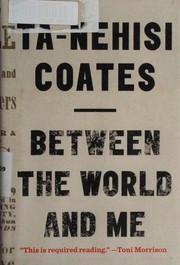
Between the World and Me
Coates writes to his son about the Black body in America, from Howard to the loss of Prince Jones.
2,234-word summary · 10 min read

The Zookeeper's Wife: A War Story
The directors of the Warsaw Zoo hid roughly three hundred Jews in empty cages and outbuildings after the German invasion, while Jan worked for the resistance.
2,065-word summary · 9 min read

1491: New Revelations of the Americas Before Columbus
Charles C. Mann gathers archaeology, ecology, and demography to argue that the Americas before Columbus were older, fuller, and more deliberately shaped than…
2,712-word summary · 12 min read
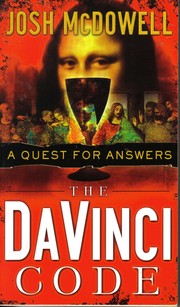
The DaVinci Code: A Quest for Answers
A short 2006 dialogue in which three friends test Dan Brown's claims about Jesus, Mary Magdalene, Nicaea, and the canon.
2,088-word summary · 9 min read

In Order to Live: A North Korean Girl's Journey to Freedom
A young North Korean girl crosses the Yalu, survives trafficking in China, and rebuilds her life in Seoul in this unsparing memoir.
2,027-word summary · 9 min read
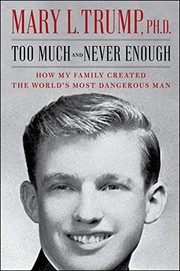
Too Much and Never Enough: How My Family Created the World's Most Dangerous Man
Mary L. Trump's 2020 memoir traces how a cold, zero-sum Queens household shaped her uncle, and uses family tax documents to challenge his self-made story.
2,059-word summary · 9 min read
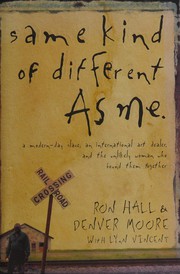
Same Kind of Different as Me
An art dealer and a formerly homeless sharecropper tell the story of the friendship that began at a Fort Worth mission and the woman who insisted on it.
2,023-word summary · 9 min read

Infidel
Ayaan Hirsi Ali's memoir of a Somali childhood, a forced marriage, a Dutch asylum claim, and the political fight that followed the murder of Theo van Gogh.
2,041-word summary · 9 min read
The Girl with Seven Names: A North Korean Defector's Story
Hyeonseo Lee crossed the frozen Yalu River at seventeen, spent years hidden in China, escaped to South Korea, and later returned to rescue her family.
2,404-word summary · 11 min read
The Wright Brothers
David McCullough tells the story of two self-taught Ohio brothers, working largely alone and out of a bicycle shop, who solved the problem of flight before…
2,027-word summary · 9 min read
Columbine
Ten years of reporting on the 1999 school massacre, including a journalist's correction of the myths he helped create in the first hours.
2,232-word summary · 10 min read
Lone Survivor: The Eyewitness Account of Operation Redwing and the Lost Heroes of SEAL Team 10
Marcus Luttrell's account of the 2005 SEAL mission in Afghanistan that killed three of his team and left him alone.
2,144-word summary · 10 min read