

Memories of My Melancholy Whores
2,101-word summary 9 min read 128 pages in the book
- First published
- 2004
- Publisher
- Penguin Books
- Pages
- 128
- ISBN
- 9780241968543
Reading options
What's inside (10 sections)
There are books you recommend with a warning, and this is one of them. Memories of My Melancholy Whores is a short novel by Gabriel García Márquez, published in Spanish in 2004 and in Edith Grossman's English translation in 2005. It is about a ninety-year-old man who decides to celebrate his birthday by sleeping with a fourteen-year-old virgin. That sentence is accurate, and it is the reason many readers will not pick the book up. It is also not what the book is actually about.
The narrator is a journalist in an unnamed Colombian city. He has spent his life paying for sex, and he has never been in love. On the eve of his ninetieth birthday, he calls a madam named Rosa Cabarcas and asks her to find him a young virgin. Rosa finds a girl who needs money for her family. The narrator goes to the brothel, sees the girl asleep, and cannot do it. He sits with her all night. In the morning, he leaves. That refusal is the beginning of the only love story he has ever had.
The Man Who Paid
The narrator is a columnist for El Diario de La Paz. He has worked there for forty years, writing a daily column about the city, politics, and the small absurdities of life. He lives alone in a house that is falling apart. He has a housekeeper who was once one of his prostitutes and who still sleeps with him once a month. He has a cat. He has a phonograph and a collection of boleros. He is, by his own account, ugly, poor, and ordinary.
He is also proud. He tells us that he has slept with 514 women, all of them paid, and he keeps the number like a record. He is not ashamed of it. He is not proud of it either. It is simply the shape his life took. He never married, though he was once engaged and left the woman at the altar. He promised his mother he would have a daughter named after her, and he never did.
The number is important because it shows what he thinks love is. For most of his life, he has confused sex with intimacy and transactions with relationships. He knows the difference, intellectually, but he has never felt it. The book is about the moment he does.
Rosa Cabarcas
Rosa Cabarcas runs a high-class brothel that serves politicians, businessmen, and men who can afford discretion. She and the narrator have known each other for years. She is practical, unsentimental, and fond of him in a way that she would never admit. When he asks for a virgin, she does not moralize. She complains about the difficulty of finding one on short notice, and then she finds one.
Rosa is the book's most grounded character. She understands the world she lives in, including its cruelty, and she makes her peace with it. She is not a villain. She is a businesswoman in a city that has always sold women, and she is trying to keep her own life afloat. When the narrator refuses to touch the sleeping girl, Rosa is angry, then relieved, then protective. Their friendship is one of the few relationships in the book that is not built on sex.
The girl is fourteen. She works in a factory and needs money for her family. She is not given a name until the narrator gives her one. He calls her Delgadina, after a song about a princess who is locked away by her father. The name is a literary gesture, and it is also a way of making her his. She does not choose it. She does not choose much of anything in this story.
The First Night
Rosa gives the girl a sleeping tonic so she will not have to experience the night. She tells the narrator to take her without waking her. It will be kinder, she says. The narrator goes into the room, sees the girl asleep on the bed, and cannot do it.
He watches her. He notices her breathing, her hands, the way she is dressed. He lies down beside her and sleeps. In the morning, he leaves without saying goodbye. He does not feel virtuous. He feels confused. He has spent his life buying access to women, and now he has access to one and does not want it.
The scene is the moral hinge of the book. A lesser writer would make the narrator a monster or a saint. Márquez makes him a man who is surprised by his own tenderness. The refusal does not undo the fact that he paid for a child. It does not make the arrangement acceptable. It does make the narrator more complicated than his premise suggests.
Delgadina
The narrator cannot stop thinking about the girl. He calls Rosa and arranges another night, then another. He never wakes her. He lies beside her, talks to her, reads to her, and invents a relationship. He brings gifts: a radio, earrings, a bicycle. He decorates the room. He starts to take care of himself. He buys new clothes. He writes about love in his column, and the readers respond.
This is the part of the book that is easy to mock. An old man falls in love with a sleeping teenager and decides that this is the great romance of his life. The girl does not speak. She does not consent in any meaningful way. She is a fantasy, and the narrator knows it, or should. Márquez is aware of the problem, and he does not solve it. He lets the reader sit with it.
What makes the section work is the prose. Márquez writes about late love with a mixture of comedy and terror. The narrator is ridiculous, and he is also dying. He is ninety. He has spent his life avoiding commitment, and now he is committed to a girl who does not know he exists. The absurdity is the point. Love arrives too late, and it arrives in the wrong shape.
The Column, the Murder, and the Rage
The narrator's writing changes. His column becomes less political and more personal. He writes about love, memory, and the city. Readers write to him. His editor is pleased. For the first time in years, he is not just a man with a byline. He is a man with something to say.
The writing is also a way of hiding. He can describe his feelings in public without naming the girl. He can turn his obsession into art. The column gives him a language for what he is experiencing, and it gives the reader a break from the claustrophobia of the house and the brothel.
Márquez was a journalist for much of his life, and the newspaper scenes have the texture of experience. The newsroom is noisy, gossipy, and full of people who have seen too much. The narrator's colleagues treat him with affection and mild condescension. He is the old man who still comes to work. That identity is one of the things he is afraid of losing.
One night, a man is murdered at the brothel. The girl disappears. The narrator searches for her, checks every woman he sees, and nearly loses his mind. Rosa eventually arranges a meeting. The narrator arrives and finds Delgadina dressed in fine clothes. He assumes she has become a prostitute. He flies into a rage and destroys the room they shared.
The rage is ugly and revealing. He has convinced himself that his love is different from the transactions around him. When he sees her dressed up, he sees the market he has been part of all along. He cannot separate his tenderness from his possessiveness. He yells at her, and she goes back into hiding. He vows never to see her again.
This is the novel's most honest scene. The narrator is not a gentle old man. He is a man who has spent his life using women, and his love does not magically cure him. He is jealous, controlling, and self-pitying. The book does not excuse him. It shows him.
The Reconciliation
Time passes. The narrator misses her. He apologizes to Rosa, though he feels it is too late. By chance, he meets a woman he slept with years earlier. She is older now, and she tells him to stop treating the girl as a fantasy. If he loves her, he should take care of her. He should provide for her, not possess her.
He meets with Rosa and arranges for his property to pass to Delgadina when he dies. It is a practical act, and it is the first thing he does that is not about his own feelings. He is not buying her. He is trying to give her a future. The distinction matters to him, and it matters to the book.
He schedules another night with her, this time on his ninety-first birthday. The ending is ambiguous. He does not know whether she will come. He does not know whether she loves him. He knows that he wants to live. The last lines are about being a new man, and about wanting to live forever. It is a hopeful ending, and it is also a delusion. Márquez lets both be true.
The Problem
The problem with the book is the premise. A ninety-year-old man and a fourteen-year-old girl is not a love story that can be separated from the power imbalance. The girl has no voice. She is asleep for most of the novel. She is named by the narrator, desired by the narrator, and provided for by the narrator. The reader never learns what she wants.
Márquez has been criticized for this, and the criticism is fair. The book can be read as a fantasy of male late-life potency, in which an old man is rejuvenated by a young girl's body and attention. It can also be read as a critique of that fantasy, because the narrator is so clearly ridiculous and so clearly not cured. Which reading dominates depends on the reader.
I think the book is doing both, and that the ambiguity is deliberate. Márquez is not endorsing the narrator. He is inside his head, and the head is a mix of tenderness and self-deception. The prose is beautiful, and the beauty is part of the trap. It makes you sympathize with a man you should not entirely trust.
The title is doing more work than it first appears. The book is a memoir, or a set of memories, and the narrator is trying to make sense of a life that has mostly slipped away. The "whores" of the title are not just the women he paid. They are the versions of himself he has been, the transactions he has mistaken for intimacy, and the city he has watched change. The melancholy is not regret for a specific woman. It is regret for a whole way of living.
The structure is simple: a frame of birthdays, a series of visits, a crisis, a reconciliation. Márquez keeps it tight. There are no subplots that do not touch the central obsession. That economy is one of the book's strengths. It knows it is a novella, and it does not pretend to be a novel.
Why It Works
Memories of My Melancholy Whores works because it is short and because it is honest about loneliness. The narrator is not a monster. He is a man who has spent his life avoiding the risk of love, and who discovers it too late to do anything useful with it. That is a real experience, and Márquez writes it with precision.
The prose is also a pleasure. Grossman's translation is clean and musical. The sentences are long and winding, and they carry the narrator's voice without becoming a parody. The boleros, the rain, the decaying house, the newspaper office: the details are specific and alive. Márquez could make a sentence about a ceiling fan feel like a meditation on mortality.
I would recommend this book to readers who already know Márquez and want a late, strange, uncomfortable addition to his work. I would not recommend it as an introduction. It is not a love story for everyone, and it is not a comfortable book. It is a book about a man who learns something too late, and about the difference between wanting to be loved and knowing how to love.
FAQ
What is Memories of My Melancholy Whores about?
It is about a ninety-year-old journalist who has spent his life paying for sex and discovers love for the first time when he refuses to sleep with a sleeping teenage girl.
Is Memories of My Melancholy Whores autobiographical?
No. It is fiction. García Márquez was in his late seventies when the Spanish edition was published in 2004, but the narrator's life is not his own.
Why is Memories of My Melancholy Whores controversial?
The novel centers on a sexual arrangement between a ninety-year-old man and a fourteen-year-old girl, and the girl is given no voice or agency in the story.
Similar books

Love in the Time of Cholera
Florentino waits fifty years for Fermina: youth letters, a marriage to Urbino, hundreds of affairs, and a river trip where old love gets a last hearing.
2,204-word summary · 10 min read

Alone With You in the Ether
Two people in Chicago agree to six conversations, and the experiment becomes a love affair that is also a study of bipolar disorder, obsession, and the shape…
2,713-word summary · 12 min read

On Chesil Beach
Two newlyweds spend one terrible night on Chesil Beach in 1962, and the rest of their lives is decided by it.
2,456-word summary · 11 min read

And Every Morning the Way Home Gets Longer and Longer
An elderly grandfather, his son, and his grandson share memories and fears as the old man's mind begins to fade, in a short novel about grief and love.
2,078-word summary · 9 min read

Olive, Again
Elizabeth Strout returns to Crosby, Maine, as Olive Kitteridge marries Jack Kennison, confronts her son, and faces old age, grief, and small-town judgment.
2,333-word summary · 10 min read
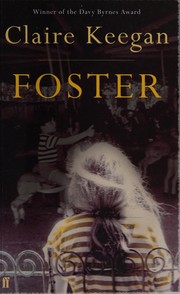
Foster
A girl spends a summer with relatives on a Wexford farm and is cared for properly for the first time. A spare novella about family and what children notice…
2,043-word summary · 9 min read

By the River Piedra I Sat Down and Wept
Pilar, 29, meets her childhood friend again in Madrid and finds a rumored miracle worker. One winter week through the Pyrenees to the river Piedra, and the…
2,845-word summary · 13 min read
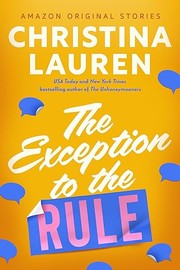
The Exception to the Rule
A typoed Valentine's email turns into yearly notes between two strangers who wonder if they should meet.
2,226-word summary · 10 min read
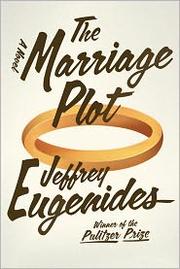
The Marriage Plot
At Brown in 1982, Madeleine loves Austen while torn between brilliant Leonard and steady Mitchell.
2,804-word summary · 12 min read
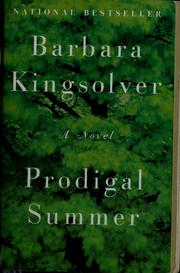
Prodigal Summer
Three lives in one Virginia mountain valley summer: a ranger watching coyotes, a widow learning moths and goats, and feuding elders guarding chestnuts, retold…
2,308-word summary · 10 min read

The History of Love
An elderly locksmith and a grieving teenage girl in New York are joined by a lost manuscript published in Spanish under another man's name.
2,805-word summary · 12 min read
Departure(s)
Barnes mixes memoir and invention as old writer Julian revisits Stephen and Jean, lost love, a loyal dog, and last goodbyes.
2,133-word summary · 9 min read
The Sense of an Ending
Retired Tony Webster inherits money and a diary from an old girlfriend's mother, forcing him to rethink his youth, a cruel letter, and a friend's death.
2,451-word summary · 11 min read
The Unlikely Pilgrimage of Harold Fry
A retired man in Devon walks to Berwick to visit a dying friend, hoping his steps keep her alive.
2,246-word summary · 10 min read

The Forty Rules of Love
A bored housewife reads a manuscript about Rumi and Shams, and the old story starts to change her life.
2,070-word summary · 9 min read

The Immortalists
Four siblings visit a fortune teller in 1969 who tells each their death date, shaping how they live and love.
2,007-word summary · 9 min read

Bel Canto
An opera singer and a Japanese executive are taken hostage at a birthday party, and months of captivity turn into music, routine, and love.
3,864-word summary · 17 min read

Heart of Darkness
Marlow pilots a steamer up the Congo for a trading company and seeks Kurtz, the brilliant agent who stopped sending ivory and started sending reports no one…
2,315-word summary · 10 min read

The Notebook
The Notebook retold: Noah reads to Allie in a nursing home, summer love in New Bern, letters and choice.
1,957-word summary · 9 min read

Chronicle of a Death Foretold
A town knows brothers will kill Santiago and no one stops it, retold to find why.
1,950-word summary · 9 min read
One Hundred Years of Solitude
Seven generations of the Buendia family rise and fall in Macondo, where memory, war and miracles blur together.
2,093-word summary · 9 min read

What Moves the Dead
Alex Easton arrives at the Usher house to find Madeline dying, the tarn full of fungus, and the local hares refusing to stay dead.
2,586-word summary · 11 min read

Violeta
A woman born in 1920 writes her life story to her grandson, from one pandemic to another, through wealth, ruin, passion, and dictatorship in South America.
2,555-word summary · 11 min read

The Only Good Indians
Four Blackfeet men who killed a pregnant elk are hunted by her spirit a decade later, and the only person who can end the cycle is a teenage girl who was not…
2,010-word summary · 9 min read

The Japanese Lover
A Polish refugee and the son of a Japanese gardener fall in love in San Francisco in 1939, then keep the affair secret for nearly seventy years.
2,286-word summary · 10 min read

The Idiot
A Turkish-American freshman at Harvard falls in love through email with a Hungarian math student and spends a summer in Hungary trying to turn correspondence…
2,019-word summary · 9 min read

The Guest
Cast out of her wealthy boyfriend's Hamptons house, twenty-two-year-old Alex spends five days talking her way through other people's homes and accounts.
2,165-word summary · 10 min read

The Crying of Lot 49
A California woman named executor of her ex-lover's estate follows a muted post horn into a possible centuries-old postal conspiracy, and Pynchon refuses to…
2,003-word summary · 9 min read

Six Scorched Roses
A dying scholar bargains with a reclusive vampire for blood, and six roses turn a transaction into a slow, dangerous romance.
2,663-word summary · 12 min read
Silas Marner
A falsely accused weaver hoards gold in Raveloe until a stolen hoard and an abandoned child remake his narrow life.
2,699-word summary · 12 min read