
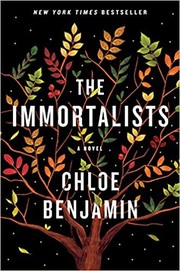
The Immortalists
2,007-word summary 9 min read 352 pages in the book
- First published
- 2018
- Publisher
- G.P. Putnam's Sons
- Pages
- 352
- ISBN
- 9780735213180
Reading options
What's inside (7 sections)
The premise hooked me before page one. Four kids hear the dates they will die. Then they grow up. The Immortalists by Chloe Benjamin was first published on January 9, 2018 by Putnam, a 352 page hardcover with ISBN 9780735213180. It follows the Gold siblings from 1969 New York across fifty years. I read it in four sittings, one per sibling, which fits how Benjamin built it. Each part has its own weather.
Summer 1969. Simon is seven, Klara nine, Daniel eleven, Varya thirteen. They live above a tailor shop on Hester Street, crammed with cousins, soup smells, and stories. On a dare they visit a fortune teller on Essex who is said to tell death dates. She tells each child a date in private. They swear not to tell each other. They tell anyway in whispers, or they carry the numbers silently. Either way the numbers stick.
What follows is not a thriller about cheating fate. It is a family saga about how belief steers choice. A boy who thinks he has little time runs toward freedom. A girl who thinks she has decades plans and postpones. Benjamin never confirms if the woman was real or fraud. She shows what the knowledge does. That restraint makes the book linger.
Simon
Simon part is the shortest and brightest and saddest. He is sixteen in the late seventies, gay, restless in a crowded apartment where his father Saul has just died. He believes his date is early, so he leaves for San Francisco with Klara the week after the funeral. No plan beyond movement. Dance, work, love, now.
San Francisco in 1978 feels alive on the page. Fog, discos, a tiny apartment with a mattress and a hot plate. Simon finds work as a go go dancer, then in a bar, and falls for Robert, older, kind, steady in a way Simon has never had. Their love scenes are tender and frank. Hand holding on a bus. Cooking with no money. A fight about condoms and risk that reads painfully now because we know what is coming and they only half do.
Benjamin does not moralize the AIDS years. She shows a community learning in real time. Flyers, rumors, a friend who vanishes, a clinic with long lines. Simon, who ran toward life, keeps dancing even as spots appear. His belief in an early date makes him both brave and careless. He lives fully, which is beautiful. He skips precautions he might have taken if he thought he had time, which is awful. Both truths sit together.
Varya voice frames this part from New York, worrying by phone, sending money she cannot spare. Daniel is in the army, angry at Simon for leaving their mother Gertie alone. Klara tries to protect Simon by performing magic in bars to pay rent. The family frays with love still attached. When Simon dies, it is not a twist. The date the woman gave matches, more or less, and that match chills you. Was it prophecy or self direction. Benjamin leaves the question open and moves to the next sibling, which feels like grief itself. Life goes on without permission.
I cried in this section and also marked a flaw. Simon gets less interior room than his sisters because his part is short and his fate arrives fast. He sometimes reads as the free spirit who teaches others by dying. Benjamin gives him joy and agency, dance, sex, chosen family, so he is more than a lesson. Still, I wanted twenty more pages of his ordinary days, not only his decline.
Klara
Klara part shifts to Las Vegas and to magic as work. She believes she has a long life, so she can risk. She moves with Simon west, then stays after his death to build an act. Not kids party tricks. Real stage magic with danger. Saws, tanks, escapes. She studies with older magicians, practices until her hands bleed, and falls for Raj, a fellow performer who loves her ambition and fears her need to raise stakes.
Her act centers on a trick she calls the Jaws of Death, an underwater escape with handcuffs and a locked tank. The trick is a metaphor she knows and hates. Every show asks if she will beat the date she was given. Audiences sense it. They lean forward. Raj begs her to retire the tank after a close call. She refuses because the tank is the only place she feels in control of fate. If she can pick the lock in time, she proves the woman wrong.
Benjamin writes show business well. Cheap motels, day jobs, agents who smile and steal. Klara pregnancy complicates everything. She wants the baby and the act, and the culture says choose. Raj wants fatherhood and safety. Their fights are specific and fair. Who watches the baby during rehearsals. Who pays when gigs dry up. Love here is logistics as much as passion.
The end of her part is the most debated and I will keep it vague. A performance goes wrong in a way that could be accident, choice, or fate. The date matches again, close enough to unsettle. I found it believable because Klara had been bargaining with risk for years. Whether you call it prophecy or psychology, the pattern holds. Belief in time made her spend time wildly.
What I admired is how Benjamin respects magic without explaining it. Klara believes in wonder as a discipline. Practice, timing, breath. She does not claim spirits guide her hands. She claims work might beat death for one more show. That working faith mirrors the novel larger question. We all perform small rituals to feel safe. Hers are just brighter.
A note. The Vegas chapters run a touch long on act detail. One rehearsal montage could have been cut. But the mother daughter thread with Gertie, phone calls full of guilt and recipes, grounds it. Klara sends money home, misses holidays, and tells herself there will be time. There is the book thesis in one sentence.
Daniel
Daniel part is the turn into middle age and control. He is a military doctor turned civilian physician, married, living in upstate New York, a man who believes his date is near and who copes by seeking certainty. He tracks his health, avoids flights, and rages at Varya distance. When a new study about longevity or a news story about the fortune teller surfaces, he fixates. If the woman was a fraud, his brothers death means something else. If she was real, his own time is short.
His section becomes a quiet procedural. Daniel looks up the fortune teller, now old or gone depending on records, and considers legal or physical confrontation. He is a healer who wants someone to blame. His marriage strains under his checking behaviors. His wife loves him but will not live inside his countdown. His daughter watches and learns anxiety like a language.
Benjamin writes male grief well here. Daniel does not cry easily. He runs, lifts, counts pills, reads journals. He visits Gertie, now older and sharp, and fights about Simon and Klara memory. Gertie insists they lived as they chose. Daniel hears excuse. Their kitchen argument about whether knowledge killed his siblings is the best dialogue in the book. Two smart people both right and both hurt.
The climax of his part involves a gun, a bad decision, and a date that again lines up in a way that makes you put the book down and stare. I will not detail it. I will say Benjamin handles it without glamour. The aftermath for Varya is worse than the act. She loses the brother who called most, and inherits the question he could not answer. Did he prove fate or make it.
Some readers find Daniel less likable than Simon and Klara. I did at first. He is rigid, judgmental about magic and gay life, and prone to lectures. Stay with him. His rigidity is fear in uniform. When he softens with a patient, a scared veteran who also counts days, you see the doctor he wanted to be before numbers ruled him. That softening makes what follows hurt more.
Varya
Varya closes the book as a scientist of longevity. She believes her date is latest, so she lives to preserve. No kids, little risk, a lab studying aging in primates, a partner who left because she would not bend. She exercises, fasts, tracks sleep, and loves a project more than people, until the project asks her to harm animals she has named.
Her chapters are the most reflective and, for me, the slowest and deepest. She works with rhesus monkeys, measures caloric restriction, and writes papers about extending life while her own life narrows to work and an apartment with good light. A younger colleague challenges her ethics. A niece, Klara daughter, arrives asking about magic and mother. The past knocks in the form of family she avoided to stay safe.
Benjamin uses the lab to ask the book question directly. If you could extend life by suffering now, would you. Varya has lived that trade for decades. No sugar, no late nights, no love that disrupts routine. Has it worked. She is alive at an age her siblings did not reach. Is she living. The monkey she favors, who trusts her hand, forces the point. Science needs data. Love needs release.
The final movement brings Varya back to New York, to Gertie old apartment, to the Essex street where a girl once told dates to kids. She does not get a neat answer. She gets a better practice. Call the niece back. Feed someone. Break routine for joy. Accept that longevity without attachment is another kind of early death. It is not a twist ending. It is a widening.
I loved Varya part most on reread, though first time I found it quiet after Daniel intensity. Give it room. The sentences about touch, hunger, and sleep are beautiful. And the last scene with a magic trick taught to a child had me tearing up. Wonder as inheritance rather than escape. That feels right for the Golds.
What the book argues and where it wobbles
The argument is clear without being preachy. Stories about the future change the present. A date, even from a stranger in a back room, becomes a script if you rehearse it. Simon rehearsed urgency. Klara rehearsed daring. Daniel rehearsed vigilance. Varya rehearsed preservation. Each life fits its date well enough to scare you, and each also makes sense without magic as personality plus context. Benjamin wants you to hold both.
What wobbles is balance. Simon gets about eighty pages, Klara about a hundred, Daniel about seventy, Varya about a hundred. That mirrors their lifespans, cleverly, but leaves Simon thin and Varya long. Some readers will also want more of Gertie, the mother who holds the center without a section of her own. I did. Her brisk love and grief deserve a chapter, though her absence from the structure mirrors how her kids took her for granted.
The prose is warm and concrete, occasionally lyrical in a way that tips toward sentiment. Hands, food, fabric, Houdini posters, hospital corridors. It is an easy book to picture. If you dislike shifting protagonists, the resets may frustrate. Each part starts with new routines and new names. Trust that the family thread pulls tight by the end. It does, especially through the niece who carries Klara forward.
Read it if you like family sagas that ask big questions without easy answers. It pairs well with discussion, because everyone will have a theory. Was the seer real. Who lived best. What would you do with a date. I closed it thinking less about death dates and more about daily scripts. What story am I rehearsing about my own time. And is it helping me live or helping me hide. That is a useful discomfort to carry out of a novel, and Benjamin earns it across fifty years in 352 pages.
FAQ
When was The Immortalists published?
G.P. Putnam's Sons published it on January 9, 2018. The hardcover runs 352 pages and the ISBN is 9780735213180.
Is it part of a series?
No. It stands alone.
Does it have mature content?
It includes sex, language, AIDS, addiction, and suicide. Best for older teens and adults.
Similar books

A Spool of Blue Thread
Four generations of the Whitshank family in Baltimore, and the silences, resentments and quiet love they hand down without ever saying so.
2,408-word summary · 11 min read

The Berry Pickers
A four year old vanishes from a Maine blueberry camp in 1962, and two families carry the loss for decades until Joe and Norma face the truth.
2,606-word summary · 12 min read

Violeta
A woman born in 1920 writes her life story to her grandson, from one pandemic to another, through wealth, ruin, passion, and dictatorship in South America.
2,555-word summary · 11 min read
Lisey's Story
Two years after her novelist husband dies, Lisey Landon follows a trail of clues into his childhood and the other world that made him a writer.
1,998-word summary · 9 min read

Alone With You in the Ether
Two people in Chicago agree to six conversations, and the experiment becomes a love affair that is also a study of bipolar disorder, obsession, and the shape…
2,713-word summary · 12 min read

Memories of My Melancholy Whores
A ninety-year-old journalist pays for a night with a teenage girl, cannot go through with it, and discovers love for the first time in García Márquez's late…
2,101-word summary · 9 min read

The Lowland
Two brothers grow up beside a marshy lowland in Calcutta, and the choices of the younger one draw the older into a life of duty, distance, and quiet grief that…
2,213-word summary · 10 min read

We Are Okay
Marin fled San Francisco after her grandfather vanished and stopped answering anyone. When Mabel visits her college dorm, she has to say what happened.
2,253-word summary · 10 min read

Stones from the River
Trudi Montag is born a dwarf in a small German river town in 1915 and grows up to keep the town's library and its secrets, from the First World War to the…
2,818-word summary · 13 min read

The Pilot's Wife
Kathryn Lyons's husband dies in a plane crash, and the investigation reveals a secret life that forces her to rethink their marriage.
2,006-word summary · 9 min read
And Every Morning the Way Home Gets Longer and Longer
An elderly grandfather, his son, and his grandson share memories and fears as the old man's mind begins to fade, in a short novel about grief and love.
2,078-word summary · 9 min read

The Tiger's Wife
A young doctor in a war-scarred Balkan country chases the stories her grandfather left behind, including a deathless man and a deaf girl who loved an escaped…
2,232-word summary · 10 min read
We Were the Mulvaneys
After a rape following a school dance, the Mulvaneys, a family that believed it was blessed, comes apart over fifteen years. Narrated by the youngest son.
2,094-word summary · 9 min read

The Little Paris Bookshop
A Paris bookseller who prescribes novels as medicine finally opens a twenty one year old letter from his lost love and sails south through France to find her.
2,050-word summary · 9 min read
By the River Piedra I Sat Down and Wept
Pilar, 29, meets her childhood friend again in Madrid and finds a rumored miracle worker. One winter week through the Pyrenees to the river Piedra, and the…
2,845-word summary · 13 min read

The Accidental Tourist
Grieving Macon writes travel guides for haters of travel, then Muriel intrudes.
2,252-word summary · 10 min read

Kitchen
Orphan Mikage finds home in a kitchen with Yuichi and Eriko after loss.
2,597-word summary · 12 min read
The Marriage Plot
At Brown in 1982, Madeleine loves Austen while torn between brilliant Leonard and steady Mitchell.
2,804-word summary · 12 min read
Prodigal Summer
Three lives in one Virginia mountain valley summer: a ranger watching coyotes, a widow learning moths and goats, and feuding elders guarding chestnuts, retold…
2,308-word summary · 10 min read

We Are All Completely Beside Ourselves
Rosemary tells of twin sister Fern, a chimp raised as family, and research fallout.
2,058-word summary · 9 min read
The Mothers
Nadia hides abortion from church Mothers while Luke and Aubrey circle for years.
2,078-word summary · 9 min read
A Tale for the Time Being
A diary by bullied Tokyo teen Nao washes up in Canada, pulling novelist Ruth into her family past.
2,148-word summary · 10 min read
Writers & Lovers
A broke waitress in Boston grieves her mother, finishes a novel, and chooses between two men.
2,473-word summary · 11 min read

The Valley of Vengeful Ghosts
A grieving therapist buys a model home in a rainy valley where the walls leak ghosts.
2,035-word summary · 9 min read
The Shipping News
At thirty-six, failed newsman Quoyle loses his cruel wife and flees to ancestral Newfoundland with his daughters, where a small-paper job slowly rebuilds him.
2,833-word summary · 13 min read

The History of Love
An elderly locksmith and a grieving teenage girl in New York are joined by a lost manuscript published in Spanish under another man's name.
2,805-word summary · 12 min read

Sing, Unburied, Sing
A Mississippi family drives to Parchman prison while ghosts press close, and a dying grandmother holds the house together.
2,871-word summary · 13 min read

White Teeth
Archie and Samad's wartime bond tangles their London families across generations, genes, and faith.
2,110-word summary · 9 min read
Lincoln in the Bardo
Willie Lincoln dies in 1862 and lingers while 166 cemetery voices squabble his father toward release.
2,032-word summary · 9 min read
The Unlikely Pilgrimage of Harold Fry
A retired man in Devon walks to Berwick to visit a dying friend, hoping his steps keep her alive.
2,246-word summary · 10 min read