
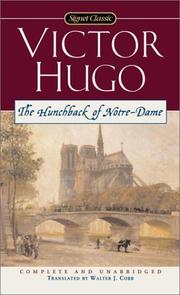
The Hunchback of Notre-Dame
1,939-word summary 9 min read 512 pages in the book
- First published
- 1831
- Publisher
- Signet Classics
- Pages
- 512
- ISBN
- 9780451527882
- Original title
- Notre-Dame de Paris
Reading options
What's inside (5 sections)
Paris as a character and a cathedral as a person. The Hunchback of Notre-Dame by Victor Hugo was first published in French in 1831 as Notre-Dame de Paris. This summary follows the Signet Classics translation, 512 pages, ISBN 9780451527882. Quasimodo rings bells. Esmeralda dances with a goat. Frollo wants her and damns himself. Paris watches. I read it over ten days, slowly, because Hugo digresses about buildings for chapters and the digressions are half the point.
The year is 1482. Louis XI reigns with spiders and cages. Paris is a medieval city of students, beggars, and priests packed around the Seine. Quasimodo, deaf from bells, raised by Archdeacon Claude Frollo, lives in the towers and sees the city as his garden. Esmeralda, sixteen, dances in squares with Djali the goat, kind to outcasts and naive about lust she inspires. Pierre Gringoire, a failed poet, drifts between them as witness and coward. Their paths cross at a festival of fools and never untangle.
What makes it last is Hugo double vision. He loves medieval Paris and mourns it. He loves the cathedral as a book in stone that printing will replace. He loves outcasts while showing their cruelty too. No one here is only victim or villain, except perhaps the crowd, which is both by turns. That moral thickness keeps 512 pages turning even when architecture lectures stall plot.
Festival and ananke
The opening festival chapters set theme with chaos that delights. A mystery play flops. A fool pope is elected by ugliness contest. Quasimodo wins and is carried cheering, then pelted when his real deafness scares. Esmeralda dances and steals every eye including Frollo from shadows. Gringoire follows her to the Court of Miracles, the beggar kingdom, and must marry her to avoid hanging. She accepts him as brother husband in name only, saving his life without loving him. That mercy defines her. Kind to the useless poet while desired by powerful men.
Hugo pauses for Notre-Dame itself in a famous chapter that readers either love or skip. Bird view of Paris roofs. History of the cathedral stones. Argument that architecture was humanity book before printing. I loved it on second read, skimmed first. If you are new, read the first three pages of the chapter for the view, then skip to plot. Return later when you miss Paris between events. The building will be there, like a character waiting in wings.
Fate, which Hugo calls ananke, drives coincidences that feel both contrived and true. Quasimodo ordered by Frollo to kidnap Esmeralda. Phoebus, the handsome captain, rescuing her. Esmeralda trusting Phoebus with her heart. Frollo watching from dark. Each meeting turns on being in the square at the wrong mass. Hugo believes cities push souls together through streets and bells. Accept the coincidences as city logic. Paris is small enough for fate and large enough for misunderstanding.
Gringoire function becomes clear here. He is the artist who survives by bending. When beggars threaten, he marries. When priests threaten, he writes. He loves Esmeralda platonically and uselessly, which lets Hugo show love without lust as contrast to Frollo consuming want. Gringoire will not save her when saving costs. That cowardice is honest and damning. Most of us are Gringoire when risk knocks. Clever enough to see. Too soft to act.
A practical note. Names vary by translation. Esmeralda, La Esmeralda. Frollo, Claude. Quasimodo, the hunchback. Keep a list of who loves whom unrequitedly. Everyone loves Esmeralda. Esmeralda loves Phoebus. Phoebus loves himself. Frollo loves Esmeralda as sin. Quasimodo loves Esmeralda as dawn. Gringoire loves his goat versus poetry tie. That chain explains every bad decision to come.
Frollo and Esmeralda
The middle belongs to Frollo, one of literature great studies in repression. A scholar priest who raised Quasimodo out of charity and pride both. Learned in alchemy. Feared by students. He sees Esmeralda dance and wants her with a violence that shocks his own theology. He prays. He fasts. He follows her through streets. His lust grows with denial until he offers her a choice that is no choice. Love me or hang. She spits. He arranges her arrest for a murder he saw and partly caused.
Hugo writes Frollo unraveling with care that avoids caricature. Long monologues about knowledge failing before desire. Jealousy of Phoebus youth and ease. Hatred of Quasimodo deaf devotion that reminds him of limits. A scene where Frollo shows Esmeralda the torture chamber tools while professing love is chilling precisely because he believes tenderness and threats can coexist. They cannot. Esmeralda sees clearly what scholars miss. This is not love. It is hunger with a cross.
Esmeralda herself is kinder than smart, which Hugo presents as virtue in a corrupt city, though modern readers may want more agency. She trusts Phoebus despite warnings. She shelters Gringoire without plan. She pities Quasimodo on the pillory with water when crowds laugh. That water scene, famous for good reason, reverses power for a moment. The despised bellringer weeps because one girl was kind. It sustains him through everything after. Small mercy as revolution. Hugo insists such moments matter more than edicts.
Her trial for stabbing Phoebus, actually stabbed by Frollo jealousy, shows justice as theater. Judges who fear priests. Torture that produces confessions. A goat accused of witchcraft because Djali spells Phoebus with hooves. Esmeralda confesses falsely to stop pain and is sentenced to hang. Readers will rage at the procedure. That rage is the point. Law serves power here, not truth. Only sanctuary in the cathedral pauses it, and even sanctuary fails when kings want examples.
If there is a drag, it is Hugo essays on printing versus building and on Paris sewers of history that stop Esmeralda story for fifty pages. Important to his argument about modernity, but hard when a girl awaits hanging. I skimmed one architecture catalog and returned for plot. Scholars forgive. First time readers should too. Mark the essays and read them after. Plot first. Stones later. The famous bird view chapter rewards patience though. Read its first three pages for the panorama of roofs and spires, then skip to the trial if needed. Return when you miss Paris between events. The building waits like a patient character. That approach kept me going through the middle without losing the thread of who loves whom to death.
Gringoire function becomes clear here and deserves a final note on cowardice as honesty. He is the artist who survives by bending. When beggars threaten, he marries. When priests threaten, he writes. He loves Esmeralda platonically and uselessly, which lets Hugo show love without lust as contrast to Frollo consuming want. Gringoire will not save her when saving costs. That failure is presented without flinching. Most of us are Gringoire when risk knocks. Clever enough to see. Too soft to act. His rescue of the goat instead of the girl in the finale is the bitter joke that lands because he earlier saved himself the same way. Survival as habit, art as excuse.
Siege and graves
The last act is justly famous for scale and sorrow. Esmeralda, rescued by Quasimodo to the towers, hides while Paris searches. Frollo demands her. Quasimodo, torn between master and mercy, chooses Esmeralda and defends the cathedral alone against beggars and soldiers both. He pours lead. Drops stones. Rings alarms that deafen him further. It is heroic and hopeless because the enemy is not only outside. Frollo has keys inside.
Phoebus does nothing worthy here, which completes his portrait. He marries his rich fiancee, attends the execution as spectacle, and forgets the dancer who loved him. Gringoire saves the goat instead of the girl in a choice Hugo presents without flinching. Artists save symbols when people cost too much. That bitter joke lands because Gringoire earlier saved himself the same way. Survival as habit.
Quasimodo final choice, to hold Esmeralda dead and starve beside her in the charnel house, divides readers. Romantic or grotesque. Hugo means both. Years later skeletons found embraced, one humped, turn to dust when separated. That image closes the book because stone outlasts flesh but love outlasts stone in story. Paris forgets names. The cathedral remembers shapes in crypts. It is not a happy ending. It is a true one about devotion that came too late to save but not too late to matter.
What stays with me is Hugo argument about who the monster is. Crowds call Quasimodo monster for his face. He proves kindest. Priests call Esmeralda witch for dancing. She proves most charitable. Judges call Frollo holy for learning. He proves most corrupt. Appearances invert throughout. Only the cathedral, ugly and beautiful at once, tells truth by containing all. That is why Hugo spent chapters on stones. Buildings remember what people revise.
Read it if you like doorstoppers with Paris and pity. Give it time for essays, but chase Esmeralda chapters first if patience thins. Notice water given on pillories. Notice who watches executions as entertainment. By the end you will hear bells differently. They mark hours for a city that failed two kind souls. Listen, Hugo says, and do better with the next dancer in the square. That plea, across two centuries, still rings. Gringoire final choice deserves a last bitter note that Hugo presents without flinching. When soldiers break in, the poet saves the goat Djali instead of Esmeralda, slipping out with the animal while the girl is taken. Artists save symbols when people cost too much. That joke lands because Gringoire earlier saved himself the same way at the Court of Miracles, marrying to avoid hanging. Survival as habit, art as excuse. Most of us are Gringoire when risk knocks. Clever enough to see. Too soft to act. Hugo includes himself in that indictment, a writer who watched Paris change and wrote instead of marching. Honesty like that keeps 500 pages from feeling like a sermon. Stones remember. Poets record. Readers must do the carrying. The cathedral chapters reward a second pass that first time readers skip, so a note on how to return helps. Read the bird view opening for panorama, skip the stone catalog, then come back after the trial for the argument about printing replacing architecture as humanity book. Hugo meant it literally. Churches taught through carvings to illiterate crowds. Books would teach through type to wider ones. Both can lie. Both can save. His fear was not change but forgetting to look up. Modern readers scrolling past buildings will feel called out kindly. Look up once a day. That practice honors the novel more than any essay summary. Esmeralda goat Djali deserves a last fond note as more than prop. Trained to spell Phoebus with hooves, beloved by crowds, accused of witchcraft by judges who fear clever animals. Gringoire rescues the goat in the finale while the girl dies, a choice Hugo presents as damning with a shrug. Artists save symbols when people cost too much. Readers remember the goat and wince. That wince is the book working. Notice who you would carry out of a fire. Then carry the person, not the symbol, next time. Phoebus captain deserves a last cold look as contrast to Quasimodo heat. Handsome, brave in battle, empty at core. He loves Esmeralda as decoration and discards her when cost appears. His marriage to Fleur proceeds on schedule while Esmeralda awaits hanging he could delay with a word. Hugo gives him no tragic depth on purpose. Some men are simply shallow where depth was needed. That flatness indicts more than villainy would. Evil at least believes something. Phoebus believes in lunch.
FAQ
When was The Hunchback of Notre-Dame published?
First published in French in 1831 as Notre-Dame de Paris. This summary follows the Signet Classics translation, 512 pages, ISBN 9780451527882.
Is it part of a series?
No. It stands alone among Hugo novels, though it shares his love of Paris and outcasts.
Similar books
The Tenant of Wildfell Hall
Helen flees a cruel marriage, hides as Helen Graham at Wildfell Hall, and tells her full story through a long diary young Gilbert Markham must read before…
2,838-word summary · 13 min read
Rebecca
A shy bride at Manderley learns she competes with Maxim's perfect dead wife Rebecca.
2,008-word summary · 9 min read
The Count of Monte Cristo
Edmond Dantes escapes Chateau d'If and returns as the Count to repay friends and ruin betrayers.
3,879-word summary · 17 min read
A Tale of Two Cities
Lucie Manette frees her father from the Bastille while Sydney Carton loves her from afar through London and Paris revolt.
3,595-word summary · 16 min read
Wuthering Heights
Emily Bronte's Wuthering Heights retold: Heathcliff and Cathy on the moors, two houses, two generations.
2,056-word summary · 9 min read
Jane Eyre
Charlotte Bronte's Jane Eyre retold: Lowood, Thornfield, the attic secret, and Jane's refusal to shrink.
2,325-word summary · 10 min read

Anatomy: A Love Story
In 1817 Edinburgh, a noblewoman who wants to be a surgeon disguises herself to study anatomy and falls for the grave robber who supplies her with bodies.
2,031-word summary · 9 min read

Fathers and Sons
Arkady brings the nihilist Bazarov home to his father's estate, and a generational argument turns into love, a duel, and an early death.
2,192-word summary · 10 min read
The Moonstone
A cursed yellow diamond vanishes on the night of a birthday party, and eight witnesses tell what they saw.
2,603-word summary · 12 min read

Ivanhoe
A disinherited Saxon knight, a great tournament, a besieged castle and a trial by combat. Scott's most famous novel, set in England in 1194.
2,834-word summary · 13 min read

Doctor Zhivago
A doctor and poet lives through revolution, war, and love in Pasternak's novel of private life under the pressure of Russian history.
2,213-word summary · 10 min read
Anne of Windy Poplars
Anne spends three letter-filled years as principal of Summerside High, outlasts the Pringle clan, and warms a lonely vice-principal and a dreaming little girl…
2,599-word summary · 12 min read
The Little Paris Bookshop
A Paris bookseller who prescribes novels as medicine finally opens a twenty one year old letter from his lost love and sails south through France to find her.
2,050-word summary · 9 min read
I Capture the Castle
Cassandra journals six months of love and money trouble in a castle.
2,402-word summary · 11 min read
Anne's House of Dreams
Newlyweds Anne and Gilbert start in a seaside house with kind neighbors.
2,465-word summary · 11 min read
The Prince and the Pauper
Tom Canty and Prince Edward swap clothes in Tudor London and live each other's lives, from palace dinners to prison cells, until a hidden seal decides the…
2,979-word summary · 13 min read

One Day in the Life of Ivan Denisovich
One freezing day with prisoner Shch-854 in a Soviet camp: roll call, bricklaying in the cold, bread rations, and small wins that let Shukhov call the day…
2,668-word summary · 12 min read
Brideshead Revisited
At Oxford Charles Ryder befriends Sebastian Flyte and falls into the Catholic Marchmain family, from Brideshead summers to Julia's affair and Lord Marchmain's…
2,353-word summary · 10 min read

Belladonna
Poison-immune orphan Signa Farrow hunts a gothic killer at Thorn Grove with Death as ally and suitor, while cousin Blythe fades and her ghost mother asks for…
2,868-word summary · 13 min read

Written in My Own Heart's Blood
1778 war splits Jamies and Claires across rebellion and time as Brianna hunts a kidnapped son.
2,008-word summary · 9 min read
One Thousand White Women: The Journals of May Dodd
May Dodd journals joining Cheyenne as a bride in an 1875 government swap, learning prairie life and loss.
2,036-word summary · 9 min read
Lady Chatterley's Lover
A baronet's wife, starved in a marriage the war broke, takes the gamekeeper as her lover. Lawrence's banned 1928 novel of class and touch.
2,566-word summary · 11 min read
Daughter of Fortune
Eliza Sommers flees Chile for California gold rush San Francisco, disguised and searching for her lover, finding freedom with Tao Chi'en.
2,009-word summary · 9 min read
Chocolat
A single mother opens a chocolate shop opposite the church during Lent, and a divided French village must choose between pleasure and piety.
2,272-word summary · 10 min read
Carmilla
Lonely Laura in Styria befriends beautiful Carmilla, whose night visits bring dreams, bites, and ancestral dread.
2,158-word summary · 10 min read
Brooklyn
Eilis Lacey leaves Enniscorthy for Brooklyn boarding house work, love with Tony, then a home death forces divided choice.
2,143-word summary · 10 min read
The Scarlet Pimpernel
A foppish baronet rescues aristocrats from the guillotine while his French wife hunts the hero she scorns.
2,980-word summary · 13 min read

These Violent Delights
Ex lover gang heirs hunt a madness monster in 1927 Shanghai together.
2,122-word summary · 9 min read
The Woman in White
A drawing teacher and Marian Halcombe fight a forged register to prove Laura is alive.
1,915-word summary · 9 min read
The Raven
A grieving student asks a midnight raven and hears only Nevermore.
2,141-word summary · 10 min read