
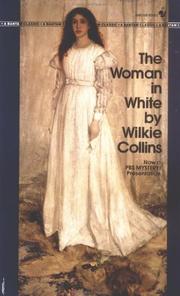
Reading options
What's inside (6 sections)
I had heard for years that The Woman in White is where detective fiction starts, and I finally read it to see if that claim holds. It does, though not in the way modern mysteries work. There is no single detective with a quirky habit. There is a group of people telling what they saw, one after another, trying to prove a woman is who she says she is. First published in serial form from November 1859 to August 1860 in All the Year Round and Harper's Weekly, then in book form in 1860, it still moves. I used the Bantam Classics reprint, 576 pages, ISBN 9780553212631, but the year that counts is 1860, when Collins put his name to this maze.
Walter Hartright is a young drawing teacher. Late one night on a London road he meets a woman all in white who is lost, anxious, and oddly familiar. He helps her find a cab. Later he learns she escaped from an asylum. Soon after, through his Italian friend Pesca, he gets work at Limmeridge House in Cumberland, teaching drawing to Laura Fairlie and her half sister Marian Halcombe. Laura looks exactly like the woman in white, whose name is Anne Catherick. That resemblance is the engine.
Limmeridge and the warning
Limeridge is run, barely, by Frederick Fairlie, Laura's uncle, a hypochondriac who lives in a few rooms and complains through closed doors. Marian runs everything else. She is sharp, plain by Victorian novel standards which the book keeps reminding you of, loyal to Laura in a way that carries half the plot. Laura is gentle, rich, engaged to Sir Percival Glyde, a baronet who seems charming until you look at the marriage settlement.
Walter and Laura fall in love quietly while he teaches. Marian sees it and tells Walter to leave, because Laura is promised and because Walter has no money. Before he goes, Laura gets an anonymous letter warning her not to marry Percival. Walter traces it to Anne. He meets Anne again in Cumberland and becomes convinced Percival put her in the asylum to hide something. No one with power listens. The family lawyer dislikes the settlement, which would give Laura's twenty thousand pounds to Percival if she dies without an heir, but Laura marries him anyway in December 1849 and goes to Italy. Walter joins an expedition to Honduras to get away.
I liked this opening more than I expected because Collins lets the romance stay small. No long speeches. Walter notices Laura's drawing, her way of listening, her kindness to servants. Laura notices Walter actually sees her rather than her fortune. Marian watches both and writes about it with a mix of love and exasperation. The three of them feel like real coworkers in a house rather than symbols.
The Anne thread is genuinely eerie. She was a child near Limmeridge, devoted to Laura's mother, who first dressed her in white. She repeats phrases her mother said, especially about Percival, without understanding them. She knows there is a secret without knowing what it is. That detail, someone carrying dangerous words they cannot parse, runs through the whole book and still feels fresh.
Blackwater and Count Fosco
The middle moves to Blackwater Park, Percival's house in Hampshire, where Laura, now Lady Glyde, lives with Percival and his friend Count Fosco and Fosco's wife, who is Laura's aunt. Marian comes at Laura's request. Percival needs money badly. He tries to bully Laura into signing a document that would let him borrow against her settlement. She refuses. Anne, now very ill, comes to the area and contacts Laura, saying she can ruin Percival. Before she can explain, Percival and Fosco act.
Fosco is the reason people still read this. He is huge, polite, fond of animals, speaks many languages, loves his wife in a possessive theatrical way, and runs conspiracies with calm good humor. He keeps white mice and canaries, feeds them during serious conversations, and apologizes to them when he raises his voice. He is menacing precisely because he never needs to shout. Percival shouts and breaks things. Fosco writes letters, keeps copies, remembers dates.
Marian is the counterweight. She eavesdrops from a roof in the rain, gets soaked, falls seriously ill, and still tries to warn Laura. Her diary from Blackwater is the best sustained stretch. Funny about Fosco's vanity, clear about money, honest about fear. She admits when she does not understand a legal point and then goes to find out. If Walter is the heart, Marian is the brain, and Collins knows it. Modern readers often say Marian should have been the detective lead. They are right, though Walter does the legwork later that a woman in 1850 could not do openly.
The plot turns on identity. Fosco uses the likeness between Laura and Anne to swap them. Laura is tricked to London, drugged, put in the asylum as Anne. Anne dies and is buried as Laura. It sounds outlandish summarized, but Collins sells it through paperwork. Certificates, registers, nurse logs, tombstones, all the dull instruments that decide who counts as alive. Marian finds Laura in the asylum only because she goes looking for Anne and hears a voice she knows insisting she is Laura. The nurse calls it delusion. Marian bribes her way in and gets Laura out.
Proving who Laura is
The last third is Walter, Marian, and Laura living quietly in London under other names while Walter hunts proof. He cannot just say the asylum mixed them up. He needs dates and documents. He learns Percival's secret, which I will keep vague enough to preserve the discovery but specific enough to be useful. Percival is not entitled to his title. His parents were not married when he thought, and he forged a marriage record in a church register to borrow money and keep the estate. His accomplice was Anne's mother, who got a watch and an annual payment for letting him into the vestry.
Walter proves the forgery by comparison. A clerk in a nearby town made a copy of the register. The copy lacks the entry that appears in the original. That gap, plus testimony about who had access, is enough in logic if not yet in law. Percival, believing Walter will expose him, tries to burn the original register to hide the fake and dies in the church fire he starts. It is a grim, fitting end for a man who trusted paper more than people.
That still leaves Laura legally dead. No court will take Walter's word over a tombstone. The breakthrough comes from Fosco, of all people. Walter tracks him after learning through Pesca that Fosco betrayed an Italian brotherhood and must flee England. Walter corners him and trades safe passage for a written confession with dates. Fosco, vain to the end, writes beautifully, admits the swap, corrects Walter's grammar, and leaves. Laura's identity is restored. Her name comes off the grave and Anne's goes on. Fosco escapes to Paris and is killed there by the brotherhood. Walter and Laura, already married by then for protection and love, inherit Limmeridge after Fairlie dies, and their son takes the house.
If that sounds like a lot, it is. The book runs long because Collins shows the work. Walking to churches, waiting for clerks, copying entries, asking innkeepers what night a lady traveled. I found that procedural patience satisfying. It is the ancestor of every modern scene where someone pulls CCTV or phone records. Here it is registers and cab drivers and laundry marks.
Law, marriage, and why it still stings
What keeps the book alive is not the tricks but the anger underneath about married women's position. Before the Married Women's Property Act of 1882, a wife's money passed to her husband. Laura's twenty thousand pounds becomes Percival's on marriage, and if she dies childless he keeps it. Her uncle neglects her interests. Her lawyer warns but cannot stop her. Once married she cannot sign or refuse easily without being called mad. The asylum is not a metaphor here. Husbands and fathers really could have inconvenient women confined with friendly doctors' notes.
Collins dedicated the book to Bryan Procter, a Commissioner for Lunacy, and drew on cases like Louisa Nottidge, who was locked up for family convenience. Marian says it plainly in her diary. Laura is rich, well born, well liked, and still almost erased by two men with pen and money. Anne, poor and ill and odd, never had a chance. The doubling is the point. One woman in white is mourned in a churchyard under the wrong name. The other almost joins her because no one will take her word over a husband's.
For craft, the multiple narrators matter. Collins opens by saying the story will be told by more than one pen, as in court by more than one witness. Walter, Marian, the lawyer Gilmore, the housekeeper, servants, doctors, even Fosco contribute statements. You learn to weigh bias. Gilmore is careful but conventional. Marian is passionate but tired. Fosco is brilliant but self serving. No one sees everything. That is why the book feels modern despite the long sentences.
Complaints are fair too. The middle Blackwater section repeats warnings. Marian overhears part of a plan, misses the rest, gets ill, recovers slowly. I wanted her to act faster, though illness in 1850 without antibiotics was serious and Collins shows it. Frederick Fairlie's comedy goes on too long for me. Two scenes of him fussing about nerves would do. We get five. And Laura, while sympathetic, stays pale next to Marian. She endures more than she decides until very late. Some readers love her gentleness. I respected it more than I felt it.
Still, I tore through the last two hundred pages. The church register chapters are thrilling in a quiet way. No chases, just a man comparing handwriting while a clerk watches. The Fosco confession scene, where Walter forces a villain who likes him to write the truth, is wonderfully tense because both men are polite. And the final restoration, stone cutter changing a name, hit me harder than any twist. A name on stone is who the law says you were. Changing it back is justice you can touch.
For who this is for. If you like Dickens but want more plot, try it. If you like modern legal thrillers, you will recognize the moves. If you want short, look elsewhere. At nearly six hundred pages in this edition it asks for a week. Read twenty pages at a time, keep a list of who signed what, and let Marian carry you when Walter gets earnest. I closed it thinking about how many Lauras never got a Walter and a Marian, which is exactly the thought Collins wanted to leave.
A practical note on editions. The Bantam Classics text I used keeps Collins's preface about multiple pens and preserves the original dates, 1849 to 1850 for the story, 1859 to 1860 for serial publication. If you use another edition, the page numbers will shift but the sequence of statements stays the same. I found it useful to mark each narrator change with a tab. By the end I had a small rainbow of tabs for Walter, Marian, Gilmore, Fosco, and the minor witnesses. Seeing the colors showed how carefully Collins rations Marian. She disappears when ill, returns when needed, never overstays. That rationing is part of why readers remember her most.
FAQ
Who is the detective in The Woman in White?
No single detective leads. Collins tells it through many witnesses, Walter, Marian, lawyers, servants and Fosco, like evidence in court. You weigh bias to find the truth.
When was The Woman in White first published?
It ran from November 1859 to August 1860 in All the Year Round and Harper's Weekly, then in book form in 1860. The edition cited is Bantam Classics, 576 pages.
What is Sir Percival's secret?
He is not entitled to his title and forged a marriage record to borrow money. Walter proves it by comparing the church register with a clerk's copy.
Similar books

The Moonstone
A cursed yellow diamond vanishes on the night of a birthday party, and eight witnesses tell what they saw.
2,603-word summary · 12 min read
The Strange Case of Dr. Jekyll and Mr. Hyde
A London lawyer traces a violent stranger to his respectable friend in Stevenson's 1886 tale of two selves.
2,286-word summary · 10 min read

The Memoirs of Sherlock Holmes
Doyle's second Holmes collection gathers twelve Strand stories, including the early case of the Gloria Scott and the confrontation with Moriarty at Reichenbach…
2,390-word summary · 11 min read

Bleak House
Jarndyce and Jarndyce grinds through Chancery while Esther finds her family.
2,480-word summary · 11 min read

The Villa
Two friends house-sit a haunted Italian villa tied to a 1974 rock murder while their own bond frays.
2,243-word summary · 10 min read
We Have Always Lived in the Castle
Merricat guards sister Constance after arsenic deaths, until cousin Charles invades and fire frees them.
3,011-word summary · 13 min read
The Turn of the Key
A nanny writes from prison about a smart Highland house, four girls, and the night one child died.
3,207-word summary · 14 min read
The Only One Left
Caregiver Kit tends mute Lenora Hope accused of 1929 family murders.
2,592-word summary · 12 min read
Rebecca
A shy bride at Manderley learns she competes with Maxim's perfect dead wife Rebecca.
2,008-word summary · 9 min read

Jane Eyre
Charlotte Bronte's Jane Eyre retold: Lowood, Thornfield, the attic secret, and Jane's refusal to shrink.
2,325-word summary · 10 min read

What She Knew
Rachel lets her eight-year-old son run ahead in a Bristol park, and the nine-day search turns her into a suspect in the public eye.
2,952-word summary · 13 min read

What Moves the Dead
Alex Easton arrives at the Usher house to find Madeline dying, the tarn full of fungus, and the local hares refusing to stay dead.
2,586-word summary · 11 min read
The Crying of Lot 49
A California woman named executor of her ex-lover's estate follows a muted post horn into a possible centuries-old postal conspiracy, and Pynchon refuses to…
2,003-word summary · 9 min read

The Beach House
A young valet is beaten to death at a Hamptons party, and his law-student brother spends a year building a case against the family that covered it up.
2,049-word summary · 9 min read
The Art Forger
A disgraced Boston painter agrees to copy a Degas stolen from the Gardner Museum, then begins to suspect the original she is copying is itself a forgery.
2,117-word summary · 9 min read

Six Years
A professor who promised to forget the woman he loved sees her husband's obituary and discovers that the wedding, the marriage, and the woman herself may never…
2,076-word summary · 9 min read
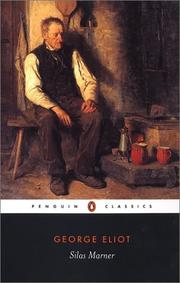
Silas Marner
A falsely accused weaver hoards gold in Raveloe until a stolen hoard and an abandoned child remake his narrow life.
2,699-word summary · 12 min read

Anatomy: A Love Story
In 1817 Edinburgh, a noblewoman who wants to be a surgeon disguises herself to study anatomy and falls for the grave robber who supplies her with bodies.
2,031-word summary · 9 min read

Rules of Prey
Minneapolis detective Lucas Davenport hunts a killer who leaves a new rule at every scene and treats murder as a game of wits.
1,914-word summary · 9 min read

Night Film
A disgraced journalist investigates the death of a reclusive horror director's daughter, following a red coat through hospitals, secret clubs, and a family…
2,690-word summary · 12 min read

4th of July
Lindsay Boxer shoots two armed teenagers in self-defense, faces a wrongful-death trial, and spends her leave chasing a string of throat-slashing murders in…
2,192-word summary · 10 min read

61 Hours
A bus crash strands Jack Reacher in a snowbound South Dakota town where a drug gang, a corrupt police force, and a single witness are on a collision course.
2,227-word summary · 10 min read

The Girls in the Garden
Clare moves her daughters to a gated London garden where the community feels safe; at the midsummer party, twelve-year-old Pip finds her sister bleeding in the…
1,973-word summary · 9 min read
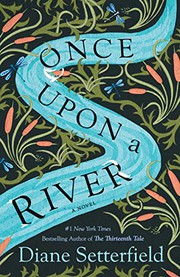
Once Upon a River
A wounded man stumbles into a riverside inn carrying what appears to be a drowned child who is not quite dead, and the story braids the guesses of everyone who…
2,173-word summary · 10 min read

Still Missing
A realtor is abducted at a Vancouver Island open house and held for more than a year. Told through therapy sessions, the novel follows her escape and the hunt…
2,466-word summary · 11 min read

Indigo Ridge
A new police chief in a Montana town meets the founding family's eldest son in a bar, and one night later a body turns up under their cliff.
2,763-word summary · 12 min read

Bad Luck and Trouble
A deposit of $1,030 summons Jack Reacher back to his old army unit, which is being picked off one name at a time.
2,366-word summary · 11 min read

3rd Degree
The third Women's Murder Club novel follows a San Francisco terror cell and a three-day killing schedule, and it costs the club a member.
2,685-word summary · 12 min read

Worth Dying For
Reacher stops for one night in rural Nebraska and finds a family that runs the county, a missing girl and a shipment worth killing for.
2,021-word summary · 9 min read

Tinker, Tailor, Soldier, Spy
Retired spymaster George Smiley is brought back to find a Soviet mole inside British intelligence, and the trail leads through old friends, old betrayals, and…
2,092-word summary · 9 min read