
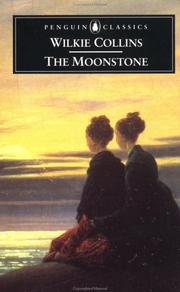
Reading options
What's inside (9 sections)
A diamond with a long memory
The Moonstone begins in India, in the middle of a siege, with a story nobody in England has heard yet. The prologue is a family paper, written by a cousin of Colonel John Herncastle while he is out east, explaining why he has cut his cousin off. It is dated to the storming of Seringapatam in 1799, under General Baird, when Herncastle took a yellow diamond from a dying priest and lied about how he came by it. The stone had been worn in the forehead of a four-handed god of the moon, it had been rescued from the temple at Somnauth by the eleventh-century conqueror Mahmud of Ghizni, and it had been guarded for generations by three Brahmins who would not give it up. A prophecy about the man who took it was written over the gates of the shrine in gold.
That prologue is not decoration. Collins opens with the curse so that the rest of the book is a story about a rumour of doom, and so that the reader knows, from page one, that the stone is not a jewel with a price but a thing with a history and a creditor.
The curse is the engine. Everything after it is the detective story.
The mechanism of the theft is settled in those same opening pages, which is a neat piece of construction. The stone passed to Tippoo Sultan of Seringapatam, who had it mounted as an ornament in a dagger hilt, and the three priests followed it even into the palace in disguise. On the night of the assault the narrator meets Herncastle at dusk, after the storming, and sees the dagger in his hand with a stone flashing in the handle. A dying priest points at it and tells him the Moonstone will have its vengeance yet on him and his house. The curse, in other words, is not superstition invented by the family. It is a promise, and the book spends nearly 200,000 words keeping it.
The novel was published in 1868. It ran in Dickens's magazine All the Year Round from January to August that year and came out in book form with Tinsley Brothers in three volumes. The edition cited here is the Penguin Classics paperback, 528 pages, edited with an introduction by Sandra Kemp. Collins's architecture is unusual and worth knowing before you start, because it explains the book's strangeness. After the prologue there is a First Period, "The Loss of the Diamond (1848)", and a Second Period, "The Discovery of the Truth (1848 to 1849)", and the second period is told in eight separate narratives by eight different writers. Then an epilogue. You read the same events more than once, from people who could not see the whole of them.
Betteredge and the birthday party
The first narrative is Gabriel Betteredge, the house-steward at Lady Verinder's Yorkshire house, and he is a comic creation who treats his copy of Robinson Crusoe as an oracle. On the morning of 21 May 1850 Franklin Blake arrives and asks him to start writing down the whole affair of the diamond, so that the facts will be on record for whoever comes after them. Betteredge agrees, after consulting his daughter Penelope, and produces twenty-three chapters on the months in which the stone came to the house and then left it.
Rachel Verinder has just turned eighteen. Her uncle, the colonel, left her the diamond in his will, with a clause forgiving his sister Julia for having had his door closed on him in his lifetime, which is Lady Verinder's way of saying she was glad to see the last of him. On the evening of 21 June the household gathers for a birthday dinner and a great many people file past the young woman to admire the stone at her breast.
Three strangers are also in the house that week, three Indian men who came to perform as jugglers and who turn out to be the descendants of the priests from the prologue. They are attended by a small, fair-haired English boy who carries their bag and whom they have found sleeping in an empty basket in the market, so the household talks about the child as much as about the men. Betteredge notices the visitors and is uneasy. He also notices a French doctor called Thomas Candy, who is in the house because he is recovering from a fever, and Franklin Blake, who is Rachel's cousin and suitor and who gets under the doctor's skin by making fun of medicine in front of the family.
The alarm goes off in the small hours. The window is open, the case is empty, and the diamond is gone. From that moment the book stops being about a jewel and starts being about who can be believed.
That is the subject, and it holds for five hundred pages.
The household and the search
Two servants carry most of the early suspicion. Penelope Betteredge is the housemaid; Rosanna Spearman is the second one, a quiet girl who has spent time in a penitentiary for theft, and who begins behaving oddly within days of the theft. The local police arrive first, under Superintendent Seegrave, who manages to offend nearly everyone he questions. Then Lady Verinder calls in Sergeant Cuff of the Detective Force at Scotland Yard, a policeman called in from London, famous for his roses and for the exactness of his method. The case eventually costs him his place in the force, which he gives up for a cottage at Dorking and a full-time interest in the white moss rose.
Cuff is good. He also fails, and the failure is the point of the book. Rachel refuses to let anyone examine her room, will not explain herself, and becomes so hostile to Franklin's investigation that the two are estranged for most of a year. Suspicion settles for a while on the dead colonel and his quarrel with his sister, a motive nobody can test because he is safely out of reach. The three jugglers keep appearing at a distance, and the suspicion of the exotic outsider sits comfortably where a real explanation should be.
The clue that unlocks everything is Rosanna's behaviour. Cuff deduces that in the small hours after the theft she slipped down to Rachel's room to settle the hiding of the Moonstone, and that on the way back her nightgown brushed against wet paint on the door frame. The paint puts Franklin in that room. Rosanna buys cloth in town, makes herself a replacement, and burns the stained garment, because she has fallen in love with him and will not be the one to hand him to the police.
Then she walks out onto the Shivering Sand, the quicksand off the Yorkshire coast that the local children are told to avoid, and drowns herself. Her body is found at low tide. Before she goes she leaves a sealed letter for Franklin, and her friend Lucy Yolland, the fisherman's daughter that everyone calls Limping Lucy, keeps it at Cobb's Hole and will not hand it to anybody but him. Cuff's reconstruction of the night has to be done without the one witness who could have confirmed the obvious answer, and the reader is left holding the same hole in the story.
Later chapters add a quieter kind of damage. Lady Verinder dies, the household disperses, and Rachel is left in London with a scandal attached to her name and a marriage being arranged around it. The stone is not the only thing that has been lost.
Miss Clack, tracts and matchmaking
The first of the eight narratives is Miss Clack, niece of the late Sir John Verinder, and she is the comic engine of the middle of the book. She is a poor relation with an appetite for distributing religious tracts she does not really believe in, an absolute confidence that the two people she most wants to convert are Rachel and Franklin, and a devotion to Mr Godfrey Ablewhite that she does not examine too closely. Her chapters are funny because they are small-minded in a specific way. She thinks the diamond is a divine warning, she thinks the whole business should be sorted out by marrying Rachel to Ablewhite, and she thinks the newspapers and the magistrates have no business interfering in a family matter.
Ablewhite is a cousin of Rachel's, a barrister by profession, a ladies' man by temperament and a good Samaritan by choice, and he is also, as the reader learns slowly, the man who took the stone. Miss Clack's view of him is the book's portrait of decent-seeming men who want something. Between her tracts and her matchmaking you get Collins's satire of the marriage market in a provincial household, where a woman's future is discussed in terms of her suitors by people who will not ask what she wants. When Rachel is engaged to Ablewhite, the reader can see the trap closing and the women in the story cannot.
The second narrative, from the solicitor Mathew Bruff, is a dry legal document that quietly rearranges the case, and the third is Franklin himself, wandering in the East, writing down his own suspicion of himself. Collins uses the shift in voice to make you feel how differently the same night looks from inside different heads.
The opium and the lost hour
The fourth narrative is the strangest document in Victorian fiction: the journal of Ezra Jennings, assistant to Dr Candy, an odd-looking, sickly man who uses opium to control an incurable pain. It is Jennings who proposes the experiment that cracks the case, and the experiment is repellent and brilliant at once. He gives Franklin opium and then plays back his own recorded narrative to him, and under the drug Franklin relives the missing hours of the night of the theft.
What comes back is this. Candy, insulted by Franklin's mockery of his profession, has had twenty-five minims of laudanum carried up to Franklin's room that night and passed off as medicine for sleeplessness, so that in the morning he could come down on him with the truth. Drugged and half awake, Franklin wandered upstairs, took the diamond out of its case in Rachel's room, and met Ablewhite in the passage. Believing the stone had been taken out of the bank that morning to be given to Rachel, Franklin handed it to his cousin to take back to the bank it came from. Ablewhite pocketed it instead. By morning Franklin had no memory of the night and Rachel had no reason to believe him.
The murder follows fast. Ablewhite is a trustee of the fund left by the colonel, whose will had three clauses: keep his animals, endow a professorship of experimental chemistry at a northern university, and leave the diamond to his niece. On 24 June he has three hundred pounds to pay to the young man for whom he is trustee, with no way of raising it. He borrows three thousand from the moneylender Septimus Luker against the diamond, travels to Amsterdam to have it cut into marketable stones so that the curse in it is broken and the money can be made good, and comes back in disguise to redeem it. While he is away the police raid the house in Northumberland Street where he and Luker were staying, the newspapers print the robbery and name both men, and Miss Clack, exiled in Brittany with a Protestant clergyman and a cheap market, writes to her friend about having become the property of the newspapers. He is found dead at an inn near the coast. A coroner's inquest returns a verdict of wilful murder against some person or persons unknown, and the three priests have the stone.
Mr Murthwaite and the god
The sixth narrative is Sergeant Cuff's, the seventh is a letter from Dr Candy, the eighth is Betteredge closing the book he opened. The epilogue gives three more statements: Sergeant Cuff's man, the captain of the East Indiaman Bewley Castle, and a letter from Mr Murthwaite, an adventurer who met the three priests at dinner in London in the autumn of 1848 and had been waiting for them ever since.
The captain's statement records that the three men sailed for Bombay as his passengers and left the ship in a boat one night off the coast, when the weather was calm and discipline was relaxed. Murthwaite's letter, dated 1850, finds them at Somnauth, the temple city in Kattiawar that Mahmud of Ghizni sacked in the eleventh century. He has disguised himself as a pilgrim and walked into a night ceremony on a hill for the god of the moon. Behind a curtain between two trees, three figures put the diamond back where it belongs. The priests, who forfeited caste in the service of their god, are purified by the pilgrimage and part in three directions, never to see each other again. The curse that opened the book is closed in the last pages.
Why it still reads sharp
People call this the first English detective novel and it is easy to see why. The rules of the genre are all set out here: a country house theft, an inside job, a crowd of false suspects, a professional investigator, a bungling local constabulary, a reconstruction of the crime, and a final twist that reassigns everything you thought you knew. T. S. Eliot later called it the first, the longest and the best of modern English detective novels, and Dorothy L. Sayers said it was probably the very finest detective story ever written. Sergeant Cuff is the prototype for the police detective in English crime fiction.
What is easy to forget is that the diamond is not the subject. The subject is testimony. Cuff is defeated by silence: Rachel will not speak because she is protecting a man she thinks is a thief, Rosanna will not speak because she loves one, and every confident account in the novel turns out to be a version of events shaped by what its teller wants. The three priests, who have the strongest claim on the stone in the whole book, are treated as scenery, and Collins's colonial language about them will not sit comfortably with a modern reader.
The book also has the taste of its moment. It is a sensation novel, printed in a weekly magazine in the years when London was full of trials and thefts, and it pokes fun at the appetite for scandal while feeding it. The Northumberland Street robbery is reported in the papers, the two men who were robbed are named in print, and a religious crank turns the whole affair into a tract. Collins is sharpest here, because the paper-pushing Miss Clack is also the woman who cannot see what is happening in her own circle. The press, in other words, is one of the unreliable narrators, and the story knows it.
The other problem is the pace. The first period is a treat, because Betteredge is funny and the household is vivid, and then Miss Clack's eight chapters are a wall of tracts and matchmaking that can try your patience. The opium chapters are brilliant and also very hard going. Read it as a period document rather than as a thriller and it settles into something better: a novel about how a family protects itself from a secret, and about how a story gets retold by everyone who was there.
FAQ
Who stole the Moonstone?
Godfrey Ablewhite, a cousin of Rachel Verinder who is trustee of a fund he has been stealing from. He takes the stone on a night when Franklin Blake, drugged with laudanum by Dr Candy, unknowingly hands it to him.
When was The Moonstone first published?
It was first published in 1868, running in Dickens's magazine All the Year Round from January to August and then in book form with Tinsley Brothers in three volumes. The edition cited here is the Penguin Classics paperback, 528 pages, edited with an introduction by Sandra Kemp.
Is The Moonstone the first detective novel?
It is usually credited as the first English detective novel, and T. S. Eliot called it the first, the longest and the best of modern English detective novels. Much of what the genre now does, from the country house theft to the police investigator, is set out here.
Similar books
The Woman in White
A drawing teacher and Marian Halcombe fight a forged register to prove Laura is alive.
1,915-word summary · 9 min read
The Memoirs of Sherlock Holmes
Doyle's second Holmes collection gathers twelve Strand stories, including the early case of the Gloria Scott and the confrontation with Moriarty at Reichenbach…
2,390-word summary · 11 min read
The Strange Case of Dr. Jekyll and Mr. Hyde
A London lawyer traces a violent stranger to his respectable friend in Stevenson's 1886 tale of two selves.
2,286-word summary · 10 min read

Rules of Prey
Minneapolis detective Lucas Davenport hunts a killer who leaves a new rule at every scene and treats murder as a game of wits.
1,914-word summary · 9 min read

3rd Degree
The third Women's Murder Club novel follows a San Francisco terror cell and a three-day killing schedule, and it costs the club a member.
2,685-word summary · 12 min read
The Murder on the Links
Poirot arrives in France too late to save his client, who is found stabbed in a grave and was not the man he claimed to be. Christie's second Poirot novel.
2,055-word summary · 9 min read

The Caves of Steel
Detective Elijah Baley must solve a Spacer's murder in a domed New York, partnered with R. Daneel Olivaw, a humaniform robot built in the victim's image.
2,445-word summary · 11 min read
The Maltese Falcon
Sam Spade hunts a jeweled bird through lies after his partner is killed.
2,529-word summary · 11 min read
Bleak House
Jarndyce and Jarndyce grinds through Chancery while Esther finds her family.
2,480-word summary · 11 min read
The Body in the Library
A strange girl found dead in a library pulls Miss Marple into lies about dance halls and film.
2,017-word summary · 9 min read

2nd Chance
Lindsay Boxer and the Women's Murder Club hunt the Chimera killer after a church shooting in San Francisco.
2,572-word summary · 11 min read
Troubled Blood
Strike and Robin take a year long cold case: doctor Margot Bamborough vanished in 1974, with a nurse hiding more.
2,211-word summary · 10 min read

The Villa
Two friends house-sit a haunted Italian villa tied to a 1974 rock murder while their own bond frays.
2,243-word summary · 10 min read
Holly
Grieving detective Holly Gibney takes a missing-girl case in 2021 and traces it to two polite retired professors with a basement secret.
2,607-word summary · 12 min read
End of Watch
A dying Bill Hodges and Holly Gibney face Brady Hartsfield again, as rigged game consoles push hurt teens toward suicide.
2,923-word summary · 13 min read
The Sign of Four
Mary Morstan's pearls lead Holmes and Watson from foggy London to Agra treasure and a Thames chase.
2,114-word summary · 9 min read
Finders Keepers
A boy finds a murdered writer's notebooks while the killer leaves prison hunting them and Hodges closes in.
2,157-word summary · 10 min read
The ABC Murders
Poirot and Hastings chase a killer who leaves an ABC railway guide near victims in Andover, Bexhill, and Churston. A salesman looks guilty, but publicity hides…
3,302-word summary · 15 min read
The Murder at the Vicarage
Vicar Leonard Clement narrates the shooting of Colonel Protheroe while Miss Marple watches St Mary Mead.
2,926-word summary · 13 min read
We Have Always Lived in the Castle
Merricat guards sister Constance after arsenic deaths, until cousin Charles invades and fire frees them.
3,011-word summary · 13 min read
The Turn of the Key
A nanny writes from prison about a smart Highland house, four girls, and the night one child died.
3,207-word summary · 14 min read
The Murder of Roger Ackroyd
Retired Poirot probes a locked study murder in King's Abbot, told by the village doctor.
3,582-word summary · 16 min read
The Adventures of Sherlock Holmes
Twelve Strand cases from Irene Adler to the Copper Beeches, with Holmes at his sharpest and strangest.
3,579-word summary · 16 min read
Death on the Nile
Poirot takes a Nile cruise where a young heiress is shot dead in her cabin.
4,077-word summary · 18 min read
The Only One Left
Caregiver Kit tends mute Lenora Hope accused of 1929 family murders.
2,592-word summary · 12 min read
The Hound of the Baskervilles
Holmes Watson probe spectral hound killing Baskervilles on Dartmoor.
2,596-word summary · 12 min read
Mr. Mercedes
Retired Hodges hunts Mercedes killer Brady Hartsfield concert plot.
2,281-word summary · 10 min read
1st to Die
Lindsay, Claire, Cindy and Jill hunt a honeymoon killer terrorizing San Francisco.
2,536-word summary · 11 min read
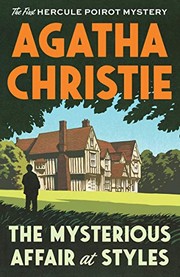
The Mysterious Affair at Styles
Hastings reunites with refugee Poirot at Styles Court after Emily Inglethorp is poisoned in her locked room.
2,856-word summary · 13 min read
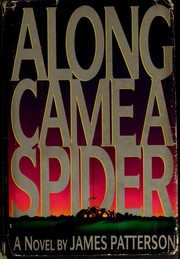
Along Came a Spider
Detective Alex Cross hunts Gary Soneji after two children vanish from a Washington school and a Lindbergh echo grows.
2,523-word summary · 11 min read