
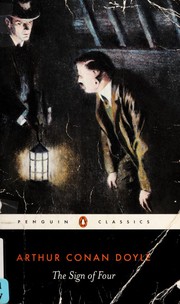
The Sign of Four
2,114-word summary 9 min read 160 pages in the book
- First published
- 1890
- Publisher
- Penguin Classics
- Pages
- 160
- ISBN
- 9780140439076
- Series
- Sherlock Holmes (#2)
Reading options
What's inside (10 sections)
I reread The Sign of Four because A Study in Scarlet left me wanting more Holmes and Watson together. Arthur Conan Doyle published it in 1890, first in Lippincott's Monthly Magazine then in book form with Spencer Blackett. My reading follows the 160 page Penguin Classics paperback. Mary Morstan brings a missing father and yearly pearls, and the trail leads to Agra treasure, a one legged man, and a Thames chase. It is leaner than Scarlet and more purely detective story.
Holmes sits in cocaine haze at 221B as the book opens, bored between cases, lecturing Watson on the science of deduction. Watson, back from war and practicing medicine, scolds the drug use with the exasperation of a friend who has tried before. That opening, with its seven percent solution talk, humanizes Holmes in ways Scarlet only hinted. Genius with a needle problem. Logic with melancholy. Then Mary Morstan arrives and lifts them both.
Mary, pearls, and a vanished father
Mary's case is classic. Her father, Captain Morstan, vanished ten years ago after returning from India. Four years later she began receiving a large lustrous pearl every year, six pearls total, from an unknown benefactor. Now she has an invitation to meet the sender and asks Holmes and Watson to accompany her. Watson, describing her trembling lip and perfect self control, falls a little in love on sight. Holmes notices everything except, at first, his friend's feelings.
The investigation moves fast. The benefactor is Thaddeus Sholto, nervous son of the late Major Sholto, who served with Morstan. He reveals the fathers shared an Agra treasure secret, quarreled, and that Mary is a wronged woman owed half a fortune. Before details settle, his brother Bartholomew is found murdered at Pondicherry Lodge, surrounded by treasure hints and a scrap reading the sign of the four. Aided by the Baker Street Irregulars and Toby the tracking dog, Holmes and Watson pursue through foggy London.
What I love here is how much Watson carries. He comforts Mary, manages Sholto's nerves, and documents without preening. His wound aches in damp. His army memories surface around treasure talk. Holmes deduces brilliantly, reading footmarks, perfume, and creosote, but Watson translates genius into care. The partnership clicks in this book in ways the series never abandons. Brain and heart, needle and kindness.
Mary herself is more than client. She is calm under pressure, loyal to her father's memory, and unimpressed by treasure fever. Her questions steer Holmes past theatrics. When danger closes, she holds steady rather than fainting on cue. Victorian constraints bind her, chaperones and propriety, but Doyle gives her spine. Watson's proposal at the end, and her acceptance minus the treasure they lose, closes with romantic tidiness some modern readers will find quick. In 1890 it satisfied. Today it still charms if you allow period pace.
Treasure, empire, and Jonathan Small
The backstory sprawls from London fog to India. During the 1857 uprising, greed and mutiny mixed around the Agra treasure. Four convicts, Jonathan Small plus Mahomet Singh, Abdullah Khan, and Dost Akbar, the Four of the title, pact over loot with corrupt guards Morstan and Sholto. Betrayals compound. Small, a wooden legged soldier with a storyteller's bitterness, chases his share across decades with his companion Tonga, an Andaman Islander whose depiction carries painful colonial stereotypes.
Small's long confession chapter, told when caught, is the book's moral center and its hardest passage now. He narrates empire's cruelty and his own with equal bluntness. The penal settlement on the Andamans. The Fort. The murder. The treasure buried and reburied. Doyle gives Small dignity as a wronged man while never excusing his murders. That balance mostly holds, though Tonga's portrayal as savage other grates badly today. New readers should expect 1890 imperial gaze, including slurs by attitude if not always by word. The adventure excites. The frame embarrasses. Both are true.
Holmes's methods shine in the London half. A footprint in flowerbeds. A perfume trace. A folding chair. A boat's fresh black paint. Each clue gets a crisp deduction scene where Holmes explains without condescending too much. The great Thames chase, with police launch against the Aurora, delivers the series' best early action. Fog, whistles, engines, and a tiny dart. You can hear water slap. Doyle, who loved boats, writes it with joy.
The treasure's fate sharpens theme. After all the killing, the Agra hoard scatters in the Thames when Small, captured, tips it overboard rather than surrender it. No one gets rich except in character. Mary loses fortune and gains Watson. Holmes loses a client and keeps a friend. That ending, with wealth dissolved and love kept, reads as Doyle's quiet joke on greed. Men drowned for mud that washes away.
What endures and what creaks
What endures is pace, partnership, and detection. At 160 pages the novel never stalls. Twelve chapters, each with a job. Deduction, statement, quest, backstory, tragedy, demonstration, chase, confession. That architecture taught mystery writers for a century. Holmes's cocaine use, handled as flaw rather than glamour, adds depth. Watson's love adds warmth. London fog adds stage. All elements now associated with Holmes lock in here after Scarlet sketched them.
What creaks is empire and haste. The Indian backstory, though vivid, filters entirely through British voices. Tonga never speaks for himself. The four's pact gets more sympathy than the colonized dead around Agra. Pacing rushes the final capture after savoring the chase. Small's confession, long and static, pauses momentum for history some readers will skim. And the romance, with Watson proposing after days, moves at Victorian speed that modern readers may find abrupt. Allow era, or sigh.
The prose is muscular and clear. Short declarative sentences for action. Longer rolling ones for fog and river. Dialogue snaps between Holmes's aphorisms and Watson's plain questions. Doyle avoids Scarlet's long American interlude here, keeping backstory inside Small's tale where it belongs. That discipline makes this the better starter Holmes novel for many, though Scarlet came first. Start with either. This one shows the machine humming.
Length at 160 pages suits an evening or two. Oxford and Broadview editions add notes on empire, science, and law for students. Penguin Classics with Ackroyd intro serves general readers well. Any edition works since the text is stable and public domain. Pick the one with readable type and a map of the Thames chase if you can find it.
Watson's heart and Holmes's needle
Watson's role in this book exceeds chronicler and deserves praise as moral counterweight. He checks Holmes's cocaine use with doctorly bluntness that never quite works and never quite stops. That persistence models love for addicts before the term existed. Stay. Object. Stay again. His war wound throbs in fog, reminding readers that this sensible man survived worse than puzzlement. When he falls for Mary, he worries aloud about money, prospects, and worth. Those anxieties make him human next to Holmes's machine mind. A man who budgets love is easier to trust than one who theorizes it.
Holmes's drug use gets frank treatment unusual for 1890 heroic fiction. Bored without cases, he injects a seven percent solution and lectures on chemistry while high. Watson calls it poison. Holmes calls it stimulation for a mind that rots in idleness. Neither wins the argument because both are right. The book does not glamorize the needle. It shows lassitude, irritability, and brilliance dulled at edges. Modern readers will recognize self medication for depression and ADHD-like restlessness before diagnoses existed. Doyle, a physician, writes the cycle without preaching. Work cures better than chemicals. The chase prove it as Holmes brightens page by page.
Their friendship deepens through shared danger rather than speeches. Trailing suspects together. Hiding in fog. Borrowing boats. Holmes shields Watson once with body, Watson patches Holmes with kit. Those exchanges, brief and practical, build the bond readers carry across fifty six stories. By the Thames chase they move as unit, anticipating without discussion. That wordless coordination, earned in one novel's action, is why the partnership endures as literature's great marriage of minds. Brain needs heart nearby. Heart needs brain ahead. Doyle intuited the formula here and never broke it.
Mary Morstan's function as more than prize deserves note. She brings the case, funds nothing, demands truth over treasure, and accepts Watson without fortune at the end. Her steadiness under threat, holding a lantern while men shout, contrasts with Victorian fainting heroines. Later stories sideline her into marriage and early death off page, which modern fans mourn. Here she shines as client who becomes partner. Savor her competence. It flickers briefly in canon before domesticity dims it.
Small's confession and empire's bill
Jonathan Small's narrative, occupying the penultimate chapters, works as adventure memoir inside detective frame. Soldier, convict, treasure guard, fugitive. His story spans continents and decades with the energy of a yarn told in a cell. Betrayed by officers, surviving Andaman prison, pact with three convicts, pursuit of Sholto gold. Each beat lands cleanly because Small tells plainly without self pity. He admits murders. He names greed as his engine. That candor makes him the book's most honest man despite being its villain. Honest killers shame polite thieves, Doyle suggests. Officers stole first in epaulettes.
The Agra treasure itself functions as curse object in the Stevenson mode Doyle admired. Everyone it touches dies badly. Morstan's heart bursts. Sholto lives paranoid. Bartholomew dies. Small loses a leg and decades. When it finally pours into the Thames, the waste feels like justice rather than loss. Wealth built on mutiny blood and prison pacts can not buy peace. Only Mary, who never sought it, walks away clean into marriage. That moral arithmetic, simple and stern, suits a young Doyle writing his second novel with a preacher's son cadence. Money drowns. Love floats.
Fog, river, and London stage
London deserves billing as third detective alongside Holmes and Watson. Fog that hides boats and motives. Gaslit rooms with chemical smells. Suburbs like Pondicherry Lodge with gardens masking graves. Doyle writes the city from medical student memory, all stenches and shortcuts. The Baker Street sitting room, with its violin, syringe, and index files, functions as mind palace before the term existed. Order amid fog. That contrast stages every deduction. Chaos outside. Method within.
The Thames chase remains the book's showpiece and early cinema in prose. Police launch cutting wakes. The Aurora darting with murderers aboard. Shouts across water. A tiny companion whose capture requires netting rather than tackling. Doyle paces it with short paragraphs and shouted orders that quicken breath. Read it aloud to feel engines. Modern action scenes owe this one a debt they rarely acknowledge. Boats, fog, and moral arithmetic at speed. All here first, or nearly.
What the fog hides thematically is empire's return voyage. Treasure looted in Agra washes up in suburban gardens. Colonial violence docks at Wapping. Doyle intuited what later writers state outright. Empires import their sins with interest. Small's wooden leg thumps through drawing rooms as reminder that distant wars limp home. That thump echoes after treasure sinks. Listen for it in final chapters where domestic calm restores too neatly. Calm cost a leg and several lives. The book knows, even if its heroes marry past it.
Treasure lost, friendship kept
The closing beats deserve savoring for how neatly they invert adventure expectations. Small tips the treasure into the Thames rather than surrender it, leaving all parties poorer but freer. Mary loses fortune with grace that proves her worth beyond dowry. Watson gains a wife and keeps a friend. Holmes loses a client and keeps his Boswell. Those exchanges balance the books morally if not financially. Doyle, young and canny, understood that readers remember who marries more than who inherits. Love keeps. Gold sinks. The final sitting room scene, with wedding talk replacing case talk, warms without cloying because work resumes next story. Cases continue. So does affection.
Who should consult
Give The Sign of Four to mystery readers who want Holmes at his most Holmes, to classics readers who found Scarlet slow, to Watson fans who like heart with logic. It suits teens and adults alike, with content mild beyond murder and drug mention. Do not give it to readers who need modern postcolonial framing without guidance. Pair it with A Study in Scarlet before and A Scandal in Bohemia after for the full early arc.
At 160 pages I read it in one sitting, marking deduction lines. Holmes starts dulled by cocaine and ends bright with chase, while Watson starts observing and ends proposing. That double lift, work plus love, is why the book charms past its imperial dust. The treasure sinks. The friendship floats. Doyle knew which mattered.
FAQ
When was The Sign of Four published?
First published in Lippincott's Monthly Magazine and in book form with Spencer Blackett in 1890. The Penguin Classics paperback runs 160 pages and the ISBN is 9780140439076.
Where does it sit in the series?
Yes. It is the second Sherlock Holmes novel, between A Study in Scarlet and The Hound of the Baskervilles.
Who is Mary Morstan?
Mary Morstan, whose father vanished and who gets yearly pearls; Watson falls for her and marries her.
Similar books
More from Sherlock Holmes first, then related titles.
A Study in Scarlet
Watson meets Holmes in Baker Street, a Brixton body bears the word Rache, and a Utah revenge tale explains it.
2,208-word summary · 10 min read
The Adventures of Sherlock Holmes
Twelve Strand cases from Irene Adler to the Copper Beeches, with Holmes at his sharpest and strangest.
3,579-word summary · 16 min read
The Memoirs of Sherlock Holmes
Doyle's second Holmes collection gathers twelve Strand stories, including the early case of the Gloria Scott and the confrontation with Moriarty at Reichenbach…
2,390-word summary · 11 min read
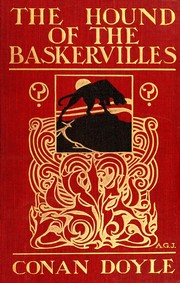
The Hound of the Baskervilles
Holmes Watson probe spectral hound killing Baskervilles on Dartmoor.
2,596-word summary · 12 min read
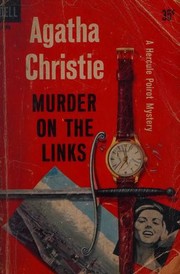
The Murder on the Links
Poirot arrives in France too late to save his client, who is found stabbed in a grave and was not the man he claimed to be. Christie's second Poirot novel.
2,055-word summary · 9 min read
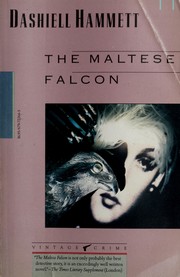
The Maltese Falcon
Sam Spade hunts a jeweled bird through lies after his partner is killed.
2,529-word summary · 11 min read
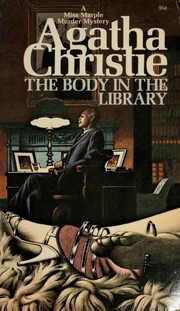
The Body in the Library
A strange girl found dead in a library pulls Miss Marple into lies about dance halls and film.
2,017-word summary · 9 min read
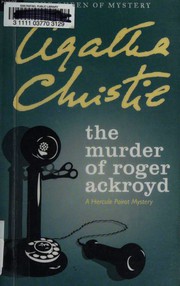
The Murder of Roger Ackroyd
Retired Poirot probes a locked study murder in King's Abbot, told by the village doctor.
3,582-word summary · 16 min read
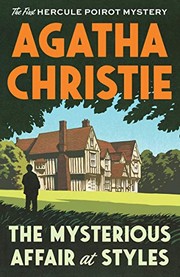
The Mysterious Affair at Styles
Hastings reunites with refugee Poirot at Styles Court after Emily Inglethorp is poisoned in her locked room.
2,856-word summary · 13 min read
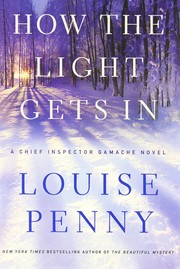
How the Light Gets In
Gamache investigates the murder of the last Ouellet quintuplet while the Sûreté he served is dismantled from inside by the man who took his protégé.
2,279-word summary · 10 min read
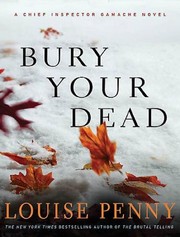
Bury Your Dead
Recovering from a failed raid that killed his officers, Gamache investigates a murder in a Quebec City library while Beauvoir reopens a case in Three Pines.
2,022-word summary · 9 min read
The Trespasser
A Dublin Murder Squad detective investigates a staged dinner-party killing and finds a cover-up that reaches into her own department.
2,051-word summary · 9 min read

Rules of Prey
Minneapolis detective Lucas Davenport hunts a killer who leaves a new rule at every scene and treats murder as a game of wits.
1,914-word summary · 9 min read
The Late Show
Exiled to the LAPD night shift after accusing her supervisor, Renée Ballard keeps two cases that were meant to be handed off at dawn: a brutal assault and a…
2,563-word summary · 11 min read
Finger Lickin' Fifteen
Lula sees a celebrity chef decapitated and talks Stephanie into entering a barbecue contest to lure the killers, while Ranger hires her to find a security leak…
2,248-word summary · 10 min read
The Moonstone
A cursed yellow diamond vanishes on the night of a birthday party, and eight witnesses tell what they saw.
2,603-word summary · 12 min read
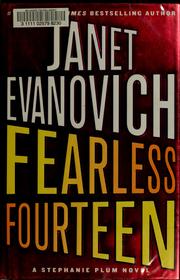
Fearless Fourteen
Bounty hunter Stephanie Plum babysits a teenager, guards a fading singer, and hunts nine stolen million dollars under her boyfriend's basement.
2,466-word summary · 11 min read

3rd Degree
The third Women's Murder Club novel follows a San Francisco terror cell and a three-day killing schedule, and it costs the club a member.
2,685-word summary · 12 min read
Lean Mean Thirteen
Stephanie Plum's ex-husband disappears after she attacks him, leaving her suspected of murder and chasing a forty-million-dollar secret through Trenton.
2,100-word summary · 9 min read
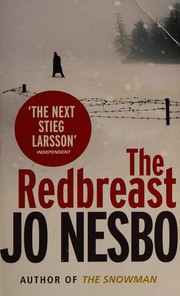
The Redbreast
Harry Hole chases an ageing sniper through modern Oslo while two Norwegian volunteers on the Eastern Front carry a fifty-year-old betrayal toward a royal…
2,453-word summary · 11 min read
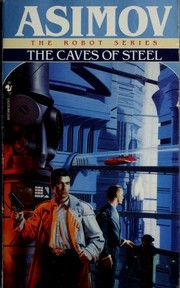
The Caves of Steel
Detective Elijah Baley must solve a Spacer's murder in a domed New York, partnered with R. Daneel Olivaw, a humaniform robot built in the victim's image.
2,445-word summary · 11 min read
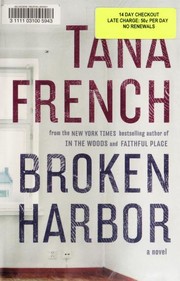
Broken Harbor
A family is found slaughtered in a half-built Dublin estate where no one broke in, and star detective Scorcher Kennedy must explain the holes in the walls.
2,308-word summary · 10 min read

One, Two, Buckle My Shoe
Poirot links a dentist murder to a missing banker and stolen millions.
2,549-word summary · 11 min read
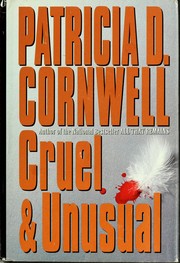
Cruel & Unusual
Scarpetta links an execution to a boy's murder while someone steals bodies.
2,533-word summary · 11 min read
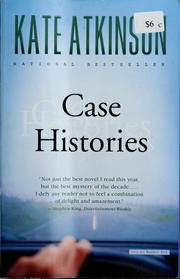
Case Histories
A Cambridge PI takes three cold cases that tangle with his own loss.
2,465-word summary · 11 min read
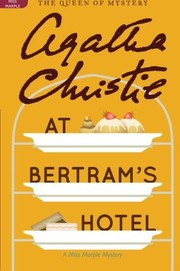
At Bertram's Hotel
Miss Marple finds a luxury hotel fronting robbery and murder.
2,550-word summary · 11 min read
The Man in the Brown Suit
Anne Beddingfeld sees a Tube death in London and chases a paper clue to South Africa, diamonds, and the hidden Colonel.
2,292-word summary · 10 min read
Maisie Dobbs
A maid turned war nurse opens a London inquiry agency in 1929 and traces a quiet case to a refuge for shattered soldiers.
2,382-word summary · 11 min read

2nd Chance
Lindsay Boxer and the Women's Murder Club hunt the Chimera killer after a church shooting in San Francisco.
2,572-word summary · 11 min read
To the Nines
Janet Evanovich's ninth Stephanie Plum case retold: a missing skip, threats in Trenton, and a rescue run to Las Vegas.
2,839-word summary · 13 min read