
Reading options
What's inside (8 sections)
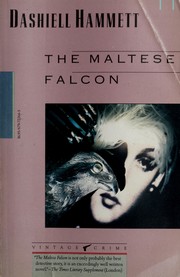
I picked up The Maltese Falcon because I wanted to see where all the hard boiled detective habits started. I expected fedoras and slang. What I got was stranger and meaner. First published in 1930 by Alfred A. Knopf, it runs about 240 pages in the standard edition, and it reads fast in the way a bad week reads fast. You keep turning pages because people keep lying to Sam Spade, and Spade keeps charging them for it.
Spade is the center, and Hammett never lets you settle on him. He is tall, broad, with a V shaped face and a jaw that looks made for getting hit. He runs Spade and Archer out of a San Francisco office with his partner Miles Archer. He is sleeping with Archer wife Iva. He does not apologize for it. He grins, he shrugs, he bills his time. Early on I thought I would hate spending a whole book with him. By the middle I understood the pull. He is honest about being dishonest. Everyone else pretends.
The setup is simple and rotten. A woman walks in calling herself Miss Wonderly. She is pretty, nervous, well dressed. She says she needs help finding her missing sister, who ran off with a man named Floyd Thursby. She wants the pair watched. Archer takes the tail job because he likes pretty clients. Spade is amused and a little bored. He lets Archer have it.
That night changes everything.
A client who lies from the first minute
Miss Wonderly is really Brigid O Shaughnessy, and almost every word of the sister story is false. There is no lost sister in danger in the way she describes it. There is Thursby, who is real enough, and there is a hunt for something valuable that she will not name yet. She pays in cash. She cries on cue. She leaves.
Hammett tells this part plainly, with attention to offices, hats, money, and who sits where. I liked that. You learn how the agency works. Spade rolls cigarettes. Effie Perine, the secretary, is sharp and loyal and the only person Spade treats with steady kindness. Archer is loud and a little vain. The client is clearly lying, and Spade knows it, and he takes the case anyway because money is money.
What struck me on this reread is how little Hammett explains. He does not give you interior monologues about Spade feelings. He shows hands, eyes, smiles, money changing hands. You have to decide what Spade believes. That keeps you alert. It also keeps you at a distance. If you want a detective who tells you his moral code, this will annoy you.
Brigid calls again, frightened. Thursby, she says, threatened her. Spade tells her Archer is on the job and she should sit tight. It sounds routine. It is the last routine moment in the book.
Miles Archer is dead by morning
Archer is found shot dead in a foggy alley off Bush Street in San Francisco, his gun still in its holster and his coat buttoned wrong. Thursby is found dead soon after, shot in the back in front of his hotel. Two corpses before most novels would have finished introducing the cast.
The police come in the form of Lieutenant Dundy and Sergeant Tom Polhaus. Dundy dislikes Spade on sight. Polhaus is more patient, willing to trade information. They want to know where Spade was, why Archer took a gun to a simple tail, whether Spade knew Thursby. Spade gives them very little. He is polite in a way that is clearly rude.
Iva Archer shows up, angry and grieving and still tangled with Spade. She thinks Spade might have had reason to want Miles out of the way. The police think so too for a while. Spade does not flinch. He tells Effie to keep the office running. He tells Iva to go home. He starts looking for Brigid, because she is the thread that connects both dead men.
This is where the book sets its rule. Nobody tells the truth unless they have to, and even then they tell half of it. Spade lost his partner, and his first move is to protect the business and find the paying liar. It is cold. It is also consistent. Hammett, who worked as a Pinkerton detective himself, writes this world as if sentiment gets people killed. Spade acts like he believes that too.
One fair complaint starts here. If you need a warm hero to root for, you will not find one. Spade jokes with cops the day after Archer dies. He hits on Brigid while she is scared. He treats Iva as a nuisance. Hammett does not ask you to admire him. He asks you to watch him work.
Joel Cairo walks in with gardenias
The next visitor is Joel Cairo, a small, fussy man who smells of gardenias and carries a cane and a wallet full of new bills. He wants to hire Spade to find a black statuette of a bird. He offers money, first a couple hundred, then more. He is polite until he is not. When Spade refuses to be hurried, Cairo pulls a small pistol. Spade disarms him almost lazily, slaps him, searches him, laughs at him.
Cairo is after the Maltese Falcon, though he does not lay out the whole history at first. He says it is a valuable ornament, that he is prepared to pay for its return, that discretion matters. Spade pretends to know less than he does. He takes Cairo money for a retainer and sends him away.
Then Brigid reappears, frightened again, staying at the Coronet apartments. She admits Thursby was her partner, not her sister lover. She says Cairo is dangerous. She says she is afraid of a third man, a fat man who has been behind much of this. She clings to Spade. They kiss. Spade tells her he will help her, but he also tells her plainly that he does not believe her story yet.
I found these middle chapters both fun and slow in spots. Fun because the dialogue snaps. Spade and Cairo circle each other like cats. Brigid changes her story every few pages and Spade lets her, noting each change. Slow because Hammett repeats the pattern. Someone arrives, offers money, threatens, leaves. Someone else arrives, lies, cries, leaves. If you read it in one sitting, that repetition builds tension. If you read it tired, you may skim.
Cairo and Brigid meet in Spade office with Spade watching, and the fear between them is real. Cairo accuses Brigid of playing both sides in Constantinople and elsewhere. Brigid accuses Cairo of using her. Spade sits back and lets them talk themselves into corners. Effie takes notes. Money moves. Nobody mentions the police.
Casper Gutman and the boy who cannot sleep
The fat man is Casper Gutman, and he is wonderful in a repulsive way. He is large, jolly, sweating, with thick lips and a soft voice. He talks a great deal. He invites Spade to drink, to eat, to talk history. He explains that the falcon is covered in black enamel to hide jewels and gold beneath, made centuries ago as tribute for a knightly order, lost and stolen and passed along through owners who died violently. He has spent years chasing it. He has brought Cairo and a young gunman named Wilmer Cook to San Francisco to finish the job.
Wilmer is the opposite of Gutman. He is young, blond, slight, with sullen eyes. He barely speaks. He hates Spade on sight. He follows Spade, tries to intimidate him, gets beaten for it. Gutman calls him a son in a way that makes your skin crawl, then offers to sacrifice him without blinking when it suits the deal.
Gutman lays out the stakes. The bird is supposedly on a boat from Hong Kong, the La Paloma. He will pay well for it. He wants Spade to get it from the Russian who has it, a man named Kemidov in Constantinople at one remove, now tied to a Captain Jacobi who is bringing it west. The details shift as Gutman talks, because Gutman lies the way other men breathe. But the desire is steady. He wants the bird the way a thirsty man wants water.
Spade listens, drinks Gutman whiskey, agrees to nothing firm, and leaves with more questions than answers. On the way home he is trailed. At his apartment Brigid is waiting. There is a scene where Wilmer comes to the door and Spade beats him badly, then sends him away. It is ugly to read now. Hammett presents it as competence. Modern readers will see bullying in it. Both can be true.
My criticism of Gutman section is simple. He talks too long. His big history speech is interesting once, then he repeats versions of it to different people. Hammett loved con men who love the sound of their own plans, and he lets Gutman run. You learn a lot about greed and very little about why anyone should care about this particular lump of gold except that people kill for it. That is the point, I think, but it still drags for twenty pages.
A boat on fire and a bird in newspaper
The La Paloma arrives burned and abandoned in San Francisco Bay. Captain Jacobi staggers off it, shot, and dies in front of Spade office with a newspaper wrapped bundle under his arm. The bundle holds a black bird, about a foot tall, heavy, dull. Spade hides it, mails it to himself under a false name from the bus station, then goes back to work as if nothing happened.
This stretch is Hammett at his best. No speeches. Just movement. Spade checks the ship news. He dodges Dundy. He tells Effie to hold calls. He meets Brigid and tells her the bird may be in hand without showing it. He meets Gutman and Cairo at his apartment for a long night session that is the heart of the book.
Everyone gathers. Gutman, Cairo, Wilmer, Brigid, Spade. Money is counted. Ten thousand dollars in bills. Promises are made. Accusations fly. Gutman explains again how the bird will make them rich. Cairo preens. Wilmer sulks with a gun under his coat. Brigid watches Spade to see which way he will jump.
Spade demands more money, demands a fall guy for the murders, demands that Wilmer take the blame for Thursby and Jacobi and even Archer. He knows Wilmer did not kill Archer, but he needs a body to hand the police so the rest can walk. Gutman agrees instantly to give up Wilmer, his own loyal boy, for the bird. Cairo agrees. Wilmer listens with white fury. That moment tells you everything about Gutman love. It lasts as long as it is useful.
They unwrap the bird. They scrape the black enamel. Underneath is lead. Gray, soft, worthless. Not gold. Not jewels. A fake.
I love this scene because nobody acts noble. Gutman laughs it off and says they will go back to Constantinople and start again. Cairo whines and follows him. Wilmer slips away into the night, free for now but marked. Brigid stays because she has nowhere else to go. Spade keeps the ten thousand minus expenses and keeps watching Brigid with sad, hard eyes.
The fake bird is the honest part of a dishonest book. Everyone assumed value because everyone wanted value. Hammett does not soften it. There is no secret compartment with real jewels. There is just weight and paint.
Spade decides who pays
The last chapter is a long talk in Spade apartment, just him and Brigid, and it is brutal. Spade lays out what he believes happened. Brigid hired Thursby in part to help get the bird. She played Cairo against Gutman. When Archer followed Thursby into that alley, she took Thursby gun or her own and shot Archer to keep him from learning too much and to keep Thursby tied to her. Thursby later killed someone else or was killed in turn as the partners turned on each other. The exact order of who shot whom in the fog matters less than the shape. Brigid used men who desired her, and one of them died for it.
Brigid begs. She says she loves him. She offers herself, offers to run. Spade says he loves her too, in his way, and he will still turn her in. He gives reasons that sound like excuses and also sound true. If he lets her go, the police will think he killed Archer. If he stays with her, he will always know she is a killer who will lie again. He will not play the sap for anyone, even someone he wants. He calls the police.
Effie is horrified. She liked Brigid. She thought Spade cared. She stares at him as the elevator takes Brigid down with the detectives. Spade tries to be light about it. Effie will not forgive him yet. The book ends with Spade alone, fiddling with the cheap bird, telling Effie about the stuff dreams are made of in spirit if not in those exact studio words.
That ending is why the book lasts. Spade is not heroic. He solves the case and loses the girl on purpose. He chooses the agency, the law as cover, his own survival, over love. You can call that integrity. You can call that self interest. Hammett lets both readings sit side by side.
What holds up after almost a hundred years. The dialogue still crackles. The method still feels real. Spade checks alibis, follows money, verifies addresses, uses the phone, works the cops, bills hours. The women are not props exactly, but close. Brigid gets brains and nerve and then gets punished for using them. Effie gets loyalty and no private life. Iva gets desire and contempt. If you want rich inner lives for women, look elsewhere. Hammett writes men watching women and guessing wrong.
The pace also sags in the Gutman talks, as I said, and Spade cruelty can tire you. He slaps Cairo, beats Wilmer, lies to Effie, uses Iva, baits Dundy. Some of that is period style. Some of it is character. None of it is kind. I kept reading because I wanted to see if anyone would tell the truth once. Almost no one does, and that feels painfully modern.
If you have only seen the 1941 film with Humphrey Bogart, the book will feel familiar but sharper. The film keeps the plot and much of the talk. The book keeps more of the sweat and greed. San Francisco is fog and hired rooms and all night apartments, not postcard hills. Money is counted in small bills. People sweat through shirts. The bird is heavy when you lift it. That physical weight is Hammett gift. He makes greed something you can hold.
I finished it late and sat a while. Spade did the right thing for the wrong reasons, or the wrong thing for the right reasons. He would probably laugh at that sentence and send me a bill for the hour.
FAQ
Who killed Miles Archer in The Maltese Falcon?
Brigid O'Shaughnessy shot Miles Archer in San Francisco to protect her search for the falcon. Spade figures it out fairly early and holds the knowledge until the final confrontation.
Is the falcon in the novel real?
No. The statuette that reaches San Francisco at the end of the novel is a lead fake. Gutman, Cairo, and Spade all realize they chased a copy.
Do I need to like Sam Spade to enjoy the book?
You do not have to like him. He lies to clients, sleeps with his partner's wife, and turns in the woman who loves him. The book works if you read him as capable and cold rather than kind.
Similar books
The Memoirs of Sherlock Holmes
Doyle's second Holmes collection gathers twelve Strand stories, including the early case of the Gloria Scott and the confrontation with Moriarty at Reichenbach…
2,390-word summary · 11 min read
The Murder on the Links
Poirot arrives in France too late to save his client, who is found stabbed in a grave and was not the man he claimed to be. Christie's second Poirot novel.
2,055-word summary · 9 min read
The Body in the Library
A strange girl found dead in a library pulls Miss Marple into lies about dance halls and film.
2,017-word summary · 9 min read
The Sign of Four
Mary Morstan's pearls lead Holmes and Watson from foggy London to Agra treasure and a Thames chase.
2,114-word summary · 9 min read
The Big Sleep
Marlowe takes a blackmail job for the Sternwoods and finds murder and daughters money cannot save.
2,243-word summary · 10 min read
The Murder of Roger Ackroyd
Retired Poirot probes a locked study murder in King's Abbot, told by the village doctor.
3,582-word summary · 16 min read
The Adventures of Sherlock Holmes
Twelve Strand cases from Irene Adler to the Copper Beeches, with Holmes at his sharpest and strangest.
3,579-word summary · 16 min read
The Hound of the Baskervilles
Holmes Watson probe spectral hound killing Baskervilles on Dartmoor.
2,596-word summary · 12 min read
The Mysterious Affair at Styles
Hastings reunites with refugee Poirot at Styles Court after Emily Inglethorp is poisoned in her locked room.
2,856-word summary · 13 min read
A Study in Scarlet
Watson meets Holmes in Baker Street, a Brixton body bears the word Rache, and a Utah revenge tale explains it.
2,208-word summary · 10 min read

How the Light Gets In
Gamache investigates the murder of the last Ouellet quintuplet while the Sûreté he served is dismantled from inside by the man who took his protégé.
2,279-word summary · 10 min read

Bury Your Dead
Recovering from a failed raid that killed his officers, Gamache investigates a murder in a Quebec City library while Beauvoir reopens a case in Three Pines.
2,022-word summary · 9 min read

The Trespasser
A Dublin Murder Squad detective investigates a staged dinner-party killing and finds a cover-up that reaches into her own department.
2,051-word summary · 9 min read

Rules of Prey
Minneapolis detective Lucas Davenport hunts a killer who leaves a new rule at every scene and treats murder as a game of wits.
1,914-word summary · 9 min read

The Late Show
Exiled to the LAPD night shift after accusing her supervisor, Renée Ballard keeps two cases that were meant to be handed off at dawn: a brutal assault and a…
2,563-word summary · 11 min read
The Black Dahlia
James Ellroy builds a fiction around the real Black Dahlia murder, following two Los Angeles cops whose partnership and obsessions destroy them.
2,533-word summary · 11 min read
Finger Lickin' Fifteen
Lula sees a celebrity chef decapitated and talks Stephanie into entering a barbecue contest to lure the killers, while Ranger hires her to find a security leak…
2,248-word summary · 10 min read

The Moonstone
A cursed yellow diamond vanishes on the night of a birthday party, and eight witnesses tell what they saw.
2,603-word summary · 12 min read
Fearless Fourteen
Bounty hunter Stephanie Plum babysits a teenager, guards a fading singer, and hunts nine stolen million dollars under her boyfriend's basement.
2,466-word summary · 11 min read

3rd Degree
The third Women's Murder Club novel follows a San Francisco terror cell and a three-day killing schedule, and it costs the club a member.
2,685-word summary · 12 min read
Lean Mean Thirteen
Stephanie Plum's ex-husband disappears after she attacks him, leaving her suspected of murder and chasing a forty-million-dollar secret through Trenton.
2,100-word summary · 9 min read
The Talented Mr. Ripley
A small-time con man is sent to bring a rich man's son home from Italy and decides to become him instead. Highsmith's amoral classic of the first antihero.
2,074-word summary · 9 min read

The Redbreast
Harry Hole chases an ageing sniper through modern Oslo while two Norwegian volunteers on the Eastern Front carry a fifty-year-old betrayal toward a royal…
2,453-word summary · 11 min read
The Caves of Steel
Detective Elijah Baley must solve a Spacer's murder in a domed New York, partnered with R. Daneel Olivaw, a humaniform robot built in the victim's image.
2,445-word summary · 11 min read

Broken Harbor
A family is found slaughtered in a half-built Dublin estate where no one broke in, and star detective Scorcher Kennedy must explain the holes in the walls.
2,308-word summary · 10 min read
One, Two, Buckle My Shoe
Poirot links a dentist murder to a missing banker and stolen millions.
2,549-word summary · 11 min read
Cruel & Unusual
Scarpetta links an execution to a boy's murder while someone steals bodies.
2,533-word summary · 11 min read
Case Histories
A Cambridge PI takes three cold cases that tangle with his own loss.
2,465-word summary · 11 min read
At Bertram's Hotel
Miss Marple finds a luxury hotel fronting robbery and murder.
2,550-word summary · 11 min read
The Man in the Brown Suit
Anne Beddingfeld sees a Tube death in London and chases a paper clue to South Africa, diamonds, and the hidden Colonel.
2,292-word summary · 10 min read