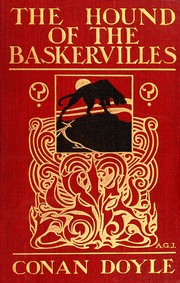
The Hound of the Baskervilles
2,596-word summary 12 min read 256 pages in the book
- First published
- 1902
- Publisher
- George Newnes
- Pages
- 256
- ISBN
- 9780140437867
- Series
- Sherlock Holmes (#5)
Reading options
What's inside (10 sections)
I picked this one up because I wanted the Holmes story people actually remember. Not a short case with a coded letter, but the long foggy one on the moor. It was first published in 1902 by George Newnes, and the standard reading text runs about 256 pages. It stands as the fifth novel in the Sherlock Holmes series.
The narrator is Dr Watson. He is back at 221B Baker Street. What I like right away is how domestic the opening feels. Breakfast, mail, a walking stick left behind by a visitor. Holmes turns that stick into a small performance, guessing the owner from wear and teeth marks. Then the owner himself walks in.
Dr Mortimer and the Walking Stick
The visitor is Dr James Mortimer, a country doctor from Devon with a big head, bright eyes, and a habit of blurting things out. Holmes guesses from the stick that Mortimer is a doctor who does hospital work as well as private practice, and Mortimer is delighted to be read so neatly.
Then Mortimer stops smiling. He pulls out an old manuscript, dated 1742, and reads it aloud. It tells the legend of Hugo Baskerville, a violent squire who carried off a farmer's daughter, chased her across the moor, and was found dead with a great black beast standing over him. Since then, the story goes, a hound has haunted the Baskerville family.
Watson treats it as local color. Holmes listens with his eyes half closed, which means he is fully awake. Mortimer says he would have laughed too, except that he has just seen something that makes laughter hard.
The Death of Sir Charles
Sir Charles Baskerville, the latest owner of Baskerville Hall, died three months earlier. He was an older man with a weak heart, known as generous and sensible. He had funded schools and charities. He also had nerves. In his last months he kept talking about the legend and admitted he was afraid to cross the moor at night.
On the night he died, his butler Barrymore found him at the far end of the yew alley behind the hall. Sir Charles had gone out for his evening cigar and his walk. He did not come back. His face was twisted in a way Mortimer finds hard to describe. There were no marks of violence on him. The inquest said death from natural causes, likely heart failure.
But Mortimer, who examined the body privately, adds details he kept out of the official record. Sir Charles waited at the moor gate for five or ten minutes, judging by cigar ash. Then he walked on tiptoe down the alley, not his usual steady pace. Near the body were the footprints of a gigantic hound, clear on the damp ground, though no dog of that size lives nearby.
That is why Mortimer has come to Holmes. The next heir is arriving, and Mortimer wants advice. Should he let the young man go down to that house with that story hanging over it.
Holmes asks a few sharp questions. Any human footprint besides? Any sign of struggle? Any sound heard? Mortimer says no, except one farmer who heard a cry late at night. Holmes tells Mortimer to return the next day with the heir. After he leaves, Holmes admits this is the most absorbing case he has touched in years.
Sir Henry Arrives
Sir Henry Baskerville is thirty, broad, direct in manner, Canadian raised and lately in America. His father and older brother died young. He is the nephew of Sir Charles and the last of the line that anyone knows about. He has come to England to take the estate, and he refuses to be scared.
Almost at once odd things happen in London. Sir Henry gets an anonymous letter made of words cut from a newspaper, warning him to stay away from the moor. One of his new boots goes missing from his hotel, then later a second single boot. A bearded man follows him and Mortimer in a cab and slips away in the traffic. Holmes and Watson try to catch the cab and fail.
Holmes studies the letter. The words are pasted on plain paper, the address in disguised hand, the cutting from a recent Times. He concludes it was posted in London by someone who wanted to help without being known.
The missing boots puzzle Watson more than Holmes. Holmes says the thief wanted something worn by Sir Henry, to give scent to a dog, and took the wrong one first because it was new. Someone in London is already preparing a hound.
Sir Henry will not quit. Holmes tells him to go, but not alone. Watson is to go with him as companion and reporter. Holmes himself must stay in London on other business. He gives Watson strict orders. Watch Sir Henry, send daily reports, do not let him walk the moor at night, and note everyone around the house.
This is where my admiration and my impatience both start. Holmes sends his best friend into danger with a notebook while he stays behind. Doyle makes it sound reasonable. But any reader who loves Holmes feels the loss at once.
Baskerville Hall and the Moor
The drive across Devon is some of Doyle's best scene setting. Baskerville Hall is a gray stone block with old wings and a newer center, set in parkland that runs out into open moor. Yew trees line the drive. Mist hangs in hollows. The butler John Barrymore is thin, bearded, and watchful. His wife is tall and often in tears.
Watson starts his reports. Neighbors are few. The nearest is Merripit House, rented by Jack Stapleton, a naturalist who knows the mire paths. He lives with his sister Beryl, who mistakes Sir Henry for someone else and begs him to leave Devon.
Other figures gather. Mr Frankland at Lafter Hall sues everyone and owns a telescope. Laura Lyons lives in Coombe Tracey and types letters for money. She had written to Sir Charles asking for help. An escaped convict named Selden hides on the moor. The Barrymores secretly feed him because Mrs Barrymore is his sister.
The moor itself becomes a presence. Doyle describes the Grimpen Mire, a great bog with green patches that look solid and swallow men and beasts. There is a low sad sound that rolls across it at times, which locals call the hound. Watson hears it once and cannot place it.
I found these chapters slow in the best way on reread. Little happens, yet every walk adds weight. A light on the moor at night. A portrait on the hall wall. Watson follows Barrymore, learns about Selden, meets Stapleton on the path, and watches Sir Henry fall for Miss Stapleton.
Watson Alone in Devon
Here is the structural gamble Doyle takes. For roughly the middle third, Holmes vanishes. Watson sends long letters. Holmes replies briefly or not at all. Watson guards Sir Henry, trails suspects, and tries to reason it out.
Some of Watson's work is solid. He discovers Barrymore signaling to Selden with a candle from a hall window. He learns Laura Lyons expected Sir Charles to meet her on the night he died, though she says she never went. He meets Stapleton often and likes him while distrusting him in flashes.
Some of it is thin. Watson circles the same paths and admits he sees no pattern. Sir Henry grows restless at being watched. He quarrels with Watson about Miss Stapleton. Watson, who promised Holmes to keep him safe, feels the promise slipping.
I missed Holmes here more than I expected. Doyle wanted Watson to carry the book so the reveal would land harder. But the cost is real. The smartest mind sits offstage while the second smartest writes careful but flat reports. The tension stays because the moor is frightening, not because the detection is sharp.
Two scenes save this stretch for me. One is Watson's night on the moor, listening to that long wail and telling himself it must be wind, while neither man believes it. The other is the discovery of a stone hut where someone has been living rough and watching Baskerville Hall. Watson creeps up, certain he has found the killer, and finds something else entirely.
Stapleton of Merripit House
Jack Stapleton seems at first like light relief with a butterfly net. He is small, fair, excitable about moths, full of talk about the mire. He knows every firm path through Grimpen Mire by markers he places himself.
Beryl Stapleton does not fit the sister story. She is nervous around her brother and warns strangers away. Stapleton explains it as a quarrel over Sir Henry's attention. Watson half believes him and half does not.
Little facts accumulate. Stapleton avoids proper visits to the hall. He asks many questions about Sir Henry's plans. He is furious when Sir Henry courts Beryl, beyond what a brother should feel. He walks the moor at night without fear. He owns a large dog, though he pretends it is small and kept tied.
Laura Lyons gives Watson another thread. She is separated from her husband and hoping for divorce money. Stapleton suggested she ask Sir Charles for aid. On the night Sir Charles died, she was supposed to meet him at the gate but says she stayed home.
Frankland with his telescope adds gossip. He saw a boy carrying messages across the moor. He saw a man watching the hall. He makes himself useless as a witness by quarreling with police, though his sightings turn out to matter.
Looking back, Doyle plays fair. Stapleton is always near when fear spikes. He appears on paths, at walls, at windows. He controls who meets whom. He knows the mire that stops pursuit. He has motive hidden in plain sight, which only becomes clear when Holmes lays out the family line.
Fog, Phosphorus, and the Hound
The hut on the moor belongs to Holmes. He has been hiding in Devon while Watson thought he was in London, getting food from a local family, watching through a boy named Cartwright. He needed Watson to act naturally so Stapleton would not guard himself.
This is the famous cheat of the book. On one hand, the clues snap into place. On the other, Watson has been risking his life writing honest reports to a man camped a few miles away who answers with silence. Holmes says the work required it.
Holmes now shows what he has learned. Stapleton is not the brother of Beryl. She is his wife. His real name is Roger Baskerville, son of the younger brother of Sir Charles, long thought dead in South America. He moved to Devon under a new name, rented near the hall, and planned to remove the heirs ahead of him. Sir Charles first, then Sir Henry.
The method is brutal and clever. Stapleton kept a huge hound, a mix of bloodhound and mastiff, starved and fierce, hidden near the mire. He stole Sir Henry's boot to give it scent. He painted the animal with phosphorus to make its jaws and coat shine in the dark, so frightened men would swear it came from hell. He used Laura Lyons to draw Sir Charles to the gate that night. The old man's heart gave out at the sight and smell of the beast, which is why there were no wounds. Stapleton called the dog off before it could mangle the body and leave proof.
Selden's death confirms the pattern. The convict, dressed in Sir Henry's cast off clothes given by Barrymore, is chased across the moor and falls and breaks his neck. Near him are huge paw marks. The hound killed by mistake in the dark, aimed by scent and clothing at the wrong man.
Holmes sets a trap. He and Watson and Inspector Lestrade, brought down quietly from London, will guard Sir Henry as he walks home alone from Merripit House across the moor. Fog rolls in, thick and white, and nearly ruins the plan. They wait by the gate, half blind, hearing steps and then a terrible shape come bounding through the mist with fire on its face.
Holmes and Watson both fire. Five shots, the dog rearing, fangs snapping, then collapse. Even dead, with phosphorus smeared on its muzzle and neck, it looks monstrous. Sir Henry stands shaking, unable to speak. Holmes names the glow at once. A simple preparation of phosphorus, cruel to the animal and meant to terrify men.
Stapleton, seeing his dog shot, flees into the Grimpen Mire without his markers in the fog. Searchers later find his footprint on a firmer patch and then nothing. The mire keeps him. Inside Merripit House they find proof enough. The missing boot, the phosphorus tin, letters from Laura Lyons, and records that trace Roger Baskerville through schools and thefts to his new name.
What Holds Up and What Drags
What holds up is the atmosphere and the mechanics of fear. Doyle understood that a rational detective needs an irrational crime. A glowing beast on a foggy moor tests Holmes better than a locked room, because witnesses mislead themselves. The phosphorus trick is simple and believable for 1902. It also hurts the dog, which Doyle does not hide. The hound is a victim too, starved and painted, and that cruelty makes Stapleton hateful.
The moor writing still works. The mire that looks like meadow, the stone huts from old times, the ponies that vanish, the bellowing sound that might be a bittern or might not. Baskerville Hall with its yews and portraits gives the fog a center.
What drags is the long absence in the center. However loyal Watson is, he cannot replace Holmes as an engine. His reports repeat cautions and interviews. Sir Henry is brave but passive for stretches. Laura Lyons and Frankland take pages without paying back much except one letter and one sighting. Beryl suffers largely off page.
There are dated notes as well. Women in the book mostly signal, warn, or need saving. Beryl begs and is beaten. Laura is used and shamed. Mrs Barrymore weeps over her brother. None are foolish, but none drive events. Selden is drawn as a brute without inner life. Servants know and hide things, masters decide. Doyle does not question that order. He uses it.
I also wish Doyle had let Watson be angrier at being left in the dark. Watson accepts the hut reveal with grace, and their friendship resumes as if no risk occurred. A sharper quarrel would have felt truer and would have made Holmes explain himself beyond need. As written, Holmes gets to be right without paying for secrecy.
Still, the solution satisfies because it respects the legend without surrendering to it. Hugo's tale opens the book as superstition. Phosphorus, theft, scent, blackmail, and inheritance close it as crime. Holmes does not mock the people who hear a hound. He shows how a clever man turned their fear into a weapon. That move, from ghost to human greed, is why the book lasts. It lets you feel the chill on the moor and then see the hand that made it.
If you are new to Holmes, this is a fine place to start after the first two novels. You get London deduction, Devon walking, and a villain who nearly wins. Keep track of boots, letters, candles, and who stands to inherit. When the fog comes down and the shots ring out, you will understand why this hound still runs.
FAQ
Is The Hound of the Baskervilles a ghost story?
No. The glow comes from phosphorus paint on a real dog. Stapleton uses the old legend to frighten his victims and hide murder for inheritance.
Why does Holmes disappear in the middle of the book?
He hides on the moor so Stapleton will act freely. Watson reports daily without knowing Holmes is near, which lets Holmes gather proof before the trap at the gate.
Who is Stapleton really?
He is Roger Baskerville, a distant heir using a false name. His wife poses as his sister Beryl while he plans to remove Sir Charles and Sir Henry.
Similar books
More like The Hound of the Baskervilles →More from Sherlock Holmes first, then related titles.

A Study in Scarlet
Watson meets Holmes in Baker Street, a Brixton body bears the word Rache, and a Utah revenge tale explains it.
2,208-word summary · 10 min read

The Mysterious Affair at Styles
Hastings reunites with refugee Poirot at Styles Court after Emily Inglethorp is poisoned in her locked room.
2,856-word summary · 13 min read

The Outsider
Coach Terry Maitland's DNA and witnesses point to an impossible murder, until Ralph Anderson and Holly Gibney trace it to El Cuco.
2,586-word summary · 11 min read

The Green Mile
Guard Paul Edgecombe watches John Coffey show healing miracles on death row in 1932 Louisiana.
2,549-word summary · 11 min read

Mr. Mercedes
Retired Hodges hunts Mercedes killer Brady Hartsfield concert plot.
2,281-word summary · 10 min read

Kiss the Girls
Cross hunts Casanova kidnapping women including niece Naomi.
2,397-word summary · 11 min read