

The Ice Princess
2,321-word summary 10 min read 393 pages in the book
- First published
- 2003
- Publisher
- HarperCollins
- Pages
- 393
- ISBN
- 9780007269853
- Original title
- Isprinsessan
- Series
- Patrik Hedström (#1)
Reading options
What's inside (9 sections)
I came to this book knowing almost nothing about it beyond the fact that it launched one of the biggest crime series in Scandinavia, and that it opens with a dead woman in a bathtub of ice. That image is real, and it is strange enough to hook you. What I did not expect was how much of the story would turn out to be about a small town keeping a secret for twenty-five years, and about a writer who returns home to find that the friend she lost was never who she thought she was. The Ice Princess was first published in Swedish as Isprinsessan in 2003, and this English version, translated by Steven T. Murray, appeared in Britain in 2008. It is the first of the books built around the detective Patrik Hedström and the writer Erica Falck.
Erica comes home to Fjällbacka
Erica Falck has come back to Fjällbacka, the town on the west coast of Sweden where she grew up, because her parents have died. She is a writer, and she has brought work with her: a biography of Selma Lagerlöf, the Swedish novelist who was the first woman to win the Nobel Prize in Literature. The project gives her a reason to stay in a place she had left, and it gives the book a quiet, domestic rhythm before anything violent happens. Läckberg spends real time on the routines of a house being sorted out after a death, on family arrangements, and on the small talk of neighbours. That slower opening is characteristic of her. The crime matters, but the texture of ordinary life matters just as much.
Erica's sister Anna lives nearby with her husband Lucas, and that marriage is already tense. Lucas is overbearing and controlling, and he wants the sisters to sell the family home. Erica has a close friend, Dan Karlsson, whose own marriage is under pressure, and Dan's wife Pernilla is part of the same web of old school friendships. These threads can look like padding at first. They are not. Läckberg is building a picture of a place where everybody knows everybody's business, and where a great deal is quietly suffered in private. By the time the murder investigation gets going, you understand why a secret could survive here for decades.
The other important return is emotional. Erica and Alexandra Wijkner were the closest of friends as girls. Alex, as everyone calls her, grew distant, then moved away with her family, and Erica never understood why. That loss still stings. When Alex turns up dead in her old hometown, Erica's interest is personal before it is professional. She also sees a possible book in it. She imagines a memoir of Alex that might finally answer the question of why their friendship came apart. That mixture of grief and curiosity is what drives her into the investigation, and it is the most human thing in the story. Erica pushes the grieving parents, Karl Erik and Birgit Carlgen, to let her look into their daughter's death, and the promise of that book is her way in.
The woman in the frozen bathtub
The body is found by Eilert Berg, an older local man, in the house Alex has been living in. She is in the bathtub, her wrists cut, the water frozen around her. Her husband Henrik is away, and the house is bitterly cold because the furnace has failed. On the surface it looks like a suicide, and that is exactly what the police are prepared to call it. Erica, who is one of the first to see the scene, is not so sure. Neither is Patrik Hedström, the detective assigned to the case.
The physical details turn out to matter more than anyone expects. The autopsy, carried out by forensic pathologist Tord Pedersen, shows that Alex was already dead before she was put in the water, and that she had been given a sedative. The cuts on her wrists are too even and too deep to have been made by her own hand. She was three months pregnant. She had also given birth at some point in the past, a fact that raises more questions than it answers. The failed furnace is not a neutral accident either. It froze the water and confused the timing of death, which is precisely what a person staging a scene would want.
I liked this part of the book a great deal. Läckberg does not rush to a clever solution. She lets the wrong explanation sit in place while she walks around it, adding small details that quietly undermine it. The frozen bath is a strong image, and it works because it is both practical and symbolic. A woman who was always cold to the people around her ends up literally frozen, and a house that looks peaceful from outside turns out to have been a place of fear. Some of that is heavy handed, but the central picture holds.
A clumsy investigation and a determined one
The police work in the book is handled out of Tanumshede, and the local boss is Bertil Mellberg, a detective superintendent who is lazy, vain, and completely sure of himself. He was sent to this quiet posting after making a mess in Gothenburg, and he spends his time waiting for the call that will bring him back. He is close to a caricature, and more than one critic has complained about it. I found him funny for a while and tiresome after that. His presence does at least throw the competence of his subordinate into relief.
Patrik Hedström is the one who actually does the work. He is thorough, patient, and a little awkward with people, and he knew Erica when they were children. He has carried a crush on her since then. The romance between them builds slowly, in the gaps between interviews and autopsy reports, and it is one of the genuine pleasures of the book. They are both scarred by earlier relationships, and Läckberg gives their growing closeness a shy, unhurried quality. The case keeps interrupting it, which is exactly how these things go in a small town where nothing stays private.
Patrik's method is to keep pulling at threads that everyone else wants left alone. He checks the timeline of the furnace. He looks at a leather patch on Alex's nightstand marked with the initials T.T.M. and the year 1976. He follows the paper trail around the Lorentz family, the wealthiest name in the area, whose fortune comes from the local cannery. Nelly Lorentz is the widow who holds the money, her son Nils disappeared years ago, and her adopted son Jan now runs the business. Patrik also learns that Jan was born Jan Norin and that his birth parents died in a fire that was never properly explained. Station secretary Annika Jansson supplies another piece: the Carlgen family vanished from Fjällbacka for a year in the late 1970s, just before Alex was sent to a boarding school in Switzerland.
The life Alex was hiding
As Erica talks to the people who knew Alex, the neat picture of a beautiful, cold, successful woman comes apart. Alex had a relationship with Anders Nilsson, a gifted painter who drinks too much and is regarded as the town drunk. It was an unlikely pairing, and almost everyone who knew about it thought so. Anders's mother Vera cleaned his house and looked after him, and a former convict named Bengt Larsson was one of his few friends. Alex's friend Francine Sandberg, who ran an art gallery with her, helps Erica see that the paintings point back to Anders.
Alex was also planning to tell the truth about something. That is the thread that gives the book its momentum. She wanted to drag old skeletons into the open, and whatever it was, people were willing to kill to stop her. There is a second death before long, when Anders is found hanged in his apartment with no furniture close enough to stand on. It looks like murder, and it sends the investigation in a new direction. Vera insists someone killed her son. Patrik, working through a notepad with the impression of a missing page, finds a leather patch like the one on Alex's nightstand and begins to understand that the two deaths are tied together by something far older than either victim.
The rich family matters here in a way that took me a while to see. Nelly Lorentz made a will that leaves her fortune to Alex's much younger sister Julia, not to Jan, who expects it. Nelly's money has been quietly supporting another family for years. The deeper Läckberg digs, the more it looks as though half the town has been paid to keep quiet about something that happened when these people were children.
A second death and an old nickname
The truth, when it finally comes, is ugly and sad rather than clever. Patrik confronts the Carlgen parents, and Karl Erik breaks down and tells what happened. When Alex was about nine, her substitute teacher was Nils Lorentz, and he began to abuse her. By the time she was ten she was pregnant. Instead of going to the police, the family made a deal with Nelly Lorentz: silence in exchange for money and support. The baby was kept and raised as Alex's younger sister. Julia, it turns out, is not Alex's sister at all but her daughter, born from that assault.
Nils did the same thing to Anders Nilsson, and to Jan Lorentz when Jan was a boy. Alex, Anders, and Jan knew about one another's suffering and called themselves the Three Musketeers, which is what the initials on the leather patches stand for. Patrik works out that the three children took Nils out onto the frozen sea, pushed him through a hole in the ice, and watched him drown. His death was never solved. Jan all but admits it, adds that he probably set the fire that killed his own birth parents, and then boasts that the statute of limitations protects him. He does not know that Nelly's will has cut him out of the inheritance. The case of Nils remains officially open.
Who killed the ice princess
The person who murdered Alex is Vera Nilsson, Anders's mother. Patrik gets her to confess through a quiet, patient interview that is one of the best scenes in the book. The break comes from a small inconsistency: Vera said she had sat with Alex in the cold house the week before her death, but the furnace did not fail until the week she actually died. Once she knows he has caught her, Vera talks. Karl Erik told her what Nils had done to Alex, and she knew what had happened to Anders too. When Alex said she intended to expose it all, Vera came to the house to talk her out of it, crushed sleeping pills into her cider while Alex was in the kitchen, waited for her to pass out, dragged her into the bathroom, and cut her wrists with a razor blade from the medicine cabinet. She then washed her glass, locked the door, and put the spare key back. She did it, she says, to protect Anders from the shame of exposure, though Patrik thinks the shame she could not bear was her own.
The ending also clears up Anders's death. He killed himself, and Vera removed the chair and the suicide note and staged the scene to look like murder, because she could not bear the idea of her son being marked a suicide. Patrik tells her that the baby Alex was carrying was not Anders's child, and the relief that washes over her is terrible to read. She has killed a woman and an unborn child for a secret that was already destroying everyone it was meant to protect. Publishers Weekly described Läckberg as showing how secrets are never completely buried and how silence can kill, and this ending earns that line. The book was adapted as a Swedish television film in 2007 and later named to Time magazine's list of the hundred best mystery and thriller books, which seems fitting given how much of its power comes from the slow uncovering of a buried life.
What stays with me, and what strains
I want to be fair about the weak parts. The crime plot is not especially original once all the pieces are laid out, and some of the characters are drawn in broad strokes. Mellberg in particular wears out his welcome, and a few of the revelations arrive with the tidy neatness of a puzzle box rather than the messiness of real life. There is a strand of social criticism about class and wealth in Fjällbacka that stays close to the surface, and the book sometimes strains for significance in its descriptions of food, weight, and women's bodies. The pacing is slow, and a reader looking for a tight, propulsive thriller may find the long stretches of domestic detail patient to the point of testing.
But the slowness is also the method. Läckberg needs you to believe that these people have lived beside one another for decades, because the whole solution depends on what a town can hide when everyone has agreed to say nothing. The scenes of ordinary life are what make the final confession land. The relationship between Erica and Patrik gives the book its warmth, and Erica's stubborn need to understand her old friend gives it a heart that a standard police procedural would not have. I finished it wanting to know what happens to these people next, which is the oldest and simplest test of a series opener. The Ice Princess is not a perfect mystery, but it is a strong, atmospheric beginning, and the cold house on the water stayed with me long after I closed it.
FAQ
Is The Ice Princess the first book in a series?
Yes. It introduced writer Erica Falck and detective Patrik Hedström and was followed by The Preacher. This catalogue lists it as book one of the Patrik Hedström series.
Who killed Alex in The Ice Princess?
Vera Nilsson, mother of the painter Anders Nilsson, crushed sleeping pills into Alex's cider and cut her wrists to stage a suicide. She did it to keep an old abuse secret from being exposed.
Is this a fast paced thriller?
No. It is a slow crime novel that gives as much space to small town life and relationships as to the investigation, though the final revelations reward the patience.
Similar books
More from Patrik Hedström first, then related titles.

The Word Is Murder
A fictionalised Anthony Horowitz is talked into chronicling a prickly ex-detective's case: a woman murdered hours after planning her own funeral. A clever…
2,296-word summary · 10 min read

The Girl Who Takes an Eye for an Eye
Lisbeth Salander investigates a secret childhood experiment from prison while Mikael Blomkvist uncovers a twin conspiracy behind a wealthy businessman.
2,059-word summary · 9 min read
A Trick of the Light
In the seventh Gamache novel, a woman is found dead in Clara Morrow's garden after her first solo show, and the case leads back through old reviews, AA amends,…
2,200-word summary · 10 min read
Hallowe'en Party
A girl boasts she once saw a murder, then drowns in an apple-bobbing bucket. Poirot investigates both the claim and the killing.
2,232-word summary · 10 min read
How the Light Gets In
Gamache investigates the murder of the last Ouellet quintuplet while the Sûreté he served is dismantled from inside by the man who took his protégé.
2,279-word summary · 10 min read

Bury Your Dead
Recovering from a failed raid that killed his officers, Gamache investigates a murder in a Quebec City library while Beauvoir reopens a case in Three Pines.
2,022-word summary · 9 min read

There Will Be Bodies
Digging out a villa buried by Vesuvius, Flavia Albia finds chained corpses and a death someone tried to hide for ten years.
2,152-word summary · 10 min read
The Last Coyote
On stress leave, Harry Bosch reopens the unsolved murder of his mother, a prostitute strangled when he was twelve, and finds corruption reaching the DA's…
2,069-word summary · 9 min read

The 5th Horseman
Two linked cases pull Lindsay Boxer and the Women's Murder Club into a hospital full of strange deaths and a luxury-car murder spree.
2,609-word summary · 12 min read
Evil Under the Sun
Poirot's Devon holiday turns deadly when a flirtatious actress is strangled at a secluded seaside hotel in this 1941 puzzle.
2,380-word summary · 11 min read

The Unquiet Grave
In Dervla McTiernan's fourth Cormac Reilly novel, a body found in a Galway bog turns out to be a missing school principal, and the case opens into something…
2,253-word summary · 10 min read
The Running Grave
In the seventh Cormoran Strike novel, Robin goes undercover inside a Norfolk cult while Strike digs into a child's death from decades earlier.
2,615-word summary · 12 min read
The Keeper of Lost Causes
Jussi Adler-Olsen introduces Carl Mørck and Department Q, a Copenhagen cold-case unit in a basement, and a missing politician whose file refuses to stay closed.
2,759-word summary · 12 min read
The Hallmarked Man
A body in a silver vault behind Freemasons' Hall sends Strike and Robin into a world of coded letters, secret societies and a girl whose whole identity may be…
3,084-word summary · 14 min read
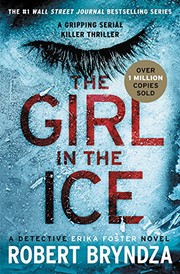
The Girl in the Ice
A young socialite is found frozen beneath the ice in a south London park, and DCI Erika Foster returns to work to lead the case. Grief, privilege and three…
2,492-word summary · 11 min read
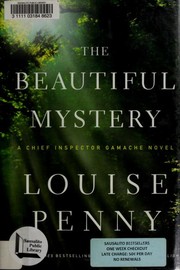
The Beautiful Mystery
In a cloistered Quebec monastery, a chant-singing monk is murdered and Gamache must break a vow of silence to find the killer. Eighth in the Chief Inspector…
2,262-word summary · 10 min read
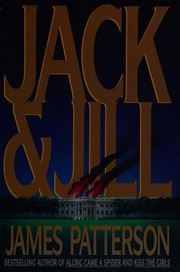
Jack & Jill
A senator is killed with a nursery-rhyme calling card as a child is murdered near Alex Cross's home. The third Alex Cross novel pulls him toward two cases, one…
2,646-word summary · 12 min read
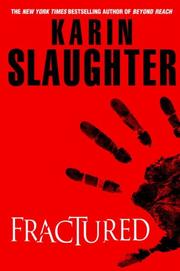
Fractured
In Karin Slaughter's second Will Trent novel, a mother kills the wrong man in an Atlanta mansion, and a GBI agent with a hidden reading difficulty finds a…
2,219-word summary · 10 min read
Five Little Pigs
Sixteen years after a painter's murder, Poirot reopens the case at the request of a daughter who believes her dead mother was innocent.
2,027-word summary · 9 min read

Crooked House
A family gathered around a dying patriarch in a twisted old house, and one of Christie's most famous revelations about who killed him.
2,059-word summary · 9 min read

The Secret Place
Two Dublin detectives revisit a murder on the grounds of a girls' boarding school, where a bulletin board note and rival cliques hide the truth.
2,271-word summary · 10 min read
The Brutal Telling
A stranger is beaten to death in a Three Pines bistro, and the clues point to its owner. Gamache uncovers a hidden cabin, carved codes, and a village practiced…
2,287-word summary · 10 min read

The Black Ice
Harry Bosch works a Christmas-night death the Robbery-Homicide Division does not want him near, and the trail runs from a dead cop to a drug operation across…
2,399-word summary · 11 min read

Nightshade
Connelly launches Detective Stilwell on Catalina Island, where a beheaded buffalo and a Jane Doe in the harbor pull a quiet sheriff's post into violence and…
2,272-word summary · 10 min read
Never Flinch
Holly Gibney works two cases at once: a killer promising fourteen deaths and a threat against a feminist writer's lecture tour. King braids them into a…
2,245-word summary · 10 min read
Hercule Poirot's Christmas
Simeon Lee invites his family to Gorston Hall for Christmas, then is found dead in a locked room. Poirot sorts a household where nearly everyone has a reason…
2,348-word summary · 10 min read

The Trespasser
A Dublin Murder Squad detective investigates a staged dinner-party killing and finds a cover-up that reaches into her own department.
2,051-word summary · 9 min read

Rules of Prey
Minneapolis detective Lucas Davenport hunts a killer who leaves a new rule at every scene and treats murder as a game of wits.
1,914-word summary · 9 min read

The Late Show
Exiled to the LAPD night shift after accusing her supervisor, Renée Ballard keeps two cases that were meant to be handed off at dawn: a brutal assault and a…
2,563-word summary · 11 min read

Finger Lickin' Fifteen
Lula sees a celebrity chef decapitated and talks Stephanie into entering a barbecue contest to lure the killers, while Ranger hires her to find a security leak…
2,248-word summary · 10 min read