
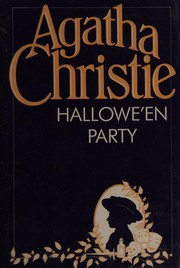
Hallowe'en Party
2,232-word summary 10 min read 256 pages in the book
- First published
- 1969
- Publisher
- Collins Crime Club
- Pages
- 256
- ISBN
- 9780007314621
- Series
- Hercule Poirot (#41)
Reading options
What's inside (9 sections)
I have always liked the late Poirot books for their willingness to be strange, and Hallowe'en Party is one of the strangest. It was first published in the United Kingdom by the Collins Crime Club in November 1969, and the first edition hardcover runs 256 pages. It is the forty-first Hercule Poirot novel. The ISBN I am citing, 9780007314621, belongs to a 2009 HarperCollins facsimile of the first edition, which is why the publisher named in the facts is the original one. Christie dedicated the book to P. G. Wodehouse, which tells you something about the mischievous tone she brings to a story about a child's Hallowe'en party and several very brutal murders.
The boast at the party
The mystery writer Ariadne Oliver is visiting her friend Judith Butler in the village of Woodleigh Common. She helps the neighbors plan a children's Hallowe'en party at the house of the wealthy Rowena Drake. Mrs Oliver is one of Christie's best self-caricatures, a successful author who resents being treated as a mere producer of plots and who periodically complains about her own fictional detective. Here she is in her element among party games and costumes, until a thirteen-year-old named Joyce Reynolds approaches her with a claim.
Joyce says she once witnessed a murder, though she was too young at the time to recognize it as such. Nobody takes her seriously. Joyce is known in the village as a girl who lies to get attention, and the adults around her assume this is another performance. That assumption is the first of several mistakes the book invites us to make. The party proceeds with snap-dragon and apple-bobbing and the usual children's games, and then Joyce is found drowned in an apple-bobbing bucket. The girl who boasted of seeing a murder is herself dead, and the festive setting curdles in a way Christie was particularly good at.
Poirot is called in
Mrs Oliver, distraught and rather guilty, summons her old friend Hercule Poirot. He arrives with his faithful valet George and is soon working alongside retired Superintendent Spence, a police officer he worked with on an earlier case. Poirot is an old man by now, and Christie is candid about the small humiliations of his age, from his fussiness about his food to the way younger people talk over him. He is also still the sharpest mind in the room. His method here is less about footprints and more about memory. He asks for a list of recent deaths and disappearances in the neighborhood, and three cases stand out.
The first is Mrs Llewellyn-Smythe, Rowena Drake's aunt, a wealthy widow who died suddenly of what everyone assumed were natural causes. The second is her au pair, Olga Seminoff, a young woman from Herzegovina who vanished after a codicil to the old lady's will, one that favored Olga, was declared a forgery. The third is Leslie Ferrier, a lawyer's clerk with a record for forgery and unsavory connections, who was stabbed in the back by a person never identified. These three deaths, scattered in time, gradually reveal themselves as pieces of one design. Christie is very good at this kind of slow accumulation, where a detail that seems irrelevant in one chapter becomes a load-bearing fact in the next.
The village and its secrets
Poirot and Spence interview the townsfolk, and the village begins to separate into its private compartments. Judith's twelve-year-old daughter Miranda was Joyce's closest friend. Miranda was too ill to attend the party but was privy to Joyce's secrets. Elizabeth Whittaker, a teacher of mathematics and Latin, remembers Rowena becoming startled and dropping a vase of water outside the library while the children played snap-dragon. A former cleaner of Mrs Llewellyn-Smythe claims she saw her employer actually make the supposedly forged codicil, which turns the forgery accusation completely around.
Then there is Michael Garfield, a handsome, narcissistic landscape gardener who designed a beautiful garden inside an abandoned quarry for Mrs Llewellyn-Smythe and still lives in a lodge on the grounds. And there is Leopold Reynolds, Joyce's brother, who has suddenly come into money. Christie sprinkles classical and literary allusions through these portraits. Rowena is compared to Lady Macbeth, Garfield to Narcissus and to Satan, and Miranda's sketch is titled Iphigenia. The allusions can feel a bit heavy-handed, but they signal that the book is operating in a register of old, familiar evil rather than of modern procedural realism.
The supporting cast is unusually large, which is both a strength and a source of the book's sprawl. Chief Constable Alfred Richmond and the local physician Dr Ferguson handle the official investigation. Miss Emlyn, the headmistress of The Elms school, is the one who knows Poirot by reputation through Miss Bulstrode, a character from an earlier book. Mrs Goodbody, a cleaning woman who comes to the party dressed as a witch, turns out to be a rich source of village gossip, and she comments on Olga's likely fate with a children's rhyme about a pussy in a well. Jeremy Fullerton is the solicitor who employed Ferrier, and Harriet Leaman is the former cleaner who claims to have watched Mrs Llewellyn-Smythe write the codicil. Two teenagers who attended the party, Nicholas Ransom and Desmond Holland, end up playing a small but decisive part near the end. Keeping all these names straight takes some effort, and the book never quite makes every one of them earn their space.
I should mention one detail that amused me. The real codicil is hidden in a book called Enquire Within upon Everything, an actual Victorian reference book of domestic tips that was published for well over a century. It is a very Christie choice, an ordinary household object doing extraordinary plot work.
More bodies
The deaths keep coming. Leopold is found dead, and Rowena tells Poirot she saw him in the library on the night of the party, which suggests he knew something about his sister's murder. Poirot advises the police to search the woods near the quarry, and they find Olga's body in an abandoned well, stabbed in the same manner as Ferrier. The pattern is now clear enough for Poirot to fear another murder, and he sends a telegram to Mrs Oliver telling her to take Judith and Miranda to London.
The scene that follows is the most dramatic in the book. Miranda, the quiet twelve-year-old, arranges to meet Garfield, and he takes her to a pagan sacrificial altar in the quarry garden, intending to poison her. The setup recalls the old tale of a child lured by a seemingly kind adult, and Christie keeps it blunt. Garfield kills himself when two youths recruited by Poirot intervene and save Miranda. His suicide is less a confession than the final act of a man who cannot bear to be exposed, and it leaves the reader with the uncomfortable sense that the true monster was never the most obvious suspect. It is a striking image, that carefully tended garden hiding an altar, and it sums up the book's idea that beauty can be built on something rotten underneath.
The solution
Miranda then reveals the truth that unlocks everything. She was the one who saw Garfield and Rowena drag Olga's body through the quarry garden, and she told Joyce in secret. Miranda was not at the preparations for the party, so Joyce, hungry for the famous Ariadne's attention, claimed Miranda's story as her own. That is why the girl who said she had witnessed a murder had to die. Rowena believed someone had seen her dispose of Olga, and Joyce's boast made her seem like that someone.
The wider plot is a story of greed and desire. Rowena had an affair with Garfield while her husband was still alive. Her aunt, disgusted, wrote the codicil leaving her fortune to Olga. Rowena and Garfield hired Ferrier, the clerk with a forgery conviction, to replace the real codicil with a deliberately clumsy fake so that Rowena would inherit everything and the forgery would be assumed to be Olga's doing. The real codicil is eventually found. Olga and Ferrier were killed to bury the deceit, and Leopold was killed because he asked Rowena for money and she suspected he knew too much. The dropped vase that Elizabeth Whittaker witnessed was Rowena's way of explaining why she was already wet. She had just drowned Joyce.
Poirot also uncovers a last secret about Judith. She is not really a widow. She had a brief affair with Garfield years before, and Miranda is their child. Garfield, fond of the girl but consumed by his dream of building a second, more perfect garden, was willing to kill his own daughter to get what he wanted. Rowena, Poirot muses, would likely have met Olga's fate once Garfield had her money and the Greek island she had already given him. The murderer here is less a person than an appetite, and that is what makes the book feel bleak despite its village setting and its children's party.
Christie's own echoes
One of the quietly enjoyable things about this book is how densely it is woven into Christie's own earlier work. Superintendent Spence brings Poirot the case they solved together in Mrs McGinty's Dead, and the two discuss it in the fifth chapter. When Joyce suggests that Ariadne should have themed the party around a fake murder in honor of her presence, Mrs Oliver replies that she should never again do such a thing, a reference to Dead Man's Folly, where a staged murder turned into a real one. A letter arrives from Mr Goby, an investigator who turns up in several other Poirot stories. Miss Emlyn's acquaintance with the detective comes through Miss Bulstrode of Cat Among the Pigeons. These echoes are not essential to the plot, but they give the book the feel of a well-worn club where old acquaintances keep reappearing.
The book also reflects the moment it was written. Several early conversations voice anxiety about the British criminal justice system, which makes sense in a novel published a few years after capital punishment for murder was abolished in 1965. Christie was reading newspaper reports of current crimes as she worked, and critics have connected the story's grim tone to her sense that cruelty was rising in the wider world. There is even a moment in chapter fifteen where a character uses the word lesbian, which marks the book firmly as a product of the late sixties. For a writer who began publishing in the 1920s, that willingness to register the changing times is striking, even if the result can feel dated now.
A mixed reputation
The novel's reception has been uneven, and I think both camps have a point. Robert Barnard, writing in 1990, said the plot was not too bad but the telling was poor, full of loose ends and unrealized characters, as if it had been spoken into a tape recorder and never read through. A contemporary review in the Toronto Daily Star called it a disappointment and said Poirot seemed weary, and so did the book. There is some justice in that. Several threads are left dangling, the murderer is unusually thinly drawn, and the dialogue can feel flat compared with Christie's earlier work.
More recent critics have been kinder. Mark Aldridge, in a 2020 study of every Poirot novel, called it a highly memorable and intriguing book with an energetic opening, one excellent clue hidden in plain sight, and a grim fascination with murder. He notes that Christie was writing at the end of the permissive sixties and was troubled by what she saw as rising cruelty in the wider world, and the novel's bleakness reads differently in that light. The book was serialized in the weekly magazine Woman's Own in seven abridged installments from November to December 1969, illustrated with photographic montages, and it appeared in Cosmopolitan in the United States that December.
It has been adapted many times. There was a BBC radio version in 1993 with John Moffatt as Poirot and Stephanie Cole as Mrs Oliver. The long-running television series with David Suchet followed in 2010, with Zoë Wanamaker as Oliver and a screenplay by Mark Gatiss; that production shifted the setting to the 1930s, as the series generally did, and changed several fates while keeping the core puzzle. A graphic novel came from HarperCollins in 2008. Most recently, Kenneth Branagh's 2023 film A Haunting in Venice moved the story from an English village to the titular city and loosened the plot considerably. If you have seen only that film, the book will be a different, and in my view better, experience.
If you are new to Poirot, this is not the place to start; try The Murder of Roger Ackroyd or Murder on the Orient Express instead. If you already know and like Christie's late period, Hallowe'en Party offers a compact, grim puzzle with one of her most chilling motives. The apple-bobbing bucket is a nasty piece of imagery, and it stays with you long after the solution has been explained. It is a short book, but the shortness is deceptive, because the tangle of old grievances and buried motives takes real patience to untangle. That is the pleasure of it for the right reader.
FAQ
Which Hercule Poirot novel is Hallowe'en Party?
It is the forty-first Poirot novel, first published by the Collins Crime Club in November 1969. It pairs Poirot with the mystery writer Ariadne Oliver.
How does the book relate to the film A Haunting in Venice?
Kenneth Branagh's 2023 film is a loose adaptation. It relocates the story from an English village to Venice and changes several characters and their fates.
Is Hallowe'en Party a good Poirot novel to start with?
Probably not. Critics often point to loose ends and an underwritten murderer. New readers are better served by an earlier, tighter book such as The Murder of Roger Ackroyd.
Similar books
More from Hercule Poirot first, then related titles.
The Mysterious Affair at Styles
Hastings reunites with refugee Poirot at Styles Court after Emily Inglethorp is poisoned in her locked room.
2,856-word summary · 13 min read
The Murder on the Links
Poirot arrives in France too late to save his client, who is found stabbed in a grave and was not the man he claimed to be. Christie's second Poirot novel.
2,055-word summary · 9 min read
The Murder of Roger Ackroyd
Retired Poirot probes a locked study murder in King's Abbot, told by the village doctor.
3,582-word summary · 16 min read
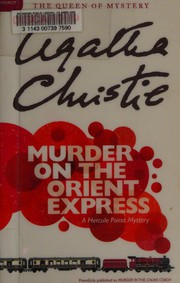
Murder on the Orient Express
Poirot is trapped by snow with thirteen strangers after an American is found stabbed in his berth.
2,004-word summary · 9 min read
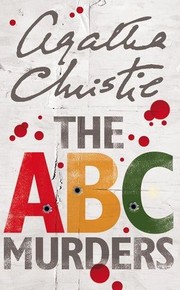
The ABC Murders
Poirot and Hastings chase a killer who leaves an ABC railway guide near victims in Andover, Bexhill, and Churston. A salesman looks guilty, but publicity hides…
3,302-word summary · 15 min read
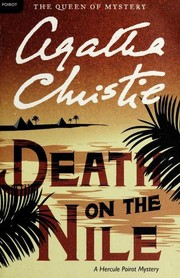
Death on the Nile
Poirot takes a Nile cruise where a young heiress is shot dead in her cabin.
4,077-word summary · 18 min read
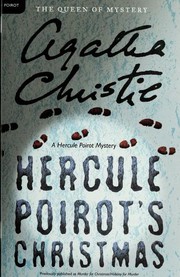
Hercule Poirot's Christmas
Simeon Lee invites his family to Gorston Hall for Christmas, then is found dead in a locked room. Poirot sorts a household where nearly everyone has a reason…
2,348-word summary · 10 min read

One, Two, Buckle My Shoe
Poirot links a dentist murder to a missing banker and stolen millions.
2,549-word summary · 11 min read
Evil Under the Sun
Poirot's Devon holiday turns deadly when a flirtatious actress is strangled at a secluded seaside hotel in this 1941 puzzle.
2,380-word summary · 11 min read
Five Little Pigs
Sixteen years after a painter's murder, Poirot reopens the case at the request of a daughter who believes her dead mother was innocent.
2,027-word summary · 9 min read
At Bertram's Hotel
Miss Marple finds a luxury hotel fronting robbery and murder.
2,550-word summary · 11 min read
The Word Is Murder
A fictionalised Anthony Horowitz is talked into chronicling a prickly ex-detective's case: a woman murdered hours after planning her own funeral. A clever…
2,296-word summary · 10 min read
The Ice Princess
Camilla Läckberg's debut follows writer Erica Falck and detective Patrik Hedström as a frozen bathtub in a small Swedish town unravels a secret kept for…
2,321-word summary · 10 min read
The Beautiful Mystery
In a cloistered Quebec monastery, a chant-singing monk is murdered and Gamache must break a vow of silence to find the killer. Eighth in the Chief Inspector…
2,262-word summary · 10 min read
The Cruelest Month
Gamache returns to Three Pines where a seance ends in murder.
2,529-word summary · 11 min read
A Fatal Grace
Gamache returns to Three Pines for Christmas where hated CC de Poitiers is electrocuted on a frozen lake.
2,339-word summary · 10 min read
Crooked House
A family gathered around a dying patriarch in a twisted old house, and one of Christie's most famous revelations about who killed him.
2,059-word summary · 9 min read
The Man in the Brown Suit
Anne Beddingfeld sees a Tube death in London and chases a paper clue to South Africa, diamonds, and the hidden Colonel.
2,292-word summary · 10 min read
The Body in the Library
A strange girl found dead in a library pulls Miss Marple into lies about dance halls and film.
2,017-word summary · 9 min read
There Will Be Bodies
Digging out a villa buried by Vesuvius, Flavia Albia finds chained corpses and a death someone tried to hide for ten years.
2,152-word summary · 10 min read
The Last Coyote
On stress leave, Harry Bosch reopens the unsolved murder of his mother, a prostitute strangled when he was twelve, and finds corruption reaching the DA's…
2,069-word summary · 9 min read
The 5th Horseman
Two linked cases pull Lindsay Boxer and the Women's Murder Club into a hospital full of strange deaths and a luxury-car murder spree.
2,609-word summary · 12 min read
The Unquiet Grave
In Dervla McTiernan's fourth Cormac Reilly novel, a body found in a Galway bog turns out to be a missing school principal, and the case opens into something…
2,253-word summary · 10 min read
The Running Grave
In the seventh Cormoran Strike novel, Robin goes undercover inside a Norfolk cult while Strike digs into a child's death from decades earlier.
2,615-word summary · 12 min read
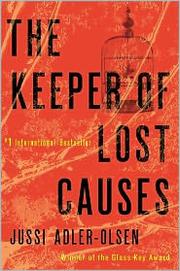
The Keeper of Lost Causes
Jussi Adler-Olsen introduces Carl Mørck and Department Q, a Copenhagen cold-case unit in a basement, and a missing politician whose file refuses to stay closed.
2,759-word summary · 12 min read
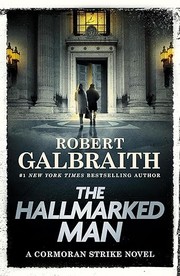
The Hallmarked Man
A body in a silver vault behind Freemasons' Hall sends Strike and Robin into a world of coded letters, secret societies and a girl whose whole identity may be…
3,084-word summary · 14 min read
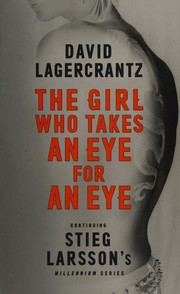
The Girl Who Takes an Eye for an Eye
Lisbeth Salander investigates a secret childhood experiment from prison while Mikael Blomkvist uncovers a twin conspiracy behind a wealthy businessman.
2,059-word summary · 9 min read
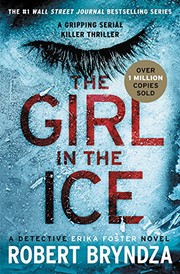
The Girl in the Ice
A young socialite is found frozen beneath the ice in a south London park, and DCI Erika Foster returns to work to lead the case. Grief, privilege and three…
2,492-word summary · 11 min read
Jack & Jill
A senator is killed with a nursery-rhyme calling card as a child is murdered near Alex Cross's home. The third Alex Cross novel pulls him toward two cases, one…
2,646-word summary · 12 min read
Fractured
In Karin Slaughter's second Will Trent novel, a mother kills the wrong man in an Atlanta mansion, and a GBI agent with a hidden reading difficulty finds a…
2,219-word summary · 10 min read