
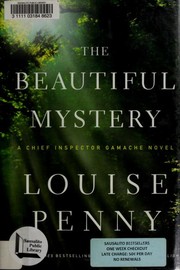
The Beautiful Mystery
2,262-word summary 10 min read 373 pages in the book
- First published
- 2012
- Publisher
- Minotaur Books
- Pages
- 373
- ISBN
- 9780312655464
- Series
- Chief Inspector Armand Gamache (#8)
Reading options
What's inside (8 sections)
I picked this one up out of order, which turned out to be a strange way to meet it. The Beautiful Mystery is the eighth Chief Inspector Armand Gamache novel, published in 2012, and it assumes you already know who Gamache is, what the Sûreté du Québec is, and why its senior officers keep fighting each other. I had read enough of the series to follow along, but the book is built as a closed room with the door locked from the outside, and I think that is why it works so well. It takes a detective, his second in command, twenty-four monks, and one dead man, shuts them all in a monastery in the Quebec wilderness, and lets the pressure rise. The edition I read was the 2012 Minotaur Books hardcover, 373 pages, and it is one of those books where the setting is not decoration. The place is the puzzle.
A body in the abbot's garden
The monastery is called Saint-Gilbert-Entre-les-Loups. For most of the book the monks and the police translate that as "Saint Gilbert Among the Wolves," but near the end the abbot corrects it: the better reading is "between the wolves," a place of perpetual choice. The Gilbertines are a tiny surviving branch of an order that fled the Inquisition centuries earlier and ended up deep in the Canadian bush. They live under a vow of silence that they break only when they sing, and what they sing is Gregorian chant. They do it remarkably well. A rough recording of their voices escaped the wilderness a couple of years before the novel opens, spread first through other monasteries and then became a sensation. Pilgrims and reporters came looking for them. They turned everyone away.
The money from that recording was not a small thing. It paid for geothermal heating and solar power, and it kept a crumbling building standing a little longer. But it also split the community down the middle. One faction, led by the prior and choirmaster Frère Mathieu, wanted another record, interviews, television, concerts, an end to the silence. The other, around Dom Philippe the abbot, wanted the old rules kept. So when Mathieu is found dead in the abbot's private garden, killed by a heavy blow and clutching a scrap of vellum covered in chant notation, there is no shortage of people who might have wished him gone.
Gamache and Inspector Jean-Guy Beauvoir arrive with a local Sûreté captain named Charbonneau, travelling by boat through rough country and then, effectively, sealed in. A stranger cannot hide here. There is nowhere to go. Penny is working the oldest shape in crime fiction, the country house murder, and she has simply swapped the snowbound mansion for a cloister. I admired how completely she commits to it. The monks have taken a vow of silence, which makes them trained observers of one another and of the two policemen now poking around their days. Every glance and every absence counts.
Beauvoir's private war
The emotional weight of the book sits with Beauvoir rather than with the monks. At the start he is quietly happy. He has fallen in love with Annie Gamache, the chief inspector's daughter, and they are keeping it secret while they wait for the right moment to tell her parents. He is also sober, after a serious struggle with painkiller addiction. That recovery is fragile, and the monastery case arrives on top of another wound. Both men are still carrying the aftermath of a raid in which several Sûreté officers were killed and Gamache and Beauvoir were badly hurt. Beauvoir was in a video of the shooting that got out, and that leak is a trigger for him.
I want to be fair about this part of the story. On the one hand it gives Beauvoir a real interior life, and it makes the monastery's calm both seductive and briefly dangerous to him. On the other hand it drags a long series arc about police corruption into a book that, for a while, seemed happy to be a contained mystery. You can feel the wider story pressing on the walls. Gamache's enemies in the Sûreté have not forgotten him, and the men who run the force have their own scores to settle.
Chief Superintendent Sylvain Francoeur turns up partway through, ostensibly to oversee the investigation. He is a career rival of Gamache and genuinely resents the older man's record of refusing to look away from corruption. Francoeur is clever about where to press. He suggests to Beauvoir that Gamache has lost interest in finding who leaked the shooting video, and he dangles opioids within reach. The relapse that follows is one of the harder passages in the book, and it is handled without spectacle. What I found interesting is that the threat here is not a monk with a grudge. It is a senior policeman who knows exactly which button to push, and who pushes it while wearing a uniform.
The men in the stalls
Penny spends a lot of pages simply introducing the twenty-four monks, and I did not mind the slow build. Dom Philippe, the abbot, is courteous and shrewd, the sort of man who notices nearly everything and admits very little. Frère Mathieu, the victim, was a gifted singer and a difficult man, the driving force behind the recording and the push to modernize. Frère Luc is the newest arrival, young, softly spoken, the porter who spent much of his time alone in the gatehouse and whom hardly anyone really knew. Frère Raymond handles the geothermal machinery. Frère Charles is the community's doctor. Frère Simon serves as the abbot's secretary. Each gets a moment, a habit, a way of speaking.
The friction between the abbot's men and the prior's men is the novel's engine. The vow of silence means no one says outright what they think, so Gamache has to read tiny things: who sits where in the chapel, who is alone after Lauds, who lies about where they were. One of the quiet ironies is that the same discipline that makes the monks holy makes them hard to question. They watch. They do not confide. And beneath the quarrel about recordings and television sits a plain fact that only a few of them know: the building itself is still in danger of collapse, and the money from the CD is all that is holding it together.
Then there is Frère Sébastien, a Dominican who arrives from Rome claiming to represent the Congregation for the Doctrine of the Faith. He is polite, insistent, and not remotely interested in the murder at first. He admits eventually that he has come for the Gilbertines' book of chants, which he regards as a priceless artifact. His real hunt is for the starting point of Gregorian chant, a single original note from which everything else descended. The monks believe their music is closer to the divine source than anyone else's. Gamache, watching the intensity in Sébastien and in Frère Luc, finds something unsettling in that kind of certainty. I liked that the book treats faith seriously here without asking the reader to share it, and without mocking it either.
The chant that should not exist
The scrap of vellum in the dead man's hand is the clue that changes everything. It carries notation for a piece that is not proper Gregorian chant. It has instruments. It may even be sacrilegious. Penny uses the prologue to explain what is at stake. The earliest chants were so old that they predated written music, passed from singer to singer by memory, and their simplicity was said to have a powerful effect on those who heard them. They became known as the beautiful mystery, and the Church spent centuries trying to find their origin point. If the Gilbertines really possess that origin, their book is worth a great deal to a man like Sébastien.
The truth about the parchment is more human and more painful. The music was written by a young former novice named Émile, and it was presented as something ancient when it was not. Frère Luc was drawn into it, asked to supply words for the new composition and coaxed into a solo role by Mathieu. For Luc, the piece was not a clever fraud but a profanation of the word of God. When Mathieu moved to remove him from the choir, Luc saw his whole world tipping. That is the motive the investigation finally uncovers, and it is a motive made of pride and fear and religious conviction rather than money. It is also deliberately close to the surface of the book's main theme, which is how a community decides what is allowed to change.
I should note one thing about the structure here. The novel is quiet for a long time, and then the last few chapters move fast. That uneven rhythm is intentional, but it caught me out. I was settling into the daily round of bells and prayer and quiet work, and suddenly I was in a feverish interrogation.
How the case breaks
Gamache works the murder the way he works everything, by watching where people go. After Lauds, only one monk was demonstrably alone, and that was Frère Luc, in the porter's office where nobody visited him. The abbot is a harder proposition. Dom Philippe is observant enough that Gamache cannot believe he missed the killing entirely, so the chief considers two explanations: either the abbot did it, or the killer was the one monk the abbot did not know well, the newest one, the one who kept to himself. The abbot also tells a small, transparent lie about being in the basement near the geothermal plant, which Gamache comes to read as a deliberate move. Dom Philippe knew one of his monks had killed Mathieu and chose to put himself in the line of fire rather than let the community be torn apart by suspicion.
The breakthrough is a piece of theatre. Gamache asks Sébastien to sing Mathieu's strange new chant in the Blessed Chapel, hoping the music will force a reaction. The Dominican's voice fills the space, and Luc breaks. He confesses to the killing. A few pages earlier, when Mathieu's death is being pieced together, Luc says of the dying man, "He wasn't the man I thought he was." The line lands hard because it is really about a stolen certainty. Luc had believed Mathieu was leading the community toward God. Instead he saw him as a man willing to dress a modern composition in the robes of something sacred.
The cost of solving the case is high. Beauvoir overdoses while the confrontation is unfolding, and Gamache has to choose between finishing the interrogation at speed and getting his inspector to treatment. Francoeur, meanwhile, makes one last play, telling Beauvoir that Gamache does not care about him and does not need to be sent away to rehab. For a moment Beauvoir believes it, and he leaves on the float plane with Francoeur and Luc while Gamache stays behind. The abbot, who has lost a prior and now a murderer, tries to console the chief inspector. They talk about the monastery's symbol, the two wolves, and the old answer about which one wins: the one you feed. Gamache looks up at the north wind and thinks he hears a plane far off, then it is gone. It is a bleak, open ending for a book that has spent three hundred pages inside a place that seemed to stand outside time.
What I liked, and what grated
The music writing is the best thing here. Penny makes chant something you can almost hear, and she connects it to the plot rather than leaving it as atmosphere. The prologue's account of a sound older than written notation gave the book a mystery inside its mystery, and I found myself caring about the origin of the chants as much as about who swung the blow in the garden. The closed-circle design is elegant too. Twenty-four suspects, all of them bound by a vow that makes lying awkward and silence automatic, is a genuinely good puzzle box.
The parts that did not work for me are the parts that belong to the series rather than to this story. Francoeur's maneuvering felt at times like a separate novel running in the background, and the Beauvoir subplot ends on a note that is not resolved here. That is partly by design, since the corruption thread is picked up again in How the Light Gets In, but it does mean this book never quite finishes its own emotional argument. I also found the middle stretch slow, with long stretches of chapel and garden that I enjoyed in the moment but that could have been trimmed. A reader who wants a brisk procedural will likely get impatient.
I would hand this to someone who likes their mysteries slow, atmospheric, and morally untidy, and who does not need every thread tied off at the end. I would be careful with a reader coming to the series cold, because so much of the weight depends on knowing what happened to these people before. But as a self-contained puzzle about a choir, a lie, and a monk who could not bear what his friend had done, it is a strong and unusually resonant book, and the abbey of Saint Gilbert is a place I remember clearly long after the details of the case faded.
FAQ
Is The Beautiful Mystery part of a series?
Yes, it is the eighth Chief Inspector Armand Gamache novel and was first published in 2012. The corruption subplot involving Sylvain Francoeur continues into the next book, How the Light Gets In.
Who kills the prior in The Beautiful Mystery?
Frère Luc, the newest and least known monk, kills Frère Mathieu after being drawn into a false chant and threatened with removal from the choir. Gamache draws him out by having the Dominican Frère Sebastien sing the controversial composition in the chapel.
Do I need to read the earlier Gamache books first?
The murder works as a self-contained puzzle, but much of its emotional weight depends on knowing Beauvoir's recovery from addiction and the Sûreté corruption arc from earlier novels.
Similar books
More from Chief Inspector Armand Gamache first, then related titles.

Still Life
A beloved teacher found with an arrow in Three Pines looks like hunting accident until Gamache looks closer.
1,996-word summary · 9 min read
A Fatal Grace
Gamache returns to Three Pines for Christmas where hated CC de Poitiers is electrocuted on a frozen lake.
2,339-word summary · 10 min read

The Cruelest Month
Gamache returns to Three Pines where a seance ends in murder.
2,529-word summary · 11 min read
A Rule Against Murder
Gamache's anniversary at a remote lodge turns into a closed-circle murder when the family statue kills Julia, and everyone at the Manoir had a reason.
2,201-word summary · 10 min read
The Brutal Telling
A stranger is beaten to death in a Three Pines bistro, and the clues point to its owner. Gamache uncovers a hidden cabin, carved codes, and a village practiced…
2,287-word summary · 10 min read

Bury Your Dead
Recovering from a failed raid that killed his officers, Gamache investigates a murder in a Quebec City library while Beauvoir reopens a case in Three Pines.
2,022-word summary · 9 min read

A Trick of the Light
In the seventh Gamache novel, a woman is found dead in Clara Morrow's garden after her first solo show, and the case leads back through old reviews, AA amends,…
2,200-word summary · 10 min read

How the Light Gets In
Gamache investigates the murder of the last Ouellet quintuplet while the Sûreté he served is dismantled from inside by the man who took his protégé.
2,279-word summary · 10 min read

Hallowe'en Party
A girl boasts she once saw a murder, then drowns in an apple-bobbing bucket. Poirot investigates both the claim and the killing.
2,232-word summary · 10 min read
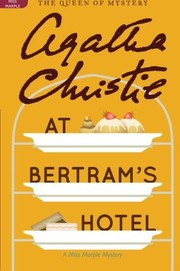
At Bertram's Hotel
Miss Marple finds a luxury hotel fronting robbery and murder.
2,550-word summary · 11 min read

There Will Be Bodies
Digging out a villa buried by Vesuvius, Flavia Albia finds chained corpses and a death someone tried to hide for ten years.
2,152-word summary · 10 min read

The Last Coyote
On stress leave, Harry Bosch reopens the unsolved murder of his mother, a prostitute strangled when he was twelve, and finds corruption reaching the DA's…
2,069-word summary · 9 min read

The 5th Horseman
Two linked cases pull Lindsay Boxer and the Women's Murder Club into a hospital full of strange deaths and a luxury-car murder spree.
2,609-word summary · 12 min read
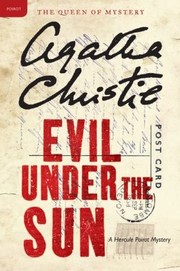
Evil Under the Sun
Poirot's Devon holiday turns deadly when a flirtatious actress is strangled at a secluded seaside hotel in this 1941 puzzle.
2,380-word summary · 11 min read

The Word Is Murder
A fictionalised Anthony Horowitz is talked into chronicling a prickly ex-detective's case: a woman murdered hours after planning her own funeral. A clever…
2,296-word summary · 10 min read

The Unquiet Grave
In Dervla McTiernan's fourth Cormac Reilly novel, a body found in a Galway bog turns out to be a missing school principal, and the case opens into something…
2,253-word summary · 10 min read
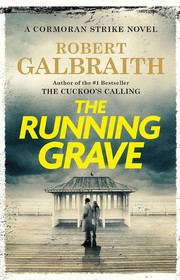
The Running Grave
In the seventh Cormoran Strike novel, Robin goes undercover inside a Norfolk cult while Strike digs into a child's death from decades earlier.
2,615-word summary · 12 min read
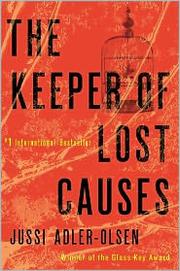
The Keeper of Lost Causes
Jussi Adler-Olsen introduces Carl Mørck and Department Q, a Copenhagen cold-case unit in a basement, and a missing politician whose file refuses to stay closed.
2,759-word summary · 12 min read

The Ice Princess
Camilla Läckberg's debut follows writer Erica Falck and detective Patrik Hedström as a frozen bathtub in a small Swedish town unravels a secret kept for…
2,321-word summary · 10 min read
The Hallmarked Man
A body in a silver vault behind Freemasons' Hall sends Strike and Robin into a world of coded letters, secret societies and a girl whose whole identity may be…
3,084-word summary · 14 min read

The Girl Who Takes an Eye for an Eye
Lisbeth Salander investigates a secret childhood experiment from prison while Mikael Blomkvist uncovers a twin conspiracy behind a wealthy businessman.
2,059-word summary · 9 min read

The Girl in the Ice
A young socialite is found frozen beneath the ice in a south London park, and DCI Erika Foster returns to work to lead the case. Grief, privilege and three…
2,492-word summary · 11 min read

Jack & Jill
A senator is killed with a nursery-rhyme calling card as a child is murdered near Alex Cross's home. The third Alex Cross novel pulls him toward two cases, one…
2,646-word summary · 12 min read
Fractured
In Karin Slaughter's second Will Trent novel, a mother kills the wrong man in an Atlanta mansion, and a GBI agent with a hidden reading difficulty finds a…
2,219-word summary · 10 min read
Five Little Pigs
Sixteen years after a painter's murder, Poirot reopens the case at the request of a daughter who believes her dead mother was innocent.
2,027-word summary · 9 min read

The Secret Place
Two Dublin detectives revisit a murder on the grounds of a girls' boarding school, where a bulletin board note and rival cliques hide the truth.
2,271-word summary · 10 min read

The Black Ice
Harry Bosch works a Christmas-night death the Robbery-Homicide Division does not want him near, and the trail runs from a dead cop to a drug operation across…
2,399-word summary · 11 min read

Nightshade
Connelly launches Detective Stilwell on Catalina Island, where a beheaded buffalo and a Jane Doe in the harbor pull a quiet sheriff's post into violence and…
2,272-word summary · 10 min read
Never Flinch
Holly Gibney works two cases at once: a killer promising fourteen deaths and a threat against a feminist writer's lecture tour. King braids them into a…
2,245-word summary · 10 min read
Hercule Poirot's Christmas
Simeon Lee invites his family to Gorston Hall for Christmas, then is found dead in a locked room. Poirot sorts a household where nearly everyone has a reason…
2,348-word summary · 10 min read