
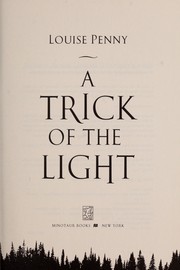
A Trick of the Light
2,200-word summary 10 min read 352 pages in the book
- First published
- 2011
- Publisher
- Minotaur Books
- Pages
- 352
- ISBN
- 9780312655457
- Series
- Chief Inspector Armand Gamache (#7)
Reading options
What's inside (9 sections)
I came to this one as the seventh Gamache book, which meant I already knew Three Pines and most of the people in it. That familiarity turned out to matter. A Trick of the Light was published in 2011 by Minotaur Books, and it is the book Penny wrote right after Bury Your Dead, in which her detective and his deputy took a beating that neither of them has shaken off. I mention that because the damage is still here, sitting under the new mystery like a bruise. You can follow the plot without reading the earlier book, but you will miss half of what Beauvoir is carrying.
The first pages put us at an art opening, and Penny clearly enjoyed writing them. Clara Morrow, a painter who has spent years as the wife of a more celebrated artist, is having her first solo show at the Musée d'Art Contemporain in Montréal. There is a vernissage the night before the public opening, and then a party at Clara and Peter's home in Three Pines, thrown by Peter. The guest lists are long. The reviews arrive the next morning, carried into the garden by Peter and their neighbour Olivier, and that is when they see a woman dressed for a party lying dead among the flowers. A broken neck. The police are called, and Chief Inspector Armand Gamache comes back to the village.
A dead woman no one remembers seeing
Here is the strange part that gets the investigation going. The woman was at one of the two parties, presumably, given how she was dressed, and yet nobody at either event recalls seeing her. Clara and Peter do not know her at all. That is a hard thing to pull off in a village where everyone knows everyone, and Penny uses it to open up a long list of people who might have wanted her gone.
The body is identified through her car, parked nearby. Her name is Lillian Dyson, and she was once Clara's closest friend, back in art college more than twenty years earlier. The friendship ended badly, and Clara has not seen her since. When Clara looks at the face in the morgue she cannot reconcile it with the girl she knew. Lillian has been living in New York for years and has only recently come back to Montréal. She looks different. The years have done a number on her, and Penny is interested in exactly how that happened.
I should say something about the shape of this book, because it is not a straight whodunit. The murder gets solved, and the solution is fair, but the pages around it are given over to art, to Alcoholics Anonymous, to a marriage coming apart, and to two detectives who are barely holding themselves together. Publishers Weekly, reviewing the first edition, singled out the chiaroscuro motif, the play of light and dark in Clara's paintings that also seems to run through the people in the story. That is as good a key to the book as any. The title earns its place, since people and pictures both depend on what the light happens to be doing when you look.
Clara, Peter, and the success that breaks a marriage
Clara's show is the event that starts everything, so it is worth staying with her for a moment. She and Peter have been married for more than twenty years, and they are both painters. The difference is that Peter's paintings sell, and Clara's have not, until now. His work is the steady, saleable kind. Hers is bold and strange, built around those dark and light effects that the critics keep coming back to. When the show lands, it lands hard, and Clara suddenly has the thing Peter has always had.
Penny writes the strain between them without much shouting. Peter is proud of her, and also diminished by her success, and the diminishment is what hurts. Clara, for her part, has spent two decades making art that nobody bought, and she does not know how to accept the attention without looking around to check that it is real. Their conversations in the later chapters are quiet and awkward and much more honest than the murder plot. When they finally decide to part for a year, with a plan to meet for dinner in Three Pines and see what comes next, it feels less like a breakup than a held breath.
Myrna Landers, the bookseller and Clara's close friend, is around for a good deal of this, and so is Ruth Zardo, the sharp-tongued old poet who posed for one of Clara's best paintings. Gabri Dubeau and Olivier Brulé, who run the B and B and the bistro, are here too. Olivier has his own history with the Sûreté: he was wrongly convicted of murder in an earlier book and has since been cleared, which makes his quiet presence in the garden scene carry more weight than it first appears. Penny does not make a speech about it. She lets him stand there holding the newspapers.
What Lillian did, and what she was forgiven for
The backstory is where the book gets its muscle. Lillian was not just a friend who drifted away. After art college she worked as an art critic for a local paper, and she wrote reviews that drew blood. She saved her worst for two women. One was Clara, whose work she tore apart. The other was Suzanne, a painter whose career never recovered from a review like that. Suzanne ended up working as a waitress, and eventually she joined Alcoholics Anonymous. After years of that work she reached the point where she could forgive Lillian, and she did. When Lillian later came to the meetings herself, Suzanne became her sponsor.
That forgiveness is the moral centre of the book, and it is a hard, unglamorous thing. It is something Suzanne has built in herself, over years, in rooms full of strangers. Penny keeps returning to the twelve steps, and the ninth step in particular, which asks a person to make amends to those they have harmed. The book treats that step as dangerous work. Approached too early, before the strength is there, it can hurt people all over again. That is not a digression from the mystery. It is the engine that drives the murder.
The AA room and the judge
One afternoon Gamache goes looking for Suzanne and finds her at an AA meeting. He stays, and in the room he recognises a judge, Judge Thierry Pineault, the Chief Judge of the Quebec Supreme Court. The judge's alcoholism began after his young granddaughter was killed by a drunk driver. The driver, a young tattooed man named Brian, came to the judge's home after his release to ask for forgiveness, and the judge started attending meetings soon after. Brian is now sober and is himself a sponsor. This is a lot of material to put into a murder mystery, and Penny does not rush it. The scene asks what it actually costs to forgive someone, and whether the person asking has any right to expect it.
Those questions are not decoration. Lillian, it turns out, was painting again in her small Montréal apartment, and when Gamache looks at the canvases he thinks they are good, though nothing like Clara's work. He takes photographs to Thérèse Brunel, an art historian who heads Property Crime at the Sûreté, for a second opinion. Thérèse is married to Jerome, a retired doctor with a gift for codes, and the two of them form the quiet intellectual backbone of the investigative team. Their conversation about the paintings turns to the violent episode from six months earlier, the one that put Beauvoir in hospital and Gamache under a cloud, and to the possibility that it was arranged from inside. This is the thread that links the new murder to the old wound.
Beauvoir, and the video he cannot stop watching
I want to spend a paragraph on Beauvoir, because for my money he is the most interesting thing in the book. He is Gamache's second in command, and he was shot in the earlier case. He is now dependent on painkillers and working very hard at denying it. The detail that got me was the video. He keeps replaying footage made from police body cameras of the violent scene, over and over, as though he can will himself to come out of it differently. He is not processing the trauma so much as re-living it, and the drug use is what makes the reliving bearable, which is also what keeps it from ending.
Gamache sees it, and the book is good on what he can and cannot do about it. He cannot order a man into healing. What he can do is refuse to look away and, at the end, order Beauvoir to continue the supportive treatment he has started. There is a temptation in books like this to have the loyal deputy snap out of it in time for the arrest. Penny does not take it. Beauvoir ends the novel still in difficulty, which is truer and much less comfortable.
Above both of them is Chief Superintendent Sylvain Francoeur, who has spent the series looking for a reason to damage Gamache's career. He is present here, circling, and his presence is one of the reasons the inside-job theory carries weight. The Sûreté is an institution with its own politics in this book, and Gamache has enemies inside it.
Three dealers, and who wanted Clara ruined
The solution, when it comes, comes through Agent Lacoste's patient sifting of the evidence, and it points to one of three art dealers who are each hoping to represent Clara. That is a satisfying answer because the motive is so thoroughly human. Clara's success is a prize, and the man who wants it most is Denis Fortin, owner of the Galerie Fortin. His business is faltering. He believes he was wronged by Clara, and by Lillian too, and there is a bitter fairness in the fact that he has only himself to blame.
Here is how it works. Back when Lillian was the critic, she wrote a savage review of Fortin's own paintings, and the review finished his career as an artist and pushed him into dealing instead. Years later, when Lillian was in AA and well into the twelve steps, she moved ahead too quickly. She jumped to the ninth step, which is about making amends, before she had the strength for it, and she began hunting down the people she had harmed. Fortin was on her list, and so was Clara. When Fortin learned that Clara was having a party, he gave Lillian directions to the Morrow house. She accepted eagerly, because asking Clara's forgiveness was exactly what she had come to do.
Lillian came in from the back of the house. The person who met her in the garden killed her. Fortin's idea was that a murder at Clara's own home would destroy Clara's reputation and leave Fortin free to pick up the pieces, maybe as the dealer who rescued what was left. It is an ugly little scheme, and Penny lets its smallness show. Fortin is charged with murder. The case closes, but nobody in it feels closed.
What the light does at the end
The ending returns to Clara and Peter, and to that one year they have agreed to spend apart. It is a strange note to finish a murder mystery on, and I think it is the right one. The killer has been named. The judge and Brian and Suzanne have had their moments. But the last thing the book wants you to hold is two people in a marriage deciding to meet for dinner in a year and see what happens, which is maybe the hardest kind of forgiveness there is.
I liked this book a lot, though not without reservations. The middle drifts. There are long stretches where the AA material and the art-world history stack up, and the murder waits while Penny works through them. If you want a tight clock and a detective driving the action every page, you may find yourself impatient. There is also a fair amount of setup carried over from Bury Your Dead, and while that gives the book its emotional weight, it does ask the reader to do some remembering of her own.
What stays with me is the title idea, handled better than I expected. Clara paints in light and shadow, and the book keeps asking how much of a person is visible at any given moment. Lillian is not the woman Clara remembers, and Peter is not the husband he was last year. Fortin is an artist who became a dealer and then something worse. Gamache himself is a man whose authority is being chipped away by people above him. Nobody in this book is only what they appear to be, and the trick, such as it is, is just the angle of the light. That is a simple idea, and Penny earns it by taking her time.
FAQ
Do I need to have read the earlier Gamache books to understand A Trick of the Light?
No, the murder stands on its own, but it follows Bury Your Dead directly, and Beauvoir's painkiller dependence and Gamache's political troubles make much more sense if you know what happened in that book.
Who kills Lillian Dyson, and why?
Denis Fortin, an art dealer whose painting career was ended by one of Lillian's reviews, lures her to Clara's party hoping a murder there will ruin Clara and leave him to profit from her downfall.
What does the title refer to?
It nods to the chiaroscuro, the interplay of light and dark in Clara Morrow's paintings, which Publishers Weekly noted as a recurring motif and which the book uses to describe how changing circumstances alter the way a person is seen.
Similar books
More from Chief Inspector Armand Gamache first, then related titles.

Still Life
A beloved teacher found with an arrow in Three Pines looks like hunting accident until Gamache looks closer.
1,996-word summary · 9 min read
A Fatal Grace
Gamache returns to Three Pines for Christmas where hated CC de Poitiers is electrocuted on a frozen lake.
2,339-word summary · 10 min read
The Cruelest Month
Gamache returns to Three Pines where a seance ends in murder.
2,529-word summary · 11 min read
A Rule Against Murder
Gamache's anniversary at a remote lodge turns into a closed-circle murder when the family statue kills Julia, and everyone at the Manoir had a reason.
2,201-word summary · 10 min read
The Brutal Telling
A stranger is beaten to death in a Three Pines bistro, and the clues point to its owner. Gamache uncovers a hidden cabin, carved codes, and a village practiced…
2,287-word summary · 10 min read

Bury Your Dead
Recovering from a failed raid that killed his officers, Gamache investigates a murder in a Quebec City library while Beauvoir reopens a case in Three Pines.
2,022-word summary · 9 min read
The Beautiful Mystery
In a cloistered Quebec monastery, a chant-singing monk is murdered and Gamache must break a vow of silence to find the killer. Eighth in the Chief Inspector…
2,262-word summary · 10 min read

How the Light Gets In
Gamache investigates the murder of the last Ouellet quintuplet while the Sûreté he served is dismantled from inside by the man who took his protégé.
2,279-word summary · 10 min read

The Ice Princess
Camilla Läckberg's debut follows writer Erica Falck and detective Patrik Hedström as a frozen bathtub in a small Swedish town unravels a secret kept for…
2,321-word summary · 10 min read

The Word Is Murder
A fictionalised Anthony Horowitz is talked into chronicling a prickly ex-detective's case: a woman murdered hours after planning her own funeral. A clever…
2,296-word summary · 10 min read
Hallowe'en Party
A girl boasts she once saw a murder, then drowns in an apple-bobbing bucket. Poirot investigates both the claim and the killing.
2,232-word summary · 10 min read
Big Lies in a Small Town
A 22-year-old woman leaves prison to restore a 1940 mural, and Edenton, North Carolina, starts talking.
2,187-word summary · 10 min read

There Will Be Bodies
Digging out a villa buried by Vesuvius, Flavia Albia finds chained corpses and a death someone tried to hide for ten years.
2,152-word summary · 10 min read

The Yiddish Policemen's Union
An alcoholic detective in an alternate Sitka investigates a murder that leads toward a messianic plot and his own family's past.
2,247-word summary · 10 min read
The New York Trilogy
Three linked novels turn a wrong-number call into a puzzle about names, authorship, and the stories people tell to stay sane.
2,259-word summary · 10 min read
The Last Coyote
On stress leave, Harry Bosch reopens the unsolved murder of his mother, a prostitute strangled when he was twelve, and finds corruption reaching the DA's…
2,069-word summary · 9 min read
The 5th Horseman
Two linked cases pull Lindsay Boxer and the Women's Murder Club into a hospital full of strange deaths and a luxury-car murder spree.
2,609-word summary · 12 min read

Forever Odd
Six months after Stormy's death, Odd Thomas tracks a kidnapped friend to a decaying hotel and faces a cultist who wants his gift.
2,308-word summary · 10 min read
Evil Under the Sun
Poirot's Devon holiday turns deadly when a flirtatious actress is strangled at a secluded seaside hotel in this 1941 puzzle.
2,380-word summary · 11 min read
The Unquiet Grave
In Dervla McTiernan's fourth Cormac Reilly novel, a body found in a Galway bog turns out to be a missing school principal, and the case opens into something…
2,253-word summary · 10 min read
The Secret of the Old Clock
The first Nancy Drew novel: a sixteen-year-old detective follows a clue hidden in a clock to overturn a will and restore a family's inheritance.
2,011-word summary · 9 min read
The Running Grave
In the seventh Cormoran Strike novel, Robin goes undercover inside a Norfolk cult while Strike digs into a child's death from decades earlier.
2,615-word summary · 12 min read
The Keeper of Lost Causes
Jussi Adler-Olsen introduces Carl Mørck and Department Q, a Copenhagen cold-case unit in a basement, and a missing politician whose file refuses to stay closed.
2,759-word summary · 12 min read
The Hallmarked Man
A body in a silver vault behind Freemasons' Hall sends Strike and Robin into a world of coded letters, secret societies and a girl whose whole identity may be…
3,084-word summary · 14 min read
The Girl Who Takes an Eye for an Eye
Lisbeth Salander investigates a secret childhood experiment from prison while Mikael Blomkvist uncovers a twin conspiracy behind a wealthy businessman.
2,059-word summary · 9 min read
The Girl in the Ice
A young socialite is found frozen beneath the ice in a south London park, and DCI Erika Foster returns to work to lead the case. Grief, privilege and three…
2,492-word summary · 11 min read
The Beekeeper's Apprentice
In 1915 a bookish fifteen-year-old American girl stumbles across a retired Sherlock Holmes keeping bees on the Sussex Downs, and talks him into taking her on…
2,215-word summary · 10 min read
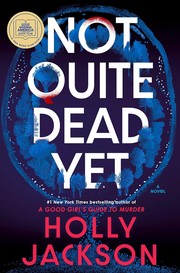
Not Quite Dead Yet
A drifting twenty-seven-year-old is told she will die within a week and decides to solve her own attempted murder instead of taking surgery with a ten percent…
2,010-word summary · 9 min read
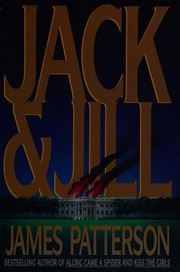
Jack & Jill
A senator is killed with a nursery-rhyme calling card as a child is murdered near Alex Cross's home. The third Alex Cross novel pulls him toward two cases, one…
2,646-word summary · 12 min read
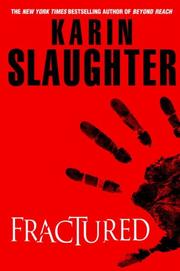
Fractured
In Karin Slaughter's second Will Trent novel, a mother kills the wrong man in an Atlanta mansion, and a GBI agent with a hidden reading difficulty finds a…
2,219-word summary · 10 min read