
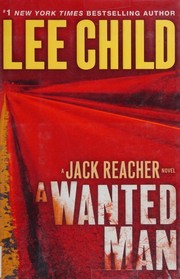
A Wanted Man
2,788-word summary 12 min read 416 pages in the book
- First published
- 2012
- Publisher
- Delacorte Press
- Pages
- 416
- ISBN
- 9780385344333
- Series
- Jack Reacher (#17)
Reading options
What's inside (9 sections)
I picked this up at a moment when I wanted a Reacher book that would remind me why the series works, and A Wanted Man is an odd choice for that purpose because it spends its first half with its hero boxed in. He is hitchhiking, which makes him a passenger, and for a man whose size and stillness usually do most of the talking, being a passenger is a real handicap. The book is the seventeenth Jack Reacher novel, published in 2012 by Delacorte Press in the United States after Bantam Press brought it out in Britain a couple of weeks earlier. It returns to the present-day timeline where Worth Dying For left off, after The Affair took a detour into Reacher's past. Knowing that bit of housekeeping helps, because the story assumes you remember the trouble in Nebraska and does not stop to retell it.
Three strangers on the interstate
Reacher is trying to get from Nebraska to Virginia, hitching rides and keeping a low profile. He is picked up by three people in a Chevrolet Impala: Donald McQueen, Alan King and Karen Delfuenso. McQueen and King are up front; Karen is in the back. They are heading east and they need a driver, because the two men want to sleep, so they ask Reacher to take the wheel. He agrees, partly because it suits him and partly because something about the arrangement is slightly off.
Karen does not say much. Instead she blinks at him in the rear-view mirror, and Reacher, who has spent years reading small physical tells, works out that she is sending him a message in code. The blinks tell him that the two men in the car are the ones the police are looking for. They have killed someone, and they have taken her vehicle. She is a cocktail waitress who was grabbed, and the men are wanted for murder and kidnapping. The Impala rolls through two roadblocks while the highway police search for the killers, and each time Reacher has to keep his face still and let the blinking do the talking.
This is the part of the book that Janet Maslin singled out in the New York Times, and she was right about the effect. With Reacher stuck behind the wheel and two armed men sleeping a few feet away, his usual advantages are neutralized. He cannot simply lift a desk and throw it through a window. He has to notice things, count exits, and wait. Maslin thought the first half confines him in a vehicle in a way that limits both the action and the size advantage, and that is exactly the tight, slightly claustrophobic feeling Child is going for. For a while this is the best kind of Reacher story: the hero reduced to his wits.
The investigation runs on a parallel track. FBI agent Julia Sorenson and Sheriff Victor Goodman believe the men kidnapped Delfuenso and stole her car after a murder. Their theory gets confirmed when they visit a gas station and study the security camera footage facing across the street. That camera is a small, clever detail, the kind of ordinary piece of evidence that Reacher books use to keep things grounded. While the law works the cameras, Reacher works the blinks, and the two lines of inquiry keep almost touching without meeting.
A phone call at the gas station
The group stops for gas, and Reacher goes in to buy coffee for everyone. Before he does, he uses the store's phone to alert the police. Sorenson is the closest officer and she drives over, but by the time she arrives the Impala is gone. It is a neat little move, and it sets the rest of the chase in motion.
McQueen grows suspicious. He tells Reacher to use his bank card, which is a fraudulent one, to rent rooms for the night. At the motel lobby McQueen pulls his gun and fires at Reacher and misses. The three of them flee, and Reacher is left standing there when Sorenson arrives and takes him into custody. Her boss wants him arrested outright. Then a call comes in about a vehicle burning nearby, and Sorenson goes to look.
They find a burned-out car with an unidentified body inside, and everyone assumes it is Karen Delfuenso. This is the moment the book plays its first real switch, because the assumption is wrong. Reacher is not done, either. He manages to disarm Sorenson and tells her to drop him a mile away from her office, which is both an escape and a way of keeping her alive. He understands that the people who burned that car are not finished with the people who survived it.
What follows is a shift in the balance of the story. Up to this point Reacher has been the odd man out, a hitchhiker caught between criminals and police. Now he and Sorenson start to work together, even though she is an FBI agent who should be arresting him. The friction between them is one of the better things in the book. She is wary of him, and he is careful with her, and neither of them quite trusts the official version of what is happening.
The case that vanishes
Sorenson learns from Goodman that Karen's daughter, Lucy, has also been kidnapped. Then a larger and uglier possibility surfaces: some kind of terrorist threat against the United States might be tied to these events. Before anyone can follow that thread, the whole case is closed as if it never happened, sealed for what is described as an overriding national security reason. Files stop existing. Witnesses get told to move along. This is where the book stops being a straightforward kidnapping chase and becomes a story about what happens when the machinery of the state decides that a crime is inconvenient.
Reacher and Sorenson agree to pursue the fugitives anyway. Goodman is a help until he dies of a heart attack, and even then he helps, because he leaves his phone and his car behind for the two of them to use. It is a nicely arranged bit of plotting, and it gives Reacher and Sorenson the means to keep going when their official options have been taken away.
I liked this stretch of the novel. Child is good at writing institutions that close ranks, and the idea that a case can be erased by a phone call from someone higher up gives the story a jagged edge. It is also the point where the book starts to take sides, and I will come back to that. Here it is enough to say that the disappearance of the case gives Reacher a reason to stay involved, because he has never been a man who walks away once someone has told him not to look.
The novel is told in the third person, as most of the Reacher books are, and that choice matters here. Because the camera sits just outside Reacher, Child can show Sorenson and Goodman working the problem while Reacher works it from the road. The two views travel toward each other. When they finally meet, the reveal has weight because both sides have earned their piece of it.
The people behind the badges
The switch comes when Karen turns out to be alive and to be an undercover FBI agent. The body in the burned car was Alan King, not her. McQueen is also an undercover agent, a special agent who managed to infiltrate a terrorist group called Wadia. The group has threatened to pollute a huge drinking water aquifer with nuclear waste, which is the kind of threat that makes a government willing to close a murder case without explanation.
As if that were not enough, the people who survived the earlier events end up gathered in a witness-protection compound. Reacher, Lucy, Sorenson, Karen and an eyewitness from the opening chapters are all locked up together for their own safety. The compound is meant to hold them until things settle down, but McQueen has gone off the radar, and Sorenson, Karen and Reacher decide to leave and try to save him. This is the point where the book's structure turns inside out. The people who seemed like villains were working the case, and the people who seemed like protectors are now the ones who need protecting.
Child handles the reversal confidently. Karen's blinking in the car was never a signal from a victim; it was an operative feeding information to a stranger she had never met. McQueen's anger and his fake bank card were part of a cover. The men who looked like kidnappers were agents living inside a terrorist network, and the network itself is the reason the case was buried. Once I understood that the whole first half had been staged for my misreading, I wanted to go back and read the early scenes again to see how the clues were planted.
The name Wadia and the talk of a dirty aquifer give the middle of the book its urgency, but the characters are what keep it from feeling like a file summary. Karen is the one who keeps her head in the car and the one who will not stop when the others want to. McQueen is a man deep inside a role he may not be able to leave. And Sorenson, who started as the agent trying to arrest Reacher, becomes the person he is willing to break into a bunker for.
It is worth noting that Maslin called Sorenson one of the best female characters in the whole Reacher series. I can see the case for it. She is written as a professional with a bad temper and a clear sense of duty, not as a love interest or a plot device. When she dies later, it lands harder than it would in a book that had spent fewer pages earning her.
The bunker
The terrorists are hiding in a huge ex-army missile storage bunker, a cavernous place that gives Child a stage for the kind of close, brutal fighting the series is known for. Sorenson is killed by a sniper before the assault really begins. That loss is the hinge of the ending. Reacher goes in to kill the gang one by one, in retaliation for her, and the sequence is long and methodical.
Inside he comes upon Peter King, Alan King's older brother, who wants revenge for his brother's death. McQueen is alive but bound, and he has protected himself by lying that Reacher was the one who killed Alan. Reacher plays along with the story rather than correcting it, because Peter King believing a false version of events buys him time. He kills Peter, but the thin cord binding McQueen takes longer to saw through with a key than anyone has, and the remaining members of the group are closing in. Karen Delfuenso helps at the fatal juncture, and the three of them get out.
I found the bunkered finale effective but overlong. Maslin made the same complaint about the ending being too detailed, and I think she has a point. Once Reacher is inside, the book keeps counting bodies and explaining angles long after I had understood the shape of the fight. The physical logic is convincing, and the confined space gives the violence a nasty intimacy, but there is a stretch where the reader can feel the author enjoying his own choreography a little too much.
The biggest turn is what the terrorist threat actually amounts to. The group never had the damaging material they claimed to possess. All that existed were some empty trailers from the cold war that had been forgotten in the bunker and never used for nuclear material. Wadia was trading on the idea of radioactive material as a kind of virtual currency, something they could offer other terrorist groups in exchange for favours. Their whole establishment was, in effect, a bank built on a bluff. It is a clever idea, and it explains why the government wanted the case sealed without anyone having to admit that the threat was hollow.
That answer does not fully satisfy. The book asks us to accept that a threat which turns out to be imaginary was still enough to justify a cover-up and several deaths, and that the CIA comes out of the story as inept and lazy while the FBI is treated far more kindly. Some readers disliked that political edge, and I understand the complaint. The novel is clearly interested in the excesses of the security response after the attacks of 2001, and it is not subtle about where it puts the blame.
Where the engine sputters
For all my admiration of the construction, A Wanted Man has a few faults that are hard to ignore. The confined first half, which I enjoyed while I was reading it, does slow the early chapters. There are only so many ways to describe a man sitting in a car and noticing things, and the book occasionally runs out of them. Readers who want Reacher loose and moving from page one may find the opening frustrating.
The dialogue also dips. Maslin noted that some of it is not up to the usual standard, and I kept noticing lines that sounded like a writer getting his exposition out of the way rather than people talking. The agents in particular sometimes speak in neat little paragraphs that explain the plot to each other for the benefit of the reader. It never ruins anything, but it is a step down from the crisp, clipped exchanges the series can do so well.
There is also the matter of the names. Child is a devoted Aston Villa supporter, and the FBI agents Karen Delfuenso and Julia Sorenson are named after Villa players Nathan Delfouneso and Thomas Sorenson. I like this sort of private joke, and it does no harm to the story, but it is a reminder that the book is full of small decisions made for the author's own amusement. That is fine. It is part of what makes a long series feel like the work of one person.
The book won the Crime Book of the Year award at the National Book Awards, and it sold heavily on release. Those facts say something about how well the pieces fit, even if the ending tries my patience. Reviews were mixed, with a number of readers praising the first half's inventiveness while objecting to the political argument and the long last act. I land close to that middle. The idea is excellent, the execution is skilful, and the final third asks for more goodwill than I was always willing to give.
The puzzle and the road to Virginia
One small thread is worth keeping, because it shows how much care went into the book. Early on, Reacher asks Alan King whether a person can talk non-stop for a minute without using the letter A. King never gets the chance to answer properly. At the end, just before he sets out for Virginia, Reacher explains it to McQueen. The trick is to count from one to one hundred, because the first letter A appears in one hundred and one. It is a trivial thing, and I enjoyed it precisely because it is trivial. After all the talk of nuclear waste and covert operations, the book closes on a bit of word play that has been sitting in a pocket since the first chapter.
That is A Wanted Man in miniature. It is a book of controlled arrangements, where a throwaway line in the opening pays off dozens of pages later and a woman's blinks carry the first act. Child builds the thing like a clock, and most of the pleasure comes from watching the gears line up. When the gears grind, as they do in the long finale, the effect is less pleasing, but the design is never in doubt.
I would hand this to someone who already likes Reacher and wants a book that plays with the formula rather than simply repeating it. The car-bound opening and the undercover reveal give it a shape that is different from most entries in the series, and Sorenson is a strong addition to the cast. I would be more careful with a reader who wants a clean, fast punch, because this novel spends a lot of time explaining itself and finishes with a fight that could have been shorter. For me the strengths win, mostly. It is a smart, strange entry that makes better use of its confined spaces than its sprawling conclusion.
FAQ
Where does A Wanted Man fit in the Jack Reacher series?
It is the seventeenth Jack Reacher novel, published in 2012. It continues the present-day timeline where Worth Dying For left off, after The Affair looked at Reacher's past.
Is A Wanted Man based on a true story?
No, it is a work of fiction. The plot draws on concerns about water contamination and the security response after 9/11, and the FBI agents Karen Delfuenso and Julia Sorenson are named after Aston Villa footballers.
Does Reacher kill the terrorists in the bunker?
Yes. After Sorenson is shot by a sniper, Reacher enters the old army missile bunker and kills the gang one by one, then escapes with McQueen and Karen Delfuenso.
Similar books
More from Jack Reacher first, then related titles.

Killing Floor
Ex-military policeman Jack Reacher is arrested for murder in Margrave, Georgia, then learns the victim was his brother.
2,872-word summary · 13 min read
Tripwire
In Key West, Jack Reacher follows a murdered detective's trail to New York, an old mentor's files, and a loan shark stealing a dead soldier's name.
2,688-word summary · 12 min read
Running Blind
Jack Reacher must catch a killer who murders women with no forced entry and no trace.
2,008-word summary · 9 min read

Echo Burning
Reacher hitches a ride with a Texas woman who wants her abusive husband killed, then has to prove she did not murder him when he comes home.
2,209-word summary · 10 min read
Without Fail
Reacher is asked to test vice presidential security by planning to kill.
2,084-word summary · 9 min read
Persuader
Reacher goes undercover in a Maine crime family to find a missing DEA agent and the man he once failed to kill, and Lee Child keeps the whole thing tight,…
2,278-word summary · 10 min read

The Enemy
In January 1990, MP major Jack Reacher investigates a dead general, a stolen briefcase, and three murders tied to an Army power struggle.
2,123-word summary · 9 min read

One Shot
Six shots, five dead in Indiana, and James Barr asks for Jack Reacher. Reacher leaves Miami to test the proof in this 2005 Delacorte Press thriller, 376 pages,…
2,972-word summary · 13 min read
The Hard Way
A man Reacher sees drive a ransom-laden Mercedes pulls him into a retired colonel's hunt for his missing wife and stepdaughter.
2,637-word summary · 12 min read

Bad Luck and Trouble
A deposit of $1,030 summons Jack Reacher back to his old army unit, which is being picked off one name at a time.
2,366-word summary · 11 min read
Gone Tomorrow
Reacher stops a suicide bomber on the subway, then hunts her handlers.
2,308-word summary · 10 min read

61 Hours
A bus crash strands Jack Reacher in a snowbound South Dakota town where a drug gang, a corrupt police force, and a single witness are on a collision course.
2,227-word summary · 10 min read

Worth Dying For
Reacher stops for one night in rural Nebraska and finds a family that runs the county, a missing girl and a shipment worth killing for.
2,021-word summary · 9 min read
The Affair
In 1997, Reacher goes undercover in a Mississippi town where a murder near an army base collides with a senator's power. The case that ends his military career.
2,039-word summary · 9 min read
Never Go Back
Reacher returns to his old military unit to find Major Susan Turner jailed and two invented cases hiding an opium smuggling ring.
2,245-word summary · 10 min read
Make Me
Reacher drifts into a quiet Midwestern town and finds a missing investigator, a trail of killers, and a deep web secret.
2,352-word summary · 10 min read
The Midnight Line
A West Point class ring in a Wisconsin pawnshop sends Jack Reacher across the Midwest, from a biker's lie to a wounded veteran hiding from the opioid trade.
2,590-word summary · 12 min read
The 5th Horseman
Two linked cases pull Lindsay Boxer and the Women's Murder Club into a hospital full of strange deaths and a luxury-car murder spree.
2,609-word summary · 12 min read
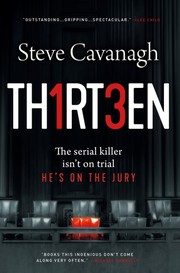
Th1rt3en
A former con artist turned defense lawyer takes a celebrity murder trial while a serial killer sits on the jury, steering the verdict.
2,254-word summary · 10 min read
Zero Day
Army investigator John Puller is sent alone to a West Virginia coal town to solve a colonel's murder, and finds a much larger secret buried nearby.
3,434-word summary · 15 min read
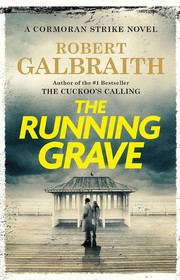
The Running Grave
In the seventh Cormoran Strike novel, Robin goes undercover inside a Norfolk cult while Strike digs into a child's death from decades earlier.
2,615-word summary · 12 min read
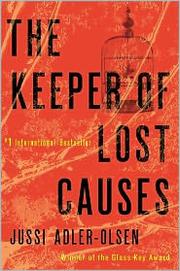
The Keeper of Lost Causes
Jussi Adler-Olsen introduces Carl Mørck and Department Q, a Copenhagen cold-case unit in a basement, and a missing politician whose file refuses to stay closed.
2,759-word summary · 12 min read
The Fix
Amos Decker watches a government contractor shoot a teacher outside FBI headquarters, then turn the gun on himself. The DIA wants the case shut.
2,315-word summary · 10 min read
Jack & Jill
A senator is killed with a nursery-rhyme calling card as a child is murdered near Alex Cross's home. The third Alex Cross novel pulls him toward two cases, one…
2,646-word summary · 12 min read
Fractured
In Karin Slaughter's second Will Trent novel, a mother kills the wrong man in an Atlanta mansion, and a GBI agent with a hidden reading difficulty finds a…
2,219-word summary · 10 min read
Falling
A pilot is told his family will be killed unless he crashes his Los Angeles to New York flight. Newman's debut turns one clean premise into a relentless…
2,507-word summary · 11 min read
All In
Cassie Hobbes and the Naturals chase a Las Vegas killer whose victims share wrist tattoos, while a break in her mother's case pulls her away.
2,484-word summary · 11 min read

What She Knew
Rachel lets her eight-year-old son run ahead in a Bristol park, and the nine-day search turns her into a suspect in the public eye.
2,952-word summary · 13 min read

The Beach House
A young valet is beaten to death at a Hamptons party, and his law-student brother spends a year building a case against the family that covered it up.
2,049-word summary · 9 min read

Six Years
A professor who promised to forget the woman he loved sees her husband's obituary and discovers that the wedding, the marriage, and the woman herself may never…
2,076-word summary · 9 min read